Beyond Cabbage and Grape Leaves: Unusual Edible Wrappers in Central European Cooking
Cabbage and grape leaves aren't the only wrappers for sarma — linden, horseradish, and a few other garden leaves have their own place in the kitchen.
Introduction
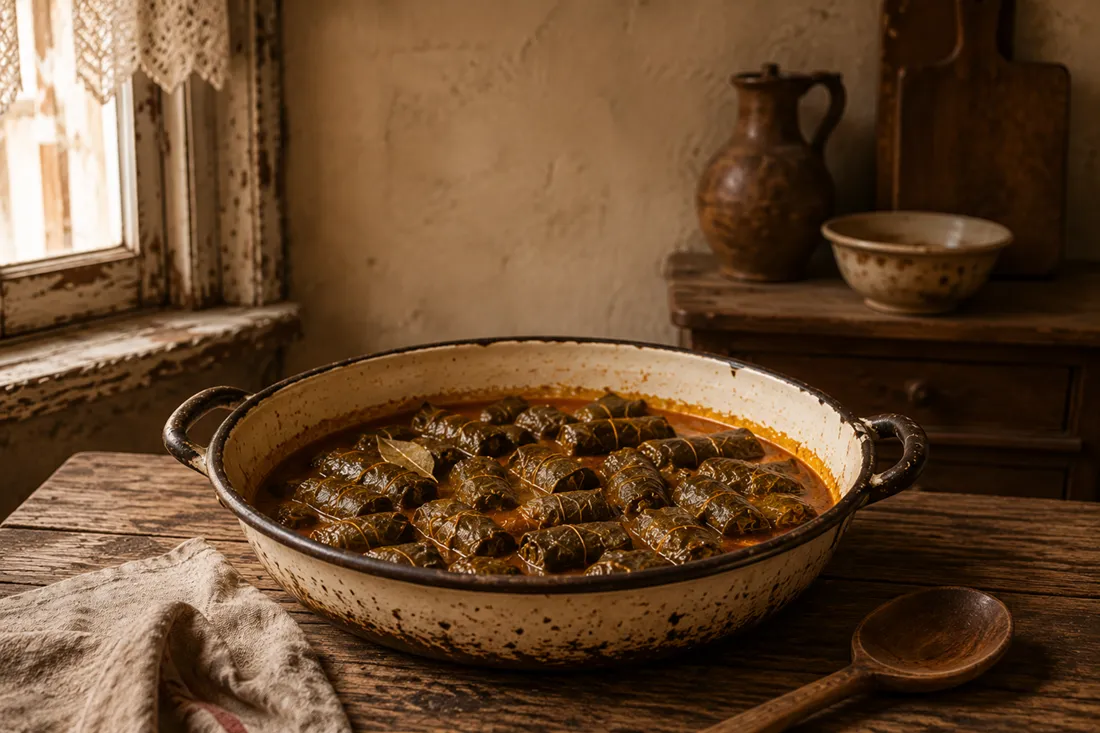
Cabbage and grape leaves are the default wrappers for stuffed rolls today, but they weren’t always the only option. In gardens and along field edges, Central European cooks had a wider range of tender, pliable leaves available depending on the season — and several of them show up in period recipes with no more fanfare than “young leaves” as an ingredient.
This guide looks at a handful of those less common wrappers: what they are, why they work (or don’t), and where the line sits between “unusual but fine” and “not something to eat.” It’s meant as a companion to any recipe that calls for something other than cabbage or grape leaves, not a foraging manual — always confirm identification with a reliable regional guide before harvesting anything from outside a garden or grocery store.
The Familiar Wrappers: Cabbage and Grape Leaves
Cabbage and grape leaves became the standard wrapper for stuffed rolls largely because they’re durable, widely available, and easy to preserve — cabbage keeps through winter, and grape leaves can be brined or jarred for year-round use. Their structure also helps: both have enough body to hold a filling through a long simmer without falling apart.
That practicality is exactly why other leaves, available only briefly in spring or early summer, tend to be overlooked today even though they were once just as familiar in the same households.
Beyond the Usual: Uncommon Leaves for Wrapping
Linden Leaves
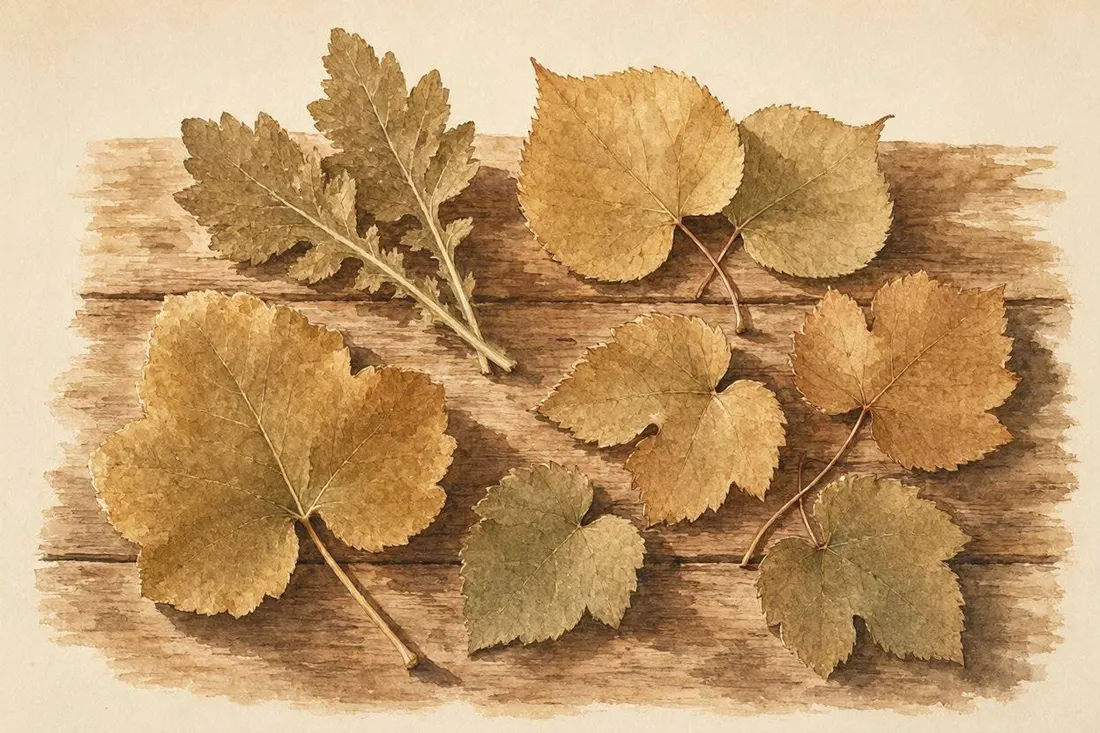
Young linden (Tilia) leaves are tender, mildly sweet, and slightly mucilaginous — a texture that helps them wrap tightly around a filling without splitting. They’re at their best in spring, before they toughen with age, and are typically used no bigger than a couple of inches across. Linden leaves are also the source of linden flower tea, so the tree itself is a familiar sight in many Central European gardens and streets, though leaves for cooking should come from trees free of pesticide treatment and away from roadside pollution.
Horseradish Leaves
Horseradish (Armoracia rusticana) is grown almost entirely for its root, but the leaves are edible too — sharp and peppery raw, closer to arugula or kale, and considerably milder once cooked. This makes them a reasonable stand-in for grape leaves in a dish that involves a long simmer, where the pungency has time to mellow. Like linden, only young, tender leaves are suitable; older leaves become tough and increasingly bitter.
Pumpkin and Squash Leaves
Young pumpkin and squash leaves appear in a number of traditional cuisines as a wrapper or cooked green, valued for a texture similar to a soft cabbage leaf once blanched. They’re less commonly used in Central European cooking specifically, but home gardeners growing their own pumpkins or squash have easy access to them during the growing season, making them a practical seasonal substitute.
Mallow Leaves
Common mallow (Malva), a plant many gardeners know mainly as a weed, has tender leaves with a mucilaginous quality similar to linden. It’s used as a wrapping leaf and a cooked green in various culinary traditions, and its texture makes it well suited to the same rolling technique used for grape leaves.
A Word of Caution: What Not to Use
Not every tender-looking garden leaf is safe, and a few common points of confusion are worth naming directly.
Rhubarb is the clearest example: the stalks are a familiar dessert ingredient, but the leaves contain high levels of oxalic acid and are not considered safe to eat. The plant is a useful reminder that “edible plant” doesn’t automatically mean “every part of the plant is edible.”
Comfrey is a less obvious case. It was eaten more freely in earlier decades, but modern research has identified pyrrolizidine alkaloids in the plant, and food safety guidance in most countries now recommends against regular internal consumption. It’s a good example of how food safety understanding changes over time, even for ingredients with a long history of kitchen use.
The general rule holds across all of these: correct identification of the species — and, where it matters, the specific part of the plant — comes before any assumption about edibility.
Practical Takeaways
- Linden, horseradish, grape, mallow, and young pumpkin or squash leaves can all work as wrappers for stuffed rolls, each with a slightly different texture and flavor.
- Youth matters more than the species: almost all of these leaves get tougher and more bitter as they mature.
- Leaves gathered outside a garden or grocery store need positive identification and a source free of pesticide or roadside contamination.
- Not every edible plant has fully edible leaves — rhubarb is the standard example, and it’s worth remembering before assuming a plant’s leaves are safe just because another part of it is a familiar food.
Attic Recipes — digitizing and adapting Central European home cooking from the early twentieth century.
Frequently Asked Questions
01Are linden leaves safe to eat?▶
Yes, young linden (Tilia) leaves are widely documented as edible, both raw in salads and cooked. They're best picked in spring while still small and tender, from trees away from roadsides or treated gardens.
02Can horseradish leaves be used instead of grape leaves?▶
Young horseradish leaves can be blanched and used as a wrapper, though they're more fibrous and peppery than grape leaves. Cooking mellows their sharpness considerably, which is why they typically appear in slow-simmered dishes rather than raw preparations.
03Is rhubarb leaf edible?▶
No. Rhubarb stalks are edible, but the leaves contain high levels of oxalic acid and are not considered safe to eat. This is one of the most common points of confusion when foraging for edible leaves in a home garden.
04What is the difference between an edible leaf and a toxic one on the same plant?▶
It varies by species — with rhubarb, the stalk is edible and the leaf is not, while with horseradish, both root and leaf are edible. There's no single rule that applies across plants, which is why correct identification of the specific species and part matters more than general assumptions.
05Can any tender leaf substitute for cabbage in a stuffed leaf roll recipe?▶
Not any leaf — it needs to be confirmed edible, pliable enough to roll without tearing, and mild or cookable enough not to overwhelm the filling. Linden, horseradish, grape, and young pumpkin leaves all meet these criteria; many ornamental or wild leaves do not.