Yellow Bundt Cake with Bananas
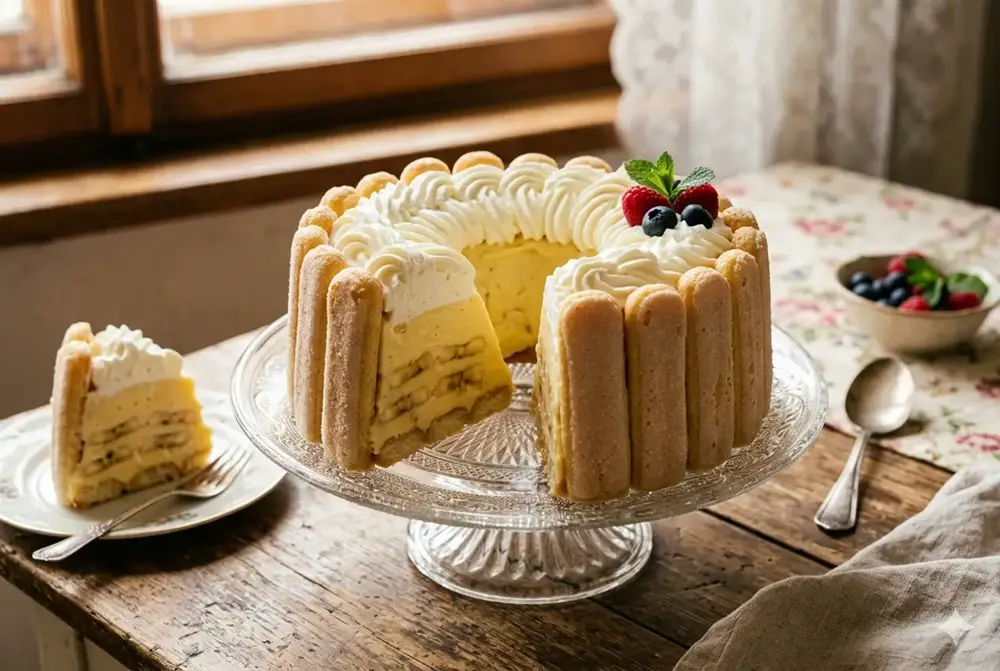
Ladyfingers soaked in rum and milk, layered with ripe banana slices and a rich vanilla egg yolk custard, set in a bundt mould and finished with whipped cream.
Quick Summary
Central European no-bake dessert with rum-soaked ladyfingers, bananas, and egg yolk crème anglaise. Prep 55 minutes plus overnight chilling. Set in a bundt mold and finished with whipped cream for a rich, custard-based structure.
Historical recipe
Modernised adaptation of an early 20th‑century source. Not independently kitchen-tested by Attic Recipes. Quantities, temperatures, and food safety guidance have been updated for a contemporary kitchen — results may vary and errors may exist. Nutritional values, where provided, are estimates only and have not been laboratory tested. Always follow current food safety guidelines for your region. If you have a health condition, allergy, or dietary requirement, consult a qualified professional before preparing this recipe.
Use of this recipe is entirely at your own risk and subject to our Terms of Service and Privacy Policy. Attic Recipes accepts no liability for any adverse outcome.
- Eggs
- Dairy
- Gluten
Additional notes
-
Warning
This recipe uses egg yolks cooked as a custard. The custard must reach 74°C (165°F) throughout to be safely pasteurised. Use an instant-read thermometer to verify — do not rely on visual thickness alone. Pregnant women, children under 18, elderly individuals, and people who are immunocompromised should ensure the custard has reached this temperature before consumption.
Pasteurised egg yolks may be used in place of standard egg yolks for additional safety.
-
Note
This recipe contains alcohol (dark rum) in the biscuit soaking liquid. While the quantity is small (2 tablespoons across 8 servings), pregnant women and children under 18 should be aware. The rum can be replaced with additional milk or with a non-alcoholic vanilla syrup without affecting the structure of the dessert.
-
Note
Saturated fat content is approximately 10g per serving due to the egg yolks, whole milk, and heavy cream. Those managing saturated fat intake should be aware.
- 1
Make the custard: in a bowl, whisk together the 6 egg yolks, 75g of sugar, and 1 tsp of vanilla extract until the mixture is pale, thick, and ribbony — about 3 minutes by hand or 1 minute with a hand mixer.
- 2
Pour the 1000ml of whole milk into a heavy-bottomed saucepan and heat over medium heat until steaming and just beginning to show small bubbles at the edges — do not bring to a full boil. Remove from the heat.
- 3
Temper the egg yolk mixture: slowly ladle approximately 200ml of the hot milk into the egg yolk mixture in a thin stream, whisking constantly. Repeat with a second ladleful. This gradually raises the temperature of the yolks without scrambling them.
Tip Never add cold yolks directly to hot milk — they will scramble immediately. The tempering step is essential. - 4
Pour the tempered egg mixture back into the saucepan with the remaining milk. Return to medium-low heat and cook, whisking continuously with a wire whisk, until the custard thickens enough to coat the back of a spoon and reaches 74°C (165°F) on an instant-read thermometer — approximately 8 to 10 minutes. Do not allow it to boil.
Tip Draw a line through the custard on the back of a spoon — if the line holds cleanly, the custard is ready. Remove from heat immediately. - 5
Remove the custard from the heat and transfer to a clean bowl. Press a sheet of cling film directly onto the surface of the custard to prevent a skin from forming. Leave to cool to room temperature, then refrigerate until cold and slightly thickened — at least 1 hour.
- 6
Prepare the soaking liquid: combine the 100ml of milk and 2 tbsp of dark rum in a shallow bowl. One at a time, briefly dip each ladyfinger into the mixture — just long enough to moisten, not to saturate. The biscuits should be damp but still hold their shape.
- 7
Line the bundt tin: arrange the soaked ladyfingers across the base and up the sides of the tin, trimming as needed to fit. The biscuits should form a continuous shell with no large gaps.
- 8
Begin layering: spread a layer of the chilled custard over the biscuit base. Arrange a layer of sliced bananas evenly over the custard. Add another layer of custard, then another layer of bananas. Continue alternating until the mould is full, finishing with a layer of custard. If any soaked ladyfingers remain, press them across the top as a final layer.
- 9
Cover the mould tightly with cling film and refrigerate for a minimum of 4 hours, or overnight, until the custard is fully set and the layers are firm enough to unmould cleanly.
- 10
When ready to serve, run a thin knife or palette knife carefully around the outer edge and inner tube of the bundt tin to loosen. Place a glass serving plate face-down over the tin, then invert firmly in one confident movement. Lift the tin away. If the cake does not release immediately, leave it inverted for 30 seconds — gravity will help.
Tip Chill the serving plate before unmoulding — a cold plate helps the cake hold its shape. - 11
Whip the 250ml of cold heavy cream with the 2 tbsp of icing sugar using a hand mixer or whisk until stiff peaks form. Spoon or pipe the whipped cream generously over the top of the unmoulded cake, filling the hollow centre and decorating around the outside. Serve immediately.
Nutrition Information per 1 serving (approx. 220g)
Nutritional values are approximate estimates and may vary based on specific ingredients used, preparation methods, and portion sizes.
Serving Suggestions
Serve immediately after decorating with whipped cream — the cream will begin to soften the structure if left to stand. The dessert is best made the evening before and unmoulded and decorated just before serving. Leftovers can be refrigerated for up to 24 hours, though the whipped cream will deflate and the biscuit layers will continue to soften.
About This Recipe
The name — žuti kuglof, yellow bundt — refers to the colour of the custard that fills and defines the dessert: a deep, egg-yolk yellow that shows through the layers when the mould is unmoulded and the slices are cut. It is a chilled, no-bake dessert in the tradition of the icebox cake, built entirely from components that are assembled cold and set in the refrigerator overnight. The visual centrepiece is the bundt form itself: the hollow centre, a structural feature of the tin, becomes a vessel for whipped cream at the moment of serving.
The custard is a straightforward crème anglaise — egg yolks, sugar, milk, vanilla — cooked on the stove until it thickens and coats a spoon. The ladyfinger biscuits, soaked briefly in rum and milk, form the shell of the dessert and absorb the custard during the overnight rest, softening into something between a biscuit and a sponge. The bananas, sliced thin and layered between the custard, provide texture, sweetness, and the mild tropical note that stops the custard from feeling too rich.
This is a dessert designed to be made the day before and presented at the table — the overnight rest is not optional, it is the point. What comes out of the mould after a night in the refrigerator is a coherent, sliceable structure that holds its shape when cut and carries every layer cleanly from plate to fork.
Why It Works
Crème anglaise thickens through the coagulation of egg yolk proteins rather than through starch. As the custard heats toward 74°C (165°F), the proteins unfold and form a loose, cohesive network that gives the liquid a silky, light body. This is why the temperature ceiling matters: above 82°C, the proteins over-coagulate and the custard curdles into sweetened scrambled egg. The tempering step — adding hot milk to the yolks gradually before returning the mixture to the stove — prevents the yolks from meeting sudden high heat and gives the cook control over the thickening process.
The ladyfingers serve as both structure and flavour. Dry enough to absorb liquid without disintegrating, they soak up the rum-milk mixture and then continue to absorb custard during the overnight rest, softening into the layers of the dessert and binding everything together. The rum is not incidental — it slows the absorption slightly and adds a note that balances the sweetness of the banana and custard.
Modern Kitchen Tips
An instant-read thermometer is the most reliable tool for this recipe. Insert it into the custard as it thickens on the stove — remove the pan from the heat the moment it reads 74°C (165°F). The custard will continue to cook slightly from residual heat, so pulling it at exactly 74°C rather than waiting for a higher number prevents overcooking.
Use ripe bananas — skins fully yellow with some brown spots. Under-ripe bananas are starchy and flavourless in a chilled dessert; over-ripe bananas will turn grey and watery overnight. Sliced just before layering, a properly ripe banana holds its colour and texture through the overnight rest.
If the unmoulded cake does not hold its shape cleanly, it needs more time in the refrigerator — return it to the tin and chill for a further hour before attempting again.
A classic of early 20th century home cooking, preserved and adapted for the modern kitchen.
The Story Behind This Recipe
Historical Context
Chilled moulded desserts of this type were a centrepiece of middle-class Central European entertaining in the early 20th century, designed to be made the day before and presented dramatically at the table. The ring or bundt mould — known in the region as a kuglof or gugelhupf form — was a standard piece of household equipment, and its hollow centre was understood to be a feature rather than a structural detail: it was filled with whipped cream at the point of serving, making the presentation self-contained. The use of ladyfinger biscuits soaked in rum as the structural shell follows the same logic as the charlotte russe — a French technique widely adopted in Central European patisserie by the late 19th century. The custard in recipes of this period was typically made by adding the egg mixture to the hot milk on the stove and whisking continuously, without the modern precaution of off-heat tempering first; the technique worked in experienced hands but was prone to scrambling on an uneven heat source.
Modern Kitchen Adaptation
The original recipe stated '¼ litre of sweet cream' for the whipped cream decoration — this has been confirmed as 250ml. The quantity of rum was not specified; 2 tablespoons is sufficient to flavour the soaking liquid without making the biscuits taste predominantly of alcohol. The custard method has been updated to include off-heat tempering before returning the mixture to the stove — this eliminates the scrambling risk inherent in the original direct-to-stove approach while producing an identical result. Vanilla quantity was not specified in the original; 1 teaspoon of vanilla extract or one sachet of vanilla sugar is the standard equivalent. The number of bananas was not given — 400g peeled weight (approximately 3 to 4 ripe bananas) fills a standard 22–24cm bundt tin with two to three layers.
This recipe is an independent modern adaptation developed from historical sources in the public domain. It is provided for informational and educational purposes only and does not constitute professional dietary, nutritional, or medical advice. Food preparation involves inherent risks. The reader assumes full responsibility for safe food handling, ingredient sourcing, and adherence to current local food safety guidelines. The site operator accepts no liability for outcomes resulting from the preparation or consumption of this recipe.
One recipe.
Every week.
You Might Also Like
More recipes you'll enjoy
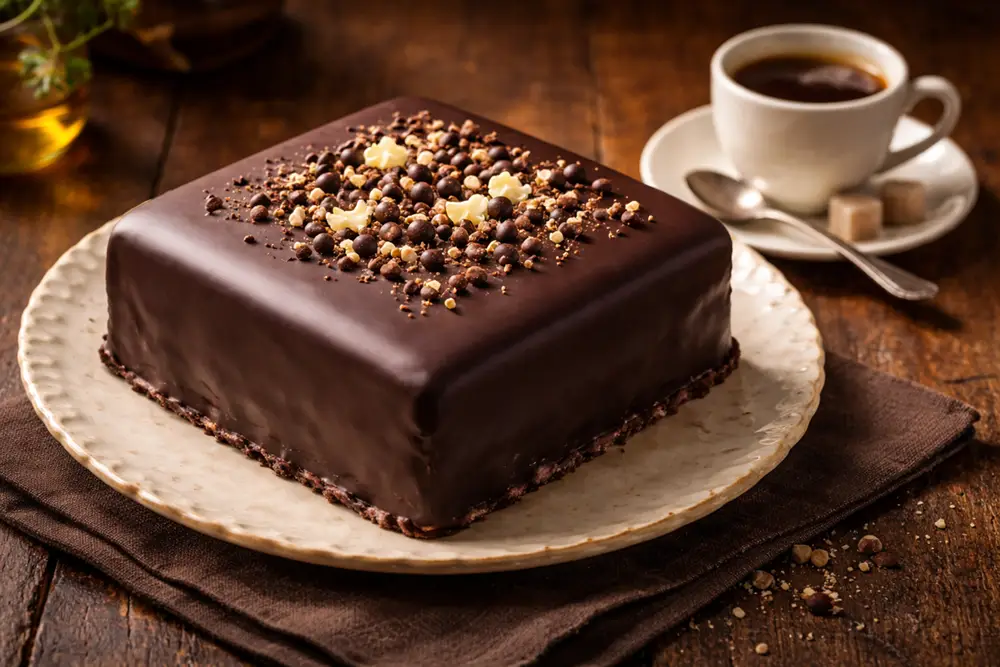
Warsaw Almond and Chocolate Torte
A flourless no-bake torte of boiled egg yolks, ground almonds, and dark chocolate, filled with Italian meringue and almond cream, glazed with chocolate.
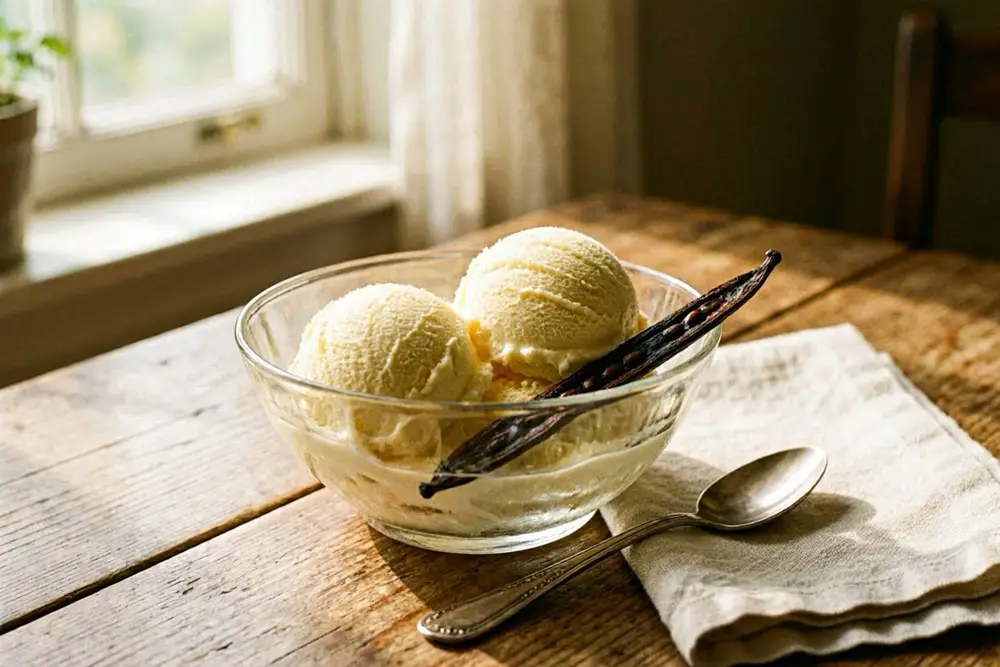
Vanilla Ice Cream
A rich vanilla ice cream made from a cooked egg yolk custard base — an early 20th century home recipe churned to a smooth, creamy finish.
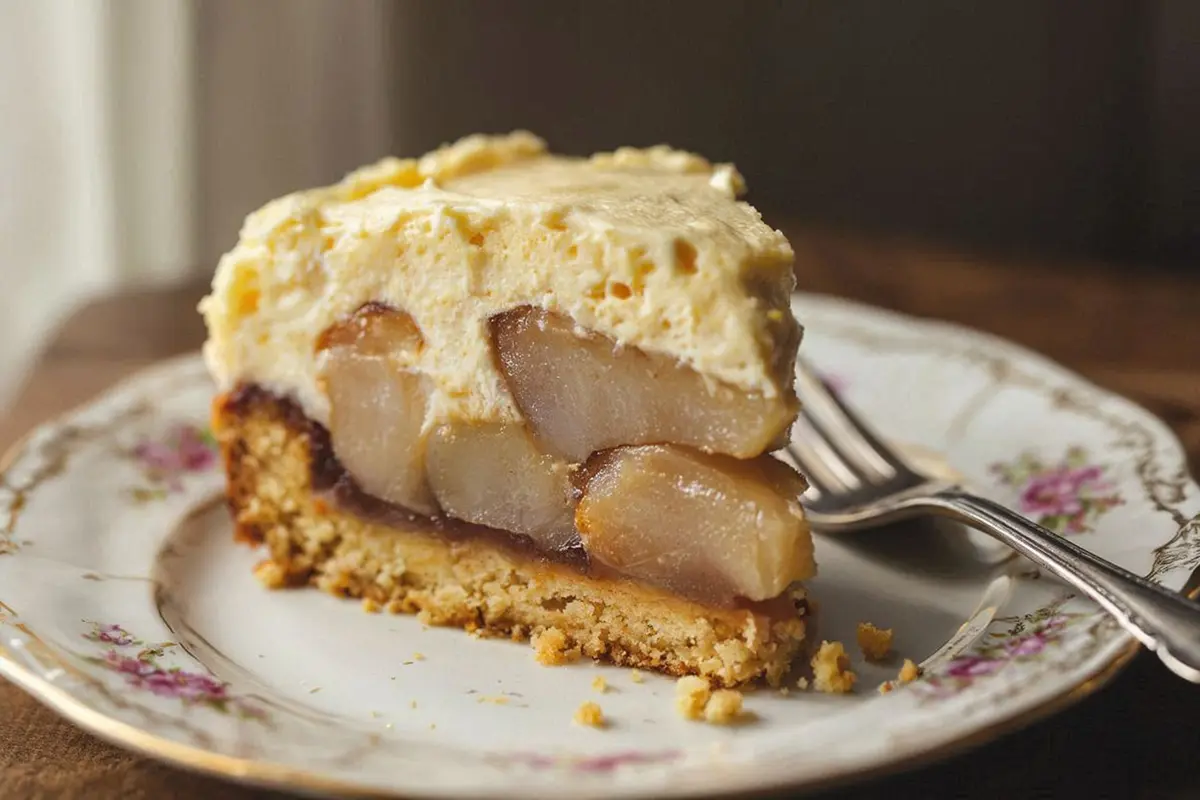
Cake with Pears and Wine Cream
Elegant Central European dessert: buttery shortcrust pastry layered with wine-poached pears and silky wine custard cream. Make-ahead and party-ready.