Walnut Roulade
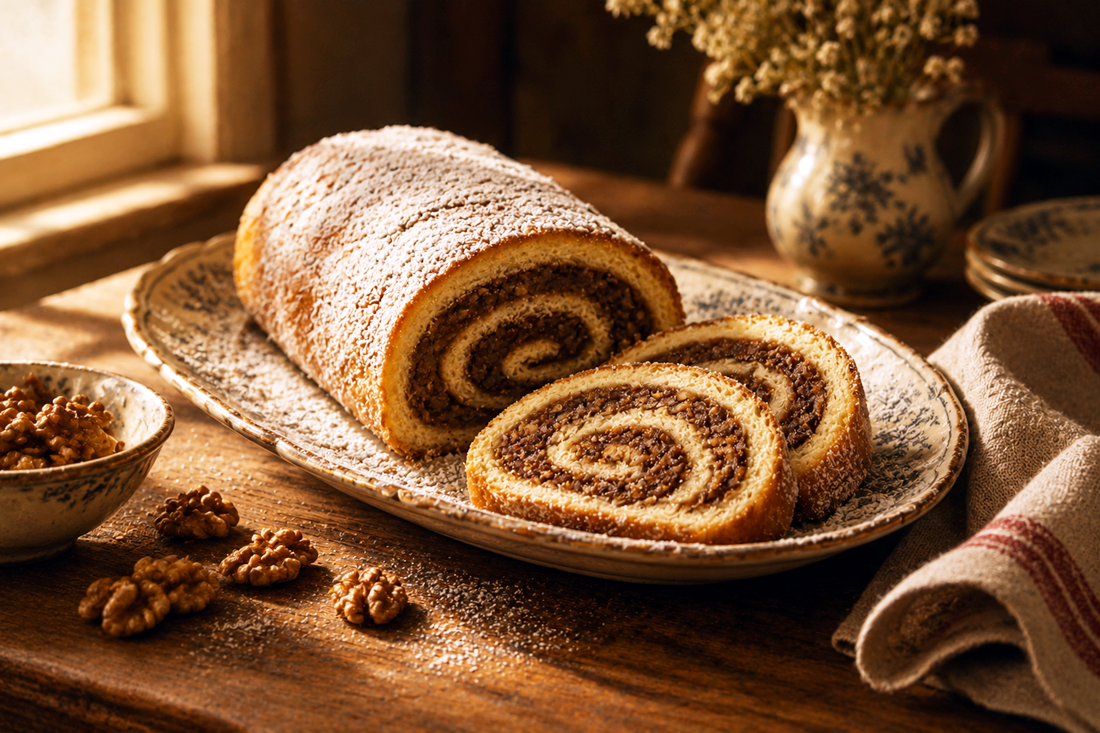
A light egg-foam sponge rolled around a warm, rum-spiked walnut filling, dusted with sugar and served cold in thin slices.
Quick Summary
This rolled sponge gets its structure entirely from whipped eggs, with only a little flour and ground walnuts holding it together. It's filled while still warm with a thick walnut-and-rum paste, then rolled, dusted, and chilled before slicing.
Historical recipe
Modernised adaptation of an early 20th‑century source. Not independently kitchen-tested by Attic Recipes. Quantities, temperatures, and food safety guidance have been updated for a contemporary kitchen — results may vary and errors may exist. Nutritional values, where provided, are estimates only and have not been laboratory tested. Always follow current food safety guidelines for your region. If you have a health condition, allergy, or dietary requirement, consult a qualified professional before preparing this recipe.
Use of this recipe is entirely at your own risk and subject to ourTerms of Service andPrivacy Policy. Attic Recipes accepts no liability for any adverse outcome.
- Eggs
- Gluten
- Tree Nuts
- Dairy
Additional notes
Warning
The filling involves boiling a sugar syrup, which reaches very high temperatures and can cause severe burns on contact with skin. Keep children away from the stove during this step.
Note
Contains rum. Most of the alcohol remains in the uncooked filling, so pregnant women, children under 18, and anyone avoiding alcohol should be aware; see the note above for an alcohol-free alternative.
Note
Contains a significant amount of walnuts throughout both the sponge and the filling. Those with tree nut allergies should avoid this recipe.
- 1
Beat the egg yolks with the 100g sugar and lemon zest until pale, thick, and foamy.
- 2
In a separate, clean bowl, whip the egg whites to stiff peaks.
- 3
Gently fold the 50g ground walnuts and the flour into the yolk mixture, then fold in the whipped egg whites, working gently with a wooden spoon to keep as much air in the batter as possible.
- 4
Line a baking sheet with a sheet of parchment paper cut to fit.
- 5
Pour the batter onto the paper and spread it evenly to about a finger's thickness.
- 6
Bake in the preheated oven until just set and lightly golden, about 10-12 minutes.
TipThis is a thin, delicate sponge — check it a couple of minutes early to avoid overbaking, which makes rolling harder. - 7
While the sponge bakes, make the filling: combine the 200g sugar and warm water in a small saucepan and bring to a boil.
- 8
Remove the syrup from the heat and stir in the 200g ground walnuts and the rum.
TipIf the filling is too thick to spread, loosen it with a little milk; if it's too loose, work in a bit more ground walnuts. - 9
As soon as the sponge comes out of the oven, turn it out onto a clean sheet of paper dusted with the 1 tbsp flour. Carefully peel away the paper it baked on.
- 10
Spread the warm walnut filling evenly over the whole sponge.
- 11
While it's still warm, roll the sponge up into a log, using the paper underneath to help guide the roll.
- 12
Dust the roulade with sugar or a glaze of your choice. Let it cool, then chill before slicing. Serve cold.
Nutrition Informationper 1 slice (approx 1/9 of the roulade)
Nutritional values are approximate estimates and may vary based on specific ingredients used, preparation methods, and portion sizes.
Serving Suggestions
For a lighter, egg-free filling, this sponge can also be rolled cold with lightly sweetened whipped cream instead of the walnut paste.
About This Recipe
This roulade belongs to a family of desserts that get all their structure from whipped eggs alone — no baking powder, no baking soda, just yolks and whites beaten separately and folded together with barely enough flour to hold the crumb. The result is a thin, delicate sponge built specifically to be rolled, not cut into layers.
What makes it distinctive is the filling: rather than a custard or a buttercream, it’s a cooked sugar syrup bound with a generous amount of ground walnuts and a splash of rum, spread onto the sponge while both are still warm so the whole roll softens and sets together as it cools.
Why It Works
Whipping the yolks and whites separately before folding them together traps far more air than mixing whole eggs would, which is what lets a cake with so little flour hold its shape at all. Rolling the sponge while it’s still warm and pliable, rather than waiting for it to cool flat, is what keeps it from cracking — once a sponge this thin cools and firms up, it loses most of its flexibility. Cooking the sugar into a syrup before adding the walnuts also gives the filling enough body to hold together in slices once chilled, rather than crumbling apart.
Modern Kitchen Tips
Have your parchment paper cut to size and your filling ingredients measured out before you start beating the eggs — everything from spreading the batter to rolling the finished sponge needs to happen quickly while things are still warm and workable. If the roulade cracks slightly while rolling, don’t worry: a light dusting of sugar over the top hides small imperfections easily, and it will still slice cleanly once chilled.
A classic of early 20th century home cooking, preserved and adapted for the modern kitchen.
The Story Behind This Recipe
Historical Context
Rolled sponges leavened only by whipped eggs, with just enough flour to hold them together, were a standard technique before chemical leaveners were common in home kitchens — the air beaten into the yolks and whites did all the lifting. A cooked sugar syrup bound with ground nuts, rather than a custard or buttercream, was a practical way to make a rich filling without extra eggs or dairy, and it kept well enough to be made ahead of the sponge.
Modern Kitchen Adaptation
The original calls for lining the pan with a plain sheet of white paper; parchment paper is the safer and more reliable modern substitute, since it's designed for oven contact and releases the delicate sponge far more cleanly. The oven temperature isn't given beyond "a strong fire," so 200°C (400°F) is an estimate suited to setting a thin sponge quickly without drying it out. The rum can be reduced, omitted, or replaced with a non-alcoholic rum flavoring if the roulade is being served to children or anyone avoiding alcohol — the syrup will still set the walnuts into a spreadable paste without it.
This recipe is an independent modern adaptation developed from historical sources in the public domain. It is provided for informational and educational purposes only and does not constitute professional dietary, nutritional, or medical advice. Food preparation involves inherent risks. The reader assumes full responsibility for safe food handling, ingredient sourcing, and adherence to current local food safety guidelines. The site operator accepts no liability for outcomes resulting from the preparation or consumption of this recipe.
One recipe.
Every week.
You Might Also Like
More recipes you'll enjoy
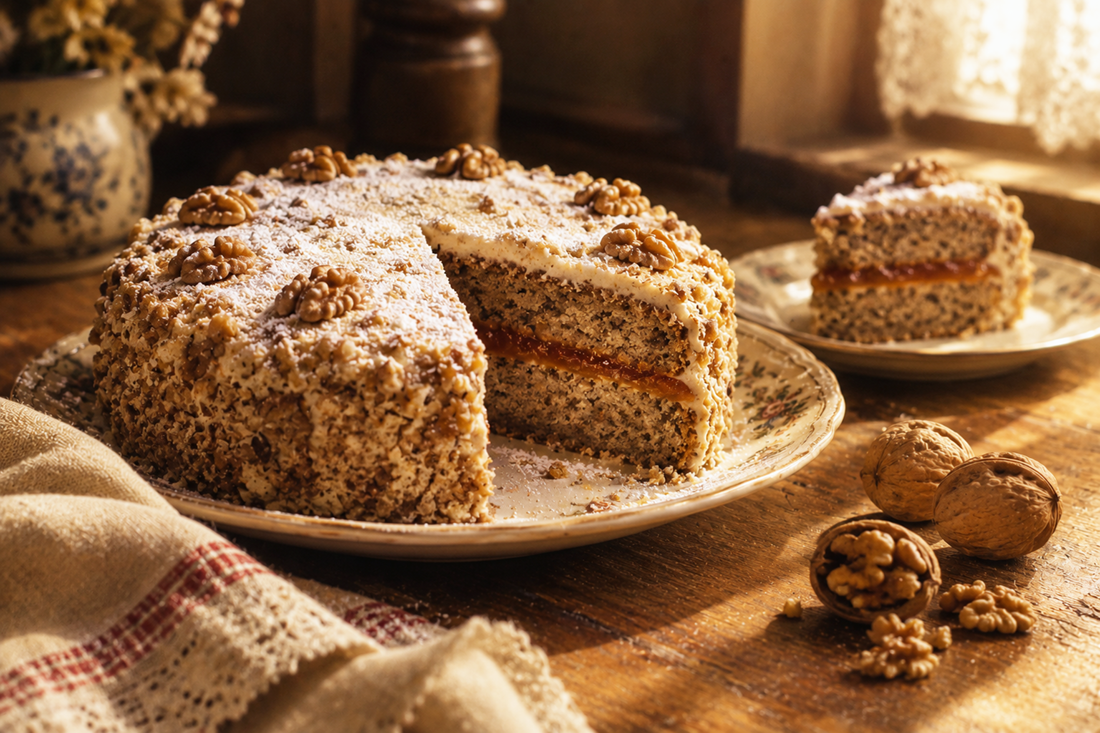
Lenten Royal Cake
An egg-free, dairy-free walnut torte bound with bean cooking liquid instead of eggs, with a hidden layer of apricot or rosehip jam.
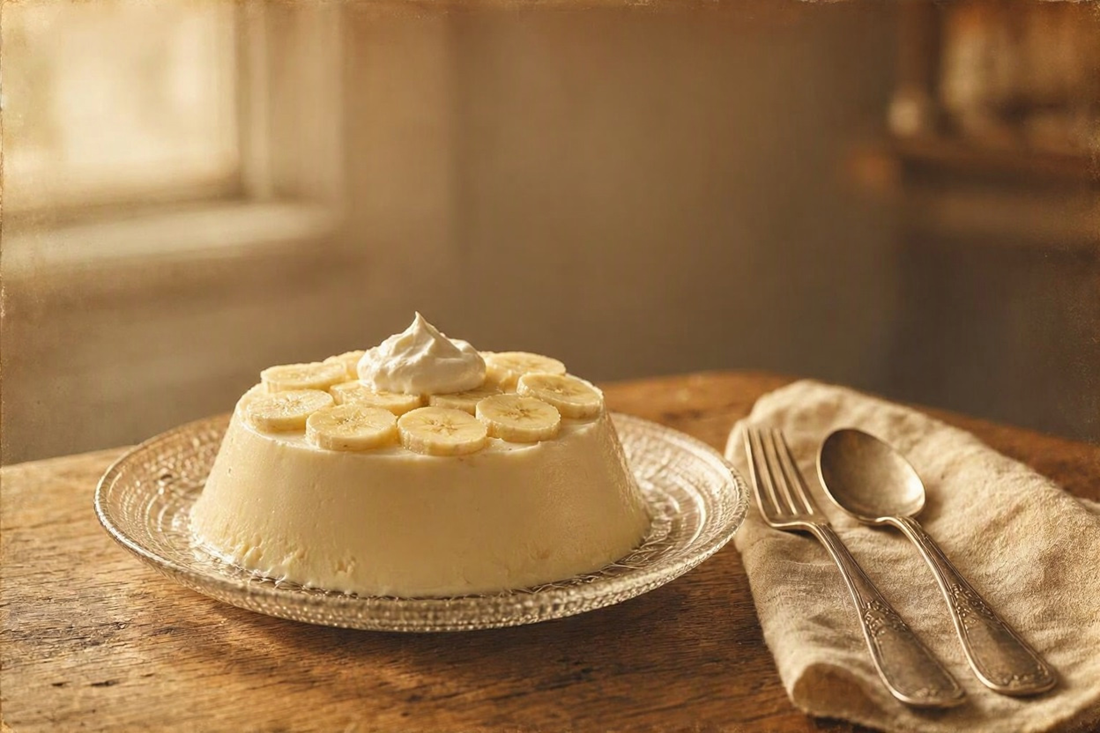
Banana Cream
A chilled, molded custard cream with rum, lemon, and thin banana slices, lightened with whipped cream and unmolded onto a plate to serve.
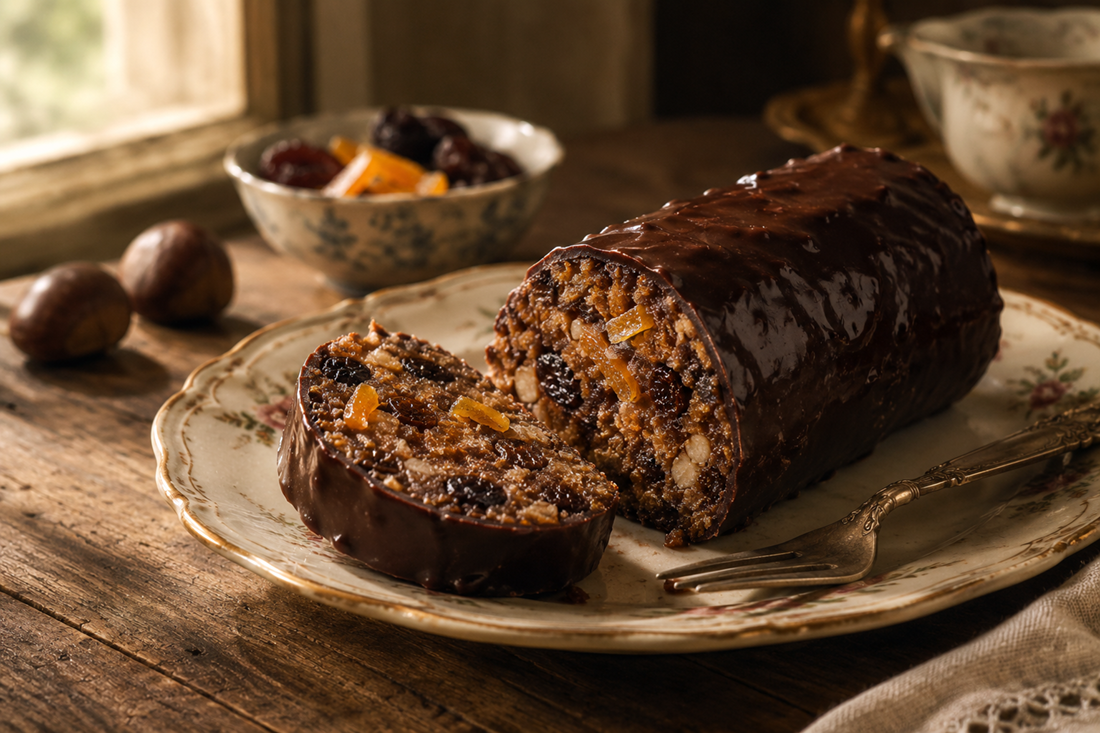
Chestnut Roll with Chocolate Glaze
A dense, no-bake chestnut confection studded with candied citrus peel, dates, and raisins, and finished with a glossy dark chocolate glaze.