Veal Schnitzels Baked with Eggs and Sour Cream
Breaded veal schnitzels layered with fresh eggs, topped with sour cream and baked covered until tender — a rich, hearty main course.
Quick Summary
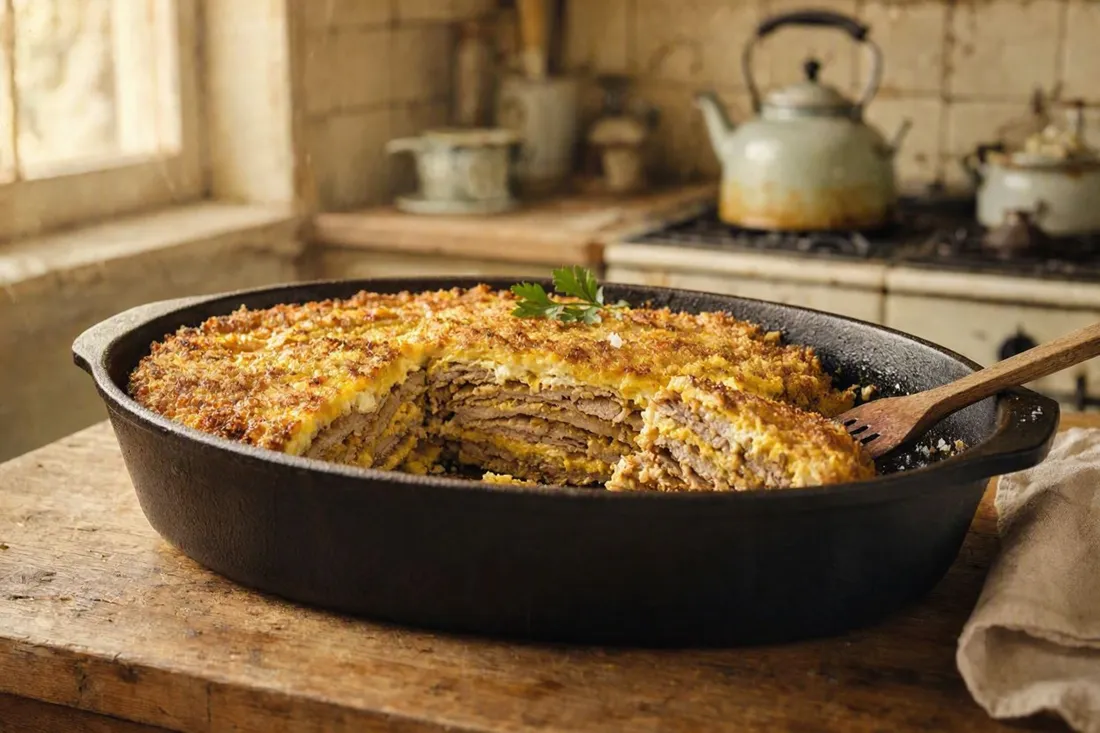
Thin breaded veal schnitzels are layered in a covered baking dish with fresh eggs cracked between each layer, then topped with sour cream and slow-baked until tender. The eggs set into the layers as it bakes, making a rich, custardy main course best served with a generous salad.
Historical recipe
Modernised adaptation of an early 20th‑century source. Not independently kitchen-tested by Attic Recipes. Quantities, temperatures, and food safety guidance have been updated for a contemporary kitchen — results may vary and errors may exist. Nutritional values, where provided, are estimates only and have not been laboratory tested. Always follow current food safety guidelines for your region. If you have a health condition, allergy, or dietary requirement, consult a qualified professional before preparing this recipe.
Use of this recipe is entirely at your own risk and subject to our Terms of Service and Privacy Policy. Attic Recipes accepts no liability for any adverse outcome.
- Eggs
- Dairy
- Gluten
Additional notes
-
Warning
This dish combines raw veal and raw eggs before baking. Both must be fully cooked through, reaching an internal temperature of 74°C (165°F) at the center of the dish, before serving. This is especially important for pregnant women, young children, older adults, and anyone with a weakened immune system.
-
Note
This is a rich dish, high in cholesterol and saturated fat from the eggs, lard, and sour cream. Those managing cholesterol or cardiovascular conditions may want a smaller portion.
- 1
Wash and pat dry the veal, then cut it into thin schnitzels. Pound each schnitzel with a meat mallet, season with the salt, then coat in the breadcrumbs.
- 2
Melt the lard in the baking dish over low heat, or in a small pan and pour it in, until fully hot.
- 3
Arrange a layer of breaded schnitzels over the bottom of the dish, covering it completely.
- 4
Crack 3 of the eggs directly over this layer of schnitzels.
Tip Break the eggs close to the surface so the yolks stay mostly intact between the layers. - 5
Arrange a second layer of schnitzels over the eggs, then crack the remaining 3 eggs over this layer.
- 6
Finish with a final layer of schnitzels on top.
- 7
Pour the sour cream evenly over the top layer, cover the dish tightly, and bake in a preheated oven until the meat is cooked through and the eggs have set, about 50-60 minutes.
Tip Both the veal and the eggs must be fully cooked before serving — internal temperature should reach 74°C (165°F) at the center of the dish. This is especially important for pregnant women, young children, older adults, and anyone with a weakened immune system. - 8
Serve hot, straight from the baking dish, with a generous portion of salad on the side.
Nutrition Information per 1 serving (approx 380g)
Nutritional values are approximate estimates and may vary based on specific ingredients used, preparation methods, and portion sizes.
Serving Suggestions
Serve hot, straight from the dish, with a generous, sharply dressed salad alongside to cut through the richness of the eggs, cream, and breaded meat.
About This Recipe
Breaded veal schnitzels usually mean a quick pan-fry, but this version takes a slower, oven-based route: layers of pounded, breaded schnitzels are stacked with fresh eggs cracked between them, then finished under a blanket of sour cream and baked covered until everything sets together. What comes out of the oven is closer to a savory baked casserole than a plate of individual cutlets — tender meat, set egg, and a tangy cream topping in every layer.
It’s a practical dish in the way a lot of period home cooking was: it uses an everyday cut of veal, stretches it further with breadcrumbs and eggs, and needs very little attention once it goes into the oven, apart from the salad served alongside.
Why It Works
Baking the schnitzels covered keeps the meat from drying out while the eggs slowly set around it rather than scrambling, the way they would over direct heat. Layering the schnitzels with eggs between each one means every portion gets a bit of set egg running through it, not just a layer on top. The sour cream poured over the final layer bastes the whole dish as it bakes and thickens slightly into a light sauce that clings to the meat when served.
Modern Kitchen Tips
A wide, shallow baking dish works better than a deep, narrow one — it lets the layers set evenly and makes serving easier. If your dish doesn’t have a lid, a double layer of foil crimped tightly around the edges does the job. Let the dish rest 5-10 minutes out of the oven before serving; it makes cutting and plating the layers much cleaner.
A classic of early 20th century home cooking, preserved and adapted for the modern kitchen.
The Story Behind This Recipe
Historical Context
Layering breaded schnitzels with eggs and finishing under sour cream before a slow covered bake was a way to turn an everyday cut of veal into a substantial main course without extra fuss at the table — the dish went straight from a covered pot in the oven to serving. Home cooks of the period commonly used a bread roll crushed into coarse crumbs for the coating rather than fine store-bought breadcrumbs, giving the schnitzels a slightly heartier crust once baked.
Modern Kitchen Adaptation
A traditional covered clay baking pot works well here, but any large oven-safe dish with a tight lid — a Dutch oven, a cast-iron braiser, or a ceramic baker covered tightly with foil — gives the same slow, even, covered bake. The number of eggs used between the layers and the amount of sour cream were not specified and have been estimated at 6 eggs total and 250ml of sour cream, enough to set into each layer and coat the top generously. Lard can be replaced with butter or a neutral oil. Because this dish combines raw egg with raw veal before baking, both must be fully cooked through by the time it comes out of the oven — check the center of the dish, not just the edges.
This recipe is an independent modern adaptation developed from historical sources in the public domain. It is provided for informational and educational purposes only and does not constitute professional dietary, nutritional, or medical advice. Food preparation involves inherent risks. The reader assumes full responsibility for safe food handling, ingredient sourcing, and adherence to current local food safety guidelines. The site operator accepts no liability for outcomes resulting from the preparation or consumption of this recipe.
One recipe.
Every week.
You Might Also Like
More recipes you'll enjoy
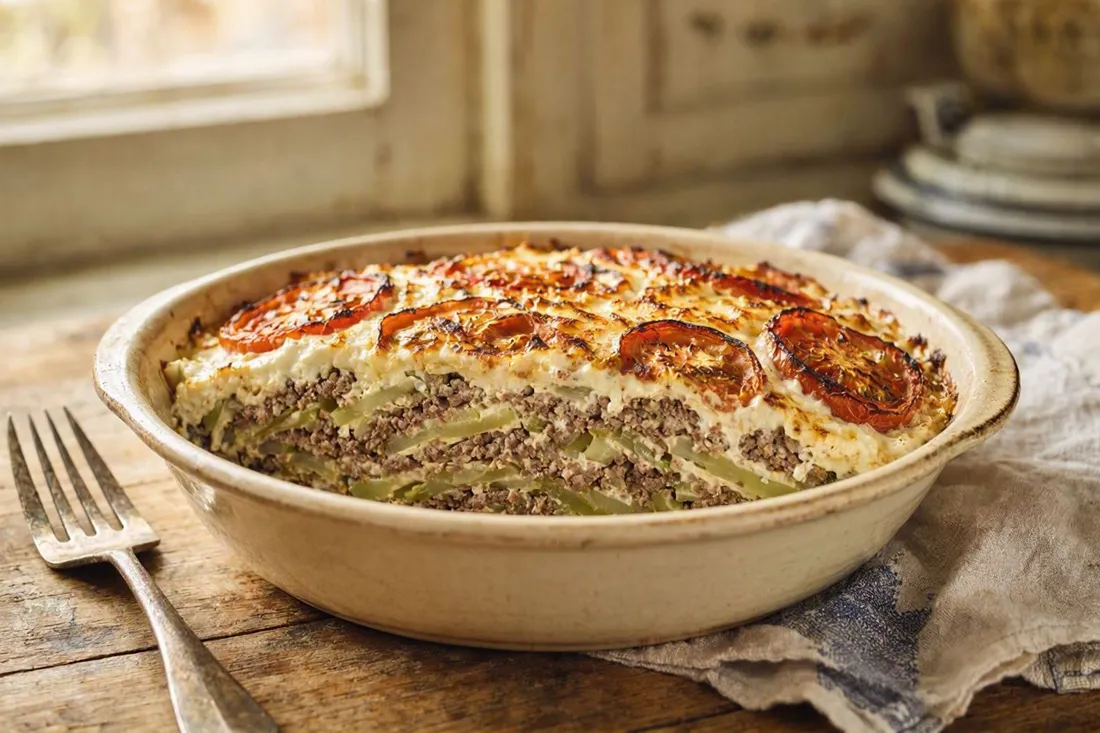
Kohlrabi and Veal Musaka
A layered casserole of braised kohlrabi and seasoned ground veal, baked under sour cream and tomato - a comforting vintage Central European dish.
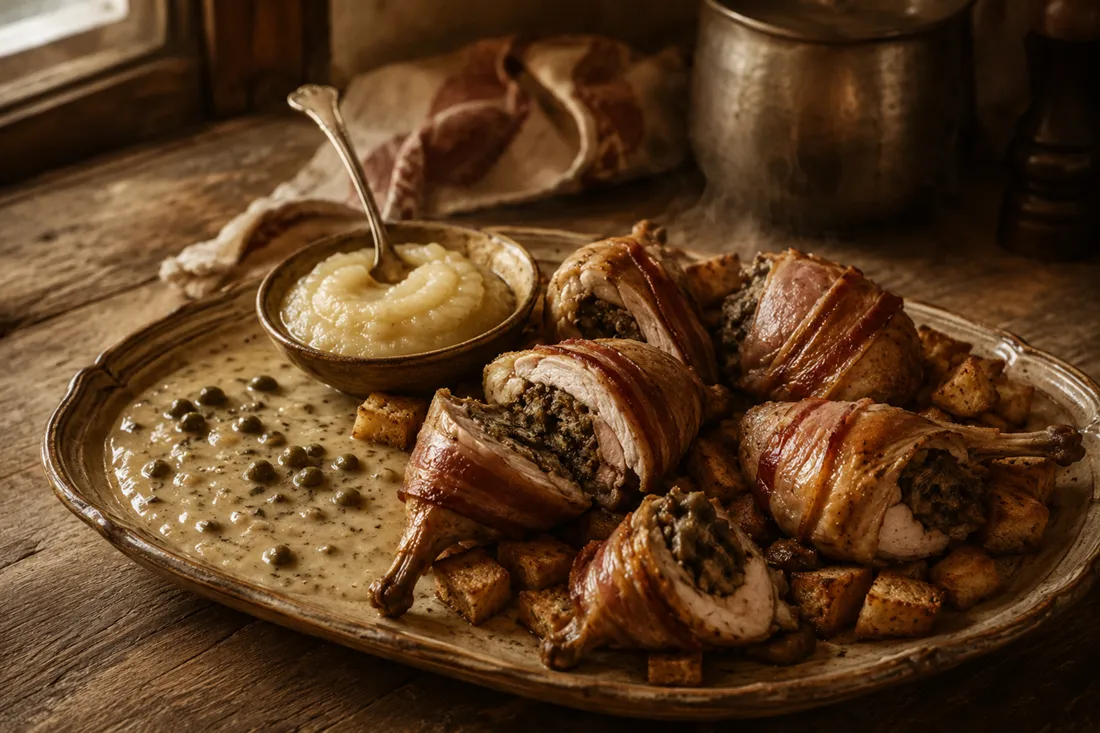
Partridge Stuffed with Mushrooms
Whole partridges wine-marinated, stuffed with mushroom-cognac filling, bacon-wrapped and roasted, served with caper sauce and apple puree.
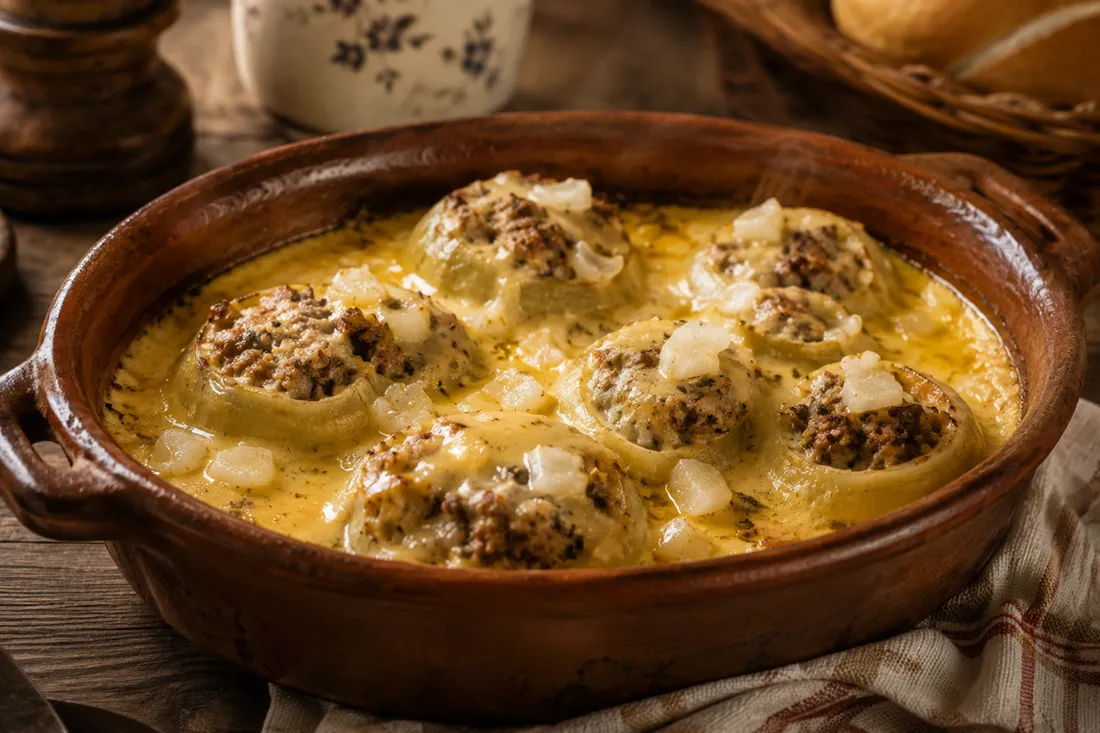
Stuffed Cucumbers in Lemon Sauce
Large cucumbers filled with seasoned ground meat, braised with bacon and root vegetables, then finished in a tangy lemon sauce - a savory main course.