Partridge Stuffed with Mushrooms
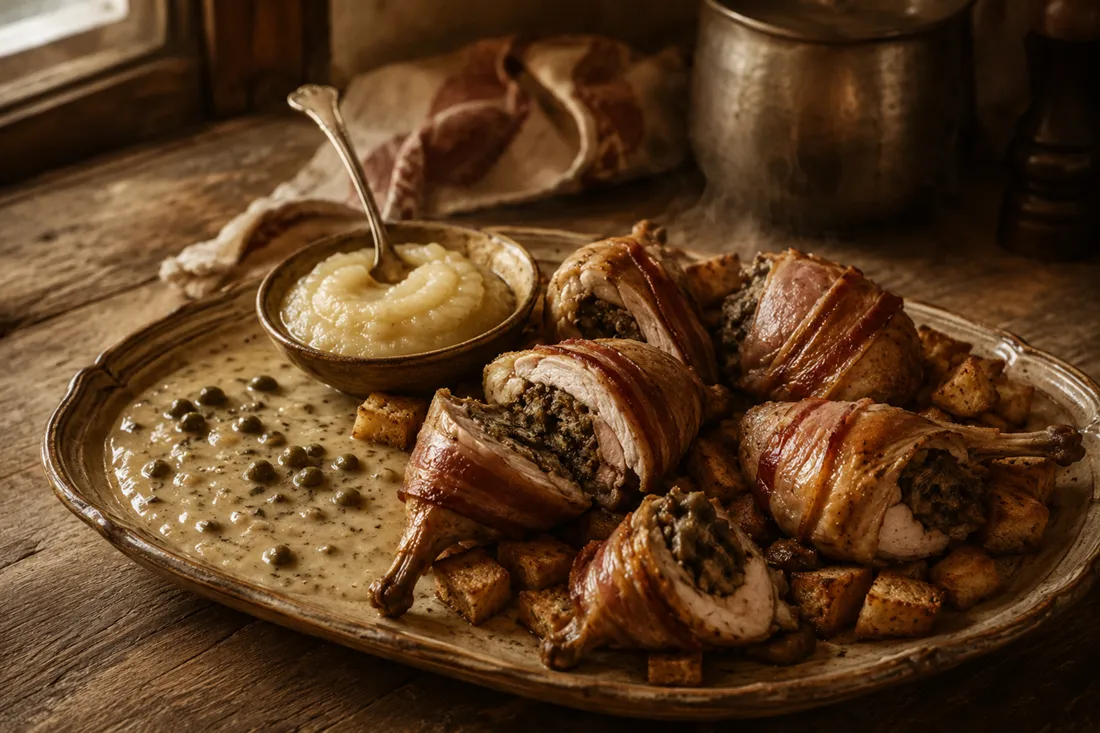
Whole partridges wine-marinated, stuffed with mushroom-cognac filling, bacon-wrapped and roasted, served with caper sauce and apple puree.
Quick Summary
Whole partridges are wine-marinated, then stuffed with a mushroom, parsley, and cognac filling before being wrapped in bacon and roasted. The dish is finished with a caper cream sauce over fried croutons, served alongside a lightly sweetened apple puree.
Historical recipe
Modernised adaptation of an early 20th‑century source. Not independently kitchen-tested by Attic Recipes. Quantities, temperatures, and food safety guidance have been updated for a contemporary kitchen — results may vary and errors may exist. Nutritional values, where provided, are estimates only and have not been laboratory tested. Always follow current food safety guidelines for your region. If you have a health condition, allergy, or dietary requirement, consult a qualified professional before preparing this recipe.
Use of this recipe is entirely at your own risk and subject to our Terms of Service and Privacy Policy. Attic Recipes accepts no liability for any adverse outcome.
- Dairy
- Gluten
- Sulphites
Additional notes
-
Warning
Partridge and other game birds must be cooked to a minimum internal temperature of 74°C (165°F) in the thickest part of the thigh. This is especially important for pregnant women, young children, older adults, and anyone with a weakened immune system.
-
Note
This dish contains alcohol in both the marinade and the filling. Most of the alcohol cooks off during roasting, but a small amount may remain. Those who are pregnant, avoiding alcohol, or serving children should take this into account.
-
Note
This is a rich dish, high in saturated fat from the butter, bacon, and cream. Those managing cholesterol or cardiovascular conditions may want a smaller portion.
- 1
Combine the red wine, onion, garlic, bay leaf, peppercorns, juniper berries, and thyme in a pot. Bring to a boil, then simmer 5 minutes.
- 2
Remove from heat, stir in the vinegar and salt, and cool the marinade completely.
Tip Never pour a warm or hot marinade over raw meat. - 3
Place the partridges in a glass, ceramic, or plastic dish and pour the cooled marinade over them, making sure they are as submerged as possible. Cover and refrigerate 12-24 hours, turning occasionally.
- 4
Remove the partridges from the marinade and pat dry thoroughly with paper towels.
Tip Discard the used marinade; it has been in contact with raw poultry and should not be reused as a sauce base without boiling it separately. - 5
For the filling, wash the mushrooms in water acidulated with the lemon juice, then slice thin.
- 6
Bring the 1 l water to a boil and blanch the mushroom slices briefly, about 1 minute, then drain well.
- 7
Melt the 50g butter in a pan, add the mushrooms, and sauté. Season with the salt and white pepper, then stir in the parsley, 1 tbsp sour cream, and cognac. Cook 2-3 minutes and let cool slightly before handling.
- 8
Divide the mushroom filling evenly among the 4 partridge cavities.
- 9
Sew or skewer the openings closed to secure the filling, then wrap each partridge with 2 bacon slices and tie with kitchen twine.
- 10
Preheat the oven to 180°C (350°F) / 160°C fan. Place the partridges on a rack in a covered roasting dish, scattering the soup vegetables around them. Roast covered for 35 minutes, then uncover and continue roasting 10-15 minutes, until the skin is golden.
Tip Game birds must reach a minimum internal temperature of 74°C (165°F) in the thickest part of the thigh before serving, especially important for pregnant women, young children, older adults, and anyone with a weakened immune system. - 11
Remove the partridges and let rest 10 minutes. Reserve the pan juices and roasted vegetables for the sauce.
- 12
Puree the roasted soup vegetables through a sieve or in a blender. Combine with the 150ml strained pan juices in a small saucepan, add the 1 tsp lemon juice, and simmer 5 minutes. Stir in the capers and 2 tbsp sour cream and warm through.
Tip Once the cream is added, keep the sauce below a boil to prevent it from splitting. - 13
Fry the bread slices in the 30g butter until golden on both sides, making croutons.
- 14
Cook the diced apples with the sugar and 2 tbsp water until soft, then mash or blend smooth. Keep warm.
- 15
Untie the partridges and cut each into quarters. Arrange each crouton with a partridge quarter on top, plate together, and spoon the caper sauce alongside. Serve the apple puree separately in a small bowl.
Nutrition Information per 1 serving (approx 420g)
Nutritional values are approximate estimates and may vary based on specific ingredients used, preparation methods, and portion sizes.
Serving Suggestions
Serve immediately while the croutons are still crisp, with the sauce spooned alongside rather than over the top so it does not soften them, and the apple puree offered in its own small bowl. A robust dry red wine, similar to the one used in the marinade, pairs well.
About This Recipe
Stuffed partridge belonged to the repertoire of dishes reserved for company dinners and holiday tables in the early 20th century — a whole bird, wine-marinated overnight, filled with a mushroom stuffing, wrapped in bacon, and roasted until the skin turns golden. The final plating, with each quartered bird arranged over a fried crouton and finished with a bright caper sauce, turns a simple roast into a formal course.
What makes this version interesting is the layering of techniques within a single dish: a wine marinade to tenderize and season, a mushroom filling enriched with cream and cognac in place of the giblet stuffings more typical of the period, a covered roasting method that keeps the bird from drying out, and a pan-sauce built from the very vegetables roasted alongside it.
Why It Works
Roasting the partridges covered for the first part of cooking, then finishing uncovered, allows the birds to stay moist through most of the cooking time while still developing color and crisp skin at the end. The bacon wrap bastes the lean meat as it renders, and the mushroom filling — cooked through before stuffing — adds moisture from the inside as well. Building the sauce from the pan juices and the same root vegetables roasted underneath the birds means nothing goes to waste, and the capers and sour cream added at the end cut through the richness of the bacon and filling.
Modern Kitchen Tips
If sourcing whole partridge proves difficult, Cornish hens or quail roast well using the same method, adjusting time down for smaller birds. The sauce can be made a little ahead and gently rewarmed, but always add the sour cream at the very end and keep it below a simmer. A stand mixer or blender makes quick work of pureeing the roasted vegetables for the sauce if a fine sieve isn’t on hand.
A classic of early 20th century home cooking, preserved and adapted for the modern kitchen.
The Story Behind This Recipe
Historical Context
Marinating game birds in wine with aromatics such as bay leaf, peppercorns, and juniper berries was standard practice in Central European game cookery, both to tenderize the meat and to soften its stronger flavor before roasting. Home cooks of the period often plated stuffed game as a formal course, cutting a whole bird into quarters and arranging each piece on a fried crouton — a presentation reserved for company dinners and holiday tables rather than everyday meals. The mushroom stuffing given here took the place of the giblet-based stuffing more commonly used at the time, whenever those interior organs were not available or preferred.
Modern Kitchen Adaptation
Wild partridge can be difficult to source today; Cornish hens or quail make a reasonably close modern substitute, adjusting roasting time for size. The marinade has been simplified from a more elaborate modern reconstruction of the period style down to its essential elements — wine, aromatics, and a touch of acid — with the carrot omitted as unnecessary in a marinade for a bird this size, and the cognac kept only in the filling rather than duplicated in the marinade. Quantities for salt, pepper, parsley, the cognac measure, the vegetable and pan-juice amounts for the sauce, and the sugar for the apple puree were not specified in the original and have been estimated based on standard technique for dishes of this type. The covered clay pot (đuveč) called for in the original can be replaced with any covered roasting dish or Dutch oven. Butter is used throughout in place of lard, matching the original's own use of butter rather than lard for this dish. Sour cream should be pasteurized, and poultry must always be cooked to a safe internal temperature.
This recipe is an independent modern adaptation developed from historical sources in the public domain. It is provided for informational and educational purposes only and does not constitute professional dietary, nutritional, or medical advice. Food preparation involves inherent risks. The reader assumes full responsibility for safe food handling, ingredient sourcing, and adherence to current local food safety guidelines. The site operator accepts no liability for outcomes resulting from the preparation or consumption of this recipe.
One recipe.
Every week.
You Might Also Like
More recipes you'll enjoy
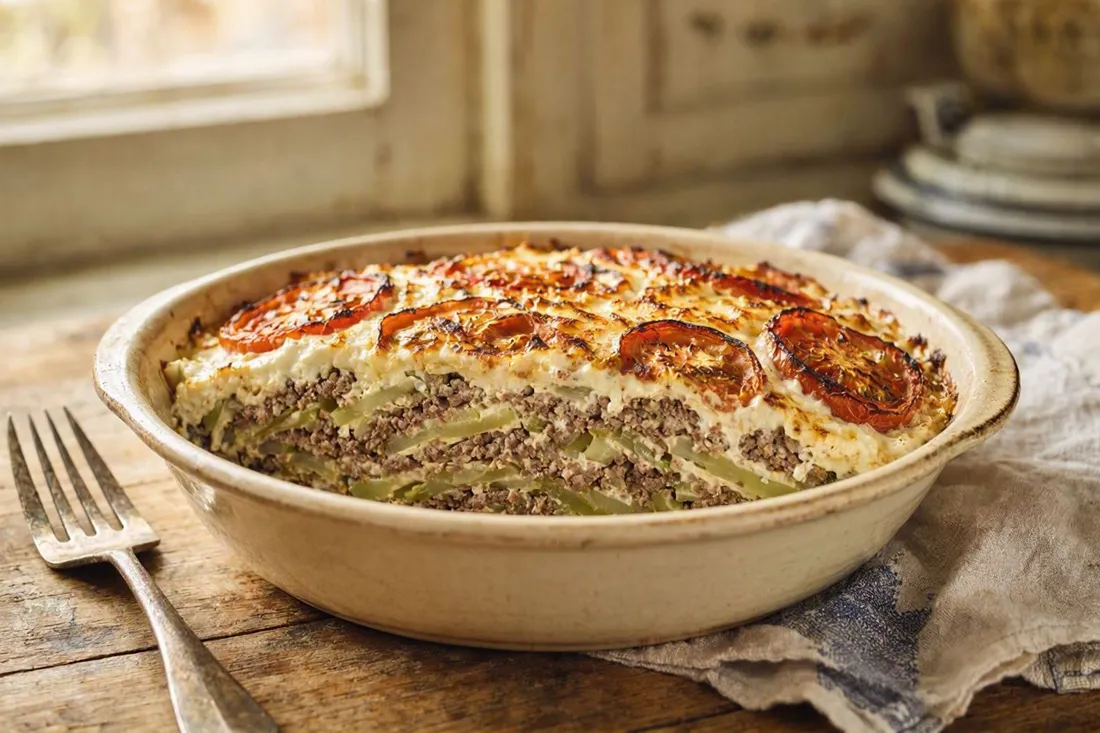
Kohlrabi and Veal Musaka
A layered casserole of braised kohlrabi and seasoned ground veal, baked under sour cream and tomato - a comforting vintage Central European dish.
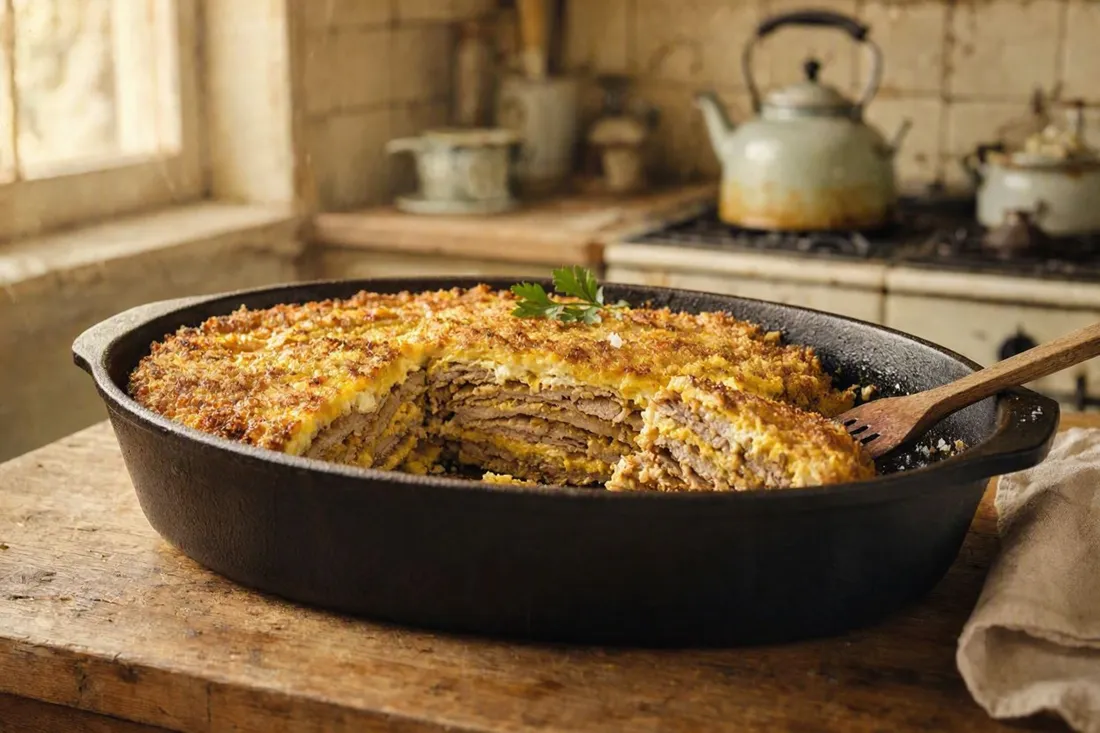
Veal Schnitzels Baked with Eggs and Sour Cream
Breaded veal schnitzels layered with fresh eggs, topped with sour cream and baked covered until tender — a rich, hearty main course.
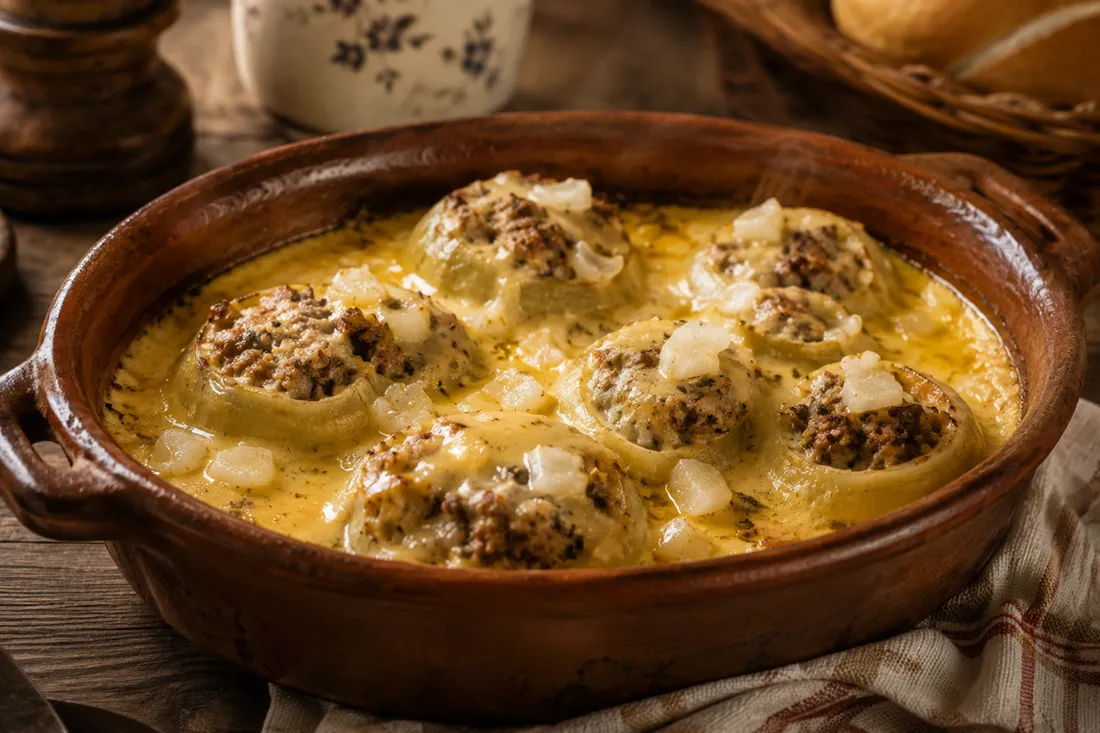
Stuffed Cucumbers in Lemon Sauce
Large cucumbers filled with seasoned ground meat, braised with bacon and root vegetables, then finished in a tangy lemon sauce - a savory main course.