Vanilla Ice Cream
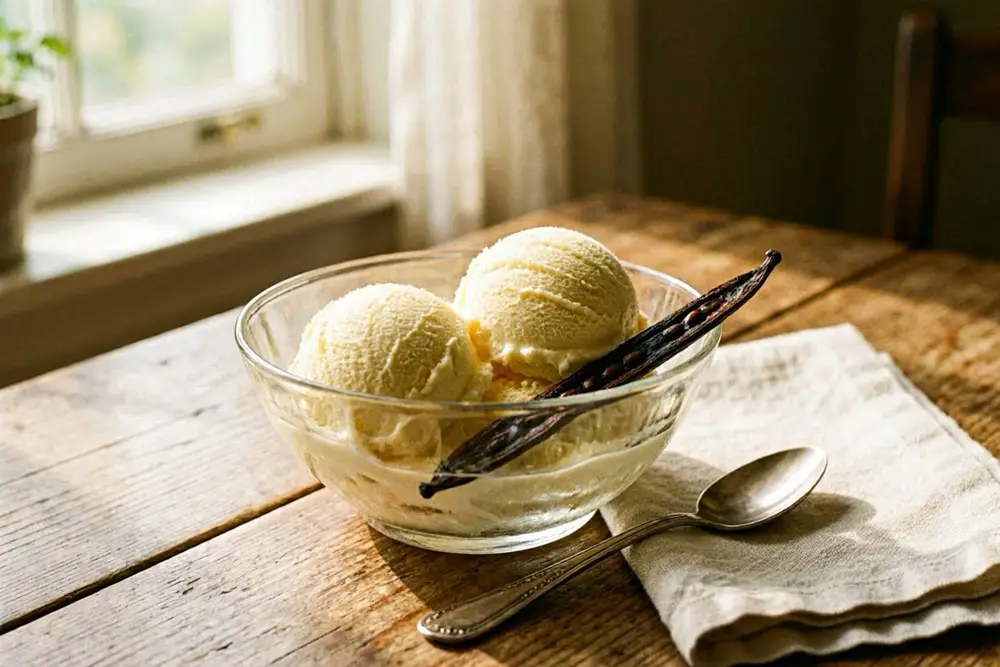
A rich vanilla ice cream made from a cooked egg yolk custard base — an early 20th century home recipe churned to a smooth, creamy finish.
Quick Summary
A Central European vanilla ice cream made from a cooked egg yolk custard base churned to a smooth finish. Takes 35 minutes total. High yolk emulsification and precise heat control prevent ice crystals, yielding a dense, fine-grained texture.
Historical recipe
Modernised adaptation of an early 20th‑century source. Not independently kitchen-tested by Attic Recipes. Quantities, temperatures, and food safety guidance have been updated for a contemporary kitchen — results may vary and errors may exist. Nutritional values, where provided, are estimates only and have not been laboratory tested. Always follow current food safety guidelines for your region. If you have a health condition, allergy, or dietary requirement, consult a qualified professional before preparing this recipe.
Use of this recipe is entirely at your own risk and subject to our Terms of Service and Privacy Policy. Attic Recipes accepts no liability for any adverse outcome.
- Eggs
- Dairy
Additional notes
-
Warning
This recipe contains egg yolks that must be cooked to a minimum internal temperature of 74°C (165°F) to be safe for consumption. Use a kitchen thermometer to verify the custard temperature. Pregnant women, children under 18, older adults, and immunocompromised individuals are at increased risk from undercooked egg and should ensure the custard reaches the full 74°C before removing from the heat.
-
Note
Each serving contains approximately 13g of saturated fat, above the recommended daily limit for a single serving. This dessert is intended as an occasional treat.
- 1
Split the vanilla pod lengthwise with a sharp knife and scrape out the seeds. Place both the seeds and the empty pod into a heavy-bottomed saucepan with the 500ml of heavy cream. Set over medium-low heat and warm until the cream is steaming and just beginning to tremble at the edges — do not allow it to boil. Remove from the heat and leave to infuse for 10 minutes. Remove and discard the vanilla pod.
Tip The longer infusion gives a deeper vanilla flavour. If time allows, infuse the pod in the cold cream for 1–2 hours in the refrigerator before heating. - 2
In a heatproof bowl, whisk together the 3 egg yolks and the 200g of sugar until the mixture is pale, slightly thickened, and the sugar has mostly dissolved — about 2 minutes of vigorous whisking.
- 3
Temper the egg yolks: slowly pour a ladleful of the warm vanilla cream into the yolk-sugar mixture while whisking constantly. Add a second ladleful and whisk again. This gradually raises the temperature of the yolks without scrambling them.
- 4
Pour the tempered yolk mixture back into the saucepan with the remaining cream. Set over medium-low heat and cook, stirring constantly with a wooden spoon or heatproof spatula, scraping the bottom and sides of the pan. Cook until the custard reaches 74°C (165°F) on a kitchen thermometer and coats the back of a spoon — a finger drawn across the coated spoon should leave a clean line. This takes approximately 8–10 minutes. Do not allow the custard to boil.
Tip If you do not have a thermometer, use the spoon test: the custard is ready when it is thick enough to coat the back of a spoon and a line drawn through it holds its shape. Remove from heat immediately at this point. - 5
Remove the saucepan from the heat immediately. Pass the custard through a fine-mesh sieve into a clean bowl to remove any cooked egg particles and ensure a perfectly smooth base. Stir frequently as the custard cools to room temperature, then cover with cling film pressed directly onto the surface to prevent a skin from forming. Refrigerate until fully cold — at least 2 hours, or overnight.
- 6
Pour the cold custard base into your ice cream maker and churn according to the manufacturer's instructions until the ice cream is thick, creamy, and holds its shape — typically 20–30 minutes depending on the machine. Transfer to a freezer-safe container, cover, and freeze for a minimum of 2 hours before serving to allow the ice cream to firm up fully.
- 7
Remove the ice cream from the freezer 5 minutes before serving to allow it to soften slightly. Scoop into bowls or glasses and serve immediately.
Nutrition Information per 1 serving (approx. 125ml, based on 6 servings)
Nutritional values are approximate estimates and may vary based on specific ingredients used, preparation methods, and portion sizes.
Serving Suggestions
Serve on its own or alongside a warm fruit compote — poached peaches or cherries complement the vanilla particularly well. A thin wafer biscuit alongside is traditional.
About This Recipe
There is a particular quality to ice cream made from a cooked custard base — a richness and smoothness that a simpler cream-and-sugar mixture cannot quite replicate. The egg yolks do two things at once: they emulsify the fat in the cream, producing a texture that is dense without being heavy, and they contribute a faint, rounded depth of flavour that sits just beneath the vanilla. The result is something noticeably different from commercial ice cream, and deliberately so.
This recipe is essentially a crème anglaise — a classic cooked egg custard — churned into ice cream. The technique requires attention at the stove: the custard must reach 74°C to be both safe and properly thickened, but must not boil, which would scramble the yolks and ruin the texture. A kitchen thermometer removes the guesswork. Without one, the spoon test is reliable enough: the custard is ready when it coats the back of a spoon and a finger drawn through it leaves a clean, stable line.
The vanilla pod is the only flavouring. Split it, scrape the seeds into the cream, and let both the seeds and the empty pod infuse together — the pod itself carries aromatic compounds that the seeds alone do not. The finished ice cream is pale gold, faintly floral, and straightforwardly good.
Why It Works
Ice cream made with egg yolks — a French-style or custard-based ice cream — behaves differently in the freezer than one made without. The lecithin in the yolks acts as an emulsifier, binding the fat and water in the cream into a stable, fine-grained mixture. This produces smaller ice crystals during churning, which translates directly into a smoother texture in the finished scoop.
The sugar serves two purposes: sweetness, and freezing-point depression. Sugar lowers the temperature at which the mixture freezes, which keeps the ice cream scoopable rather than rock-hard at normal freezer temperatures. The 200g specified here is calibrated for this effect as much as for taste.
Churning introduces air and breaks up ice crystals as they form, which is why a no-churn alternative produces a denser, icier result. The more slowly and evenly the mixture freezes during churning, the finer the final texture.
Modern Kitchen Tips
- No ice cream maker: Pour the cold custard base into a shallow freezer-safe container and freeze. Every 45 minutes for the first 3 hours, remove from the freezer and beat vigorously with a fork or hand mixer to break up ice crystals. The texture will be slightly icier than churned ice cream but entirely acceptable.
- Custard safety: If the custard begins to look grainy or lumpy, remove from the heat immediately and plunge the base of the saucepan into a bowl of cold water while whisking rapidly. Pass through a fine sieve — in most cases the texture can be recovered.
- Make-ahead: The custard base can be made up to 48 hours ahead and kept refrigerated. Churn just before needed.
- Vanilla: Use a plump, moist vanilla pod rather than a dry one. A spent pod that has already been scraped can be added to the cream for additional aroma — it will not contribute seeds, but the pod itself still carries flavour.
A classic of early 20th century home cooking, preserved and adapted for the modern kitchen.
The Story Behind This Recipe
Historical Context
Early 20th century recipes for vanilla ice cream of this type were built on a cooked egg custard base — what French technique calls a crème anglaise — rather than a simple cream-and-sugar mixture. Home cooks of the period used heavy cream specifically, which provided both the fat content and the body needed for a smooth churn without stabilisers. The original instruction called for everything to be combined from the start and brought to a boil, which reflects a less precise understanding of egg coagulation than modern food science requires; the dish was nonetheless well established in middle-class Central European households as a dessert worth the effort. Hand-cranked ice cream makers, or packing the mixture in a metal container surrounded by ice and salt, were the standard domestic methods.
Modern Kitchen Adaptation
The original method combined all ingredients at once and brought the mixture to a full boil — a technique that risks scrambling the egg yolks and produces a grainy texture. This version applies the standard custard technique: the cream is heated separately, the yolks are tempered before combining, and the custard is cooked only to 74°C (165°F), the safe pasterisation threshold for egg yolk. The vanilla pod is split and infused in the warm cream rather than simply added whole, which produces a significantly more aromatic result. A fine-mesh sieve pass after cooking ensures a perfectly smooth base regardless of minor egg coagulation during cooking.
This recipe is an independent modern adaptation developed from historical sources in the public domain. It is provided for informational and educational purposes only and does not constitute professional dietary, nutritional, or medical advice. Food preparation involves inherent risks. The reader assumes full responsibility for safe food handling, ingredient sourcing, and adherence to current local food safety guidelines. The site operator accepts no liability for outcomes resulting from the preparation or consumption of this recipe.
One recipe.
Every week.
You Might Also Like
More recipes you'll enjoy
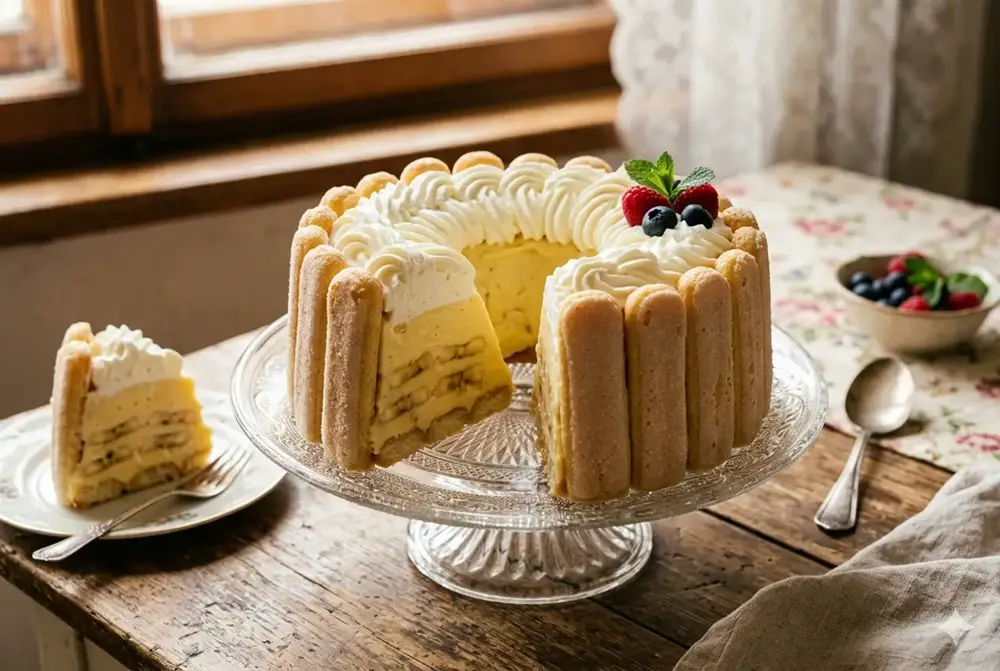
Yellow Bundt Cake with Bananas
Ladyfingers soaked in rum and milk, layered with ripe banana slices and a rich vanilla egg yolk custard, set in a bundt mould and finished with whipped cream.
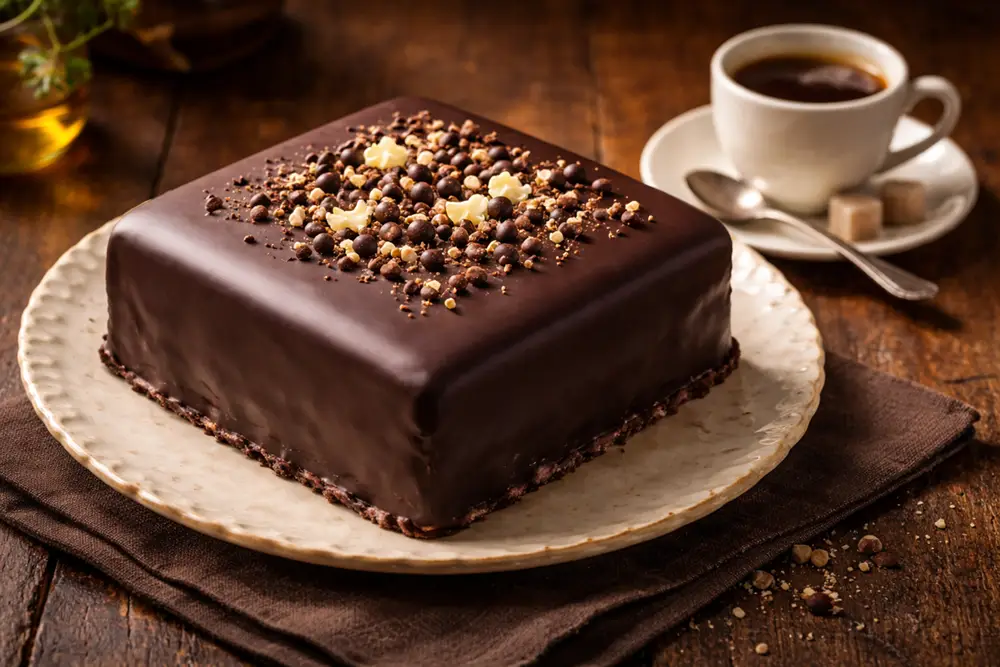
Warsaw Almond and Chocolate Torte
A flourless no-bake torte of boiled egg yolks, ground almonds, and dark chocolate, filled with Italian meringue and almond cream, glazed with chocolate.
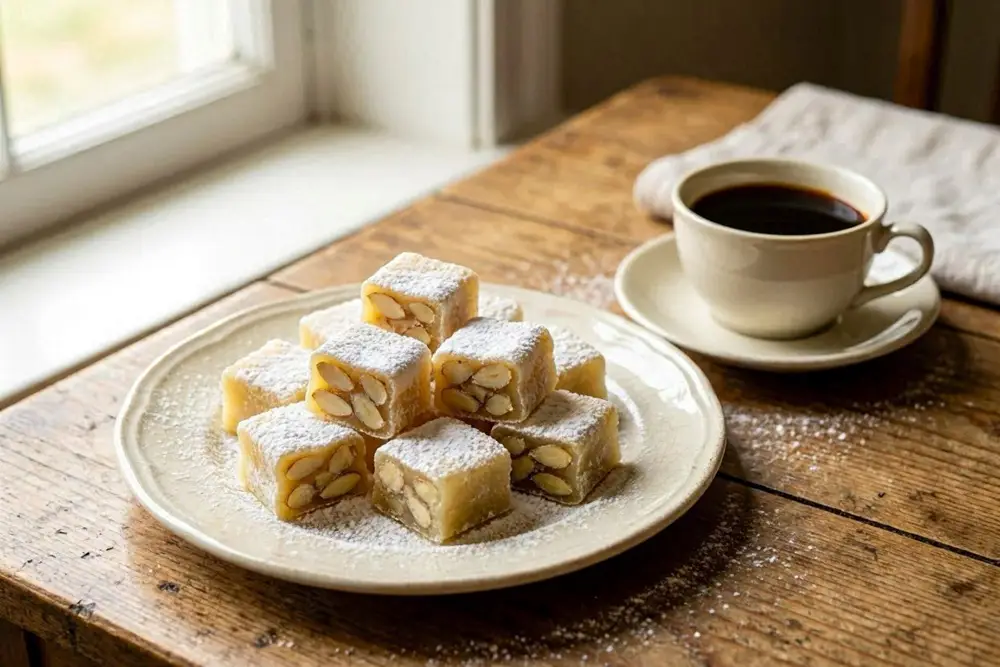
Turkish Delight with Almonds and Bergamot
A slow-cooked Central European confection made with potato starch, bergamot essence, lemon, and whole almonds.