Sweet Curd Cheese Pancakes
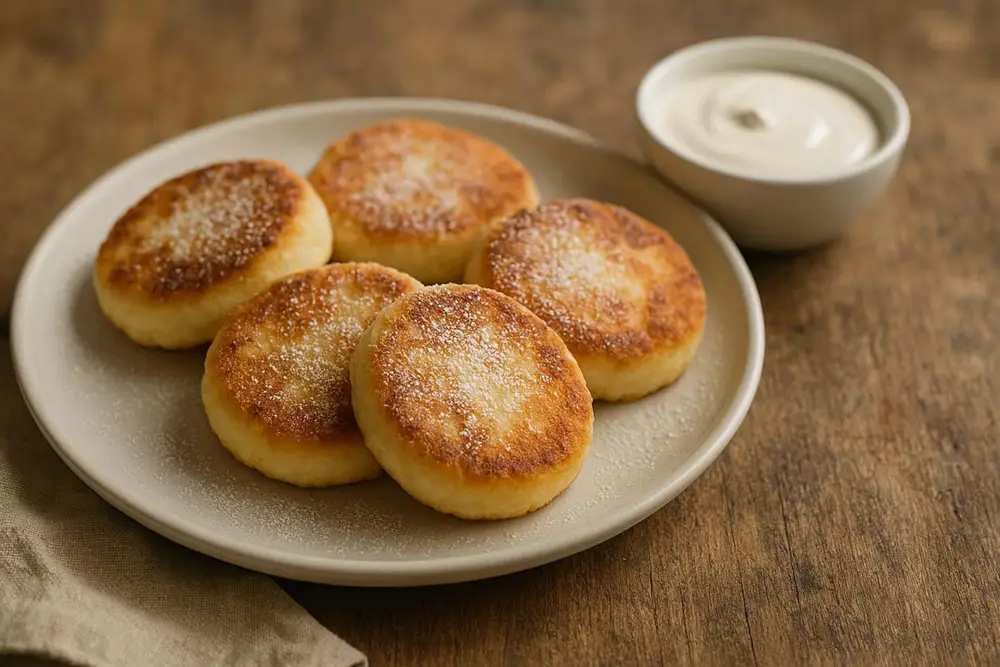
Pan-fried cakes of fresh curd cheese, eggs, flour, and a little sugar — a classic sweet course from the early 20th century Central European home kitchen.
Historical recipe
Modernised adaptation of an early 20th‑century source. Not independently kitchen-tested by Attic Recipes. Quantities, temperatures, and food safety guidance have been updated for a contemporary kitchen — results may vary and errors may exist. Nutritional values, where provided, are estimates only and have not been laboratory tested. Always follow current food safety guidelines for your region. If you have a health condition, allergy, or dietary requirement, consult a qualified professional before preparing this recipe.
Use of this recipe is entirely at your own risk and subject to our Terms of Service and Privacy Policy. Attic Recipes accepts no liability for any adverse outcome.
- Eggs
- Dairy
- Gluten
Additional notes
-
Warning
This recipe contains whole eggs cooked through in the pan. Ensure the cakes reach an internal temperature of at least 71°C (160°F) before serving. Not recommended for pregnant women, young children, elderly, or immunocompromised individuals unless eggs are fully cooked through — check by pressing the center: it should feel firm, not soft.
-
Note
This dish has a moderately high saturated fat content from butter and full-fat dairy (approx. 8g per serving). Those managing cardiovascular health should be aware.
- 1
Place the 500g curd cheese in a large bowl. If the cheese is wet, drain it through a cheesecloth or fine sieve first until it holds its shape when pressed. Pass the drained cheese through a fine sieve or mash thoroughly with a fork until smooth with no large lumps.
Tip Excess moisture is the main reason these pancakes fall apart in the pan. The mixture should feel soft but not sticky. - 2
Add the 2 whole eggs, 1.5 tbsp sour cream, 50g flour, and 25g sugar to the cheese. Mix until a soft, cohesive dough forms. It will be slightly sticky — this is correct. Do not add more flour than needed to bring it together.
- 3
Lightly flour your hands and a work surface. Portion the mixture into approximately 10 equal pieces (about 75g each). Roll each piece into a ball, then flatten gently into a round cake about 2cm thick.
- 4
Heat 2 tbsp butter in a wide frying pan over medium heat until foaming subsides. Working in batches, place the cakes in the pan without crowding. Fry for 3–4 minutes on the first side until deep golden brown, then flip carefully and fry for a further 3–4 minutes on the second side.
Tip Resist the urge to press down on the cakes or move them before the crust forms — they will release naturally from the pan when ready to flip. - 5
Transfer to a warm plate. Add more butter between batches as needed. Serve warm, dusted with caster sugar, with sour cream on the side.
Nutrition Information per 1 serving (approx. 2 cakes, 150g)
Nutritional values are approximate estimates and may vary based on specific ingredients used, preparation methods, and portion sizes.
Serving Suggestions
Serve warm immediately from the pan — these do not improve with sitting. Dust with caster sugar and serve sour cream alongside for dipping. Fresh berries or a spoonful of fruit preserve are consistent with the period and work well as additions. Honey is a modern alternative to sugar for serving.
About This Recipe
Fresh curd cheese, two eggs, a spoonful of sour cream, a little flour and sugar — pressed into rounds and fried in butter until golden. This is one of those recipes that has barely changed in a century because it has no reason to. The same combination appears across the region under different names and with minor variations, but the logic is always the same: cheese that is soft enough to shape, firm enough to hold, and rich enough that a dusting of sugar and a spoonful of cold sour cream is all it needs.
The original recipe placed this as a “third course” — the sweet course of the midday meal, not a breakfast item as modern versions are often presented. That framing matters: these are not thick, bready pancakes but delicate, cheese-forward cakes where the flour plays a supporting role, not a structural one. The texture should be soft in the center with a golden, slightly crisp exterior.
The one technique the original specified — passing the cheese through cheesecloth — is worth taking seriously. Dry cheese makes the difference between a cake that holds its shape in the pan and one that collapses.
Why It Works
The sieve step is not optional for wet cheese. Curd cheese varies significantly in moisture content depending on brand and style. A wet mixture will spread in the pan rather than hold its shape; passing the cheese through a sieve or pressing it through cheesecloth removes enough whey to give the dough structure without adding extra flour, which would make the cakes dense and bready.
The eggs bind, the flour sets the structure minimally, and the sour cream adds a slight tang that keeps the sweetness in check. The ratio of cheese to flour is deliberately high — roughly 10:1 — which is what keeps the texture firmly in the cheese category rather than the pancake category.
Frying in butter at medium heat is essential. Too high and the exterior burns before the egg sets through; too low and the cakes absorb fat and become heavy. The crust forms first, and the cake will release naturally from the pan when it is ready to turn.
Modern Kitchen Tips
- Cheese choice: Quark is the most reliable option — consistent moisture content, smooth texture, widely available. Farmer’s cheese works well. Tvaroh (Czech/Slovak style) is ideal if accessible. Avoid ricotta unless drained overnight — it is too wet as sold.
- Wet mixture rescue: If the mixture feels unworkably sticky after mixing, add flour one teaspoon at a time — no more than an extra tablespoon total before the texture suffers.
- Shaping: Lightly floured hands make shaping much easier. The cakes should be about 2cm thick — thicker and the center will not cook through; thinner and they dry out.
- Make-ahead: The uncooked shaped cakes can be refrigerated on a floured tray for up to 2 hours before frying. Do not freeze uncooked — the texture suffers.
- Leftovers: Reheat in a dry non-stick pan over low heat. Microwaving makes them rubbery.
A sweet curd cheese cake from the early 20th century Central European home kitchen, preserved and adapted for the modern table.
The Story Behind This Recipe
Historical Context
Early 20th century recipes for this type of sweet cheese cake called for cow's curd cheese passed through cheesecloth — a technique that both drained excess moisture and homogenized the texture, producing a smoother dough than simply mashing. Home cooks of the period used the cheese in its fresh, unaged form, made from whole milk and still slightly warm from draining. No quantity of butter was specified for frying; the pan was simply heated with butter as needed. The dish was classified as a sweet third course — the dessert position at the midday meal — and served with sour cream and a dusting of sugar, a combination that was standard across the region.
Modern Kitchen Adaptation
Quantities have been halved from the original 1kg of cheese to yield approximately 5 servings; all proportions are scaled accordingly. The cheesecloth-passing technique has been replaced with passing through a fine sieve or thorough mashing with a fork, which achieves the same result in a modern kitchen. Butter quantity for frying is estimated at 2 tbsp and marked accordingly — add more between batches as needed. Lard was the period-appropriate frying fat; unsalted butter is used here for a cleaner flavor. Quark or farmer's cheese are the closest modern equivalents to the original cow's curd cheese; both work well. If only wet-style ricotta is available, drain it overnight through a cheesecloth before use.
This recipe is an independent modern adaptation developed from historical sources in the public domain. It is provided for informational and educational purposes only and does not constitute professional dietary, nutritional, or medical advice. Food preparation involves inherent risks. The reader assumes full responsibility for safe food handling, ingredient sourcing, and adherence to current local food safety guidelines. The site operator accepts no liability for outcomes resulting from the preparation or consumption of this recipe.
One recipe.
Every week.
You Might Also Like
More recipes from the same category
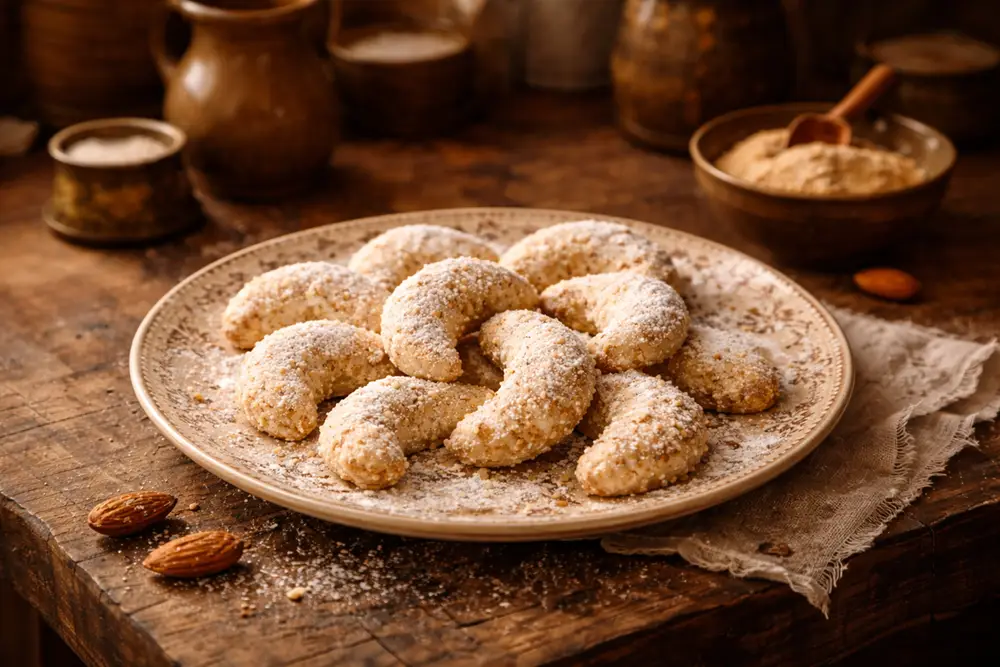
Almond Meringue Crescents
Crisp Central European confections of Swiss meringue shaped into crescents, coated in ground almonds, oven-dried until white and firm.
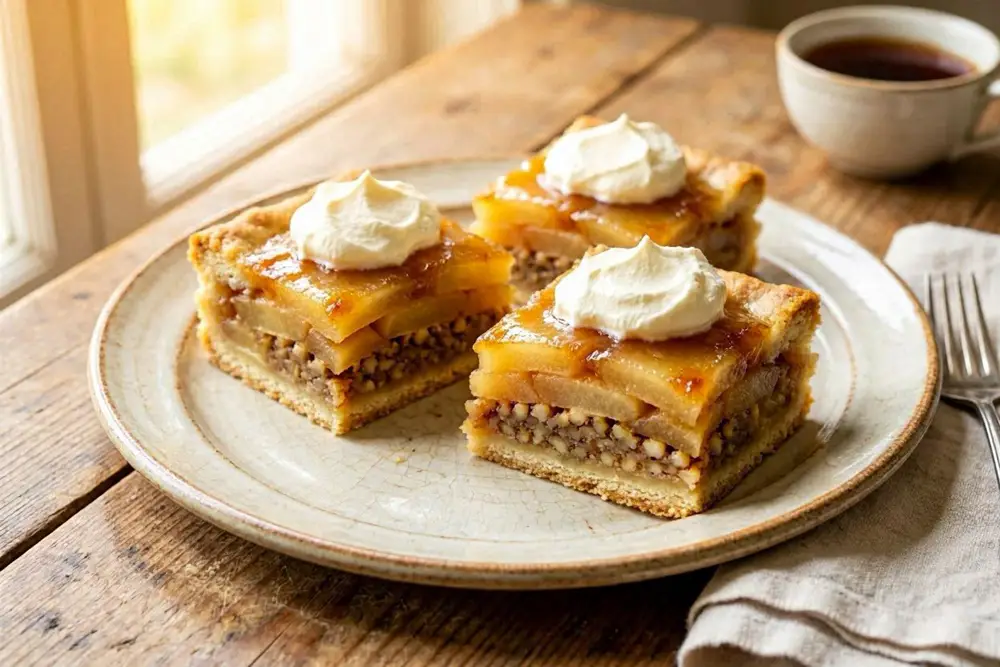
Apple Pie with Whipped Cream
A crisp almond shortcrust base layered with ground walnuts, poached apples, apricot jam, and a thick cloud of sweetened whipped cream.
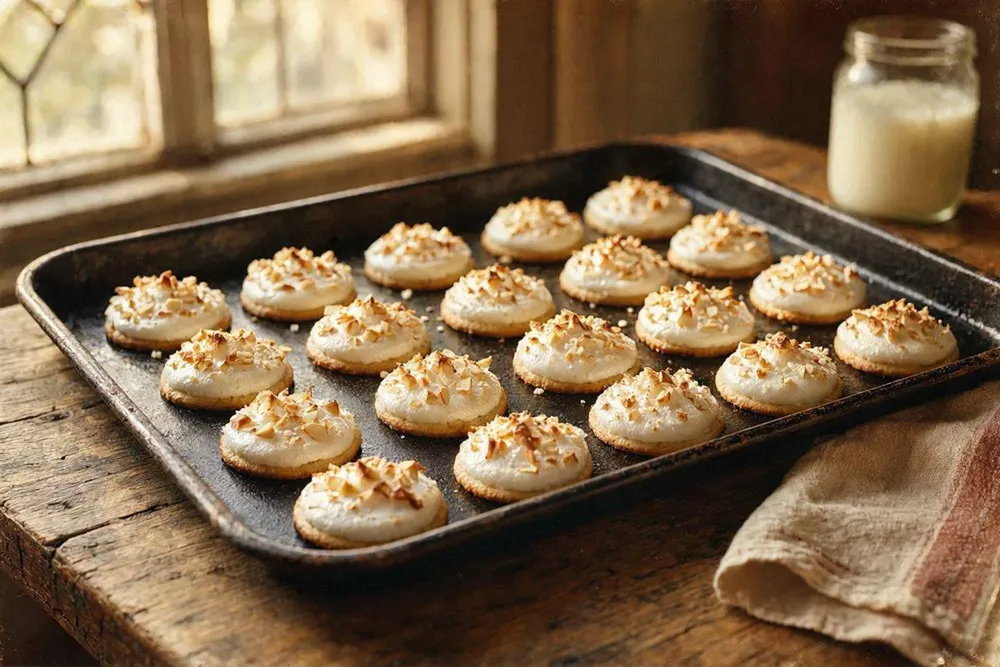
Almond Gurabije Cookies
Small lemon-scented cookies made with lard and egg yolk, indented in the center, coated in whipped egg white, and rolled in sugar and chopped almonds.