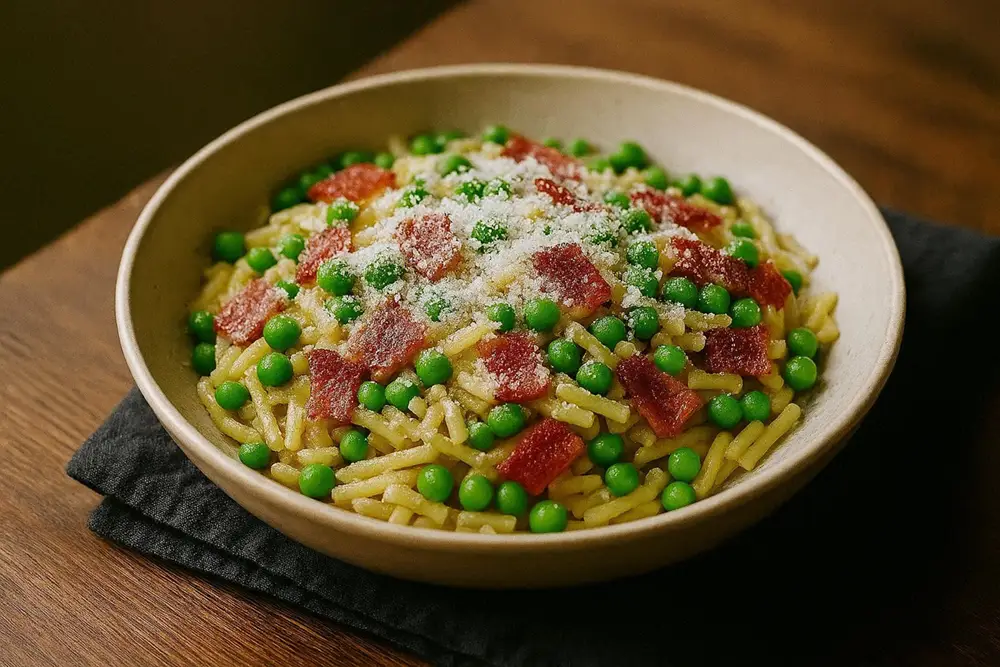
Spaghetti with Peas and Bacon
Broken spaghetti tossed with sweet peas, bacon, celery, and parsley. A Central European family dish — practical, hearty, and unapologetically weeknight.
Historical recipe
Modernised adaptation of an early 20th‑century source. Not independently kitchen-tested by Attic Recipes. Quantities, temperatures, and food safety guidance have been updated for a contemporary kitchen — results may vary and errors may exist. Nutritional values, where provided, are estimates only and have not been laboratory tested. Always follow current food safety guidelines for your region. If you have a health condition, allergy, or dietary requirement, consult a qualified professional before preparing this recipe.
Use of this recipe is entirely at your own risk and subject to our Terms of Service and Privacy Policy. Attic Recipes accepts no liability for any adverse outcome.
- Gluten
- Dairy
Additional notes
-
Note
This recipe contains bacon. Those following a low-sodium diet should note that bacon and salted pasta water contribute significant sodium — approximately 620mg per serving. Reduce or omit added salt in the pea mixture if using heavily salted bacon.
- 1
Finely chop the bacon, onion, garlic, celery, and parsley together until they form a coarse mixture — all pieces roughly the same small size so they cook evenly.
- 2
Heat the 2 tbsp oil in a large skillet over medium heat. Add the bacon and chopped vegetables. Cook, stirring occasionally, until everything is golden and the bacon fat has rendered, about 8–10 minutes.
Tip Don't rush this step. The golden colour means the onion and celery have sweetened and the bacon has crisped slightly — this is the flavour base for the whole dish. - 3
Add the 500g peas to the pan. Season with 1 tsp salt, stir well to coat in the fat and aromatics, and cook over medium-low heat for 8–10 minutes until the peas are tender. Add a splash of water if the pan looks dry.
- 4
Meanwhile, bring a large pot of well-salted water to a boil. Break the 500g spaghetti into pieces approximately 3–4 cm long directly over the pot. Cook until al dente according to package instructions, then drain, reserving one full ladle (approx. 100ml) of pasta water.
- 5
Add the drained spaghetti to the pan with the peas. Pour in the reserved pasta water. Toss everything together over medium heat for 1–2 minutes until the pasta is well coated and the liquid is absorbed.
Tip The starchy pasta water binds the peas and pasta into a cohesive dish. Without it, the mixture tends to be dry and the pasta separates from the peas. - 6
Serve immediately in shallow bowls or directly from the pan, topped with the 50g grated Parmesan.
Nutrition Information per 1 portion (approx. 320g)
Nutritional values are approximate estimates and may vary based on specific ingredients used, preparation methods, and portion sizes.
Serving Suggestions
Serve immediately — broken spaghetti absorbs the pea liquid quickly and the dish tightens up as it cools. A green salad and crusty bread alongside make this a complete meal. Leftovers reheat well with a splash of water stirred in.
About This Recipe
This recipe will offend exactly one kind of cook: the kind who believes spaghetti must never be broken. For everyone else, it makes immediate sense. The spaghetti is broken into short pieces — half a finger long — because short pasta tosses evenly with peas in a shallow pan, serves cleanly with a spoon at a family table, and doesn’t require twirling. It is a practical decision made by a practical cook, and it works.
The dish follows a structure that appears across Central European home cooking of the period: an aromatic base of finely chopped vegetables cooked in oil with bacon until golden, a vegetable added and cooked in the fat, and a starch tossed in at the end. The peas here are not a garnish — they are half the dish by weight, equal to the pasta, which tells you something about what this meal was: an economical way to stretch a modest amount of pasta and bacon into a satisfying family dinner for six.
Period recipes of this type offer Parmesan as the finishing touch, with no alternatives given — unlike other dishes of the era that immediately name local substitutes. Parmesan here is used as a seasoning, not a sauce, dusted over the finished dish.
Why It Works
The bacon does two things simultaneously: it seasons the base and renders fat that carries the flavour of the aromatic base. Onion, garlic, celery, and parsley cooked in bacon fat until golden become something sweeter and more complex than any of them alone. The peas then cook in this base, absorbing the fat and aromatics rather than being added to plain water.
Breaking the spaghetti is not a shortcut — it is the correct technique for this specific preparation. Long spaghetti tossed with round peas in a pan produces an uneven dish where the pasta clumps and the peas roll to the bottom. Short pieces of pasta and peas are roughly the same size and coat evenly. The starchy pasta water added at the end creates a light, clingy sauce from the fat already in the pan — no cream, no stock, no thickener.
Modern Kitchen Tips
Frozen peas work as well as fresh here, and arguably better out of season — they are blanched at peak sweetness and hold their colour through the pan cooking. If using fresh peas, taste one raw first; if starchy, add a splash of water and give them a few extra minutes.
Salt the pasta water generously — it is the primary seasoning for the spaghetti itself, since the pea mixture already has its own salt from the bacon and added seasoning.
The dish is best eaten immediately. Like all short pasta dishes with legumes, it tightens quickly as it sits and the pasta absorbs the remaining moisture.
A classic of early 20th century home cooking, preserved and adapted for the modern kitchen.
The Story Behind This Recipe
Historical Context
Home cooks of the period broke long pasta into short pieces as a practical measure — spaghetti was difficult to toss evenly with peas in a shallow pan, and short pasta could be served with a spoon at a family table without ceremony. This was standard practice in Central European kitchens adapting Italian pasta shapes to local serving styles and cookware. The 'black and white onion' in period recipes of this type refers to the spring combination of young green onion and young garlic, used when both were in season alongside fresh peas; yellow onion and garlic cloves are the year-round equivalent. Quantities for celery, parsley, and oil were not specified — these were assumed knowledge for any competent home cook of the era.
Modern Kitchen Adaptation
Celery quantity estimated at 2 stalks (approx. 100g), parsley at 20g, and oil at 2 tbsp — none were specified in the original. 'Black and white onion' interpreted as 1 medium yellow onion plus 2 garlic cloves, the closest year-round equivalent to the seasonal spring combination described. Reserved pasta water added in step 5 for binding — this technique was not mentioned in the original but is standard practice and significantly improves the final texture. Fresh or frozen peas are interchangeable; frozen peas are acceptable and consistent year-round.
This recipe is an independent modern adaptation developed from historical sources in the public domain. It is provided for informational and educational purposes only and does not constitute professional dietary, nutritional, or medical advice. Food preparation involves inherent risks. The reader assumes full responsibility for safe food handling, ingredient sourcing, and adherence to current local food safety guidelines. The site operator accepts no liability for outcomes resulting from the preparation or consumption of this recipe.
One recipe.
Every week.
You Might Also Like
More recipes from the same category
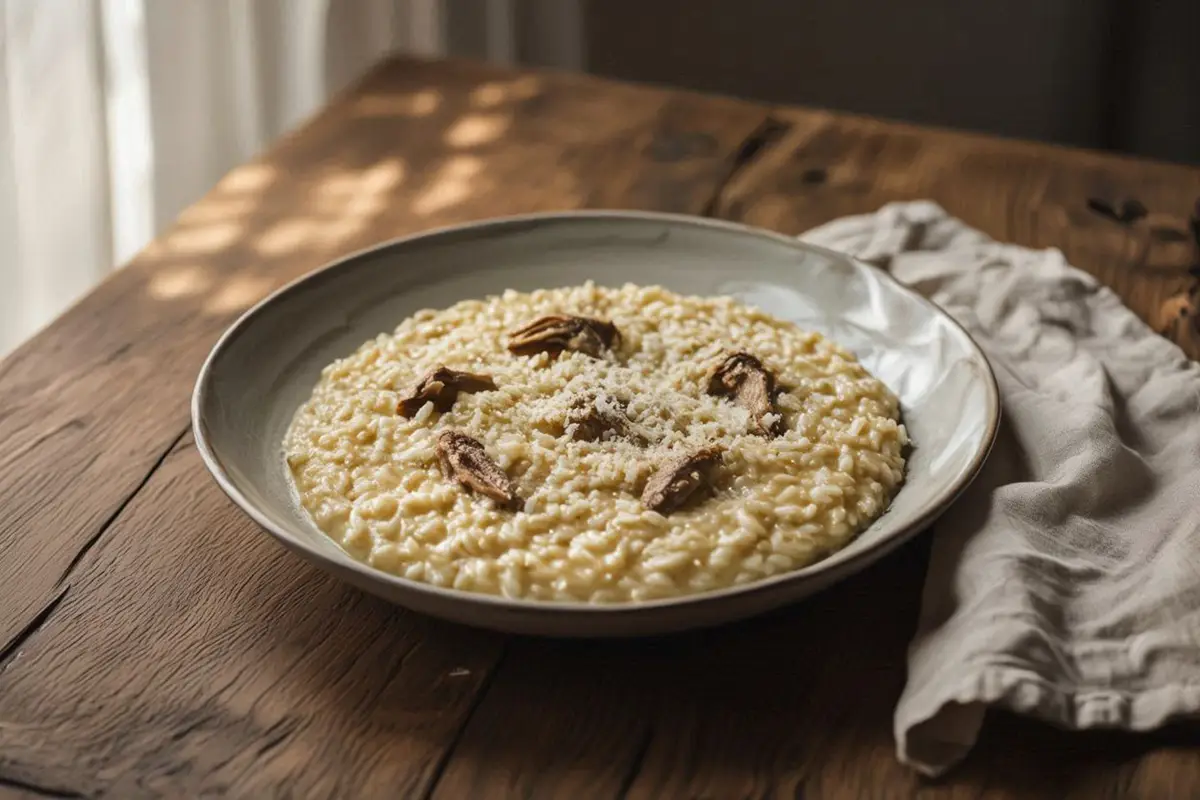
Frog Risotto (Risotto di Rane)
A rich pureed frog broth with tomato and aromatic vegetables, used as the cooking base for a deeply flavored Central European risotto.
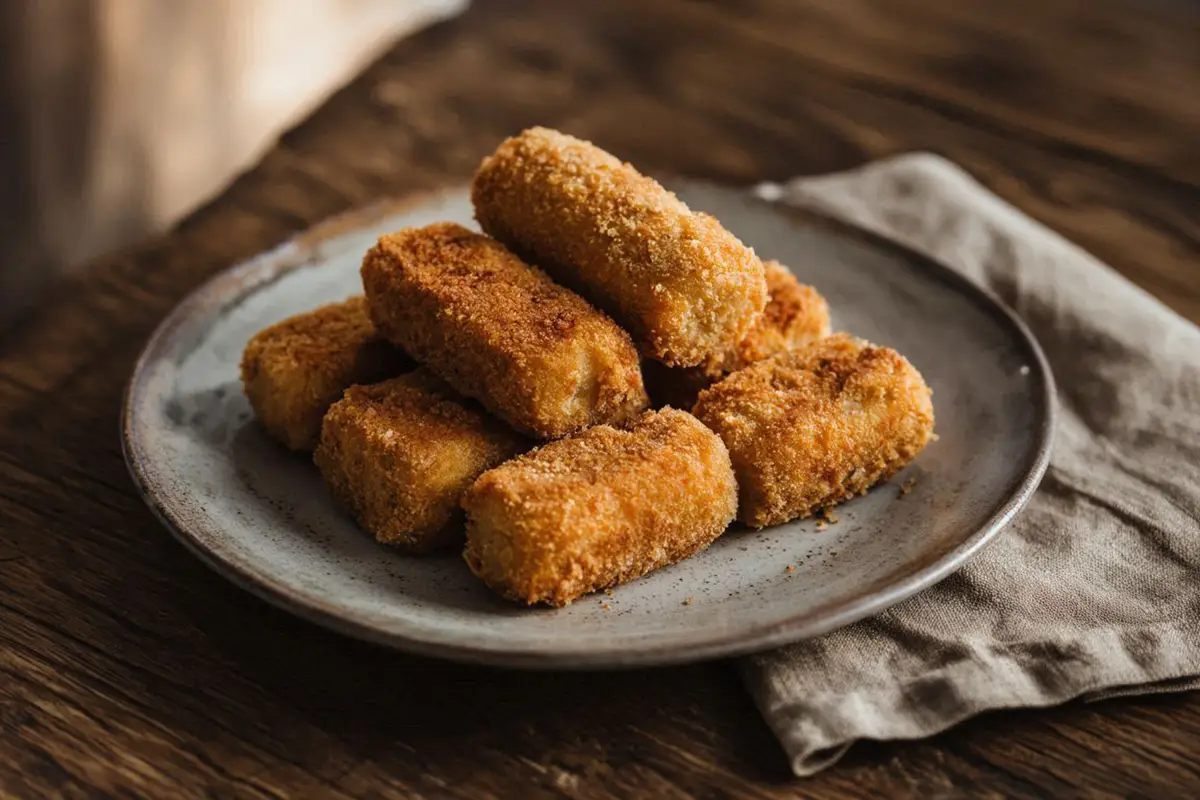
Mushroom and Rice Rolls
Crispy breaded rolls of earthy mushrooms and rice, bound with egg and parsley — a classic Central European side served alongside roast meats.
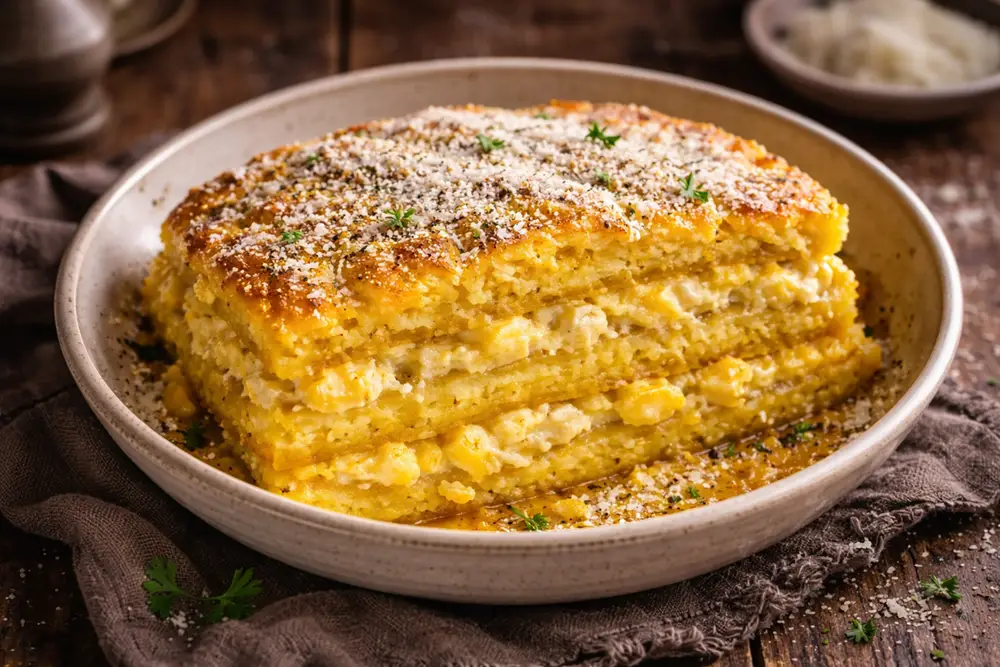
Layered Polenta with Parmesan and Scrambled Eggs
Firm polenta layered with grated hard cheese and soft scrambled eggs. A Central European home dish that turns humble cornmeal into a rich, satisfying meal.