Savory Choux Puffs for Soup
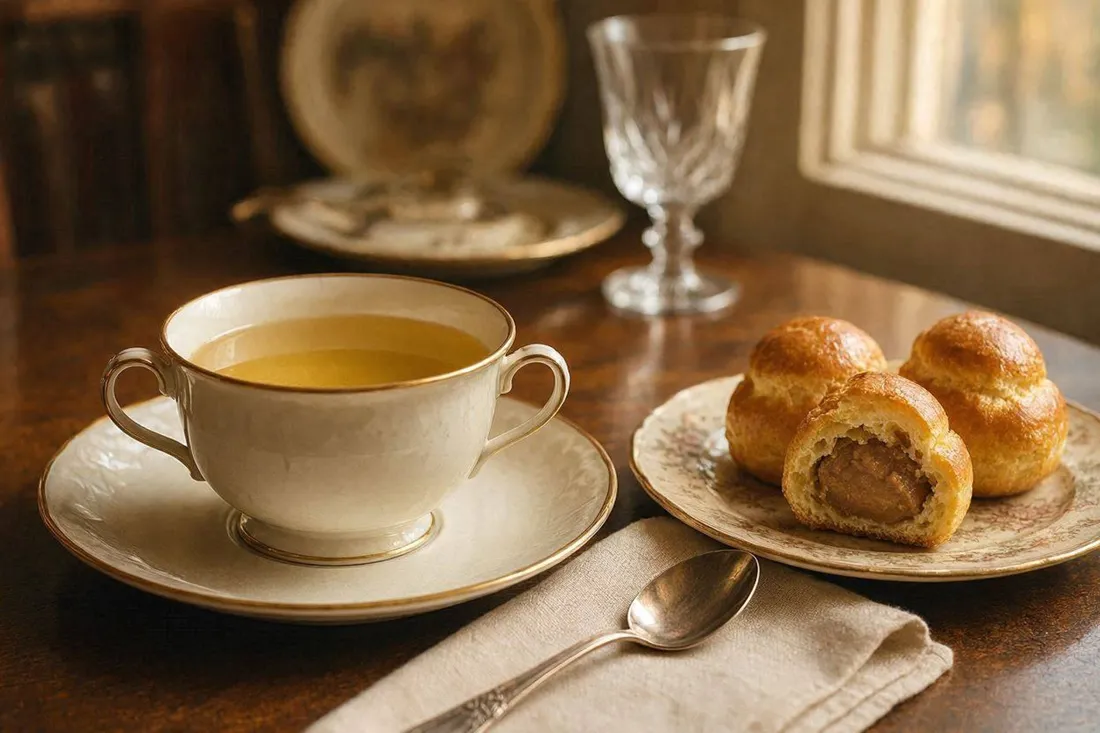
Small parmesan choux puffs baked until golden, hollowed out, and filled with a rich butter filling — served alongside a cup of clear soup.
Quick Summary
Small Central European choux pastry puffs baked until golden, then filled with a whipped butter mixture of goose liver pate, Roquefort, or lobster. Takes about 1.5 hours including resting time, and serves as a savory accompaniment to a cup of clear soup.
Historical recipe
Modernised adaptation of an early 20th‑century source. Not independently kitchen-tested by Attic Recipes. Quantities, temperatures, and food safety guidance have been updated for a contemporary kitchen — results may vary and errors may exist. Nutritional values, where provided, are estimates only and have not been laboratory tested. Always follow current food safety guidelines for your region. If you have a health condition, allergy, or dietary requirement, consult a qualified professional before preparing this recipe.
Use of this recipe is entirely at your own risk and subject to our Terms of Service and Privacy Policy. Attic Recipes accepts no liability for any adverse outcome.
- Eggs
- Dairy
- Gluten
Additional notes
-
Note
This recipe is high in saturated fat per serving, largely from the butter-based filling. Those managing saturated fat intake may wish to adjust portion size.
-
Note
If preparing the lobster filling option, shellfish becomes an allergen present in this dish, unlike the pâté or Roquefort options.
- 1
Combine the 200ml water, 50g butter, and 2g salt in a saucepan and bring to a boil.
- 2
Once boiling, add the 100g flour all at once, stirring constantly until the dough pulls away from the sides of the pan and forms a smooth ball with no lumps.
- 3
Remove from the heat and let cool for a couple of minutes.
- 4
Add the eggs one at a time, mixing vigorously after each addition, until the dough is smooth and glossy and falls from the spoon in a slow ribbon.
Tip Two eggs is usually enough, but if the dough still looks stiff and dull rather than glossy, beat a third egg separately and add it a little at a time until the texture is right. - 5
Stir in the 15g grated parmesan.
- 6
Grease the baking sheet with the 10g butter and dust with the 10g flour.
- 7
Using two spoons, shape the dough into small balls about the size of a walnut, spacing them apart on the sheet.
- 8
Let the shaped dough rest for 15 minutes before baking.
- 9
Preheat the oven to 200°C (392°F) / 180°C fan.
- 10
Bake for up to 30 minutes, until puffed and golden. Do not open the oven door for at least the first 10 minutes, as the puffs need this time to rise properly.
- 11
Let the puffs cool completely, about 20 minutes, before filling.
- 12
Meanwhile, whip the 100g butter for the filling until light and fluffy.
- 13
Fold in your choice of filling — pureed goose liver pâté, Roquefort cheese, or finely chopped cooked lobster meat — in equal proportion to the butter.
- 14
Once the puffs are completely cool, hollow out the bottom of each one and fill with the butter mixture using a spoon or piping bag.
- 15
Serve the filled puffs alongside soup, on a small plate next to the soup cup.
Nutrition Information per 5 filled choux puffs (approx 90g)
Nutritional values are approximate estimates and may vary based on specific ingredients used, preparation methods, and portion sizes.
Serving Suggestions
Serve alongside a cup of clear soup, such as our clear beef soup (consommé), with the filled puffs on a small side plate.
About This Recipe
These small choux puffs are built the same way as classic profiteroles, but the filling takes them in a savory direction — a whipped butter base folded with a rich addition of your choice: goose liver pâté, Roquefort, or lobster. They’re meant to sit on a side plate next to a cup of clear soup, offering something to bite into alongside a course that’s otherwise just broth.
Offering a choice of three fillings made this a flexible little dish that could be dressed up or down depending on the occasion, using whatever rich ingredient was on hand or fitting for the meal. The parmesan folded into the dough itself adds a savory backbone that works with any of the three filling options.
Why It Works
Choux dough gets its rise from steam, not a chemical leavener, which is why the initial burst of oven heat and the instruction not to open the door early matters so much — losing that heat too soon collapses the structure before it’s set. Cooling the puffs completely before filling keeps the whipped butter filling from melting and going greasy, so it stays light and holds its shape when piped or spooned in.
Modern Kitchen Tips
- Judge the eggs by texture, not just count — the dough should fall from a spoon in a slow ribbon, not plop off in a clump or run off too thin.
- If making the puffs ahead, bake and cool them, then store unfilled in an airtight container; fill just before serving so they stay crisp.
- A piping bag with a small round tip makes filling faster and neater than spooning, especially for a large batch.
A classic of early 20th century home cooking, preserved and adapted for the modern kitchen.
The Story Behind This Recipe
Historical Context
Small filled choux puffs like these were a familiar accompaniment to a clear soup course in Central European households of the period, offered on a side plate rather than added into the soup itself. Home cooks of the era typically offered a choice of rich fillings — a liver pâté, a blue cheese butter, or a seafood filling — depending on what was available and the occasion being marked.
Modern Kitchen Adaptation
No oven temperature or exact egg count was given in the period approach in a way that reliably produces a proper choux dough; the standard ratio for this amount of flour and liquid calls for closer to 2 full eggs, sometimes a partial third, rather than the 1 in the period range. The instructions describe the correct dough texture (smooth, glossy, falling in a ribbon) so the exact number of eggs can be judged by feel rather than a fixed count. Oven temperature has been estimated at a standard choux-baking temperature, since 'hot oven' alone isn't precise enough for reliable rising.
This recipe is an independent modern adaptation developed from historical sources in the public domain. It is provided for informational and educational purposes only and does not constitute professional dietary, nutritional, or medical advice. Food preparation involves inherent risks. The reader assumes full responsibility for safe food handling, ingredient sourcing, and adherence to current local food safety guidelines. The site operator accepts no liability for outcomes resulting from the preparation or consumption of this recipe.
One recipe.
Every week.
You Might Also Like
More recipes from the same category
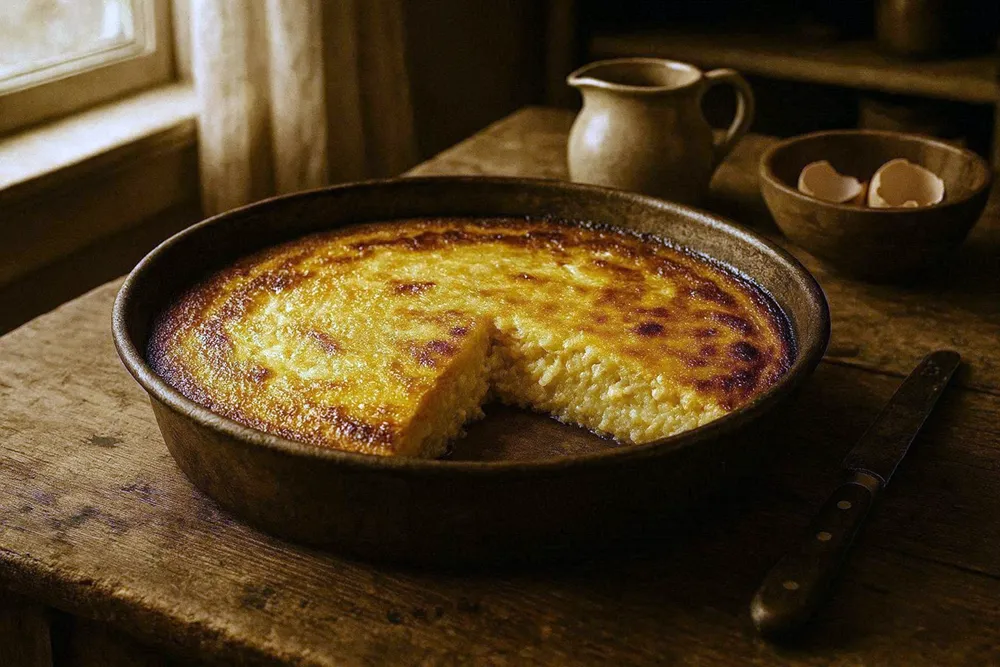
Baked Cornmeal Custard with Kajmak and Cheese
Known as razlevuša, this rustic bake pours a loose cornmeal, kajmak, cheese, and egg batter into a pan and bakes it until golden — a hearty, standalone dish.

Emmental Cheese Bars
Flaky millet pastry strips with Emmental, kajmak, egg yolks, and red pepper—savory tea snack from early 1900s Central Europe.
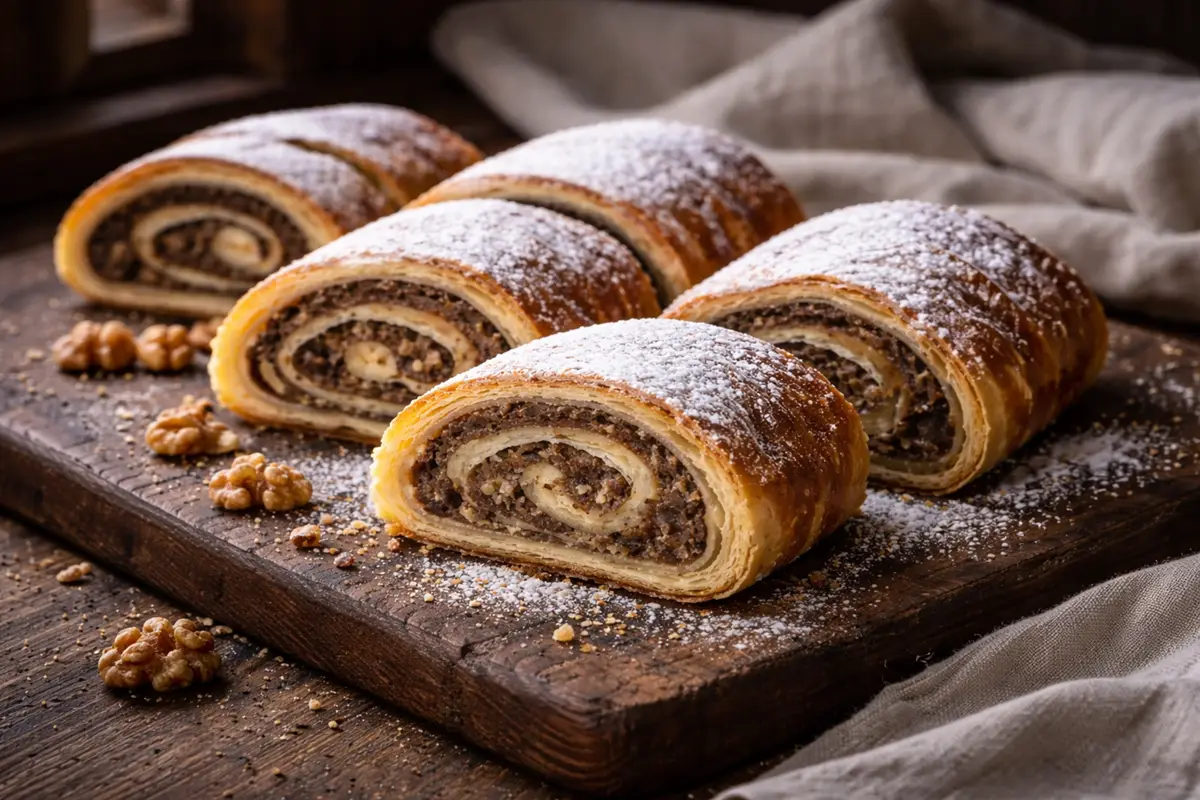
Fatback Walnut Roll
Flaky yeasted pastry laminated with raw pork fatback, filled with milk-cooked walnuts, raisins, and lemon zest. Sliced and dusted with sugar.