Emmental Cheese Bars
Flaky millet pastry strips with Emmental, kajmak, egg yolks, and red pepper—savory tea snack from early 1900s Central Europe.

Quick Summary
Flaky millet pastry strips with Emmental, kajmak, egg yolks, and red pepper—savory tea snack from early 1900s Central Europe.
Historical recipe
Modernised adaptation of an early 20th‑century source. Not independently kitchen-tested by Attic Recipes. Quantities, temperatures, and food safety guidance have been updated for a contemporary kitchen — results may vary and errors may exist. Nutritional values, where provided, are estimates only and have not been laboratory tested. Always follow current food safety guidelines for your region. If you have a health condition, allergy, or dietary requirement, consult a qualified professional before preparing this recipe.
Use of this recipe is entirely at your own risk and subject to our Terms of Service and Privacy Policy. Attic Recipes accepts no liability for any adverse outcome.
- Eggs
- Dairy
Additional notes
-
Warning
The filling contains egg yolks that do not reach a safe internal temperature of 74°C (165°F) during baking. The egg yolks in the dough are safe — the thin dough layer bakes through fully. Pregnant women, children under 18, elderly individuals, and immunocompromised persons should avoid this dish or use pasteurized egg yolks in the filling.
Pasteurized liquid egg yolks can be substituted in the filling at a 1:1 ratio.
-
Note
Contains significant amounts of saturated fat (~11g per serving) from butter, Emmental, and kajmak. Suitable for occasional consumption as part of a balanced diet.
- 1
Combine 170 g sifted millet flour, 200 g grated Emmental, and 150 g cold butter on a clean work surface or in a large bowl. Rub the butter and cheese into the flour with your fingertips until the mixture resembles coarse crumbs.
Tip Work quickly to keep the butter cold — this is what gives the final bars their flaky layers. - 2
Add 2 egg yolks, 1 tbsp sour cream, and 2 g salt. Knead everything together until a cohesive dough forms. Do not overwork.
- 3
On a lightly floured surface, roll the dough out into a rough rectangle. Fold it in thirds (like a letter), rotate 90°, and roll out again. Repeat this process three times total.
Tip This simplified lamination — similar in spirit to rough puff pastry — creates distinct, flaky layers in the finished bars. - 4
Wrap the dough and refrigerate for 1 hour.
- 5
While the dough rests, prepare the filling: mix 60 g kajmak, 2 egg yolks, 40 g finely grated Emmental, and 0.5 tsp hot paprika until smooth and spreadable.
- 6
Preheat the oven to 180°C (350°F) / 160°C fan. Line a baking sheet with parchment paper.
- 7
Remove the dough from the refrigerator. On a lightly floured surface, roll it out to approximately 0.5 cm thickness.
- 8
Spread the kajmak filling evenly over the entire surface of the rolled dough using an offset spatula.
- 9
Cut the covered dough into strips of your preferred width and length — a width of about 2–3 cm and a length of 8–10 cm works well for a finger-food serving size. Transfer carefully to the prepared baking sheet.
- 10
Bake for 20–25 minutes until the bars are a deep golden brown. Serve warm.
Nutrition Information per 1 bar (approx. 53g)
Nutritional values are approximate estimates and may vary based on specific ingredients used, preparation methods, and portion sizes.
Serving Suggestions
Serve warm alongside black or herbal tea, as period recipes for this dish consistently recommend. These bars also work well as part of a savory pastry spread or as a pre-dinner snack. They are best eaten the day they are baked; reheat briefly at 160°C for 5–7 minutes if needed.
About This Recipe
Emmental cheese bars are a savory laminated pastry from the early 20th century Central European kitchen — thin, flaky strips of millet-and-cheese dough spread with a rich kajmak filling, cut into neat bars, and baked until deeply golden. They occupy the same table position as cheese straws or savory biscuits in the Anglophone tradition, but their laminated structure and the double use of Emmental — in both dough and filling — gives them a more complex, layered character.
The use of millet flour is what marks this recipe as distinctly period. By the mid-20th century, refined wheat flour had become the default for pastry in most Central European kitchens, but earlier recipes still called for millet flour regularly, prizing its slightly nutty flavor and the particular crumble it lends to baked goods. Combined with cold butter rubbed directly into the cheese and flour, the result is something between a flaky pastry and a cheese sablé.
Kajmak — the thick clotted cream made from slowly heated milk — brings a mild, milky richness to the filling that neither cream cheese nor béchamel can quite replicate. A small amount of hot paprika cuts through the fat. The whole thing is served warm, with tea.
Why It Works
The lamination technique used here is a rough version of the classical folding used in puff pastry and butter cakes, applied to a dough already enriched with both fat (butter) and protein (Emmental). Each fold creates thin, alternating layers of fat and dough; these layers expand during baking as moisture turns to steam, producing lift and a flaky, separating texture. Because the dough is richer than standard puff pastry, the result is less puffed and more layered-crumbly — similar to a rough-puff or a quick flaky pastry, which is exactly right for a savory bar.
The one-hour rest serves two purposes: it gives the fat time to firm back up, and it allows the dough proteins to relax, which is what makes the dough rollable without springing back. Skipping the rest produces a dough that fights the rolling pin and produces a denser, less distinct crumb.
Modern Kitchen Tips
Millet flour contains no gluten and behaves differently from wheat pastry flour — the dough will be more fragile and prone to cracking at the edges when rolled. This is normal. Patch any cracks with your fingertips before spreading the filling, and handle the cut strips with a thin spatula rather than your hands.
If kajmak is unavailable, full-fat cream cheese (softened to room temperature) mixed with a tablespoon of heavy cream and a small pinch of salt makes a workable substitute. Avoid low-fat cream cheese — the bars need the fat content to bake correctly and to carry the flavor of the Emmental.
The bars are noticeably better warm. If making ahead, underbake very slightly (pull at the first sign of gold rather than deep brown) and reheat in a 160°C oven for 5–7 minutes before serving.
A classic of early 20th century home cooking, preserved and adapted for the modern kitchen.
The Story Behind This Recipe
Historical Context
Early 20th century savory pastry recipes from Central European home kitchens frequently called for millet flour, a grain that had not yet been displaced by refined wheat flour in everyday baking. The combination of Emmental and kajmak as both dough enricher and filling reflects a characteristic regional doubling of dairy — building richness at every layer. The lamination technique used here is a simplified version of classic butter-cake folding, applied to a cheese-enriched dough rather than a sweet one. Home bakers of the era worked without temperature dials; heat was calibrated by feel or by observing how quickly a pinch of flour darkened on the oven floor.
Modern Kitchen Adaptation
The original recipe does not specify an oven temperature. A moderate heat of 180°C (350°F) / 160°C fan has been estimated based on comparable laminated savory pastry recipes from the period; this is flagged as an estimate. Millet flour is used as specified and is widely available in health food stores — it produces a slightly denser, more crumbly result than wheat pastry flour, which is appropriate here. Kajmak, a clotted cream traditional to the former Yugoslavia, can be difficult to source outside the region. The closest widely available substitute is crème fraîche, which matches kajmak's fat content and mild acidity and behaves identically in the filling; use the same quantity. Labneh (strained yogurt) is a good alternative in cities with Middle Eastern grocery stores — slightly tangier, but it works well. Full-fat cream cheese loosened with 1 tablespoon of heavy cream is the most universally available option, though it lacks the characteristic acidity. The egg yolks in the filling do not reach a safe internal temperature during baking — use pasteurized yolks if serving to at-risk groups.
This recipe is an independent modern adaptation developed from historical sources in the public domain. It is provided for informational and educational purposes only and does not constitute professional dietary, nutritional, or medical advice. Food preparation involves inherent risks. The reader assumes full responsibility for safe food handling, ingredient sourcing, and adherence to current local food safety guidelines. The site operator accepts no liability for outcomes resulting from the preparation or consumption of this recipe.
One recipe.
Every week.
You Might Also Like
More recipes you'll enjoy
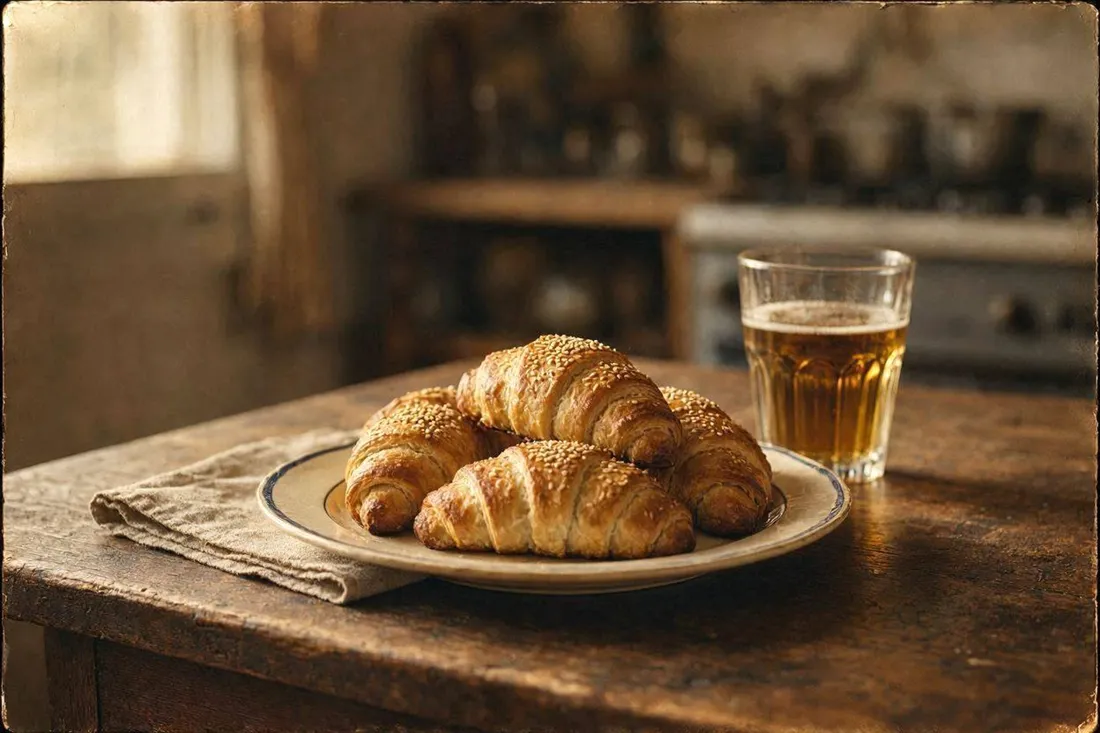
Ham-Filled Yeast Pastries
Firm yeast dough triangles rolled around a savory ham, egg, and butter filling, shaped into small crescent-like rolls and baked golden.
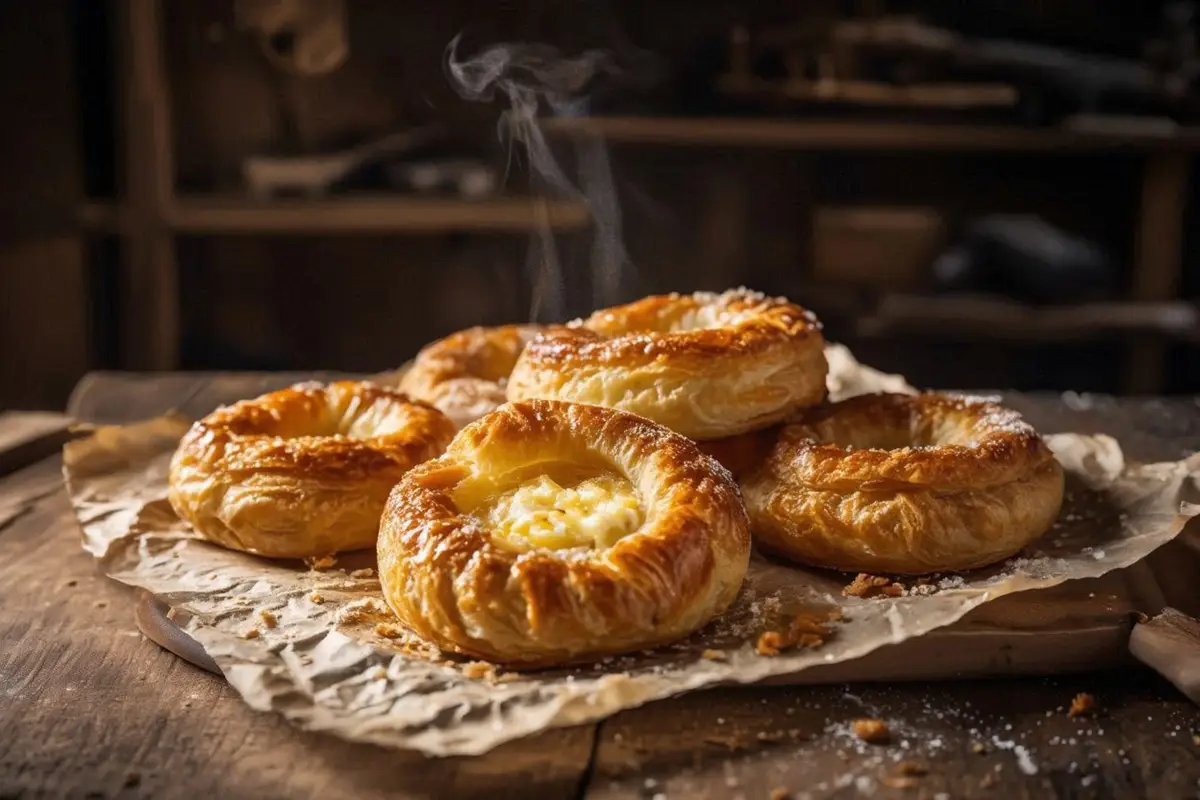
Flaky Fatback Pastries with Ham or Cheese
Tender, layered pastries made with hand-laminated pork fatback dough, filled with creamy ham or a rich egg-and-cheese mixture.
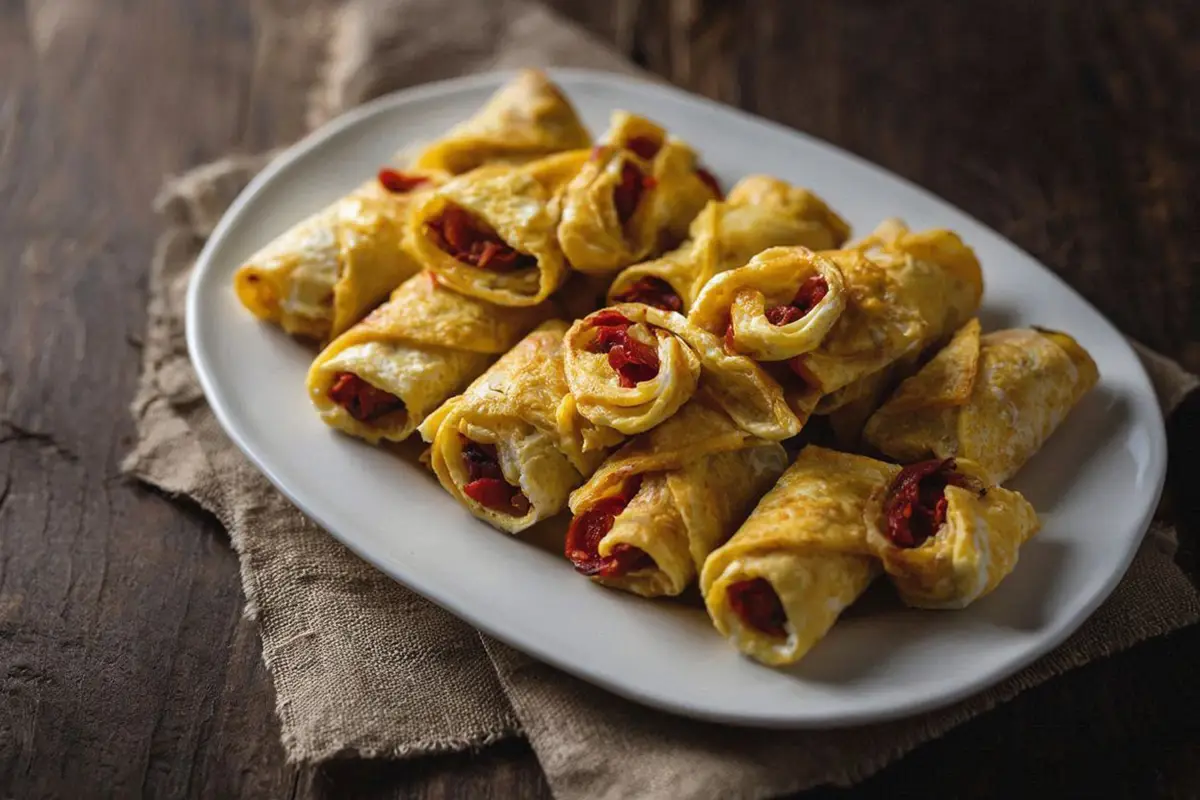
Roasted Pepper and Egg Roll
Thin egg omelets filled with smoky fried roasted peppers, rolled and served hot as an appetizer. A simple Central European classic with few ingredients.