Baked Cornmeal Custard with Kajmak and Cheese
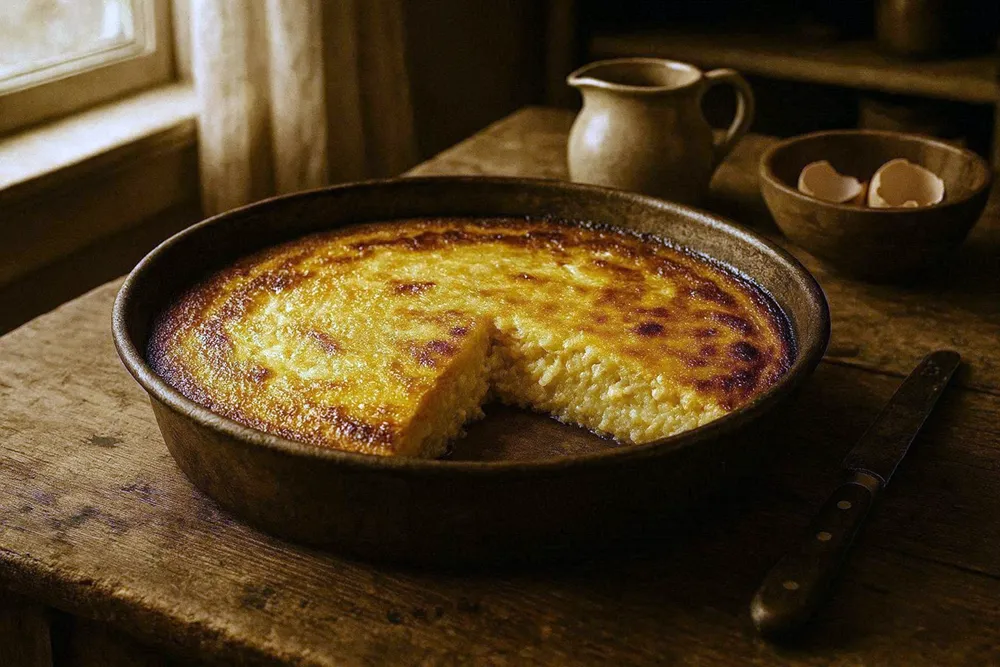
Known as razlevuša, this rustic bake pours a loose cornmeal, kajmak, cheese, and egg batter into a pan and bakes it until golden — a hearty, standalone dish.
Quick Summary
Known as razlevuša, this rustic bake pours a loose cornmeal, kajmak, cheese, and egg batter into a pan and bakes it until golden — a hearty, standalone dish.
Historical recipe
Modernised adaptation of an early 20th‑century source. Not independently kitchen-tested by Attic Recipes. Quantities, temperatures, and food safety guidance have been updated for a contemporary kitchen — results may vary and errors may exist. Nutritional values, where provided, are estimates only and have not been laboratory tested. Always follow current food safety guidelines for your region. If you have a health condition, allergy, or dietary requirement, consult a qualified professional before preparing this recipe.
Use of this recipe is entirely at your own risk and subject to our Terms of Service and Privacy Policy. Attic Recipes accepts no liability for any adverse outcome.
- Eggs
- Dairy
Additional notes
-
Caution
This batter contains egg and dairy in custard-like proportions. Bake until fully set with no wobble in the center, reaching a safe internal temperature of at least 71°C (160°F), before serving — this is especially important for pregnant women, young children, the elderly, and immunocompromised individuals.
-
Note
This is a rich dish with a notable amount of saturated fat per serving from the kajmak, cheese, and lard. Those managing cholesterol or heart health may want to keep portions modest.
- 1
Preheat the oven to 220°C (425°F) / 200°C fan. Grease the base and sides of a deep baking pan with a little of the lard or butter.
- 2
Separate the {0003}, keeping the yolks and whites in separate bowls. Whip the egg whites to stiff, foamy peaks and set aside.
- 3
In a large bowl, mix the {0001}, {0002}, egg yolks, and {0004} together well until smooth and combined.
- 4
Stir in the {0005}, then add the {0006} and {0007}, mixing to a fairly loose, pourable batter.
- 5
Gently fold in the whipped egg whites last, just until no streaks remain.
- 6
Pour the batter into the prepared pan and bake until nicely golden brown on top and around the edges.
- 7
Serve directly from the pan it was baked in, while still warm.
Nutrition Information per 1 slice (1/8 of the bake)
Nutritional values are approximate estimates and may vary based on specific ingredients used, preparation methods, and portion sizes.
Serving Suggestions
Serve warm, straight from the pan, on its own or alongside a simple green salad or pickled vegetables to cut through the richness.
About This Recipe
Razlevuša sits somewhere between a savory cornbread and a baked custard. The batter is deliberately loose — thinner than a typical cornbread dough — and gets its richness from kajmak and fresh cheese rather than butter alone. Whipped egg whites folded in at the end give it a lightness that keeps the dense combination of cornmeal and dairy from feeling heavy.
It was considered substantial enough to stand on its own as a meal, not just a side dish, and the method reflects that: everything is mixed straight in one bowl and poured into a well-greased pan, with no need for kneading, proofing, or shaping.
Why It Works
Cornmeal alone would make a dense, crumbly bake, but the combination of kajmak, fresh cheese, milk, and eggs turns it into something closer to a savory custard — moist throughout, with a good contrast between the golden, slightly crisp top and the soft interior. Separating the eggs and whipping the whites before folding them in last adds air to an otherwise heavy batter, giving the finished bake a noticeably lighter texture than the ingredient list alone would suggest.
Modern Kitchen Tips
For easier portioning, this batter also works well baked in a standard round muffin tin instead of one large pan: grease 12 muffin cups well, fill each about two-thirds full, and bake at 200°C (400°F) / 180°C fan for about 20-22 minutes, until golden and set. The muffin version bakes faster and browns more evenly than the full pan, and makes for easy individual servings straight from the tin.
A classic of early 20th century home cooking, preserved and adapted for the modern kitchen.
The Story Behind This Recipe
Historical Context
This was considered a satisfying, standalone dish in its own right in period Central European rural households, not just a side. The batter was deliberately made loose and pourable — the name itself comes from the idea of pouring the mixture out into the pan, rather than kneading a stiffer dough — and baked in a very hot, lively fire until well browned on the outside. Lard rendered at home from fatback was considered the best choice for greasing the pan.
Modern Kitchen Adaptation
Oven temperature, baking time, and pan size were not given in the original and have been estimated based on standard practice for a loose cornmeal-and-egg batter of this size; these are marked as estimated. A small amount of salt has been added, as the original recipe did not include any — the kajmak and cheese provide some salinity on their own, but a modern palate generally expects a bit more seasoning. Lard can be substituted with an equal amount of butter or a neutral oil if preferred, though it will change the flavor slightly. The batter should be baked until fully set with no wobble in the center, since it contains egg and dairy — this generally takes about 35-40 minutes, but check with a skewer or toothpick for a clean result before serving.
This recipe is an independent modern adaptation developed from historical sources in the public domain. It is provided for informational and educational purposes only and does not constitute professional dietary, nutritional, or medical advice. Food preparation involves inherent risks. The reader assumes full responsibility for safe food handling, ingredient sourcing, and adherence to current local food safety guidelines. The site operator accepts no liability for outcomes resulting from the preparation or consumption of this recipe.
One recipe.
Every week.
You Might Also Like
More recipes you'll enjoy

Emmental Cheese Bars
Flaky millet pastry strips with Emmental, kajmak, egg yolks, and red pepper—savory tea snack from early 1900s Central Europe.
Macaroni Cheese Pie
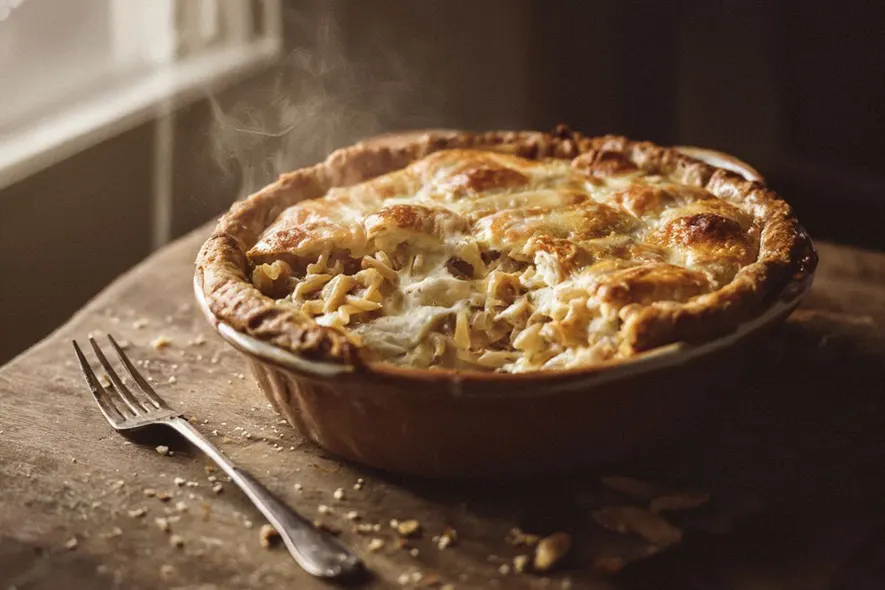
Savory Serbian gibanica layered with boiled pasta, aged white cheese, and kajmak, wrapped in a hand-stretched lard pastry crust.
Layered Polenta with Parmesan and Scrambled Eggs
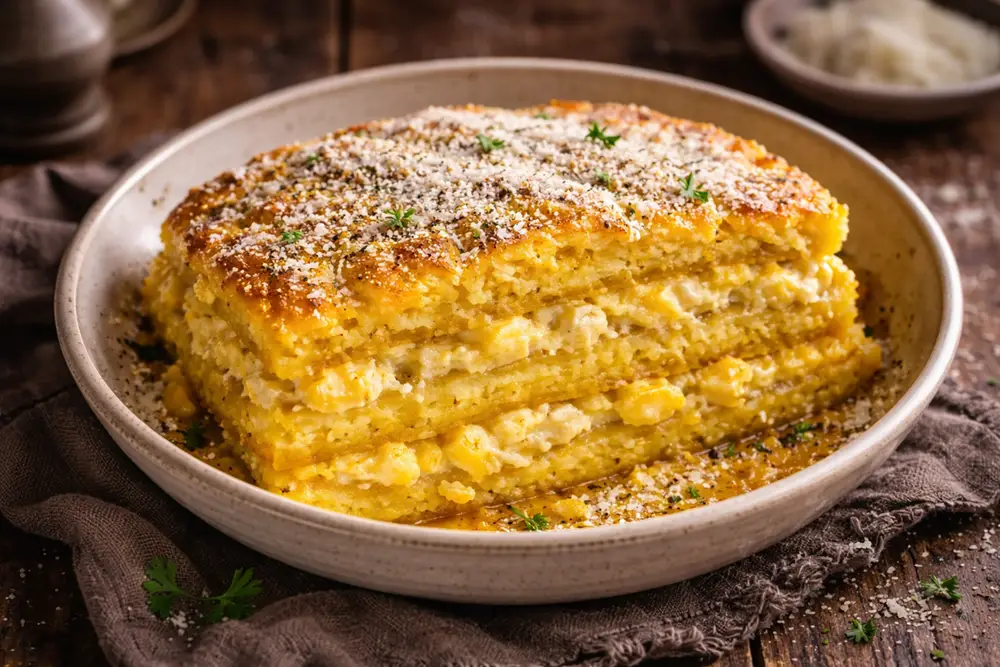
Firm polenta layered with grated hard cheese and soft scrambled eggs. A Central European home dish that turns humble cornmeal into a rich, satisfying meal.