Salt Cod with Garlic and Potatoes
Desalted salt cod simmered gently, then tossed with garlic-warmed olive oil, boiled potatoes, and parsley for a simple, hearty fish dish.
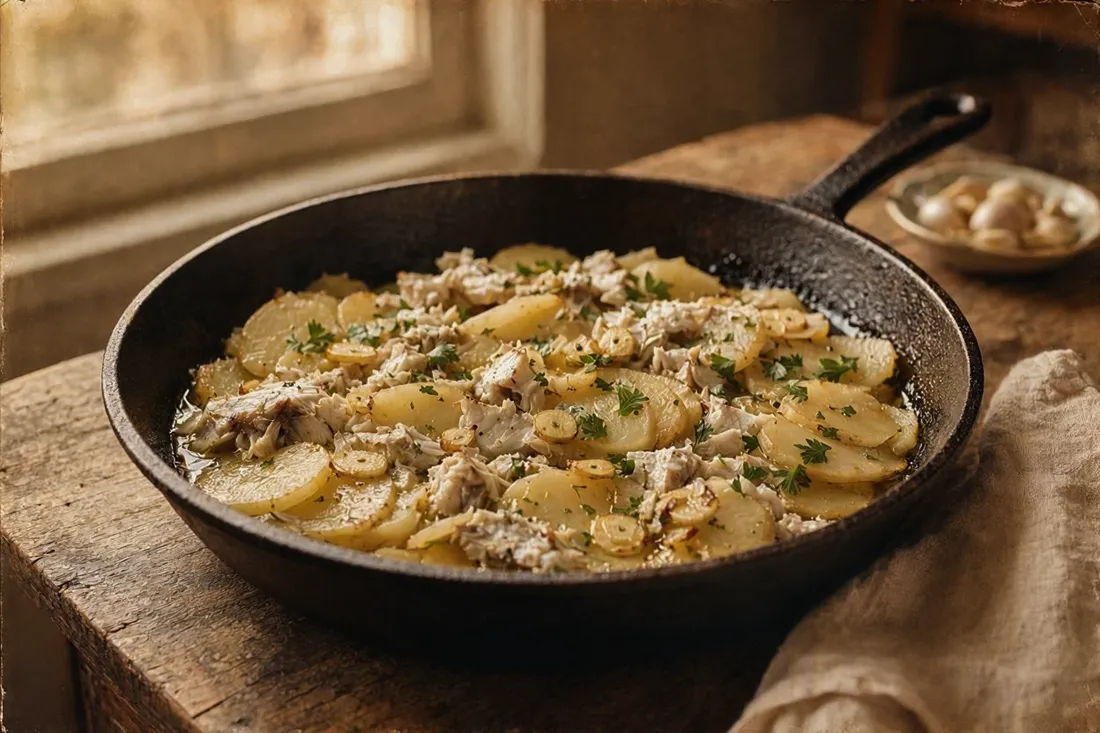
Quick Summary
Dried salt cod is soaked to rehydrate and desalt, then simmered until tender and flaked. Garlic-infused olive oil brings it together with sliced boiled potatoes and parsley — a simple, filling fish dish traditionally served during fasting periods.
Historical recipe
Modernised adaptation of an early 20th‑century source. Not independently kitchen-tested by Attic Recipes. Quantities, temperatures, and food safety guidance have been updated for a contemporary kitchen — results may vary and errors may exist. Nutritional values, where provided, are estimates only and have not been laboratory tested. Always follow current food safety guidelines for your region. If you have a health condition, allergy, or dietary requirement, consult a qualified professional before preparing this recipe.
Use of this recipe is entirely at your own risk and subject to our Terms of Service and Privacy Policy. Attic Recipes accepts no liability for any adverse outcome.
- Fish
Additional notes
-
Caution
The dried cod needs to soak for 24-48 hours before cooking. Keep it refrigerated for the entire soak and change the water regularly; discard it if it develops an off smell or slimy texture at any point. Pregnant people, young children, older adults, and immunocompromised individuals should take particular care with any raw or partially prepared fish during this stage.
- 1
Desalt the dried cod: place it in a large bowl or pot, cover generously with cold water, and refrigerate for at least 24 hours (up to 48 hours for thicker pieces), changing the water every 8-12 hours until the fish has softened and lost its excess salt.
Tip Keep the fish refrigerated for the entire soak rather than at room temperature — once it starts rehydrating, prolonged room-temperature soaking isn't food-safe. - 2
Boil the potatoes until tender, then peel and slice them into thin rounds. Set aside.
- 3
Peel and thinly slice the garlic, and finely chop the parsley. Set both aside.
- 4
Place the desalted fish in a large pot and cover with cold water. Bring to a boil over high heat, then immediately reduce to the lowest simmer and cook gently until the fish is tender, about 20 minutes.
- 5
Remove the fish and, once cool enough to handle, remove any skin and bones on a clean cloth or cutting board. Flake the flesh into pieces.
- 6
In a large, wide pan, heat the olive oil. Once hot, add the sliced garlic — don't let it brown, just let it warm through and soften.
- 7
Add the sliced potatoes, flaked fish, parsley, pepper, and salt. Stir well over the heat, then remove from the heat.
- 8
Give the pan a good shake to bring everything together, and serve.
Nutrition Information per 1 portion (approx 300g)
Nutritional values are approximate estimates and may vary based on specific ingredients used, preparation methods, and portion sizes.
Serving Suggestions
Serve warm as a main course, with crusty bread to soak up the garlic-infused olive oil.
About This Recipe
This is a dish that starts long before any actual cooking does — dried salt cod needs a day or two of soaking before it’s usable at all, which makes it a plan-ahead dish rather than a weeknight one. Once that’s done, though, the cooking itself is quick and simple: a short simmer, a flake into pieces, and a toss with garlic-warmed olive oil and boiled potatoes.
What’s notable here is how little the original recipe pins down. The garlic is deliberately left to taste, the oil quantity is the only precise figure given, and everything else is described loosely. That looseness reflects a dish meant to be adjusted household to household, built around whatever amount of fish and however much garlic a given family preferred.
It’s a dish strongly associated with fasting periods, when a long-keeping, already-prepared fish like salt cod stood in for fresh meat or fish that wasn’t always available.
Why It Works
The long soak does two things for dried salt cod: it rehydrates the flesh, which has been dried hard during curing, and it draws the preserving salt back out into the surrounding water. Changing the water regularly speeds up that exchange and keeps the fish from sitting in salt-saturated water once it’s mostly desalted.
Warming the garlic in oil without letting it brown is a deliberate choice — browned garlic turns bitter and would compete with the mild, delicate flavor of the poached fish rather than supporting it. Tossing everything together off the heat, rather than continuing to cook it, keeps the flaked fish from breaking down further and turning mushy.
Modern Kitchen Tips
- Start the soak two days ahead if you can — thicker pieces of dried cod take the full 48 hours to soften properly.
- Taste a small piece of the desalted fish before cooking; if it’s still noticeably salty, give it one more change of cold water.
- Flake the fish gently with your fingers rather than a fork, so you can feel for any small bones the boiling missed.
A classic of early 20th century home cooking, preserved and adapted for the modern kitchen.
The Story Behind This Recipe
Historical Context
Dried salt cod was valued precisely because it didn't need refrigeration and could be stored and transported far from where it was caught, which made it a practical, long-keeping fish for periods of religious fasting. Finishing it simply, with olive oil, garlic, and potatoes, is a preparation found throughout coastal-influenced home kitchens, especially around winter holidays and fasting periods.
Modern Kitchen Adaptation
The original recipe deliberately leaves the garlic quantity to taste ('so everyone can adjust this dish to their liking'); a starting amount is given here, freely adjustable. The olive oil quantity is not estimated — the original itself gives a ratio (a quarter liter of oil per half kilogram of fish), which is used directly here, though it specifies a regional variety that isn't called for elsewhere on this site; any good-quality olive oil works. The parsley, pepper, and salt amounts are estimated, since the original gives them only as 'a little' or by loose description. The multi-day desalting soak in the original is a standard and necessary step for dried salt cod — it draws out the curing salt and rehydrates the flesh, not a food-safety oddity — but the original doesn't specify refrigeration during that soak; this version adds that as a needed food-safety correction, since once the fish begins to rehydrate at room temperature over one to two days, it's no longer a shelf-stable product.
This recipe is an independent modern adaptation developed from historical sources in the public domain. It is provided for informational and educational purposes only and does not constitute professional dietary, nutritional, or medical advice. Food preparation involves inherent risks. The reader assumes full responsibility for safe food handling, ingredient sourcing, and adherence to current local food safety guidelines. The site operator accepts no liability for outcomes resulting from the preparation or consumption of this recipe.
One recipe.
Every week.
You Might Also Like
More recipes you'll enjoy
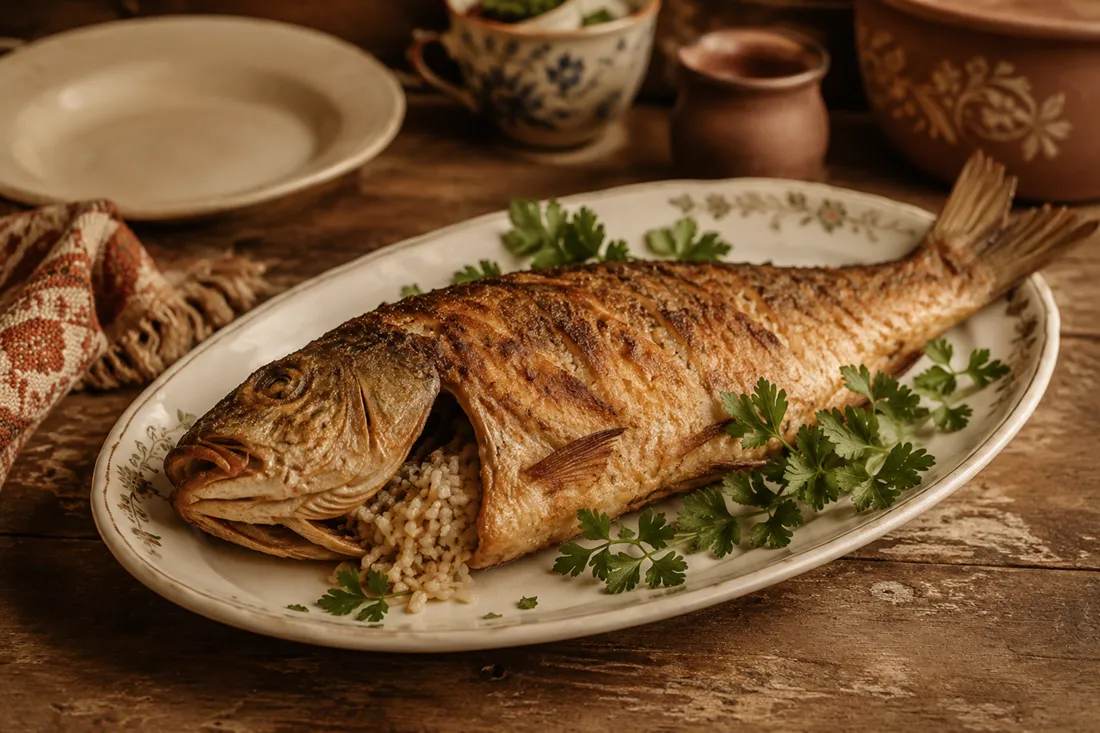
Fried Stuffed Whole Fish with Rice Filling
A whole fish stuffed with a seasoned rice, onion, parsley, and paprika filling, sewn shut, dredged in flour, pan-fried, and finished in the oven.
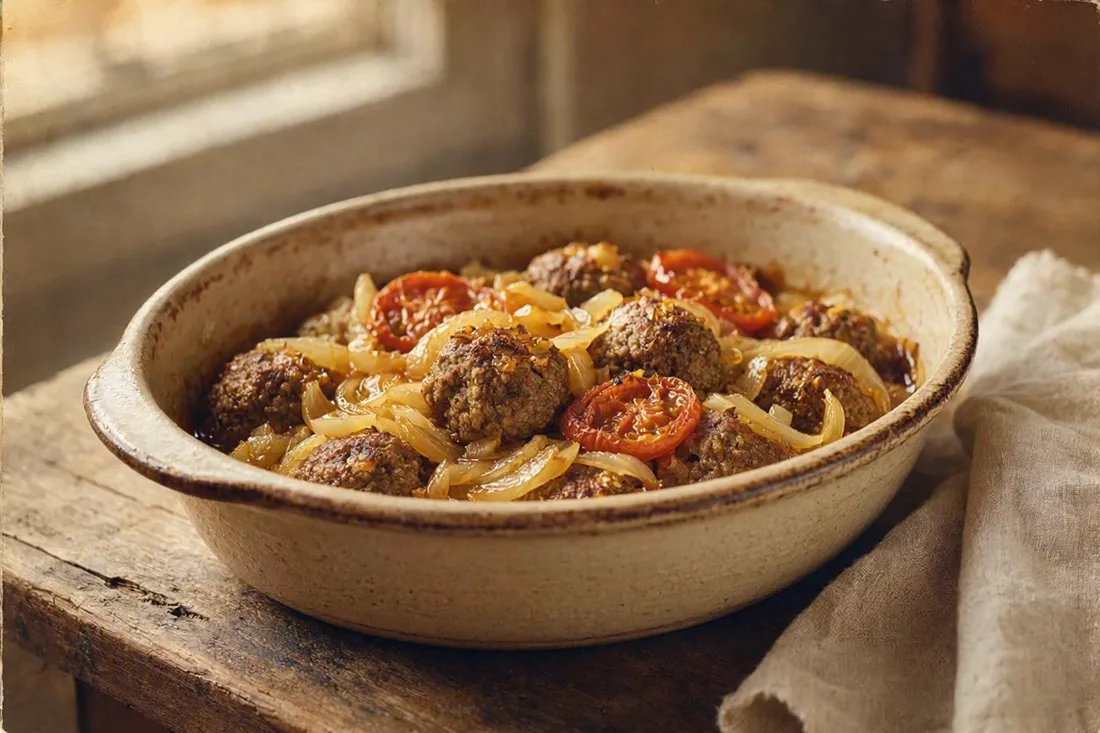
Baked Meatballs on Fried Onion with Tomatoes
Beef and pork meatballs baked over softened onion and sliced tomatoes in a light braising liquid — a comforting one-dish oven bake.
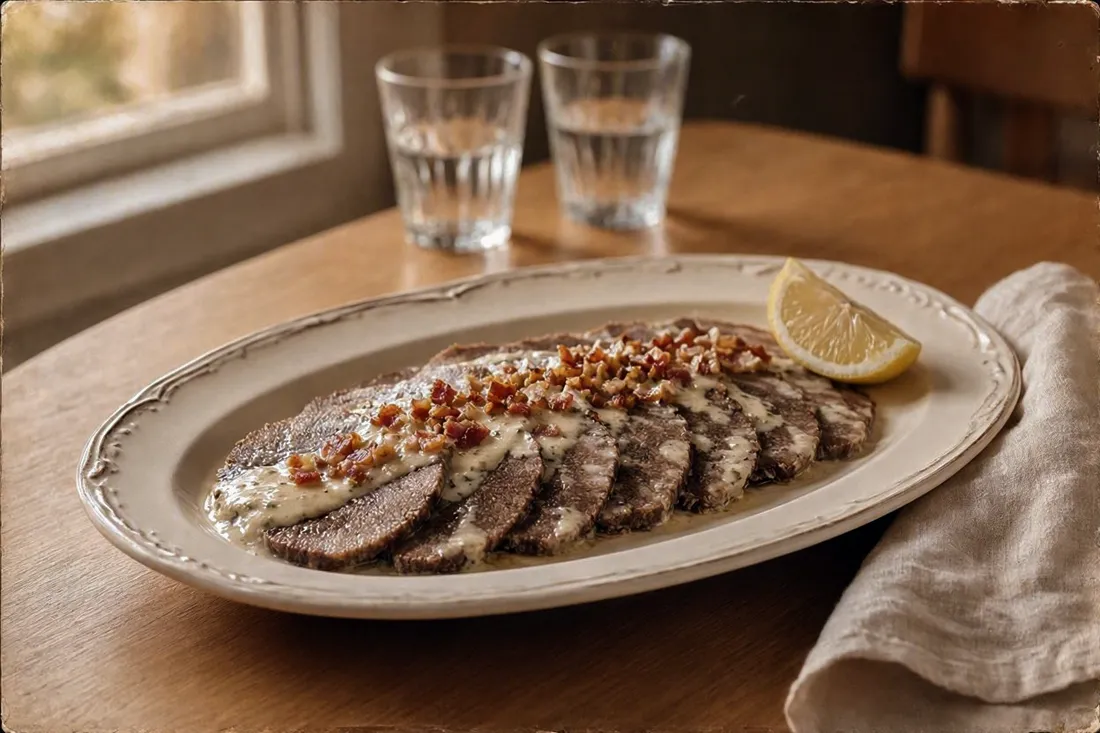
Beef Tongue with Creamy Sardine Sauce
Tender simmered beef tongue served sliced under a rich sardine, sour cream, and bacon sauce — a classic way to dress up an economical cut.