Beef Tongue with Creamy Sardine Sauce
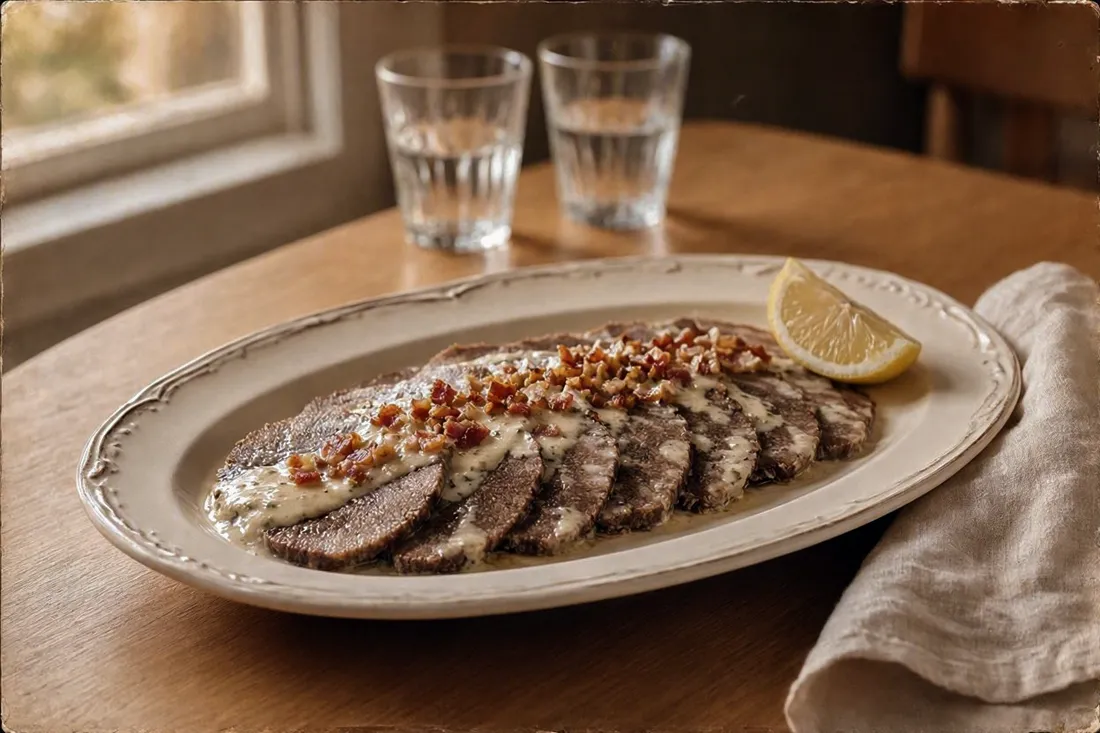
Tender simmered beef tongue served sliced under a rich sardine, sour cream, and bacon sauce — a classic way to dress up an economical cut.
Quick Summary
Beef tongue is simmered until tender, peeled, and baked briefly under a rich sauce of pureed sardines, sour cream, lemon juice, and bacon. Sliced thin and served with the same sauce, it's a substantial, make-ahead main built around an economical cut of meat.
Historical recipe
Modernised adaptation of an early 20th‑century source. Not independently kitchen-tested by Attic Recipes. Quantities, temperatures, and food safety guidance have been updated for a contemporary kitchen — results may vary and errors may exist. Nutritional values, where provided, are estimates only and have not been laboratory tested. Always follow current food safety guidelines for your region. If you have a health condition, allergy, or dietary requirement, consult a qualified professional before preparing this recipe.
Use of this recipe is entirely at your own risk and subject to our Terms of Service and Privacy Policy. Attic Recipes accepts no liability for any adverse outcome.
- Fish
- Dairy
- Gluten
Additional notes
-
Note
This dish is naturally rich — organ meats like tongue are high in cholesterol, and the sour cream and bacon add further saturated fat. Those managing cholesterol or heart health, along with pregnant people, children, older adults, and immunocompromised individuals, may want to enjoy it in moderation.
- 1
Rinse the beef tongue and place it in a large pot. Cover with the water and add the salt. Bring to a boil, then reduce to a gentle simmer.
- 2
Simmer gently until the tongue is completely tender when pierced with a fork, about 2.5-3 hours for a 1-1.2kg tongue.
Tip Keep the water at a bare simmer rather than a rolling boil — a hard boil toughens the tongue instead of tenderizing it. - 3
Remove the tongue from the water while it's still hot, and peel off the tough outer skin — it comes away far more easily while warm than once cooled. Set the tongue aside to cool.
- 4
Meanwhile, pan-fry the bacon strips in a dry skillet over medium heat until lightly crisped. Set aside to cool slightly.
Tip The final bake is brief and only meant to warm the dish through, so the bacon needs to be fully cooked beforehand. - 5
Puree the drained sardines in a food processor until smooth.
- 6
In a bowl, combine the pureed sardines, the cooked bacon strips, the lemon juice, the sour cream, and the flour. Mix well.
- 7
Place the cooled tongue in a baking dish and pour the sardine and sour cream mixture evenly over it.
- 8
Bake in a preheated oven at 180°C (350°F) for 10-15 minutes, until heated through.
- 9
Just before serving, slice the tongue into thin slices, arrange on a serving platter, and serve with the same sauce spooned over.
Nutrition Information per 1 portion (approx 200g sliced tongue with sauce)
Nutritional values are approximate estimates and may vary based on specific ingredients used, preparation methods, and portion sizes.
Serving Suggestions
Serve as a main course with boiled or mashed potatoes and a simple green salad to balance the richness of the sauce.
About This Recipe
Beef tongue rarely gets much fanfare, but a long, gentle simmer is really all it needs to become fork-tender — the work here goes into what comes after. A sauce built from pureed sardines, sour cream, lemon, and bacon turns a plain simmered cut into something that reads far more like a special-occasion dish than an economical one.
The pairing of meat and preserved fish might seem unusual today, but it’s a combination that shows up again and again in older European cooking, where a small amount of something briny and concentrated was used to deepen the flavor of a milder main ingredient.
Serve it sliced thin with the same sauce spooned back over the top, and it looks — and eats — like considerably more effort than it actually takes.
Why It Works
The tongue is fully cooked by the time it goes into the oven; the final bake is only there to warm the dish through and let the sauce cling and slightly set, not to finish cooking the meat. That’s also why the bacon needs to be pan-fried beforehand rather than left raw in the sauce — ten to fifteen minutes in the oven isn’t enough to cook it through on its own.
Pureeing the sardines smooth lets them melt into the sour cream rather than sitting as distinct chunks, so the sauce reads as rich and savory rather than distinctly “fishy.” The small amount of flour gives the sauce just enough body to coat the sliced tongue instead of running off it.
Modern Kitchen Tips
- Peel the tongue’s outer skin while it’s still hot — once it cools, the skin tightens back down and becomes much harder to remove.
- A food processor makes quick work of pureeing the sardines; a stick blender in a tall container works just as well.
- The tongue and sauce can both be made a day ahead and assembled just before the final bake, which makes this a convenient dish for entertaining.
A classic of early 20th century home cooking, preserved and adapted for the modern kitchen.
The Story Behind This Recipe
Historical Context
Beef tongue was a practical, economical cut, and period cooks often dressed it up with a rich finishing sauce rather than serving it plain. Pairing meat with preserved fish like sardines for depth of flavor was a technique that made its way into Central European home kitchens of the era, turning a humble simmered cut into something fit for a more formal table.
Modern Kitchen Adaptation
The original recipe has you cut 100g of dry bacon into thin strips but never says what to do with them — a clear gap in the text. Here, the bacon is pan-fried and folded into the sardine sauce, both for flavor and because the final bake is only 10-15 minutes, too brief to reliably cook raw bacon through inside the sauce. The sardines are pureed in a food processor rather than pushed through a sieve, and the tongue's weight, the amount of cooking water, and the simmering time are estimated using standard technique for a whole beef tongue, since none of these were specified in the original. The oven temperature for the final bake is also estimated, as the original gives only a time.
This recipe is an independent modern adaptation developed from historical sources in the public domain. It is provided for informational and educational purposes only and does not constitute professional dietary, nutritional, or medical advice. Food preparation involves inherent risks. The reader assumes full responsibility for safe food handling, ingredient sourcing, and adherence to current local food safety guidelines. The site operator accepts no liability for outcomes resulting from the preparation or consumption of this recipe.
One recipe.
Every week.
You Might Also Like
More recipes you'll enjoy

Marinated Veal Brain with Egg Yolk Dressing
Veal brain gently poached in an acidulated broth, cooled, sliced, and dressed with a rich sieved egg yolk, oil, and lemon dressing. Served cold.
Veal Kidney with Marjoram
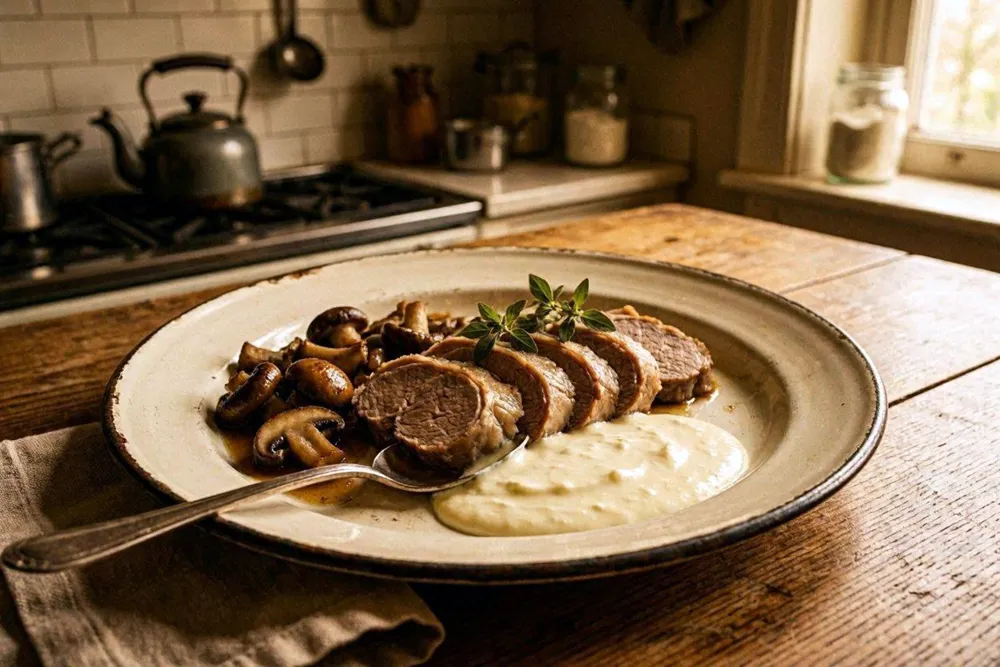
A whole veal kidney rubbed with marjoram, wrapped in a thin veal cutlet, braised in white wine, and roasted with mushrooms in a rich sour cream sauce.
Tripe in Cognac Sauce
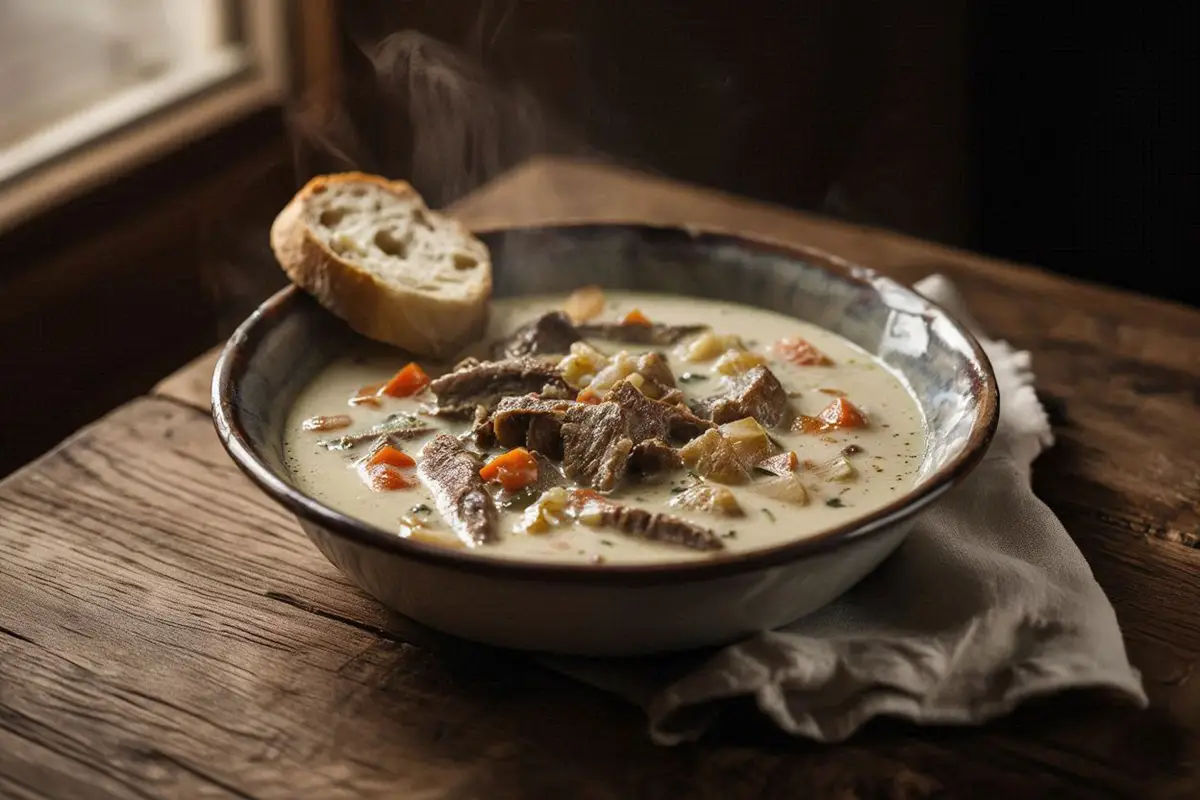
Tender veal tripe slow-braised with root vegetables, finished with sour cream and cognac for a rich, warming Central European classic.