Royal Walnut and Orange Candy Squares
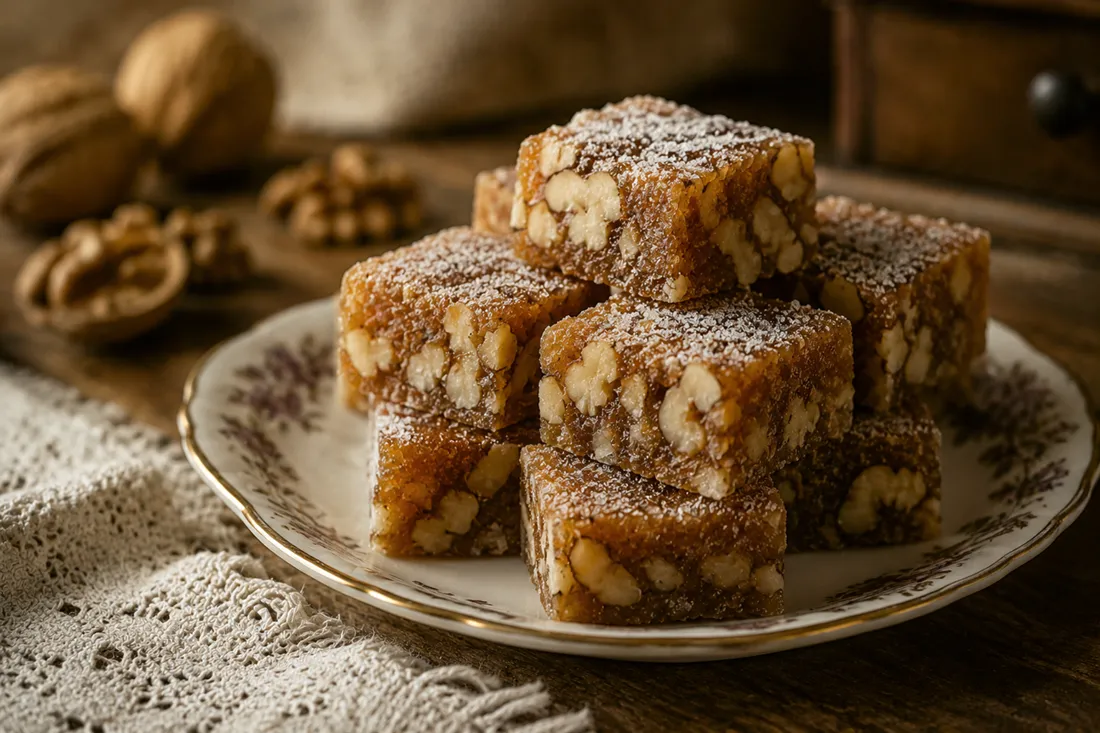
Sugar, walnuts, butter, and orange zest are boiled briefly, then beaten by hand until thick and poured into squares — a festive holiday candy.
Quick Summary
Sugar, chopped walnuts, butter, and orange zest are boiled together for a few minutes, then beaten off the heat until thick and poured into a pan to set. A festive Central European candy, cut into squares once cooled.
Historical recipe
Modernised adaptation of an early 20th‑century source. Not independently kitchen-tested by Attic Recipes. Quantities, temperatures, and food safety guidance have been updated for a contemporary kitchen — results may vary and errors may exist. Nutritional values, where provided, are estimates only and have not been laboratory tested. Always follow current food safety guidelines for your region. If you have a health condition, allergy, or dietary requirement, consult a qualified professional before preparing this recipe.
Use of this recipe is entirely at your own risk and subject to our Terms of Service and Privacy Policy. Attic Recipes accepts no liability for any adverse outcome.
- Tree Nuts
- Dairy
Additional notes
-
Warning
Boiling sugar reaches very high temperatures and can cause serious burns if it splatters during boiling or beating. Keep children away from the stove, and handle the hot mixture with care.
-
Note
Contains walnuts and is not suitable for those with tree nut allergies.
- 1
Combine the sugar, walnuts, butter, and orange zest in a saucepan.
- 2
Stir over medium heat until the sugar has fully dissolved, then bring to a boil.
- 3
Boil for 3 minutes, then remove the pan from the heat.
Tip For a more reliable set, use a candy thermometer here and cook to the soft-ball stage, 112–116°C (234–240°F), rather than timing by minutes alone. - 4
Beat the mixture vigorously off the heat until it thickens and starts to lose its glossy sheen.
Tip Beat with a wooden spoon in one direction; the mixture is very hot and can splatter. - 5
Pour the thickened mixture into a buttered baking pan and spread it into an even layer.
- 6
Let cool completely at room temperature, then cut into squares.
Nutrition Information per 1 piece (approx 28g)
Nutritional values are approximate estimates and may vary based on specific ingredients used, preparation methods, and portion sizes.
Serving Suggestions
Serve as a small sweet with coffee or tea, or wrap individual pieces for a homemade holiday gift.
About This Recipe
This candy belongs to a small family of stovetop sweets built on the same principle: dissolve sugar with a little fat, add flavor and texture with nuts, boil briefly, then beat the mixture off the heat until it thickens into something closer to fudge than syrup. There’s no chocolate and no elaborate technique — just sugar, walnuts, butter, and orange zest, worked by hand until it sets.
The name points to its status as a treat for special occasions rather than everyday eating, which tracks with how sugar-heavy recipes were generally reserved for holidays and celebrations in the early 20th century.
Why It Works
The short boil dissolves the sugar and begins to concentrate it, but it’s the beating afterward, done off the heat, that actually builds the texture: agitation encourages the sugar to crystallize into countless tiny crystals instead of staying smooth and glassy, giving the finished candy its characteristic fudge-like bite rather than a hard, glossy shell. The walnuts add crunch and the orange zest cuts through the sweetness, keeping the candy from tasting flat.
Modern Kitchen Tips
If you have a candy thermometer, use it — cooking to the soft-ball stage (112–116°C / 234–240°F) gives a far more consistent result than timing the boil by minutes, since pot size and stove strength vary. Beat the mixture in a heatproof bowl or straight in the pan with a sturdy wooden spoon, and keep your hand well clear of the rim, since the hot syrup can splatter as it thickens. Line the pan with parchment paper for easier removal once the candy has fully cooled.
A classic of early 20th century home cooking, preserved and adapted for the modern kitchen.
The Story Behind This Recipe
Historical Context
Sugar candies like this one were a festive, special-occasion treat in the early 20th century, made without a candy thermometer by judging the boil by time and the texture by hand. Beating the syrup vigorously off the heat encouraged the sugar to crystallize into a fine, fudge-like texture rather than staying glassy, while the walnuts and orange zest gave a simple syrup real character. The name suggests it was reserved for special, celebratory occasions rather than everyday cooking.
Modern Kitchen Adaptation
The original amount of fat was given by size ('the size of a walnut'), which is estimated here at 20g of butter; rendered lard would have been the more traditional choice for a period version. Boiling 'for three minutes' is imprecise, since it depends on pot size and stove heat — a candy thermometer and the soft-ball stage (112–116°C / 234–240°F) are noted as a more reliable modern check. Cooling time before cutting is estimated at about an hour and is tracked separately from the active cooking time.
This recipe is an independent modern adaptation developed from historical sources in the public domain. It is provided for informational and educational purposes only and does not constitute professional dietary, nutritional, or medical advice. Food preparation involves inherent risks. The reader assumes full responsibility for safe food handling, ingredient sourcing, and adherence to current local food safety guidelines. The site operator accepts no liability for outcomes resulting from the preparation or consumption of this recipe.
One recipe.
Every week.
You Might Also Like
More recipes you'll enjoy
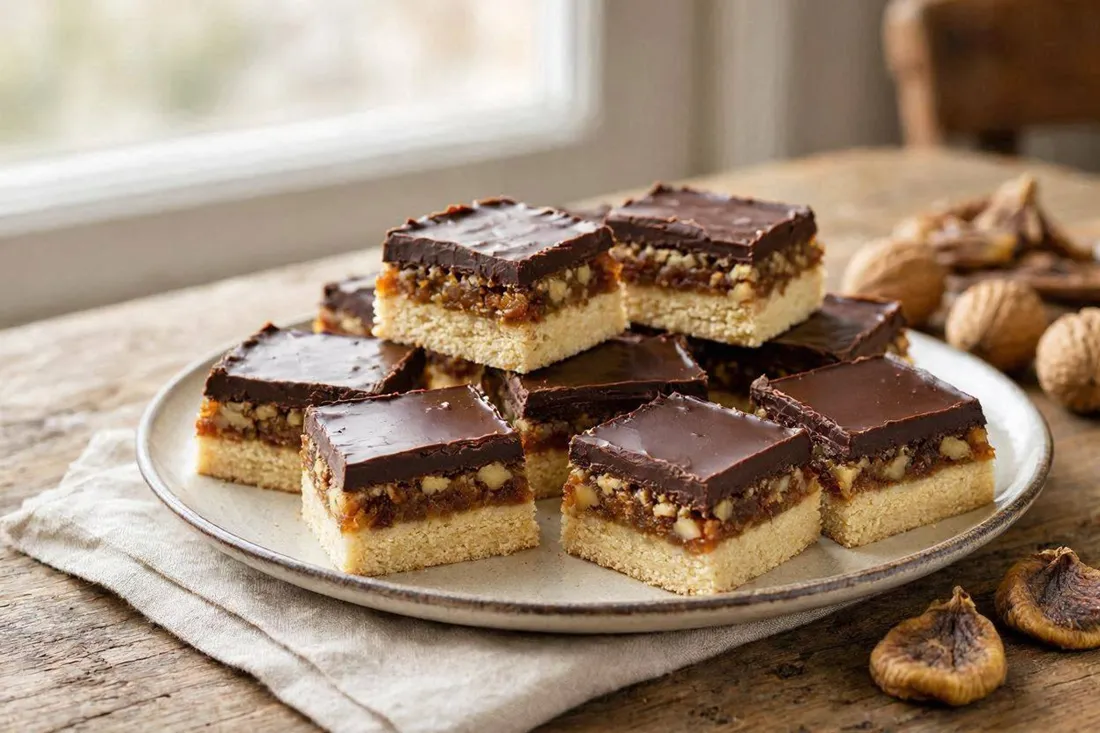
No-Bake Date and Fig Bars
A no-bake almond marzipan base layered with ground dates, figs, and walnuts, finished with a dark chocolate icing. Naturally dairy-free.
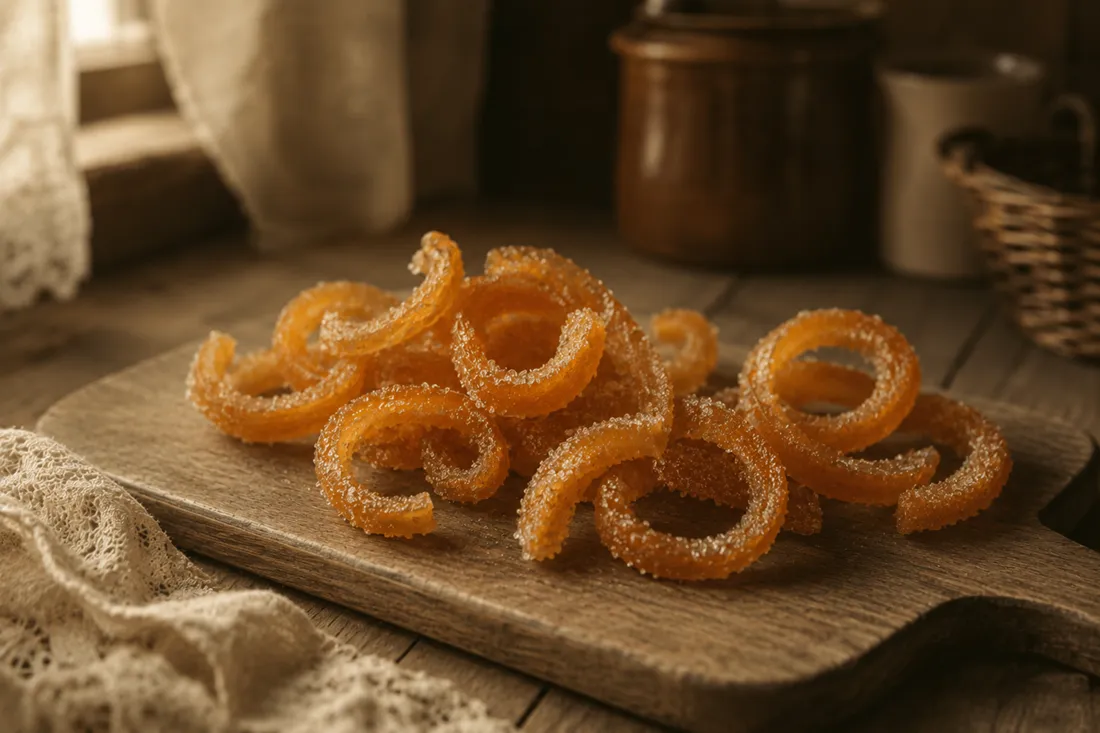
Candied Orange Peel
Thick strips of orange peel are softened, soaked overnight in syrup, then rolled in coarse sugar for a chewy, translucent candied treat.
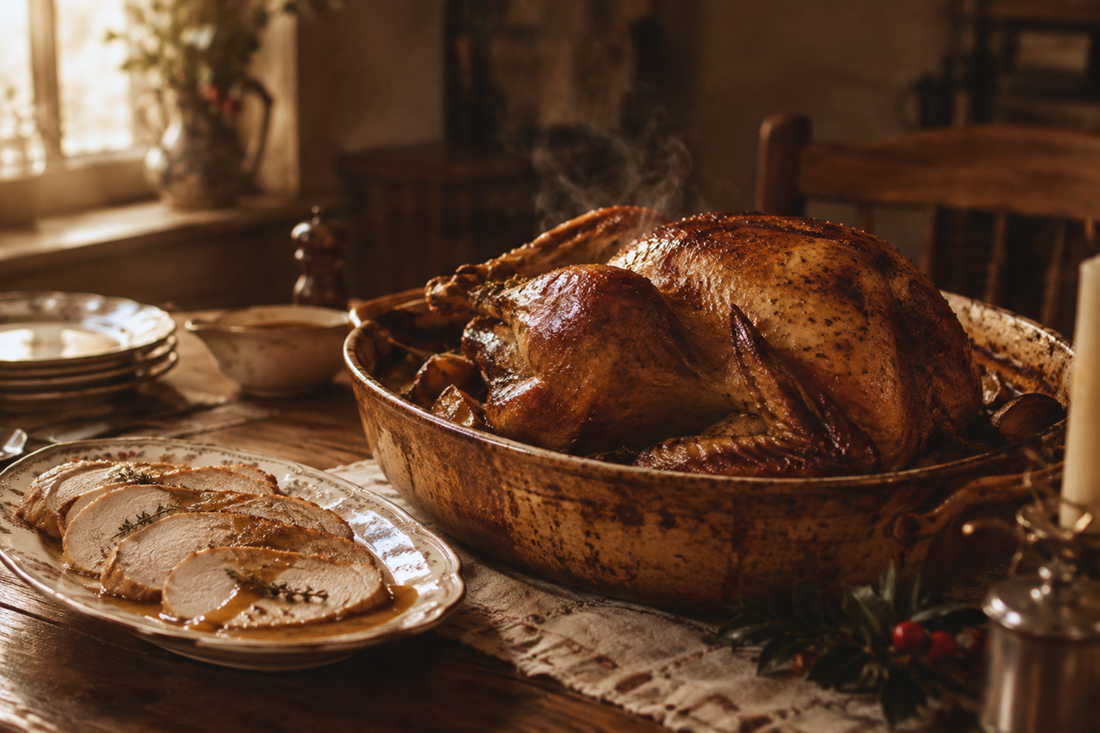
Traditional Roast Turkey with Pan Juices
A whole turkey salted the day before, roasted until golden, and basted throughout with its own pan drippings.