Peach Cream
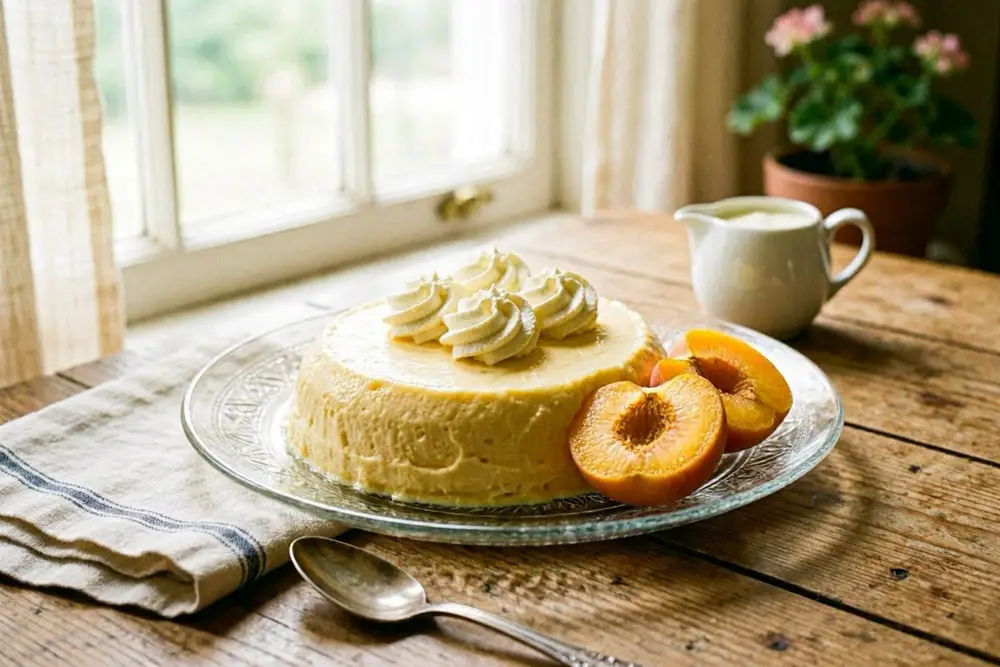
A chilled peach mousse from early 20th century home cooking: peach marmalade base folded with egg and gelatine, set in a mould and served with fresh cream.
Quick Summary
A chilled peach mousse from early 20th century home cooking: peach marmalade base folded with egg and gelatine, set in a mould and served with fresh cream.
Historical recipe
Modernised adaptation of an early 20th‑century source. Not independently kitchen-tested by Attic Recipes. Quantities, temperatures, and food safety guidance have been updated for a contemporary kitchen — results may vary and errors may exist. Nutritional values, where provided, are estimates only and have not been laboratory tested. Always follow current food safety guidelines for your region. If you have a health condition, allergy, or dietary requirement, consult a qualified professional before preparing this recipe.
Use of this recipe is entirely at your own risk and subject to our Terms of Service and Privacy Policy. Attic Recipes accepts no liability for any adverse outcome.
- Eggs
- Dairy
Additional notes
-
Warning
This dessert contains raw egg whites that are not heat-treated. Pregnant women, children under 18, older adults, and immunocompromised individuals should avoid consuming raw egg. Use pasteurised egg whites as an alternative.
Replace the 2 raw egg whites with 150ml of cold heavy cream, whipped to firm peaks, and fold in as directed. The set will be slightly denser.
-
Warning
The peach marmalade base involves cooking a high-sugar syrup at high temperature. Exercise care when stirring; the mixture can bubble and spit and will cause serious burns on skin contact. Keep children away from the stove during this step.
-
Note
Each serving contains approximately 111g of sugar, significantly above typical daily recommended limits. This dessert is intended as an occasional treat. Individuals managing blood sugar should be aware of the high carbohydrate content.
- 1
Peel and pit the peaches, then weigh out 600g of prepared fruit. Cut into rough chunks and place in a large heavy-bottomed saucepan without any sugar. Set over medium heat and stir as the peaches release their juice and begin to soften — about 8–10 minutes. Continue cooking, pressing the pieces against the side of the pan, until the fruit has broken down and the liquid has reduced by roughly a third. Now add the 600g of sugar, stir to dissolve, and continue cooking over medium heat for a further 10–12 minutes, stirring frequently, until the mixture is thick and jammy. Remove from the heat and set aside to cool to room temperature. The marmalade must be fully cooled before the next step.
Tip Cooking the fruit without sugar first allows the water in the peaches to evaporate freely. Adding the sugar to already-reduced fruit gives a more concentrated flavour and prevents scorching at the base of the pan. Once the sugar is in, do not leave the pan unattended. - 2
Place the 2 gelatine sheets in a shallow bowl with the 100ml of lukewarm water. Leave to soak for 5–10 minutes until they are fully softened and floppy. Do not use hot water, which can weaken the setting power of the gelatine.
- 3
In a heatproof bowl, whisk the 2 egg yolks until smooth and pale. Squeeze the softened gelatine sheets firmly to remove excess water. Place the squeezed gelatine sheets in a small saucepan or heatproof cup with 2–3 tablespoons of the cooled peach marmalade and warm gently over very low heat, stirring, until the gelatine has fully dissolved into the marmalade — about 1–2 minutes. Do not boil. Pour the dissolved gelatine mixture over the egg yolks and whisk together until smooth.
- 4
Add two or three large spoonfuls of the cooled peach marmalade to the yolk-gelatine mixture and whisk together — this tempers the yolks. Then pour the yolk mixture back into the main pan of cooled marmalade and stir until completely and evenly combined. The mixture should be smooth and uniform in colour.
Tip The marmalade must be below 60°C before adding the yolks. If it is still warm to the touch, allow it to cool further — a kitchen thermometer is useful here. - 5
In a clean, grease-free bowl, whip the 2 egg whites with a hand mixer or stand mixer until they form firm, glossy peaks. Do not over-whip to the dry stage.
- 6
Using a large spatula, fold the beaten egg whites into the peach and yolk mixture in two additions. Work gently and deliberately to preserve the volume — the goal is a light, airy mousse rather than a dense cream.
- 7
Rinse an 800ml–1 litre mould or bowl with cold water (do not dry it). Pour or ladle the peach cream mixture into the mould. Cover with cling film and refrigerate for a minimum of 4 hours, or overnight, until fully set.
- 8
To unmould, run a thin knife or palette knife carefully around the edge of the set cream. Place a chilled glass plate or flat serving dish face-down on top of the mould, then invert with a confident, swift motion. If the cream does not release, briefly press a warm damp cloth against the outside of the mould for 10–15 seconds and try again.
- 9
Whip the 150ml of cold heavy cream to soft peaks. Decorate the unmoulded peach cream with the whipped cream and the fresh peeled peach halves. Serve immediately.
Nutrition Information per 1 serving (approx. 200g, based on 5 servings)
Nutritional values are approximate estimates and may vary based on specific ingredients used, preparation methods, and portion sizes.
Serving Suggestions
Serve well chilled, directly from the refrigerator. A thin coulis of lightly sweetened fresh peach or apricot purée is a good accompaniment in place of, or alongside, the whipped cream. The dessert holds in the mould for up to 24 hours; once unmoulded, serve within 2–3 hours.
About This Recipe
There is something quietly theatrical about an unmoulded dessert — the brief suspense of inversion, the moment the cream slides free and holds its shape on a cold glass plate. This peach cream belongs to that tradition: a chilled, moulded sweet built from a base of slow-cooked peach marmalade, lightened with beaten egg and set with leaf gelatine. It is not a mousse in the modern sense, nor quite a Bavarian cream, but something in between — denser than foam, lighter than set jelly, and deeply, unambiguously peachy.
The recipe comes from the large-batch tradition of early 20th century home entertaining, where desserts were made in quantities sufficient for a full table. This version scales the original down to a manageable 4–6 portions without altering the fundamental ratios. The equal weights of peaches and sugar produce a marmalade base far more intensely flavoured than fresh fruit alone could manage — the long cook concentrates everything, and the result is the kind of flavour that tastes like August distilled.
Like many cold sweets of the period, this one rewards patience above all else. The marmalade must cool fully before the eggs are added, and the set mould must chill long enough — at least four hours — for the gelatine to do its work. Rush either stage and the texture suffers. Give it time, and what comes out of the mould is something genuinely elegant.
Why It Works
The structural logic of this dessert relies on three distinct elements working in concert. The peach marmalade provides body and flavour: the high sugar concentration draws water out of the fruit during cooking, intensifying the taste and creating a thick, pectin-rich base that helps the final cream hold its shape. The gelatine adds firm setting power, dissolving into the warm marmalade and forming a gel matrix as the mixture chills. The beaten egg whites provide lift and aeration — folded in at the end, they transform what would otherwise be a dense, jammy block into something light enough to unmould cleanly.
The sequence matters. The marmalade must be cool before the egg yolks are added, to avoid scrambling. The gelatine, softened in lukewarm water, dissolves readily into the warm-but-not-hot marmalade without requiring a separate heating step. The egg whites must be whipped to firm peaks — not stiff and dry — so they fold in smoothly without losing their volume.
Modern Kitchen Tips
- Peach selection: Use ripe, fragrant yellow-fleshed peaches. Underripe fruit will produce a pale, flat-tasting marmalade regardless of cooking time.
- Peeling peaches: Score an X in the base of each peach and blanch in boiling water for 30 seconds, then transfer immediately to cold water. The skins slip off cleanly.
- Mould preparation: Rinsing the mould with cold water (not oiling it) creates the light film that allows clean release without affecting flavour.
- Setting reliability: If you are concerned about the set, increase the gelatine to 3 sheets. The texture will be firmer but will unmould with greater confidence.
- Make-ahead: The cream sets and holds well in the mould for up to 24 hours, making it an excellent prepare-ahead dessert for guests.
A classic of early 20th century home cooking, preserved and adapted for the modern kitchen.
The Story Behind This Recipe
Historical Context
Chilled moulded desserts of this kind were a staple of early 20th century Central European home entertaining. Home cooks of the period used the same weight of sugar as fruit — a ratio drawn directly from traditional fruit preserve-making — producing an intensely flavoured, deeply sweet base. Setting agents were typically leaf gelatine, softened in lukewarm water exactly as specified here. The instruction to 'place on ice to freeze the mass' reflects pre-refrigeration practice; a domestic ice box or cellar would have provided the prolonged chill required to set the gelatine. The recipe belongs to a broader family of cold moulded sweets — variously called Bavarian creams, charlottes, or simply 'creams' — that were considered elegant but achievable with standard kitchen equipment.
Modern Kitchen Adaptation
This recipe scales the original 4-kilogram batch down to a practical 4–6 serving quantity, preserving the original 1:1 fruit-to-sugar ratio, which is structurally important for the body of the marmalade base. The original method added sugar directly to raw fruit at the start of cooking; this version applies the two-stage technique — peaches are cooked and reduced without sugar first, then the sugar is added to the already-softened fruit. This prevents scorching and produces a more concentrated flavour. The instruction to set the mould 'on ice' has been replaced with standard refrigeration — a minimum of 4 hours is required for the gelatine to set fully; overnight is more reliable. Gelatine sheet quantity is estimated proportionally from the original at 2 sheets for this batch; if your sheets differ from the standard 200-bloom 2g format, adjust accordingly. The egg whites are folded in raw, as in the original — no heat treatment is applied to them. Readers who prefer to avoid raw egg whites may substitute an equivalent volume of whipped heavy cream, which will produce a slightly denser, richer set.
This recipe is an independent modern adaptation developed from historical sources in the public domain. It is provided for informational and educational purposes only and does not constitute professional dietary, nutritional, or medical advice. Food preparation involves inherent risks. The reader assumes full responsibility for safe food handling, ingredient sourcing, and adherence to current local food safety guidelines. The site operator accepts no liability for outcomes resulting from the preparation or consumption of this recipe.
One recipe.
Every week.
You Might Also Like
More recipes you'll enjoy
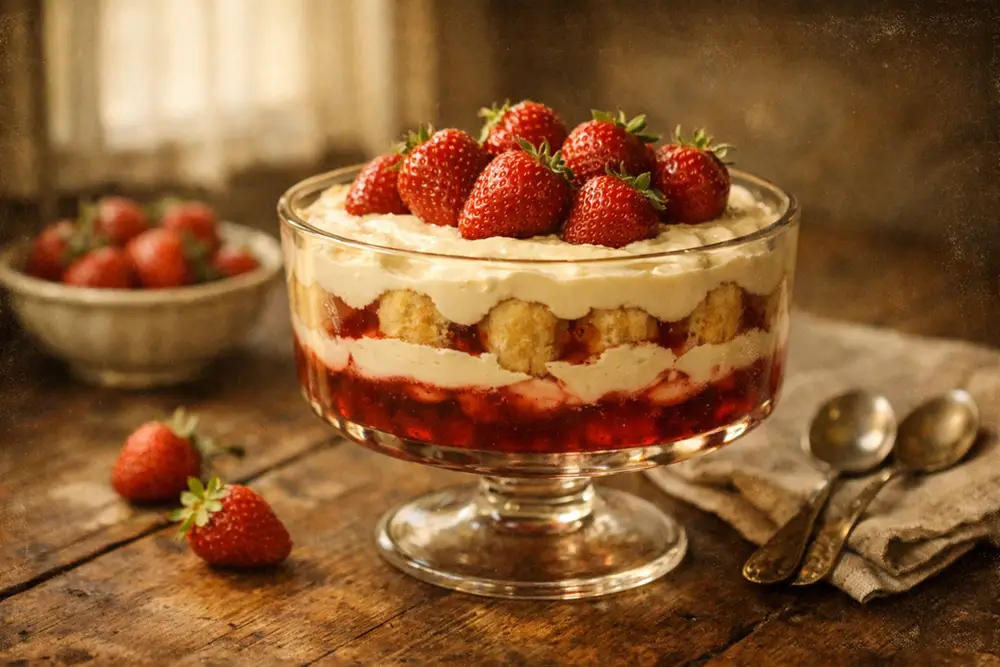
Ladyfingers with Strawberry Topping
Ladyfingers layered with a thick wild strawberry syrup and chilled to set — a simple, elegant Central European no-bake dessert from the early 20th century.
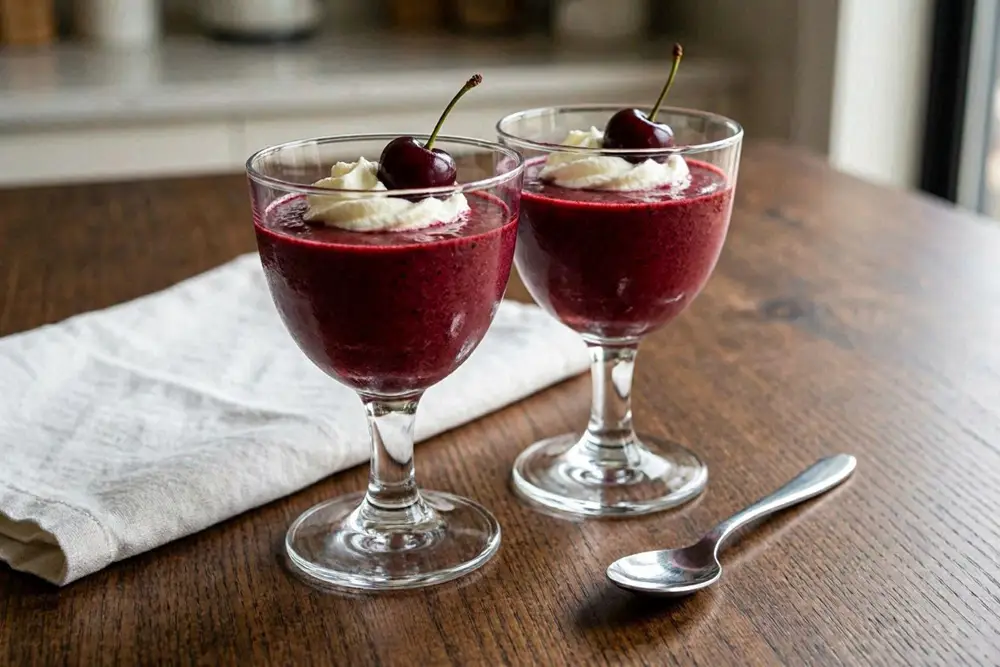
Cherry Cream
A silky, chilled cherry mousse set with agar-agar and lightened with whipped cream — a refined dessert from the early 20th century home kitchen.
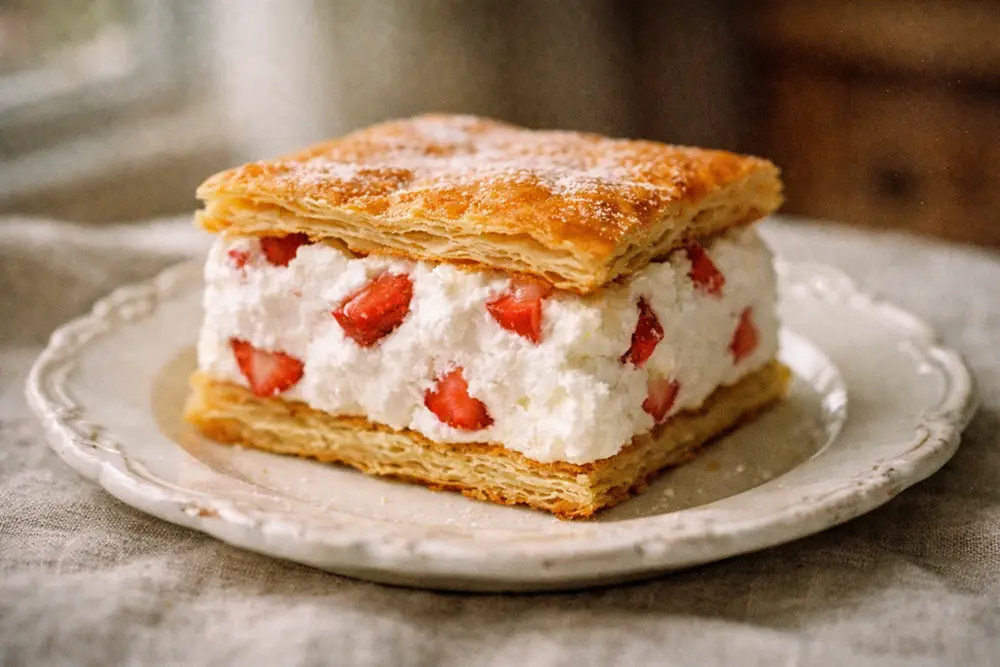
Strawberry Meringue Pie
Italian meringue with fresh strawberries between two rough puff pastry crusts. A Central European celebration dessert from early 20th century home baking.