Lenten Turkish Delight Wafer Torte
A no-bake Lenten torte of crisp wafer sheets layered with melted Turkish delight, ground almonds and lemon zest, finished with a glossy fondant glaze.
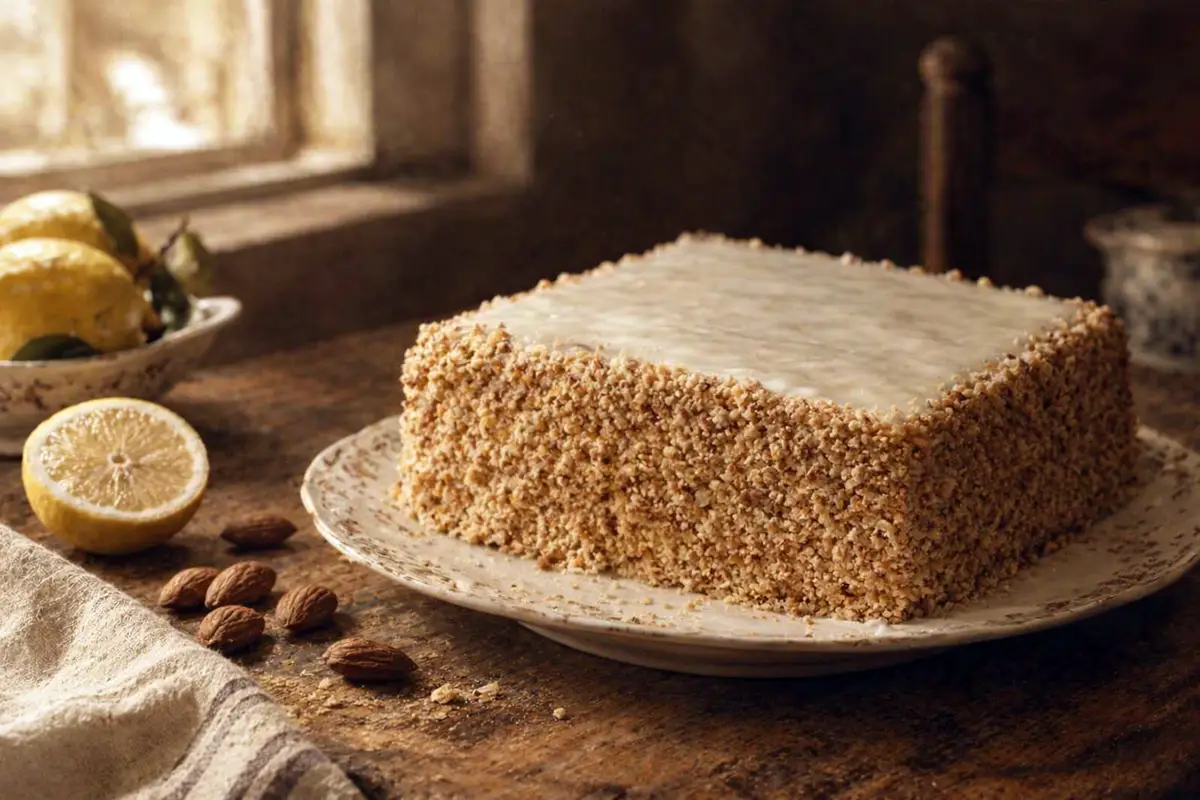
Quick Summary
This no-bake Central European torte stacks wafer sheets with a filling of melted Turkish delight, sugar syrup, ground almonds and lemon zest, then tops it with a glossy fondant glaze. Made without eggs, dairy or animal fat, it takes about 75 minutes, plus a few hours to set.
Historical recipe
Modernised adaptation of an early 20th‑century source. Not independently kitchen-tested by Attic Recipes. Quantities, temperatures, and food safety guidance have been updated for a contemporary kitchen — results may vary and errors may exist. Nutritional values, where provided, are estimates only and have not been laboratory tested. Always follow current food safety guidelines for your region. If you have a health condition, allergy, or dietary requirement, consult a qualified professional before preparing this recipe.
Use of this recipe is entirely at your own risk and subject to ourTerms of Service andPrivacy Policy. Attic Recipes accepts no liability for any adverse outcome.
- Gluten
- Tree Nuts
Additional notes
Warning
Hot sugar syrup reaches 105–115°C (221–239°F), sticks to skin and causes severe burns. Keep children and older adults away from the stove, use a deep heavy pan, and never leave boiling sugar unattended.
Note
Contains almonds (tree nuts) and wafers made from wheat. Not suitable for anyone with a nut allergy or gluten intolerance. Check the labels on wafers and Turkish delight for hidden allergens.
Note
This torte is very high in sugar, about 50g per slice, so keep portions small. Children, older adults and anyone monitoring their sugar intake should enjoy it only occasionally.
- 1
Finely grate the zest of 1 unwaxed lemon. Measure 150g ground blanched almonds and set 100g aside for the filling and 50g for coating the sides. Cut 500g plain Turkish delight into pieces of about 5mm. Lay out 8 square wafer sheets.
TipTurkish delight sticks to everything. Dip the knife in hot water and wipe it between cuts, or chill the pieces in the freezer for 20 minutes before cutting. If starting from whole almonds: blanch 1 minute, slip off the skins, dry at 120°C (250°F) for 15 minutes, cool and grind finely. - 2
Put 500g granulated sugar and 250ml water in a heavy 3-litre saucepan. Dissolve over medium heat, then bring to a boil and simmer without stirring for 5–7 minutes, until the syrup reaches about 105°C (221°F). It should be slightly thinner than the syrup for a spoon sweet.
TipDo not stir once the sugar has dissolved. Stirring a boiling syrup can start crystallization and make the filling grainy. - 3
Take the pan off the heat. Add the 500g chopped Turkish delight and stir constantly until it melts into a smooth, thick mass, 5–8 minutes.
TipIf small lumps remain, return the pan to the lowest heat and stir for a minute or two. Do not let it boil again. - 4
Stir in 100g of the ground almonds and the lemon zest until evenly mixed. This is the filling.
TipThe filling thickens quickly as it cools. Assemble while it is still warm and spreadable. If it stiffens, warm the pan gently, stirring, until it loosens. - 5
Place 1 wafer on a flat serving board. Spread it with about 140g of the warm filling, right to the edges, in an even layer of about 3mm. Repeat with 6 more wafers, stacking them, until 7 wafers are filled. Reserve about 250g of the filling. Set the 8th wafer on top with its honeycomb-textured side facing up. Coat the sides of the torte with the reserved filling and press the remaining 50g ground almonds onto the sides.
TipPress each layer down gently with your palm so the stack is level and the layers bond. Use a spatula dipped in hot water to smooth the sides. - 6
For the glaze, put 200g granulated sugar and 500ml water in a clean saucepan. Dissolve over medium heat, then boil without stirring until the syrup reaches 113–115°C (235–239°F), about 15–20 minutes. Brush down any crystals on the sides of the pan with a wet pastry brush as it boils.
TipBURN HAZARD: boiling sugar syrup is far hotter than boiling water and sticks to skin. Keep children away from the stove and never leave the pan unattended. Traditional cooks tested the stage by blowing through a wire loop dipped in the syrup until a bubble formed; a thermometer is more reliable. - 7
Pour the syrup into a clean heatproof bowl and let it cool undisturbed to about 40–45°C (104–113°F), about 10–15 minutes. Add the 0.5ml lemon juice (8–10 drops), then beat vigorously with a clean wooden spoon until the glaze turns opaque white, thick and creamy, 5–10 minutes.
TipDo not stir or move the syrup while it cools. Beating it too hot gives a coarse, grainy glaze. - 8
Working quickly, pour the glaze over the top of the torte and spread it to the edges with an offset spatula. If the glaze becomes too thick to pour, set the bowl in a pan of warm water and stir until it loosens, keeping it below 45°C (113°F).
TipOverheating the glaze makes it lose its gloss and stay soft, so warm it only until pourable. - 9
Leave the torte uncovered at room temperature for 1 hour for the glaze to set, then let it rest for another 2 hours so the wafers soften into the filling. Slice into 20 small pieces with a long knife dipped in hot water and wiped dry.
TipThe torte slices more cleanly after a full rest. Wipe the knife between cuts.
Nutrition Informationper 1 slice (approx 75g)
Nutritional values are approximate estimates and may vary based on specific ingredients used, preparation methods, and portion sizes.
Serving Suggestions
Serve in small slices with strong black coffee or unsweetened tea, as the torte is very sweet. Store in an airtight container in a cool place for up to 4 days; refrigeration can make the glaze weep.
About This Recipe
This is a no-bake torte built from thin, crisp wafer sheets, a thick filling of melted Turkish delight and ground almonds, and a smooth white fondant glaze. There is no oven, no butter and no eggs, which made it a practical sweet for fasting days, and it is naturally vegan and dairy-free.
Melting plain Turkish delight into a hot sugar syrup is the clever part. The ratluk dissolves into a soft, fragrant paste that spreads like a thick jam and holds the layers together as it cools. Ground almonds add body and a gentle nutty flavor, and lemon zest keeps the sweetness from becoming flat.
The finished torte is dense, sweet and chewy, best cut into small slices and served with strong coffee or plain tea.
Why It Works
The filling is a cooked sugar syrup with Turkish delight melted into it. The sugar and starch gel in the ratluk dissolve in the hot syrup, then set again as the mixture cools, which is why the filling must be spread while it is warm. Over a few hours the wafers absorb a little moisture from the filling and soften, turning separate sheets into a sliceable torte.
The glaze is a fondant. The syrup is boiled to a precise temperature, cooled without stirring so that only very fine crystals form, and then beaten until it turns opaque and creamy. The few drops of lemon juice are acid that converts a small part of the sugar and helps keep the crystals tiny, so the glaze is smooth instead of gritty.
Modern Kitchen Tips
Use a sugar thermometer for both syrups. It removes the guesswork from the glaze, where a few degrees decide between a glossy glaze and a grainy or runny one.
Keep a bowl of hot water and a clean towel nearby. A knife or spatula dipped in hot water and wiped dry smooths the filling and glaze and cuts neat slices.
Pour the glaze syrup into a clean bowl and do not scrape the pan, since sugar crystals stuck to the sides can trigger graininess. Use a wooden spoon that has never touched fat.
A classic of early 20th century home cooking, preserved and adapted for the modern kitchen.
The Story Behind This Recipe
Historical Context
Plain Turkish delight, known in the region as ratluk, entered Central European kitchens during the centuries of Ottoman presence in the region and became a common confection in home pantries. Sweets for fasting days were made without eggs, butter or cream, so wafers, sugar syrups, nuts and confectionery such as ratluk did most of the work. Home cooks of the period stacked wafer sheets with melted ratluk and ground almonds and finished the top with a boiled-sugar glaze. Syrups were tested without a thermometer, by blowing through a wire loop dipped in the syrup, and the traditional approach did not specify the size of the wafer sheets, the volume of a glass of water, or how to divide the almonds between filling and coating.
Modern Kitchen Adaptation
The wire-loop test is replaced with a sugar thermometer: about 105°C (221°F) for the filling syrup and 113–115°C (235–239°F) for the glaze, both estimated from standard confectionery stages. Wafer size (about 20 × 20 cm), a 'large glass' of water (250 ml), the 100 g / 50 g almond split, the filling per wafer (about 140 g, with about 250 g kept for the sides), and the setting time were not specified and have been estimated. The period ingredient list gives half a lemon, while the method gives one lemon; one lemon is used here. Seven wafers are filled and the eighth is used as the top, glazed on its honeycomb-textured side. Cooling the glaze syrup to 40–45°C before beating and warming it only to loosen are added for a smooth, glossy result. The torte is naturally Lenten (posno) and can be vegan, dairy-free and egg-free, but check the labels: some wafer sheets contain milk or egg derivatives, and some Turkish delight contains gelatin. For a gluten-free version, use certified gluten-free wafers.
Images on this site are AI-generated illustrations in a 1930s style; your finished dish may look different.
This recipe is an independent modern adaptation developed from historical sources in the public domain. It is provided for informational and educational purposes only and does not constitute professional dietary, nutritional, or medical advice. Food preparation involves inherent risks. The reader assumes full responsibility for safe food handling, ingredient sourcing, and adherence to current local food safety guidelines. The site operator accepts no liability for outcomes resulting from the preparation or consumption of this recipe.
One recipe.
Every week.
You Might Also Like
More recipes you'll enjoy
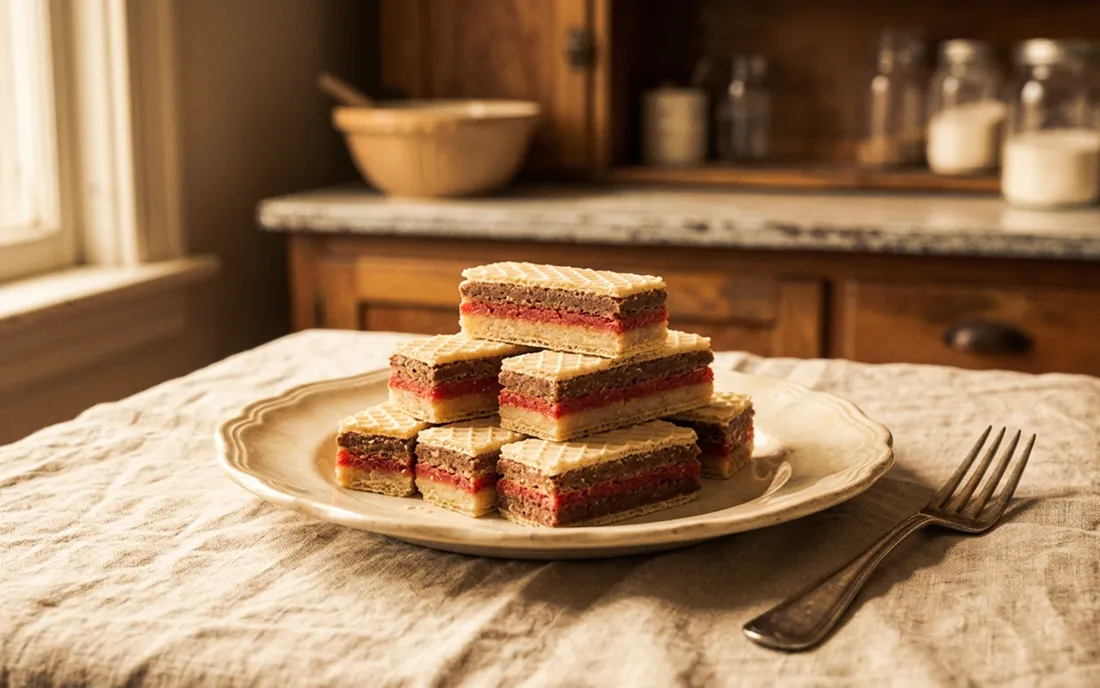
Vegan Almond Wafer Bars (Three-Layer)
Dairy-free, egg-free almond wafer bars in three colorful layers — a no-bake Lenten dessert built from almond paste and crisp wafer sheets.
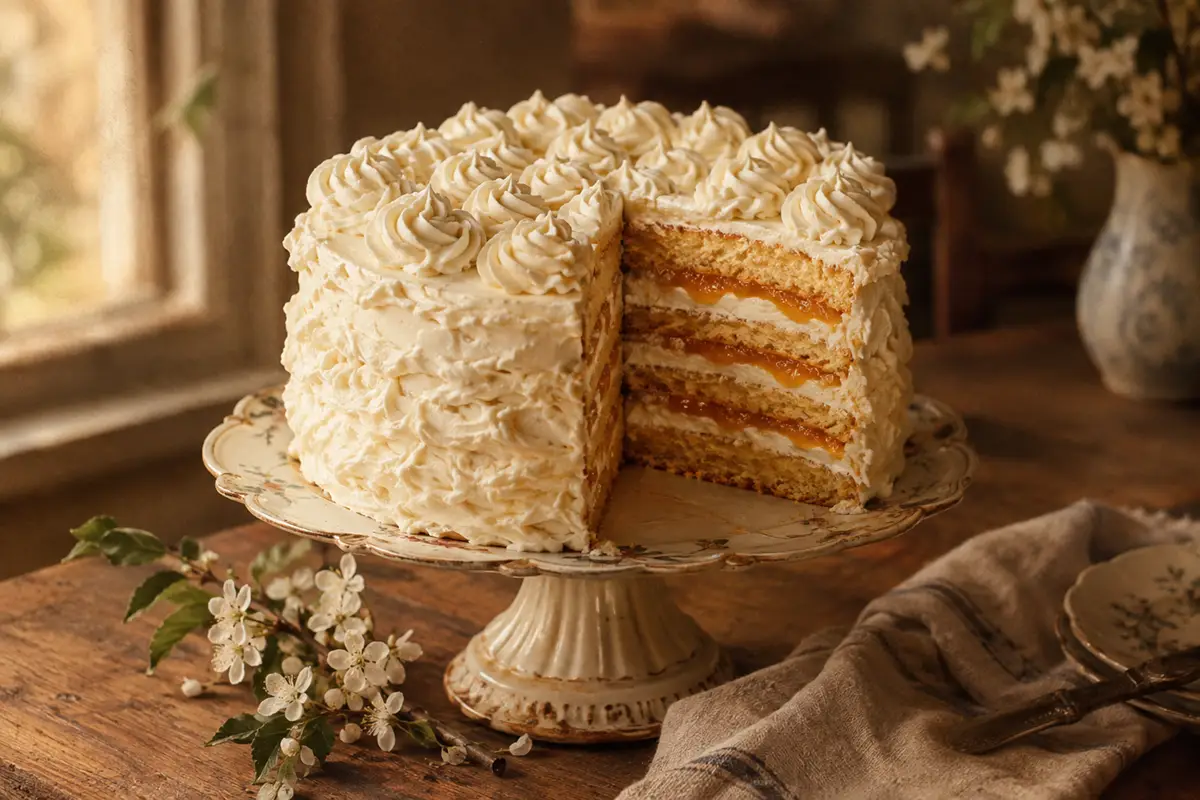
Easter Torte with Apricot Jam and Whipped Cream
Five thin semolina sponge layers filled with apricot jam and vanilla whipped cream, topped with piped cream for a light vintage Easter torte.
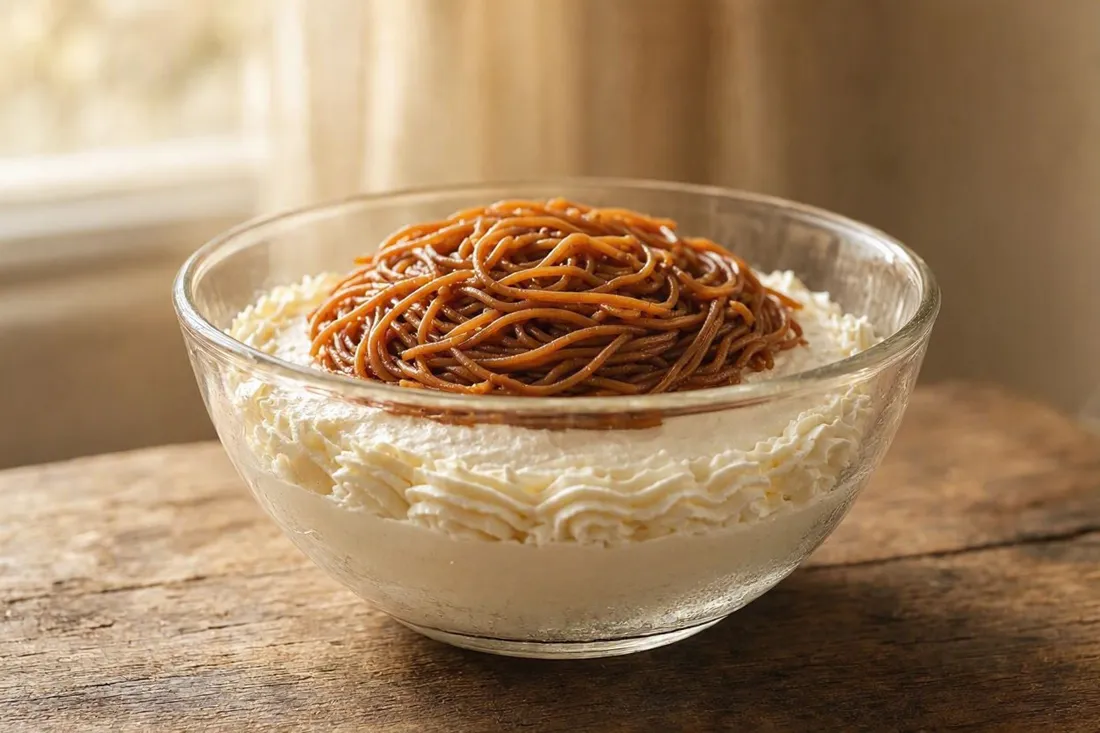
Chestnut Purée with Whipped Cream
Sweetened chestnut puree is pressed through a ricer over whipped cream and finished with a piped border of cream — a rich chestnut dessert.