Easter Torte with Apricot Jam and Whipped Cream
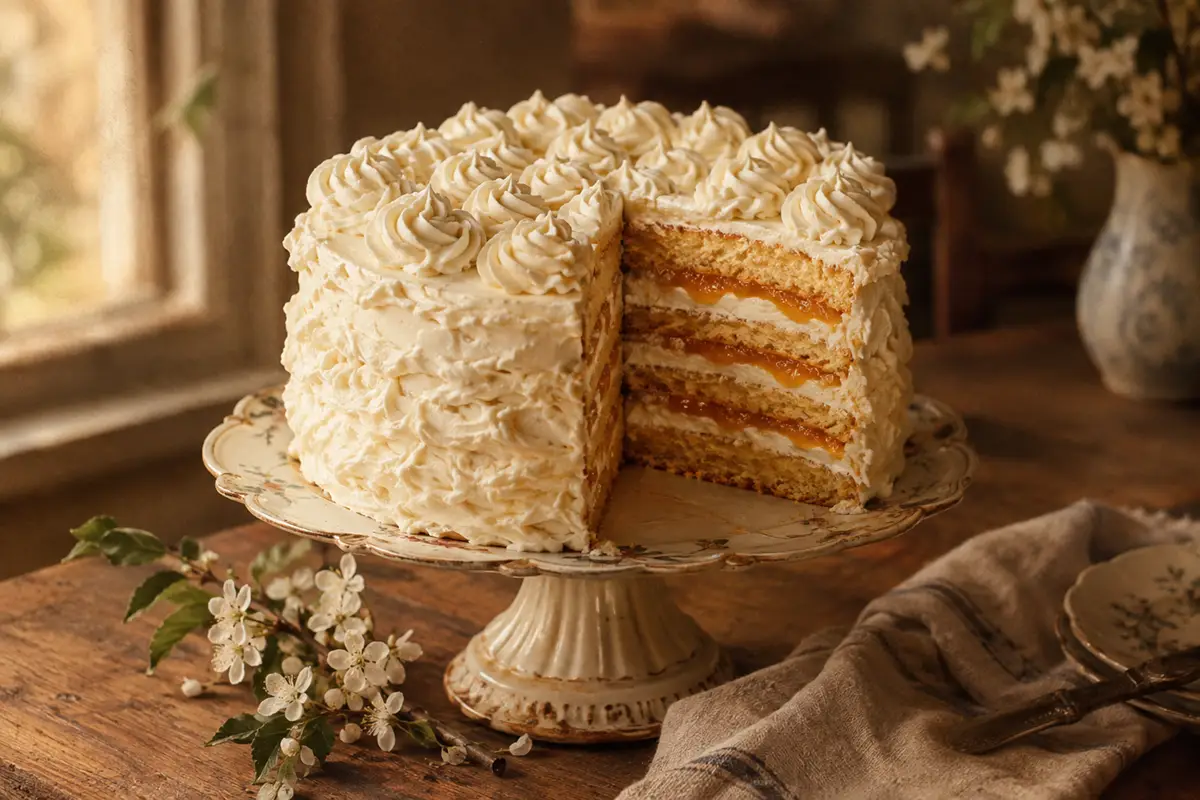
Five thin semolina sponge layers filled with apricot jam and vanilla whipped cream, topped with piped cream for a light vintage Easter torte.
Quick Summary
This vintage Easter torte stacks five thin, egg-rich sponge layers made with a little fine semolina, each spread with apricot jam and vanilla whipped cream. It takes about 80 minutes plus several hours of chilling, and the top is covered or piped with more cream.
Historical recipe
Modernised adaptation of an early 20th‑century source. Not independently kitchen-tested by Attic Recipes. Quantities, temperatures, and food safety guidance have been updated for a contemporary kitchen — results may vary and errors may exist. Nutritional values, where provided, are estimates only and have not been laboratory tested. Always follow current food safety guidelines for your region. If you have a health condition, allergy, or dietary requirement, consult a qualified professional before preparing this recipe.
Use of this recipe is entirely at your own risk and subject to ourTerms of Service andPrivacy Policy. Attic Recipes accepts no liability for any adverse outcome.
- Eggs
- Dairy
- Gluten
Additional notes
Caution
Whipped cream is perishable. Use pasteurized cream, keep the torte refrigerated at 4°C (40°F) or below, do not leave it at room temperature for more than 2 hours, and discard it after 2 days. This is especially important for pregnant women, children, older adults and immunocompromised people.
Note
This torte is high in saturated fat (about 10g per slice) and sugar (about 39g per slice), so it is best enjoyed in small portions as an occasional treat, particularly by children, older adults and anyone monitoring their fat or sugar intake.
- 1
Preheat the oven to 160°C (320°F) / 140°C fan. Line 2 large baking sheets with parchment paper. On the underside of the parchment, trace two 20 cm circles on each sheet, then turn the paper over so the pencil marks face down.
TipFour circles are baked together and the fifth afterward. The oven is kept low so the thin layers dry out gently and color only lightly. - 2
Separate 5 of the 6 large eggs, putting the yolks in a large bowl and the whites in a very clean, dry, grease-free bowl. Add the remaining whole egg to the yolks.
TipEven a trace of yolk will stop the whites from whipping to full volume. - 3
Beat the 5 yolks and 1 whole egg with 280g granulated sugar until pale, thick and voluminous, 8–10 minutes with a mixer.
TipThe mixture will be very thick because of the amount of sugar. The sugar should be largely dissolved, and the mixture should fall from the whisk in a slow ribbon. - 4
Whip the 5 egg whites to stiff, glossy peaks. Fold about one-third of the whites into the yolk mixture to loosen it. Sift 90g fine semolina flour over the top and fold in gently, then fold in the remaining whites until no streaks remain.
TipFold gently and stop as soon as the batter is even. The whipped whites are the only leavening. - 5
Divide the batter into 5 equal portions (about 130g each). Spread 4 portions inside the traced circles in an even layer about 5mm thick, using an offset spatula. Cover the remaining batter and set it aside.
TipSpread the layers quickly. The batter loses air as it stands, and the last layer will be slightly thinner if left waiting. - 6
Bake the 4 layers for 12–15 minutes, swapping the baking sheets between the racks halfway through, until pale golden and set at the centre. Slide the parchment onto wire racks. While the layers are still warm, trim each to an even round with a 20 cm plate or ring. Cool the baking sheets, re-line one, then spread and bake the fifth layer the same way.
TipAlways spread the batter on a cool baking sheet. A hot sheet starts cooking the batter before it reaches the oven. Trimming while warm prevents the edges from cracking. - 7
Let all 5 layers cool completely, about 30 minutes. In a chilled bowl, whip 500ml cold heavy cream with 50g icing sugar and 1 tsp vanilla extract to stiff peaks, 3–5 minutes.
TipChill the bowl and whisk beforehand. Stop as soon as stiff peaks form, because overwhipped cream turns grainy and starts to become butter. - 8
Place the first layer on a serving plate. Spread it thinly with about 60g apricot marmalade, then with about 95g of the whipped cream. Repeat with layers 2, 3 and 4, then set the fifth layer on top with the smooth side up.
TipPress each layer down very gently. The thin layers are fragile and break if pressed hard. - 9
Cover the top with the remaining whipped cream, smoothing it with an offset spatula, or pipe it into rosettes or other shapes with a piping bag and a large star tip.
TipFor piping, keep the cream cold and stiff. If it softens, chill the filled bag for 10 minutes. - 10
Chill the torte, loosely covered, in the refrigerator at 4°C (40°F) or below for at least 3½ hours, until the layers have softened and it slices cleanly. Cut with a long knife dipped in hot water and wiped dry.
TipDo not skip the chilling. The dry sponge layers absorb moisture from the cream and marmalade and turn tender.
Nutrition Informationper 1 slice (approx 115g)
Nutritional values are approximate estimates and may vary based on specific ingredients used, preparation methods, and portion sizes.
Serving Suggestions
Serve chilled in slices with tea or coffee, ideally the day after assembling, when the layers have fully softened. Store covered in the refrigerator for up to 2 days.
About This Recipe
This Easter torte is built from five thin, golden sponge layers, spread with tart apricot marmalade and soft vanilla cream. The sponge is rich in eggs and sugar and uses only a little fine semolina, so it bakes into slim, delicate rounds instead of a tall cake.
Stacked and left to rest in the refrigerator, the layers take up moisture from the cream and marmalade and turn tender, while the apricot adds a bright acidity that balances the sweetness. The top is covered with whipped cream, or piped into rosettes and other shapes for the festive table.
It is a light, elegant torte, best cut into slim slices and served chilled with tea or coffee.
Why It Works
There is almost no flour here, so the structure comes from eggs. Beating the yolks and whole egg with a large amount of sugar builds a thick foam, and the whipped whites add the lightness. The small amount of fine semolina absorbs moisture slowly and gives the crumb a tender, slightly sandy texture without making it heavy.
Because the layers are so thin and baked slowly at a low temperature, they come out dry and sturdy enough to handle. That dryness is deliberate: once layered with moist cream and marmalade, the sponge draws in moisture over several hours and becomes soft, which is why the torte needs time in the refrigerator before it is cut.
Modern Kitchen Tips
Trace the layers on the underside of parchment paper so the pencil does not touch the batter, and spread each layer to an even thickness so they bake at the same rate.
Whip the cream last, from very cold, in a chilled bowl, and stop as soon as it holds stiff peaks. Sift the icing sugar in so there are no lumps.
Cut the chilled torte with a long, thin knife dipped in hot water and wiped dry between cuts for neat layers.
A classic of early 20th century home cooking, preserved and adapted for the modern kitchen.
The Story Behind This Recipe
Historical Context
Early 20th century festive tortes of this kind were assembled from several thin sponge layers rather than one tall cake, joined with fruit marmalade and sweetened cream. Home cooks of the period used a cloth piping bag to turn the whipped cream into decorative figures on top. The batter relied on whipped eggs and only a small amount of finely milled semolina, with the sugar beaten into the yolks and the whites whipped on their own. The traditional approach did not specify the oven temperature, the diameter of the layers, or the amounts of marmalade and powdered sugar, and described the baking only as slow.
Modern Kitchen Adaptation
Oven temperature was not given and has been estimated at 160°C (320°F) / 140°C fan, with 12–15 minutes per layer. The layer diameter (20 cm), thickness (about 5 mm), the amount of apricot marmalade (250 g), the icing sugar (50 g, 'to taste' in the period method) and the vanilla (1 tsp) were also not specified and have been estimated. 'Fine semolina flour' is read as very finely milled wheat semolina; plain flour can be used in the same weight, giving a slightly softer crumb. Layers are baked on parchment-lined sheets, which removes the need for greasing, and trimmed round while warm. The marmalade goes on layers 1–4 and the top is covered with cream only; the sides are left open to show the layers. Whipped cream is perishable, so the torte must be refrigerated and eaten within 2 days. Check the label of commercial apricot jam, because some contain sulphites. The eggs in the sponge are fully baked in thin layers, so no raw egg remains in the finished torte.
Images on this site are AI-generated illustrations in a 1930s style; your finished dish may look different.
This recipe is an independent modern adaptation developed from historical sources in the public domain. It is provided for informational and educational purposes only and does not constitute professional dietary, nutritional, or medical advice. Food preparation involves inherent risks. The reader assumes full responsibility for safe food handling, ingredient sourcing, and adherence to current local food safety guidelines. The site operator accepts no liability for outcomes resulting from the preparation or consumption of this recipe.
One recipe.
Every week.
You Might Also Like
More recipes you'll enjoy
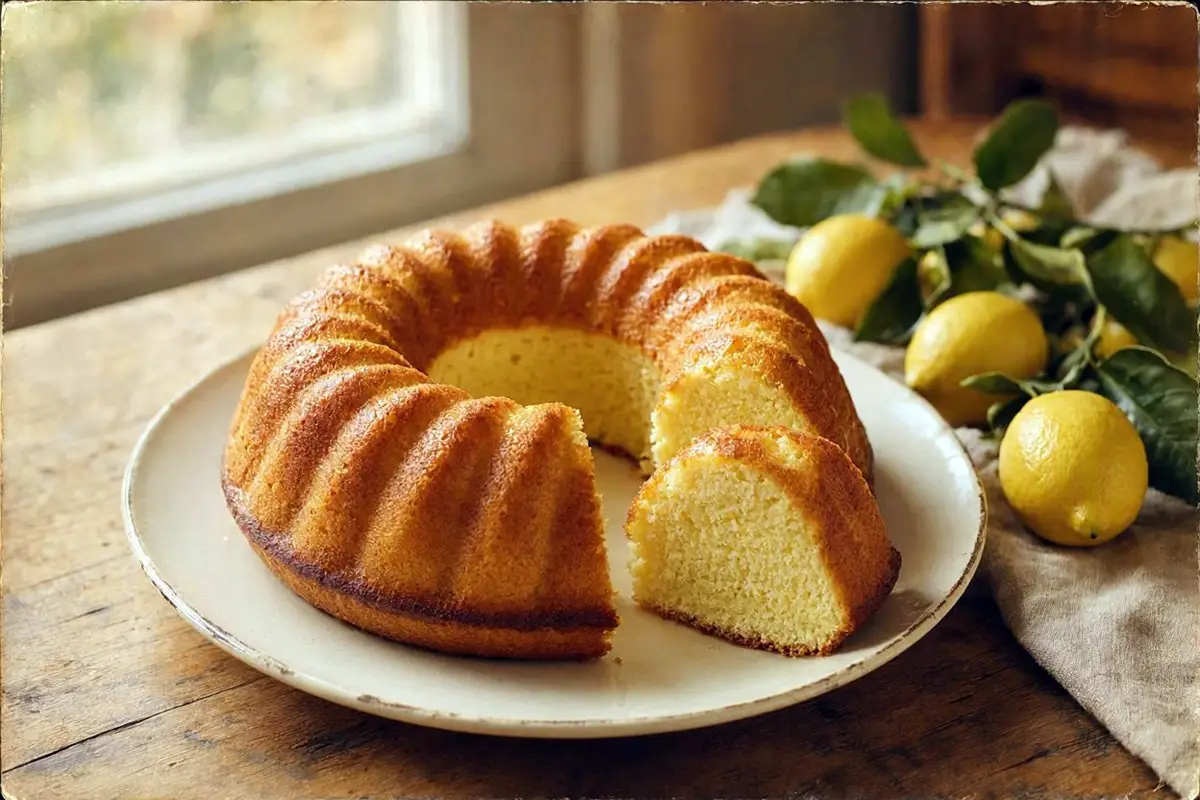
Lemon Potato Starch Sponge Cake
A tender vintage lemon sponge with 12 eggs, fresh zest and juice, and potato starch in place of flour, baked in a tube or bundt pan.
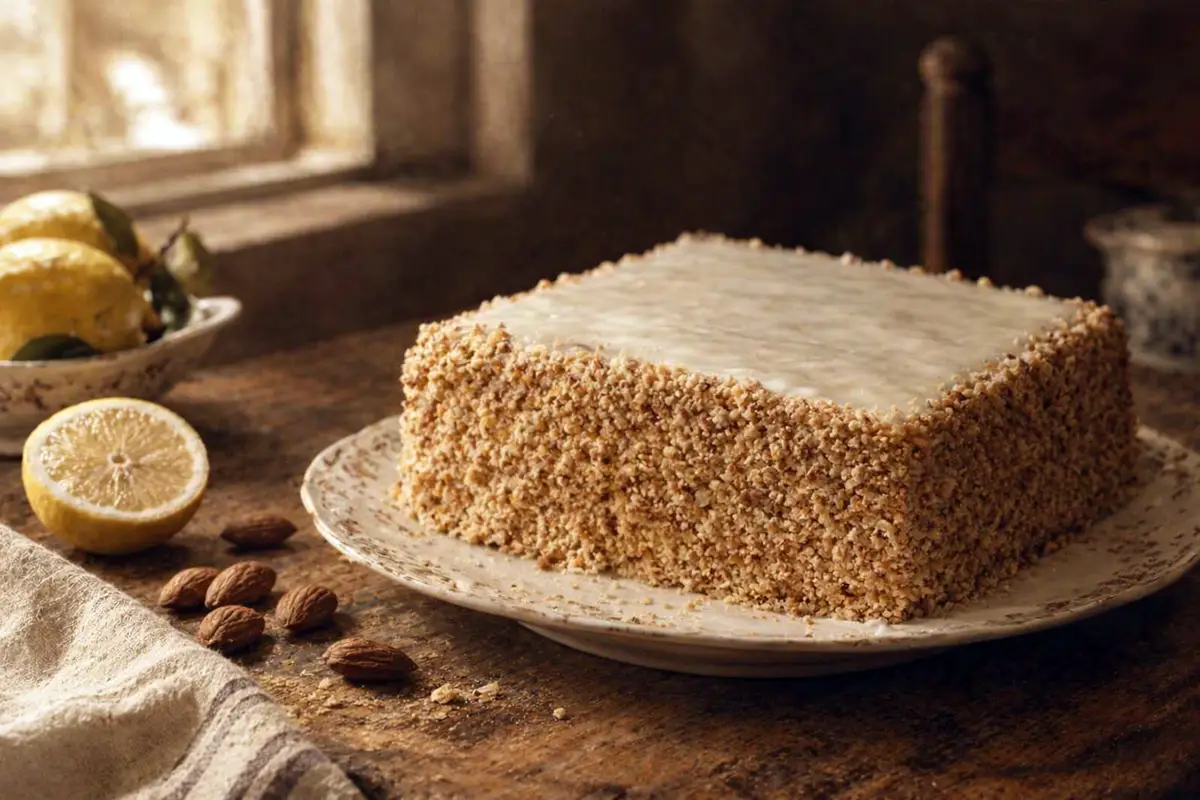
Lenten Turkish Delight Wafer Torte
A no-bake Lenten torte of crisp wafer sheets layered with melted Turkish delight, ground almonds and lemon zest, finished with a glossy fondant glaze.
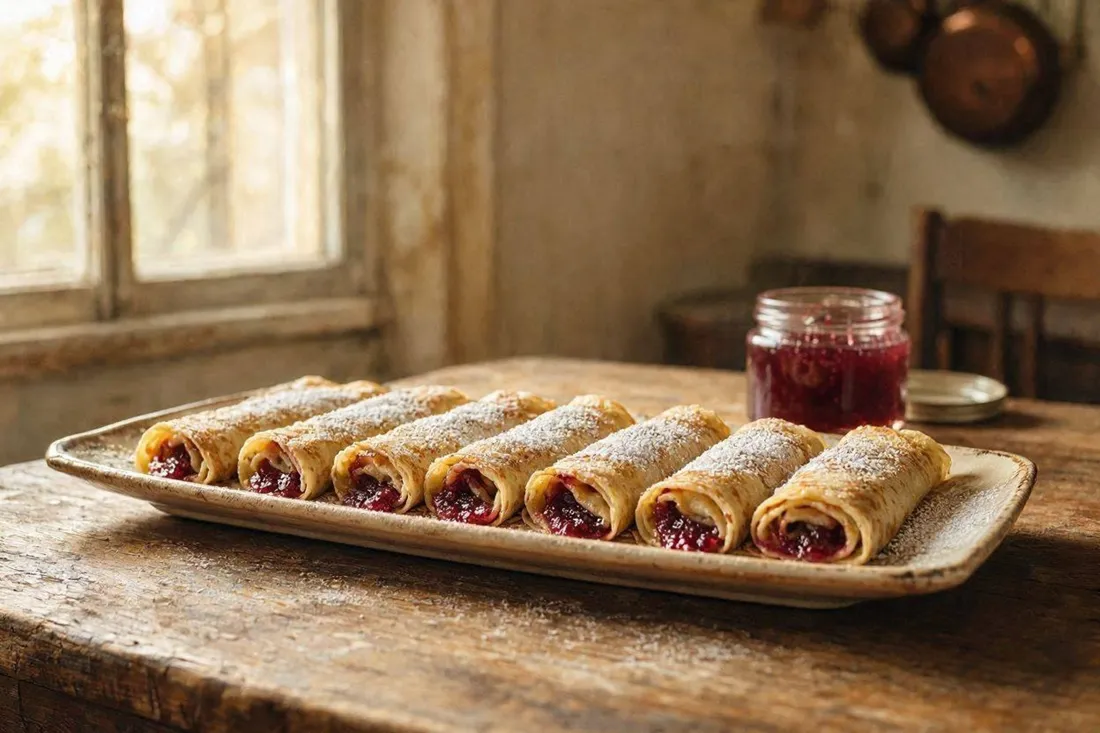
Classic Jam-Filled Crepes
Thin, delicate egg crepes with very little flour, pan-fried and rolled around jam, finished with vanilla sugar — a simple Central European classic.