Ladyfingers with Strawberry Topping
Ladyfingers layered with a thick wild strawberry syrup and chilled to set — a simple, elegant Central European no-bake dessert from the early 20th century.
Quick Summary
Ladyfingers layered with a thick wild strawberry syrup and chilled to set — a simple, elegant Central European no-bake dessert from the early 20th century.
Historical recipe
Modernised adaptation of an early 20th‑century source. Not independently kitchen-tested by Attic Recipes. Quantities, temperatures, and food safety guidance have been updated for a contemporary kitchen — results may vary and errors may exist. Nutritional values, where provided, are estimates only and have not been laboratory tested. Always follow current food safety guidelines for your region. If you have a health condition, allergy, or dietary requirement, consult a qualified professional before preparing this recipe.
Use of this recipe is entirely at your own risk and subject to our Terms of Service and Privacy Policy. Attic Recipes accepts no liability for any adverse outcome.
- Eggs
- Gluten
- Dairy
Additional notes
-
Warning
The sugar syrup in step 3 reaches temperatures above 100°C and will cause serious burns on skin contact. Keep children under 18 away from the stove during this step. Use a long-handled spoon for stirring and take care when adding the strawberry purée to the hot syrup, as the mixture may bubble and spit.
-
Note
Each serving contains approximately 73g of sugar. This dessert is intended as an occasional treat. Individuals managing blood sugar should be aware of the high carbohydrate content.
- 1
Wash the 500g of wild strawberries thoroughly and hull them. Reserve a small handful of the best-looking whole berries for decoration. Place the rest on a clean sieve set over a bowl and leave to drain for 5 minutes.
- 2
Press the drained strawberries through a fine-mesh sieve into a bowl, working the pulp through with the back of a spoon. Discard the seeds and any remaining fibrous pulp. You should have approximately 300–350ml of smooth strawberry purée.
- 3
In a medium heavy-bottomed saucepan, combine the 250g of sugar and the 125ml of water. Set over medium heat and stir until the sugar has fully dissolved. Bring to a boil and cook without stirring for 8–10 minutes, until the syrup has thickened visibly — it should coat the back of a spoon and fall in a slow, heavy drip rather than a thin stream. Do not allow it to caramelise or colour.
Tip The syrup is ready at approximately 105°C if you have a sugar thermometer. Without one, drop a small amount onto a cold plate — it should hold a soft, slightly sticky consistency when cool. - 4
Remove the saucepan from the heat. Add the strawberry purée and the lemon juice to the hot syrup and stir to combine thoroughly. The mixture will loosen slightly as the purée is incorporated. Set aside to cool until the topping is warm but no longer steaming — about 10–15 minutes. Do not allow it to cool completely before assembling, as it will thicken further and become difficult to pour.
- 5
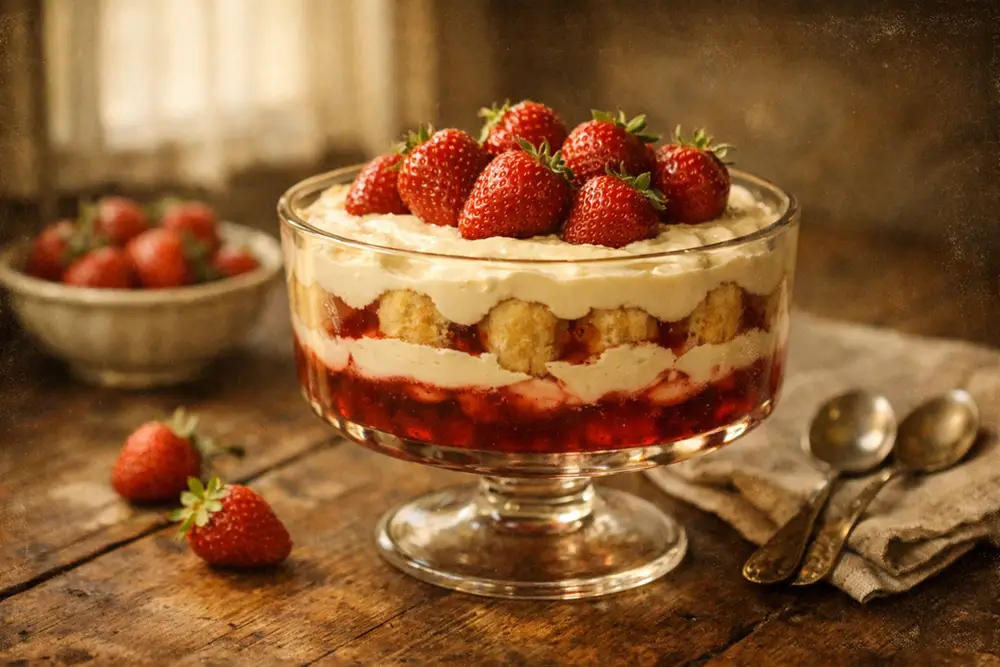
In a deep glass serving bowl, arrange a single layer of piskote, sugar-crusted side facing up. Pour enough of the warm strawberry topping over them to cover the biscuits generously — they should be well saturated but not swimming in liquid. Add a second layer of piskote and pour over more topping. Continue layering until all the piskote and topping are used. Finish with a final layer of topping — the topmost surface should be all strawberry.
- 6
Arrange the reserved whole strawberries decoratively across the top of the dessert. Cover the bowl with cling film and refrigerate for a minimum of 2 hours, until the layers have set and the piskote have softened completely into the topping. Serve cold, spooned directly from the bowl.
Tip The dessert holds well in the refrigerator for up to 24 hours. The piskote will continue to soften the longer it sits — some prefer the texture after a full overnight chill.
Nutrition Information per 1 serving (approx. 185g, based on 5 servings)
Nutritional values are approximate estimates and may vary based on specific ingredients used, preparation methods, and portion sizes.
Serving Suggestions
Serve cold, straight from the refrigerator, spooned into bowls or glasses. A spoonful of unsweetened whipped cream alongside cuts through the sweetness of the topping. The dessert is also good assembled in individual glasses for a more composed presentation.
About This Recipe
Before the refrigerator became a household fixture, the ice box was the summer kitchen’s most valuable tool — and the desserts built around it tend to share a certain quality: no oven, no fuss, and a patience that rewards waiting. This layered strawberry and piskote dessert is exactly that kind of sweet. Wild strawberries are pressed through a sieve and folded into a thick cooked syrup, then poured in stages over rows of ladyfingers in a glass bowl. Two hours in the cold and the whole thing sets into something between a trifle and a charlotte — the biscuits swelling into the syrup, the layers merging at the edges, the top crowned with whole berries.
The recipe is simple to the point of austerity. There is no custard, no cream in the layers, no gelatine — just fruit, sugar, and biscuit, assembled and left alone. What makes it work is the intensity of the strawberry base. Wild strawberries, smaller and more fragrant than cultivated ones, produce a purée that colours the syrup deeply and carries a flavour out of proportion to their size. The lemon juice is not incidental: it sharpens the sweetness and keeps the syrup from becoming cloying.
This version scales the proportions down to a practical household quantity without altering any of the ratios. The result is a dessert that looks more elaborate than the effort involved — which was, in all likelihood, exactly the point.
Why It Works
The structural principle here is absorption. Piskote (ladyfingers) are designed to take on liquid — their open, aerated crumb draws in moisture quickly, and the sugar crust on one side slows the process slightly, creating a contrast between the softened interior and a faintly resistant outer layer in the first hour or two of chilling. By the time the dessert is fully set, the boundary between biscuit and topping has blurred into something unified in texture.
The syrup itself does two things at once. Boiling the sugar and water together concentrates the solution, and the strawberry purée added off the heat brings both flavour and additional natural pectin from the fruit. As the dessert chills, this combination thickens further between the layers, giving the finished dessert enough body to hold its shape when spooned.
Modern Kitchen Tips
- Wild vs. garden strawberries: Wild strawberries give a noticeably more intense colour and flavour. If using garden strawberries, choose the smallest, ripest fruit and taste the purée before adding lemon — some varieties are tarter than wild ones.
- Syrup consistency: Err on the side of slightly under-thickened when the syrup is hot. It will continue to thicken as it cools and as the pectin in the strawberry purée activates during chilling.
- Glass bowl: A clear glass bowl lets the layers show through the sides — part of the visual appeal of this dessert. Individual glass tumblers or coupes work equally well for a single-serving presentation.
- Timing: Assemble no more than 24 hours ahead. Beyond that, the piskote dissolve too completely and the dessert loses its layered structure.
A classic of early 20th century home cooking, preserved and adapted for the modern kitchen.
The Story Behind This Recipe
Historical Context
No-bake layered biscuit desserts were a fixture of early 20th century Central European home cooking — practical, requiring no oven, and well suited to summer entertaining when the fruit was at its peak. Home cooks of the period used wild strawberries specifically, which are smaller, more intensely flavoured, and higher in pectin than cultivated varieties. Home cooks of the period worked with very large-batch syrups and specified that the assembled dessert be placed on ice to set — the domestic equivalent of refrigeration at the time. Piskote (known across the region as ladyfingers or savoiardi) were a standard pantry item, used across a wide range of cold and layered sweets.
Modern Kitchen Adaptation
Early 20th century versions of this dessert were made in very large batches — the proportions here are scaled down to a practical 4–6 serving quantity. The instruction to set the dessert 'on ice' has been replaced with standard refrigeration for a minimum of 2 hours. The lemon juice, specified in the original, is retained; it brightens the strawberry flavour and helps prevent the syrup from crystallising as it cools. Garden strawberries work well in place of wild ones — choose the ripest, most fragrant fruit available and expect a slightly less intense colour and flavour in the finished topping.
This recipe is an independent modern adaptation developed from historical sources in the public domain. It is provided for informational and educational purposes only and does not constitute professional dietary, nutritional, or medical advice. Food preparation involves inherent risks. The reader assumes full responsibility for safe food handling, ingredient sourcing, and adherence to current local food safety guidelines. The site operator accepts no liability for outcomes resulting from the preparation or consumption of this recipe.
One recipe.
Every week.
You Might Also Like
More recipes you'll enjoy
Peach Cream
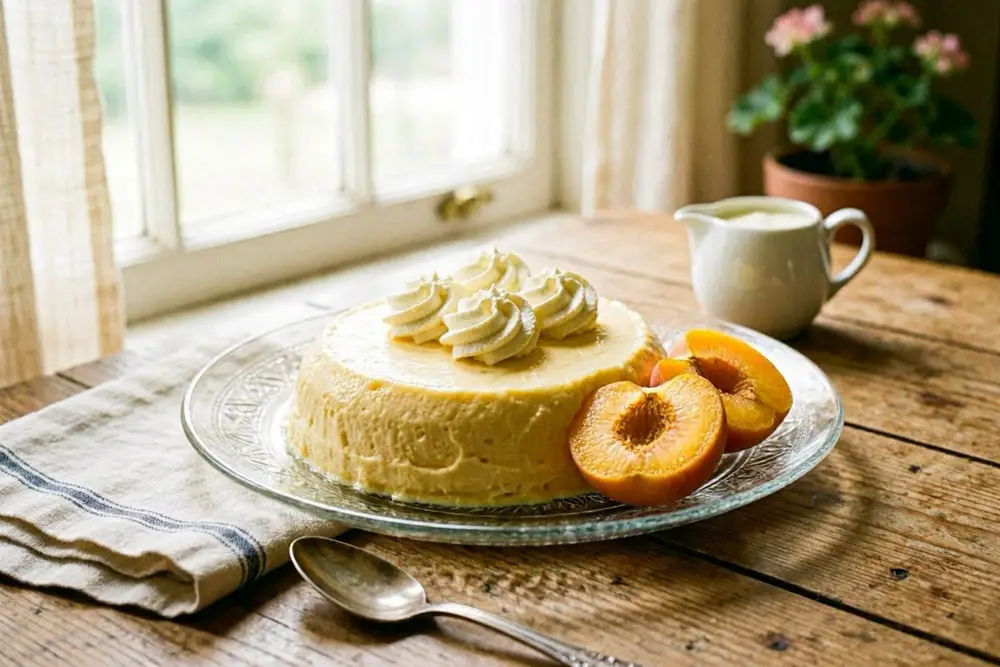
A chilled peach mousse from early 20th century home cooking: peach marmalade base folded with egg and gelatine, set in a mould and served with fresh cream.
Cherry Cream
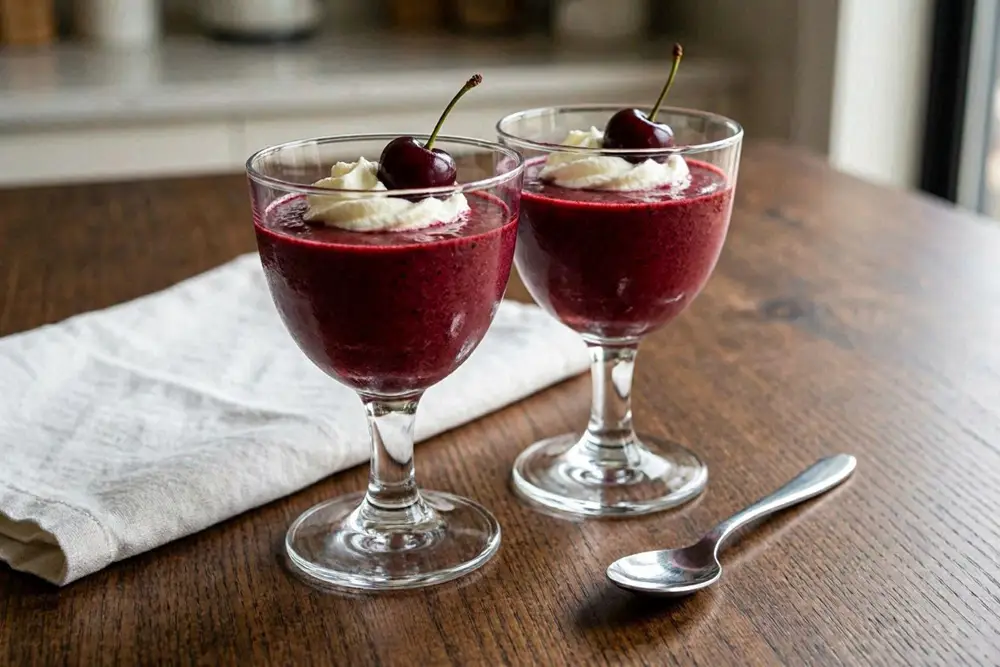
A silky, chilled cherry mousse set with agar-agar and lightened with whipped cream — a refined dessert from the early 20th century home kitchen.
Figs in the Snow
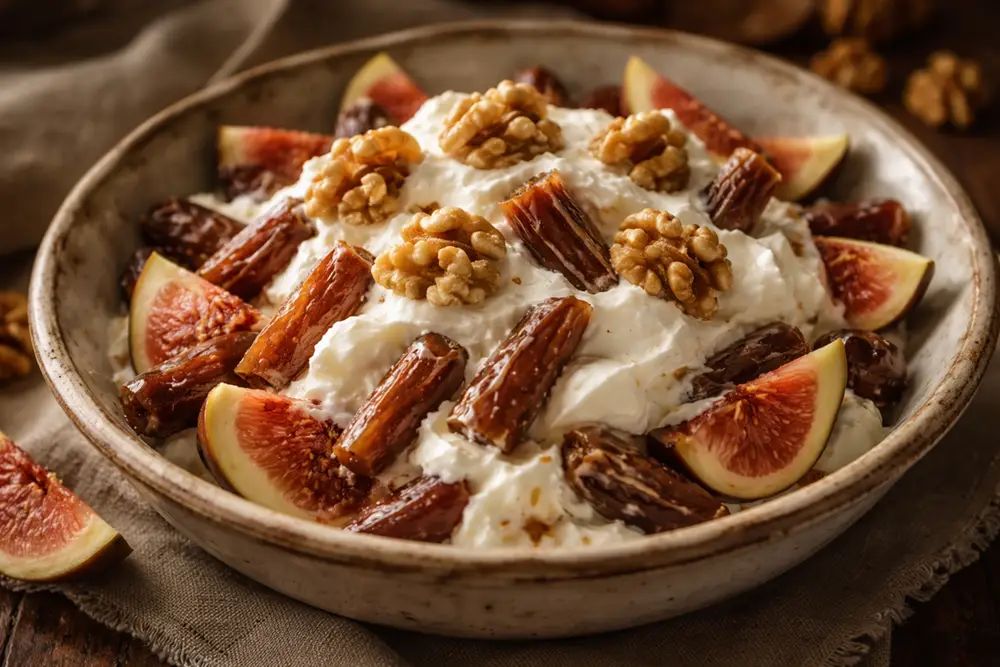
Sliced ripe figs and dates macerated in lemon juice and sugar, piled into a bowl and covered with sweetened whipped cream and whole walnuts.