Hazelnut Biscuits
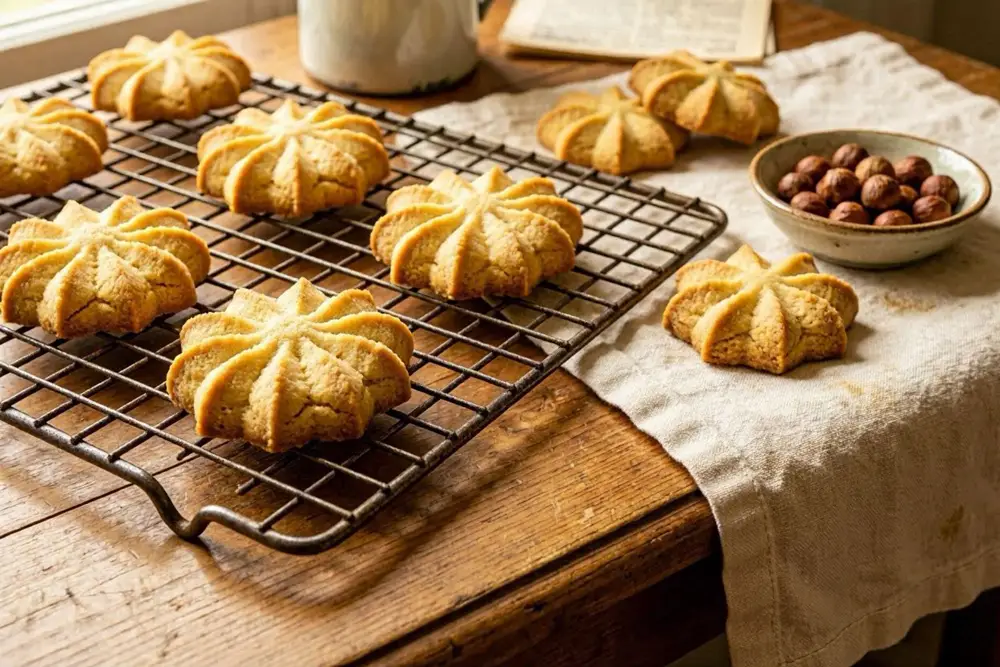
Rich, buttery biscuits shaped through a cookie press, packed with roasted ground hazelnuts and vanilla.
Historical recipe
Modernised adaptation of an early 20th‑century source. Not independently kitchen-tested by Attic Recipes. Quantities, temperatures, and food safety guidance have been updated for a contemporary kitchen — results may vary and errors may exist. Nutritional values, where provided, are estimates only and have not been laboratory tested. Always follow current food safety guidelines for your region. If you have a health condition, allergy, or dietary requirement, consult a qualified professional before preparing this recipe.
Use of this recipe is entirely at your own risk and subject to our Terms of Service and Privacy Policy. Attic Recipes accepts no liability for any adverse outcome.
- Eggs
- Dairy
- Gluten
- Tree Nuts
Additional notes
-
Note
This recipe contains eggs incorporated into a baked dough. Ensure biscuits are fully baked through (set centre, no raw dough smell) before consuming. Raw dough should not be tasted. Pregnant women, young children, older adults, and immunocompromised individuals should avoid consuming unbaked dough.
-
Note
This recipe contains hazelnuts (tree nuts), a major allergen. Suitable for nut-containing products only — not safe for individuals with tree nut allergy.
- 1
Toast the hazelnuts on a dry baking sheet at 175°C for 12–15 minutes until the skins blister and crack. Wrap in a clean kitchen towel and rub vigorously to remove the skins. Allow to cool completely, then grind finely in a food processor. Do not over-process into paste — the texture should resemble coarse sand.
Tip Pre-ground hazelnuts work, but freshly ground roasted ones produce a noticeably deeper flavour. The dough benefits from the oils released during fresh grinding. - 2
In a large bowl, beat the 250 g softened butter with an electric mixer until pale and foamy, about 3–4 minutes. Add the 500 g granulated sugar and beat until combined. Add the 6 eggs one at a time, beating well after each addition.
- 3
Add the 2 tbsp sour cream, 1 tsp baking soda, and 8 g vanilla sugar. Mix until just combined.
- 4
Add the 250 g ground roasted hazelnuts and stir to incorporate. Gradually add the 1150 g flour in three or four additions, mixing after each. When the dough becomes too stiff for the mixer, turn it out onto a lightly floured board and knead by hand until smooth and uniform.
- 5
Wrap the dough tightly in cling film or place in a covered container and refrigerate overnight, or for a minimum of 8 hours. This rest is strongly recommended — it makes shaping significantly easier and deepens the flavour.
- 6
When ready to bake, preheat the oven to 180°C (350°F) / 160°C fan. Line baking sheets with parchment paper. Remove the dough from the refrigerator and allow to rest at room temperature for 10 minutes if it feels too firm to press.
- 7
Load the dough into a cookie press fitted with your chosen disc, or into a piping bag with a star tip. Press or pipe the biscuits directly onto the prepared baking sheets, leaving about 3 cm between them. Alternatively, use a meat grinder fitted with a biscuit attachment to run the dough through into shapes.
- 8
Bake for 12–15 minutes, until the edges are lightly golden and the centres are set. The biscuits should not brown deeply — they continue to firm up as they cool.
Tip Every oven runs slightly differently. Bake a test tray of 6–8 biscuits first and adjust time and temperature before committing the full batch. - 9
Remove from the oven and allow to cool on the baking sheet for 5 minutes before transferring to a wire rack. Cool completely before storing.
- 10
Store in an airtight tin at room temperature. The biscuits keep well for 2–3 weeks and improve in flavour after the first day.
Nutrition Information per 1 cookie (approx. 18g)
Nutritional values are approximate estimates and may vary based on specific ingredients used, preparation methods, and portion sizes.
Serving Suggestions
Serve alongside coffee or tea. These biscuits are particularly well suited to the holiday tin — they keep for 2–3 weeks in an airtight container and improve over the first few days as the hazelnut flavour deepens. They travel well and make a good gift packed in a paper-lined box.
About This Recipe
These hazelnut biscuits belong to a category of Central European baking that was designed for volume. The recipe makes a large batch — approximately 120 cookies — and was intended for the holiday tin, the neighbour’s visit, or the church table. It is built around the domestic meat grinder fitted with a biscuit attachment, a piece of equipment that allowed a single cook to produce consistent, professional-looking shapes quickly and without the patience required for hand-rolling.
The flavour is defined by roasted hazelnuts, which here are used not as an accent but as a structural ingredient. At 250 g against 1150 g of flour, they contribute enough oil and body to shift the entire character of the dough — from a plain butter biscuit to something denser, nuttier, and more complex. The overnight rest in the refrigerator is not optional in spirit, even if it is technically skippable: the dough handles better cold, the hazelnut oils distribute more evenly, and the finished biscuit has a noticeably deeper flavour than one baked from dough mixed and pressed the same day.
This is practical baking at its most efficient — a single kneading session, a night’s rest, and a morning of shaping and baking yields enough biscuits to fill several tins.
Why It Works
The ratio of fat to flour here is lower than in a shortbread, which means the dough has structure — it holds its pressed shape cleanly and does not spread aggressively in the oven. The sour cream contributes a small amount of acid that reacts with the baking soda, producing a modest amount of CO₂ during baking and keeping the crumb tender rather than hard. It also adds a faint tang that balances the richness of the butter and the sweetness of 500 g of sugar in a batch this large.
Ground roasted hazelnuts behave differently from almond flour or plain ground nuts. Roasting drives off moisture and develops Maillard compounds that remain present in the finished biscuit. The grinding releases hazelnut oil, which acts as an additional fat in the dough — this is part of why the recipe works with a relatively low butter-to-flour ratio while still producing a tender result. Under-roasted or raw hazelnuts would not contribute the same flavour and would make the dough slightly wetter.
The meat grinder attachment — and its modern equivalent, the cookie press — works here because the dough is firm enough to hold shape under pressure but plastic enough to move through the die without crumbling. Cold dough is essential: warm dough softens too much and the extruded shapes spread before they set.
Modern Kitchen Tips
A cookie press fitted with a star or rosette disc produces results indistinguishable from the original machine method. If you do not own a cookie press, a piping bag with a large star tip works for rosette shapes, though it requires more hand pressure with a firm dough. Chill the dough thoroughly before piping.
For the hazelnuts: if buying pre-roasted, check that the skins have been removed — the skin adds bitterness. Grind in short pulses in a food processor; stop before the nuts begin to clump into paste. The correct texture is fine and sandy, not oily.
This recipe scales down well. Half quantities produce approximately 60 cookies and require no adjustment to method or timing.
A classic of early 20th century home cooking, preserved and adapted for the modern kitchen.
The Story Behind This Recipe
Historical Context
Machine-shaped biscuits of this type were a fixture of the middle-class Central European household from the late 19th century onward, made possible by the domestic meat grinder — a piece of equipment found in virtually every well-equipped kitchen of the period. Fitted with a special biscuit attachment, the grinder could produce consistent shapes at volume far faster than hand-rolling. Early 20th century home recipes for this style typically gave no oven temperature, assuming the cook would know the correct heat by the colour and smell of the baking dough. The instruction to knead the dough the day before appears frequently in this category of recipe — experienced bakers of the period understood that rested dough passed through the machine more cleanly and held its shape better after baking. Hazelnuts were the standard nut for Central European biscuit baking; walnuts appear in the same role in autumn and winter recipes where hazelnuts were unavailable.
Modern Kitchen Adaptation
The meat grinder biscuit attachment is largely obsolete in modern kitchens. A cookie press (Spritzgebäck press) is the direct modern equivalent and produces identical results; a piping bag fitted with a star tip works equally well for rosette and star shapes. The quantity of hazelnuts has been corrected to 250 g (1/4 kg) — the figure as transcribed was physically impossible given the other ingredient quantities, and 250 g is consistent with the hazelnut-to-flour ratio typical of this biscuit style. Oven temperature was not given in the period recipe; 180°C conventional / 160°C fan is estimated based on the butter and egg content of the dough and the thin cross-section of pressed shapes. The baking soda acts here as a mild chemical leavener rather than a full raising agent — it is present at a low quantity relative to the flour and contributes to a tender crumb rather than lift.
This recipe is an independent modern adaptation developed from historical sources in the public domain. It is provided for informational and educational purposes only and does not constitute professional dietary, nutritional, or medical advice. Food preparation involves inherent risks. The reader assumes full responsibility for safe food handling, ingredient sourcing, and adherence to current local food safety guidelines. The site operator accepts no liability for outcomes resulting from the preparation or consumption of this recipe.
One recipe.
Every week.
You Might Also Like
More recipes from the same category
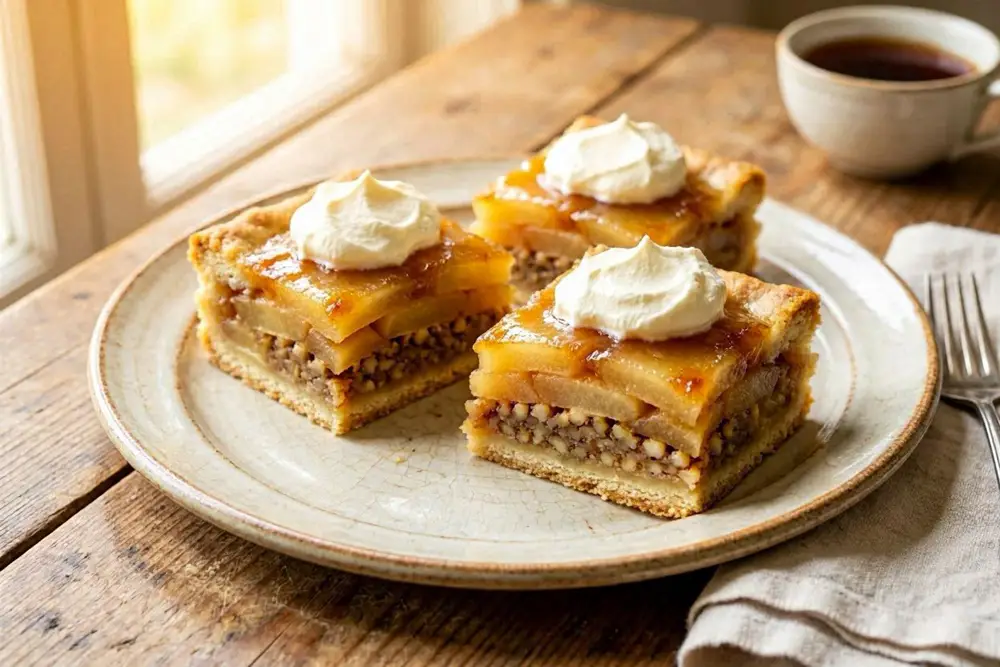
Apple Pie with Whipped Cream
A crisp almond shortcrust base layered with ground walnuts, poached apples, apricot jam, and a thick cloud of sweetened whipped cream.
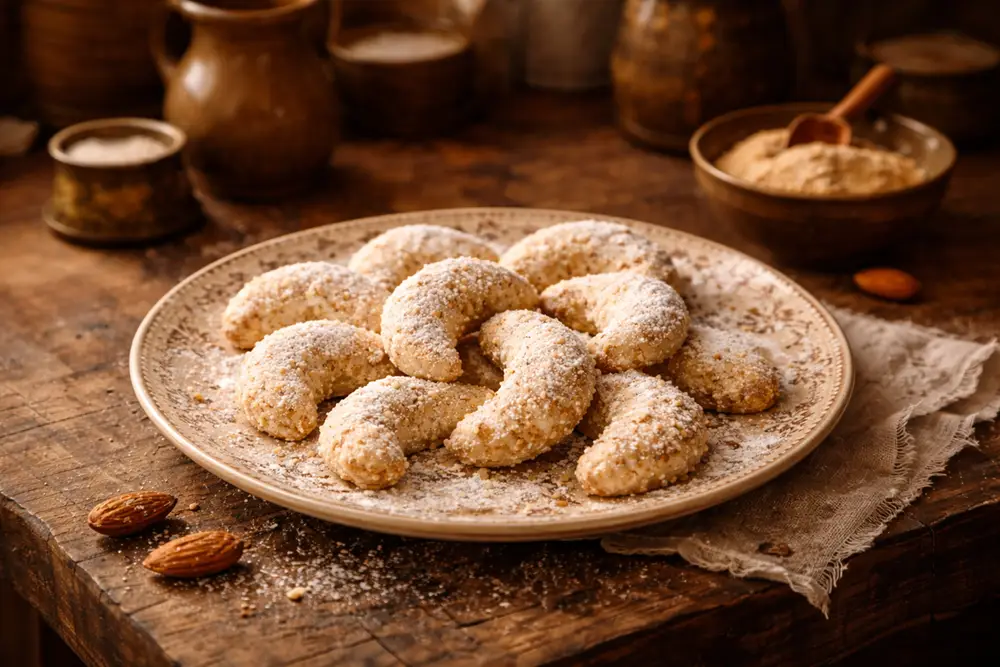
Almond Meringue Crescents
Crisp Central European confections of Swiss meringue shaped into crescents, coated in ground almonds, oven-dried until white and firm.
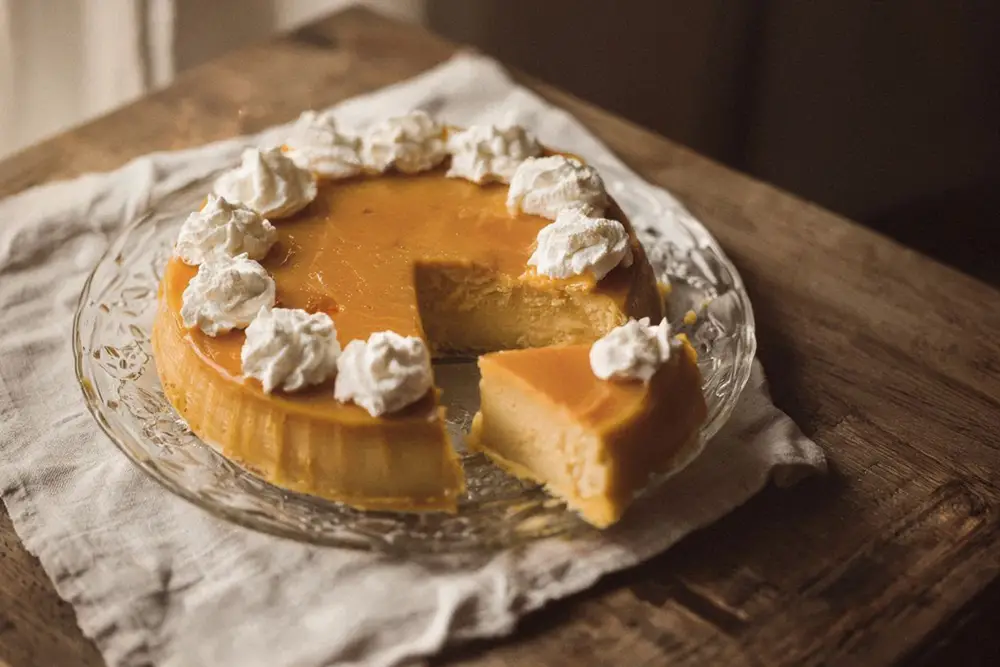
Apricot Cream
A rich chilled cream of apricot marmalade, egg yolks, sugar, and gelatin, set in a mould and served unmoulded with whipped cream.