Ham-Filled Yeast Pastries
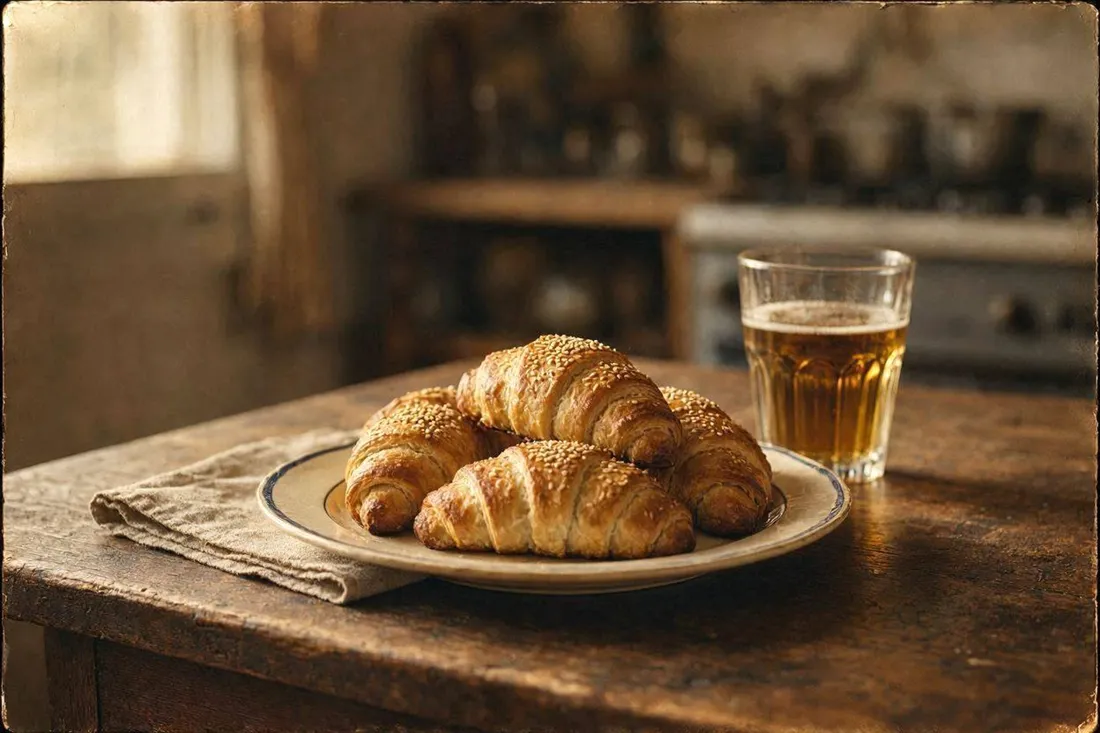
Firm yeast dough triangles rolled around a savory ham, egg, and butter filling, shaped into small crescent-like rolls and baked golden.
Historical recipe
Modernised adaptation of an early 20th‑century source. Not independently kitchen-tested by Attic Recipes. Quantities, temperatures, and food safety guidance have been updated for a contemporary kitchen — results may vary and errors may exist. Nutritional values, where provided, are estimates only and have not been laboratory tested. Always follow current food safety guidelines for your region. If you have a health condition, allergy, or dietary requirement, consult a qualified professional before preparing this recipe.
Use of this recipe is entirely at your own risk and subject to our Terms of Service and Privacy Policy. Attic Recipes accepts no liability for any adverse outcome.
- Gluten
- Eggs
- Dairy
- 1
Warm the milk to lukewarm and crumble in the fresh yeast. Stir gently and let stand for 5–10 minutes until foamy.
- 2
In a large bowl, combine the flour, 20g butter, sugar, and 10g salt. Add the yeast mixture and knead into a dough noticeably firmer than a strudel or pie dough. Knead until smooth and elastic, about 8–10 minutes.
- 3
Divide the dough into 48 equal balls (about 12–13g each). Cover and let rest for 20 minutes.
- 4
Meanwhile, make the filling: hard-boil the 4 eggs (about 9–10 minutes from boiling), cool completely, then separate the yolks from the whites. Push the yolks through a fine sieve and finely chop the whites.
- 5
Beat the 100g softened butter until light and fluffy. Fold in the sieved yolks, chopped whites, ground ham, and 3g salt. Mix thoroughly until evenly combined.
- 6
Roll each dough ball out into a thin triangle.
- 7
Place a heaping teaspoon of filling along the wide base of each triangle. Roll up from the wide end toward the point, the same way you would shape a crescent roll — this rolling motion is what turns a flat triangle into the elongated, log-like štanglica shape.
- 8
Arrange the shaped rolls on lined baking sheets, curving the ends slightly inward if you like the classic crescent look. Cover loosely and let rise for 15 minutes.
Tip Do not let them over-rise — the dough should stay firm enough to hold its shape in the oven. - 9
Preheat the oven to 190°C (375°F) / 170°C fan. Brush each roll with the beaten egg, then sprinkle with caraway seeds and coarse salt.
- 10
Bake for 15–18 minutes, until deep golden brown. Cool slightly on a wire rack before serving.
Nutrition Information per 1 piece (approx 27g)
Nutritional values are approximate estimates and may vary based on specific ingredients used, preparation methods, and portion sizes.
Serving Suggestions
Serve warm or at room temperature as a savory snack alongside a cold beer, or as part of a party appetizer spread. Because the filling contains egg, dairy, and meat, refrigerate leftovers within two hours and consume within 2–3 days; reheat briefly before serving.
About This Recipe
These ham-filled yeast pastries take their name from their finished shape — not from being cut into rectangles, but from the way each triangle of dough is rolled from its wide base toward the point, the same motion used for a crescent roll. That rolling technique is what turns a flat triangle into a small, elongated log, or “štanglica.”
The filling itself is a study in using every part of a hard-boiled egg: the yolks are pushed through a sieve for a fine, buttery texture, while the chopped whites add bite. Combined with finely processed ham and a generous amount of butter, it makes a rich, savory counterpart to the slightly firm, bread-like dough.
This was a popular savory accompaniment to beer in middle-class Central European households of the era, made in large batches for gatherings.
Why It Works
The dough is deliberately firmer than a strudel or pie dough, which gives it enough structure to hold a generous amount of filling without tearing during the rolling and baking process. Sieving the egg yolks rather than simply chopping them creates a smoother base for the filling that binds more evenly with the butter and ham. The short second rise after shaping is just long enough to relax the gluten and give a light, tender crumb, without letting the rolls puff up so much that they lose their compact, log-like shape in the oven.
Modern Kitchen Tips
A stand mixer with a dough hook makes quick work of the firm dough. If you don’t have a meat grinder, a food processor will break the ham down into a smooth, spreadable paste in a few short pulses — just be careful not to over-process it into a puree. These freeze well after baking; reheat briefly in a warm oven to restore the crisp exterior.
A classic of early 20th century home cooking, preserved and adapted for the modern kitchen.
The Story Behind This Recipe
Historical Context
Home cooks of the period prepared this dough noticeably firmer than a typical strudel dough, and portioned it into small triangles before filling and shaping. Quantities for the yeast, milk, sugar, and salt were traditionally judged by hand rather than measured, and the filling was passed through a hand-cranked meat grinder several times to achieve a smooth, spreadable texture. The finished rolls were a popular savory accompaniment to beer.
Modern Kitchen Adaptation
The traditional method did not specify exact amounts for the milk, yeast, sugar, dough salt, filling salt, oven temperature, caraway, or topping salt — these have been estimated here based on standard yeast dough ratios and are marked accordingly. The oven temperature and the short second rise after shaping were also not specified in period instructions and have been estimated based on similar enriched yeast doughs of the era. Where period technique called for passing the ham through a meat grinder multiple times for a fine texture, a food processor achieves the same smooth, spreadable consistency in a single step. All eggs used in the filling are fully hard-boiled, so there is no raw-egg food safety concern in this recipe.
This recipe is an independent modern adaptation developed from historical sources in the public domain. It is provided for informational and educational purposes only and does not constitute professional dietary, nutritional, or medical advice. Food preparation involves inherent risks. The reader assumes full responsibility for safe food handling, ingredient sourcing, and adherence to current local food safety guidelines. The site operator accepts no liability for outcomes resulting from the preparation or consumption of this recipe.
One recipe.
Every week.
You Might Also Like
More recipes from the same category
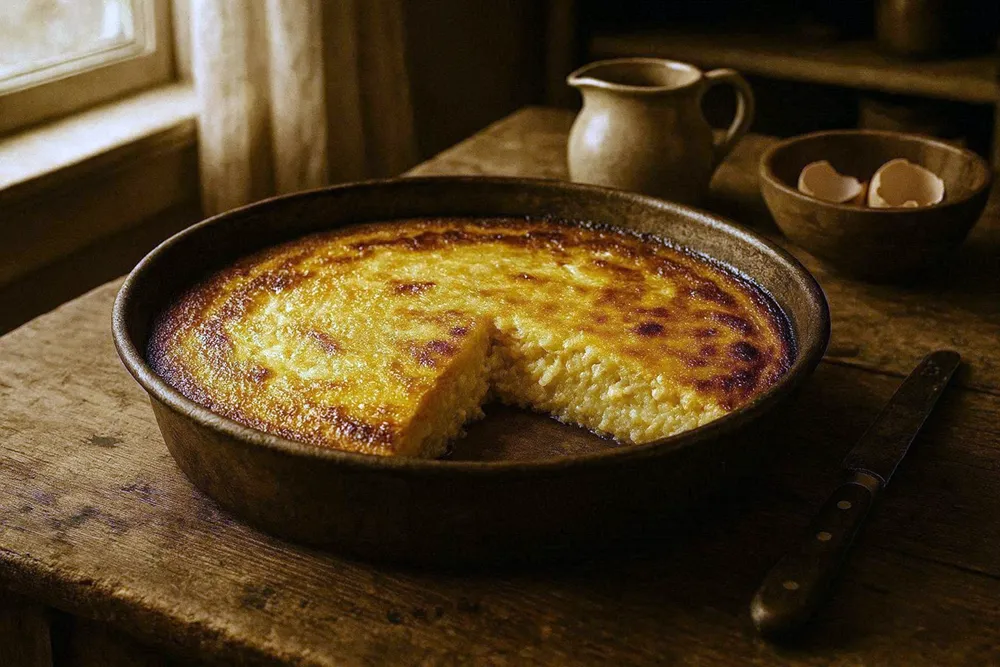
Baked Cornmeal Custard with Kajmak and Cheese
Known as razlevuša, this rustic bake pours a loose cornmeal, kajmak, cheese, and egg batter into a pan and bakes it until golden — a hearty, standalone dish.

Emmental Cheese Bars
Flaky millet pastry strips with Emmental, kajmak, egg yolks, and red pepper—savory tea snack from early 1900s Central Europe.
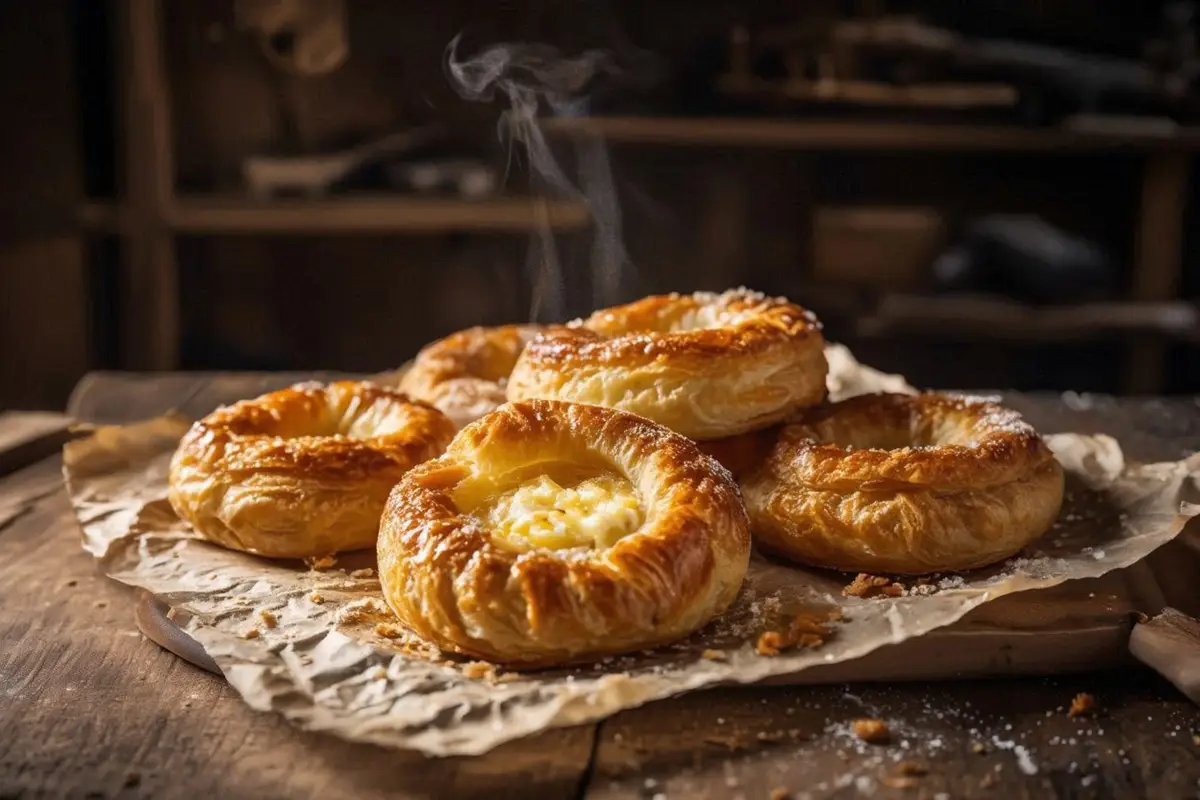
Flaky Fatback Pastries with Ham or Cheese
Tender, layered pastries made with hand-laminated pork fatback dough, filled with creamy ham or a rich egg-and-cheese mixture.