Goose Liver Pudding
A light, soufflé-textured baked pudding made with pureed goose liver, egg yolks, and stiffly beaten egg whites.
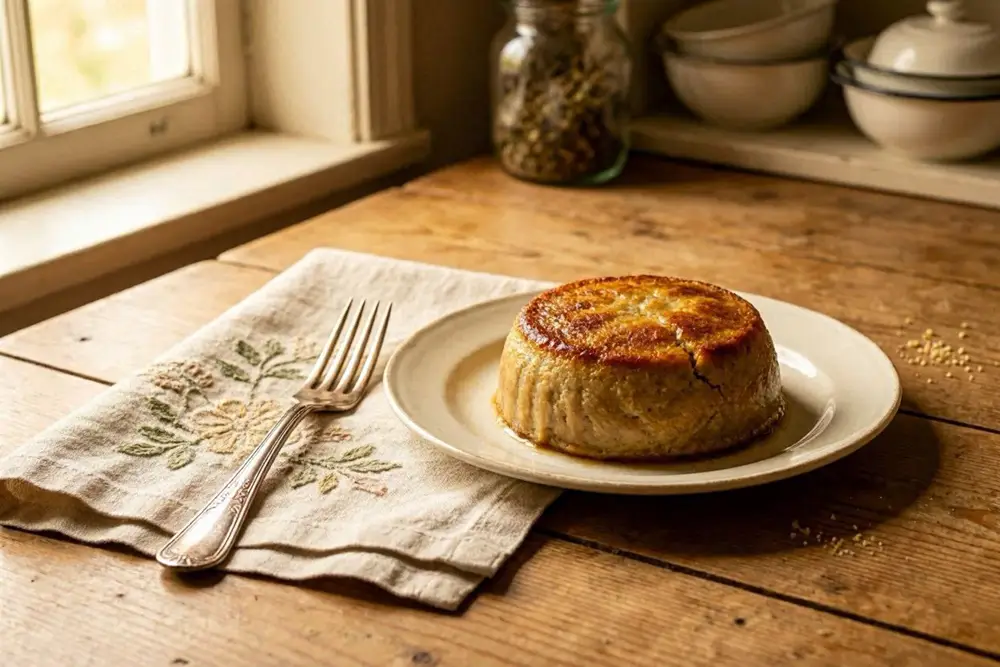
Quick Summary
A light, soufflé-textured baked pudding made with pureed goose liver, egg yolks, and stiffly beaten egg whites.
Historical recipe
Modernised adaptation of an early 20th‑century source. Not independently kitchen-tested by Attic Recipes. Quantities, temperatures, and food safety guidance have been updated for a contemporary kitchen — results may vary and errors may exist. Nutritional values, where provided, are estimates only and have not been laboratory tested. Always follow current food safety guidelines for your region. If you have a health condition, allergy, or dietary requirement, consult a qualified professional before preparing this recipe.
Use of this recipe is entirely at your own risk and subject to our Terms of Service and Privacy Policy. Attic Recipes accepts no liability for any adverse outcome.
- Eggs
- Gluten
- Dairy
Additional notes
-
Warning
This dish contains raw eggs mixed into the batter before baking. Ensure the pudding reaches an internal temperature of at least 71°C (160°F) before serving, particularly important for pregnant women, young children, elderly people, and immunocompromised individuals.
-
Note
This dish is very high in dietary cholesterol due to the combination of liver and egg yolks, well above typical daily recommendations in a single serving. Individuals managing cholesterol levels, including pregnant women and those with cardiovascular conditions, may wish to enjoy this dish occasionally and in smaller portions.
- 1
Finely cut and puree the goose liver until smooth.
- 2
In a bowl, combine the pureed liver with the 3 egg yolks, breadcrumbs, and melted butter (or goose fat). Season with the salt and pepper and mix well.
- 3
In a separate bowl, beat the 3 egg whites until stiff peaks form.
- 4
Gently fold the beaten egg whites into the liver mixture until just combined, taking care not to deflate the whites.
- 5
Grease a mold with butter and dust the inside with flour (or crushed almonds).
- 6
Pour the mixture into the prepared mold.
- 7
Bake at 160°C (320°F) / 140°C fan until set and a skewer inserted into the center comes out clean, with an internal temperature of at least 71°C (160°F), about 25-30 minutes.
- 8
Serve warm, turned out of the mold or directly from the dish.
Nutrition Information per 1 portion (approx. 110g)
Nutritional values are approximate estimates and may vary based on specific ingredients used, preparation methods, and portion sizes.
Serving Suggestions
Serve warm as a savory appetizer, accompanied by toasted bread or a light salad.
About This Recipe
This goose liver pudding is a study in contrasts: rich, mineral-tasting liver lightened by stiffly beaten egg whites into something closer to a soufflé than a terrine. The result is delicate rather than heavy, with a soft, almost airy texture that makes it well-suited to a small appetizer portion rather than a substantial main.
It’s a dish that rewards a light hand — the egg whites do most of the work in giving the pudding its characteristic rise and tenderness, so folding them in gently is the key step that separates a fluffy result from a dense one.
Why It Works
Pureeing the liver creates a smooth base that the egg yolks, butter, and breadcrumbs bind into a cohesive mixture. Stiffly beaten egg whites, folded in carefully, introduce air into the batter, which expands during baking to give the pudding its light, soufflé-like structure. Baking at a moderate temperature allows the mixture to set gently without curdling or becoming rubbery, while the flour or crushed almond coating on the mold helps the finished pudding release cleanly.
Modern Kitchen Tips
Work the liver puree as smooth as possible before adding the other ingredients, as any remaining texture will be noticeable in the finished pudding. When folding in the egg whites, use a light hand and stop as soon as no large pockets of white remain — overmixing will deflate the batter and result in a denser pudding. If using crushed almonds to coat the mold, toast them lightly first for extra flavor.
A classic of early 20th century home cooking, preserved and adapted for the modern kitchen.
The Story Behind This Recipe
Historical Context
Early 20th century recipes for this dish typically called for goose liver sourced from force-fed geese, a common practice of the period that produced larger, fattier livers prized for their rich flavor and texture. Home cooks of the era used this liver pureed and lightened with stiffly beaten egg whites to create a delicate, soufflé-like pudding, often served as a savory appetizer.
Modern Kitchen Adaptation
Force-feeding of geese to produce enlarged livers is now banned or heavily restricted in most countries due to animal welfare concerns, and goose liver from this method is no longer widely available. This recipe can be made with conventionally raised goose liver, or substituted with duck liver or chicken liver, which are more widely accessible; the texture and richness will vary slightly but the technique remains the same. The quantity of liver was not specified in the original and has been estimated at 220g, proportional to the egg and breadcrumb quantities given. The oven temperature was not specified and has been estimated at 160°C (320°F) / 140°C fan, suitable for a delicate egg-based mixture. Salt and pepper quantities have also been estimated, as the original called for these to taste without specific amounts.
This recipe is an independent modern adaptation developed from historical sources in the public domain. It is provided for informational and educational purposes only and does not constitute professional dietary, nutritional, or medical advice. Food preparation involves inherent risks. The reader assumes full responsibility for safe food handling, ingredient sourcing, and adherence to current local food safety guidelines. The site operator accepts no liability for outcomes resulting from the preparation or consumption of this recipe.
One recipe.
Every week.
You Might Also Like
More recipes you'll enjoy
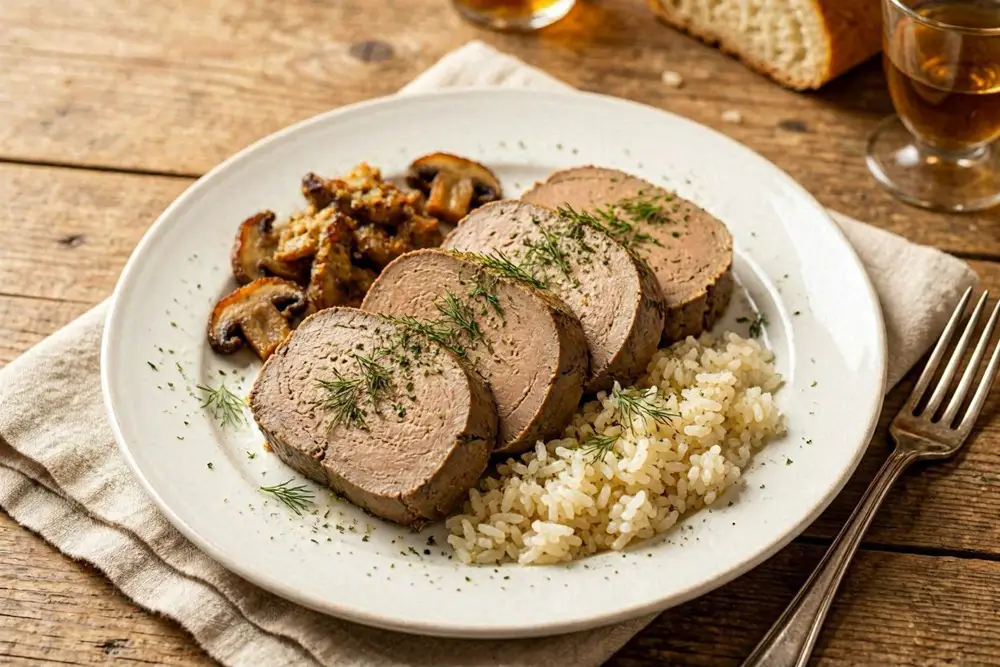
Goose Liver Pudding with Cognac
A rich steamed terrine of goose liver, bacon, and bread, flavored with cognac and dill, served with rice and fried mushrooms.
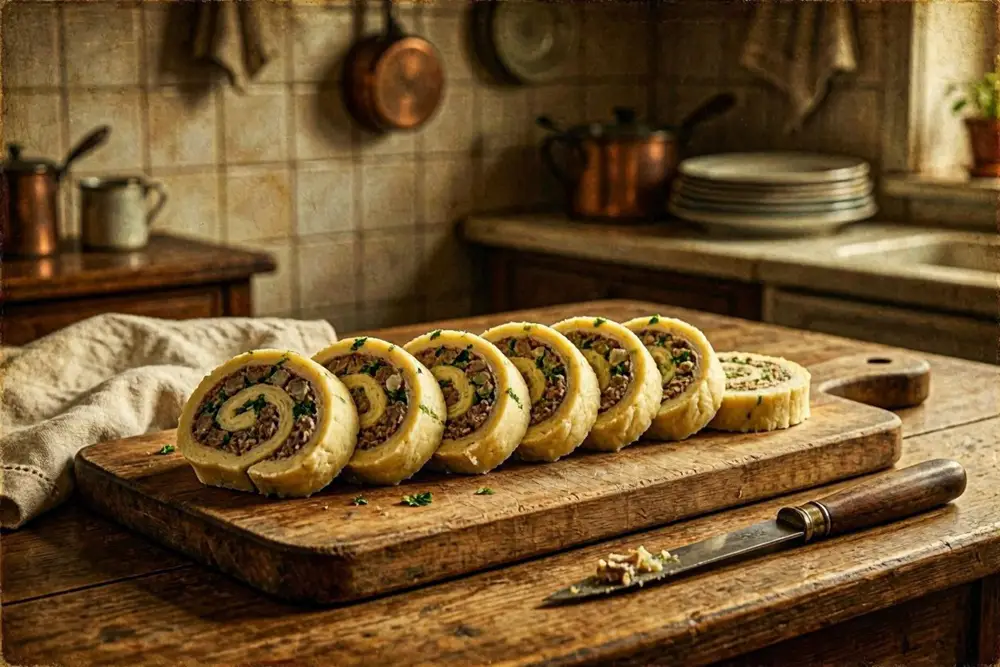
Brain Roll
A delicate Central European savory roulade of potato-egg dough filled with pan-fried calf's brain, onion, and parsley — served warm as an appetizer.
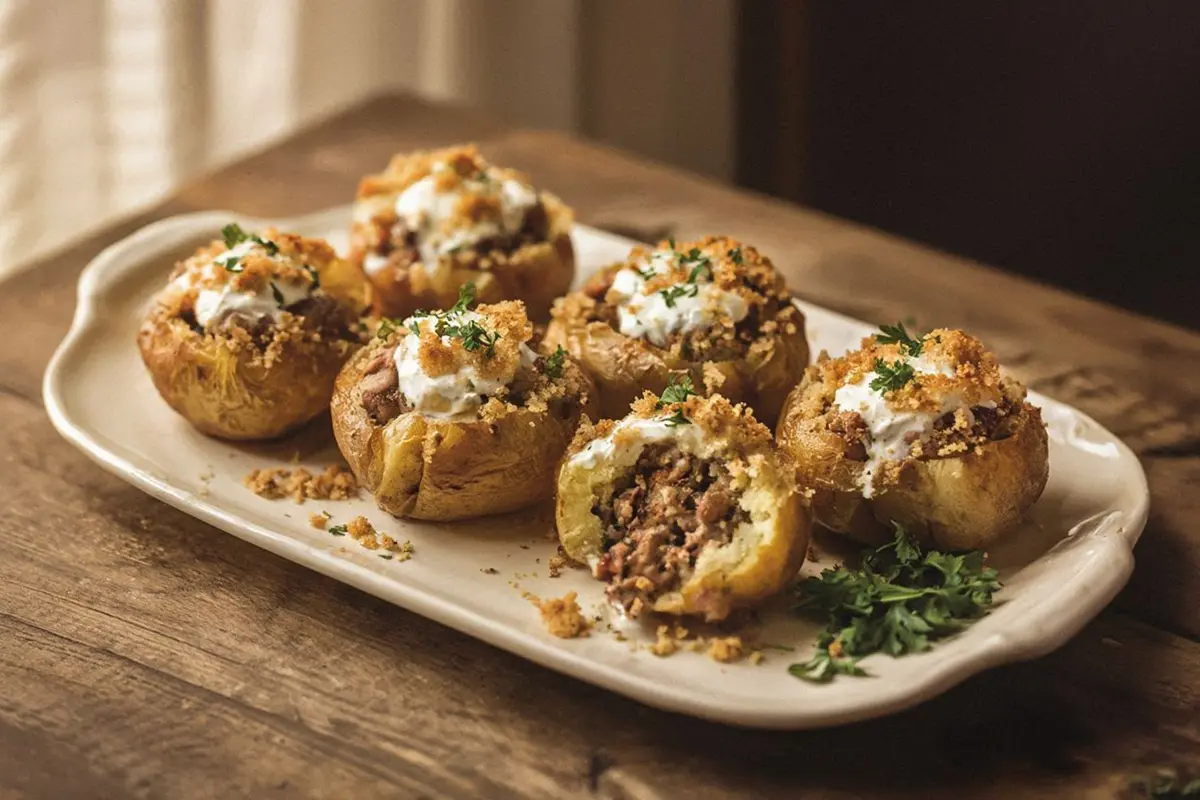
Potatoes Stuffed with Brains
Young potatoes filled with sautéed veal brains, baked in sour cream with golden breadcrumbs.