French Potato Gratin
Thin layers of boiled potato, ham, hard-boiled egg, and grated cheese baked under a béchamel sauce until golden and set.
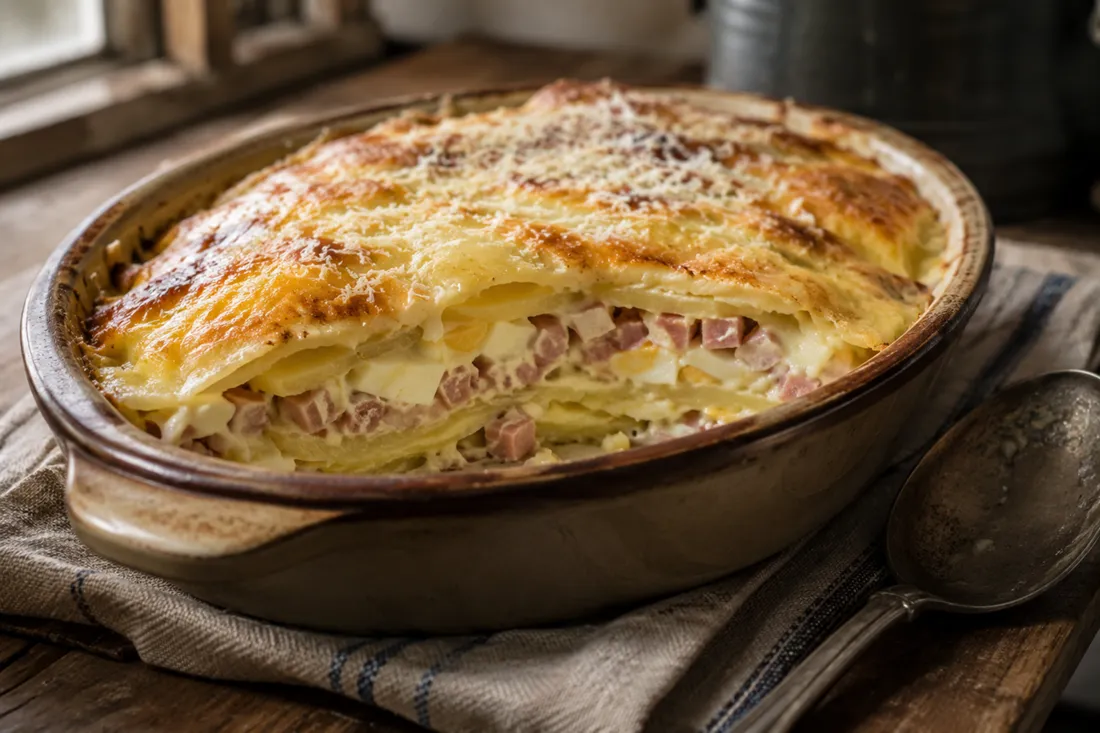
Quick Summary
A layered baked gratin of sliced potato, diced ham, hard-boiled egg, and grated cheese, held together with a butter-based béchamel and a final egg-enriched milk topping. About 1 hour 45 minutes total, mostly hands-off baking time. A rich, filling main course.
Historical recipe
Modernised adaptation of an early 20th‑century source. Not independently kitchen-tested by Attic Recipes. Quantities, temperatures, and food safety guidance have been updated for a contemporary kitchen — results may vary and errors may exist. Nutritional values, where provided, are estimates only and have not been laboratory tested. Always follow current food safety guidelines for your region. If you have a health condition, allergy, or dietary requirement, consult a qualified professional before preparing this recipe.
Use of this recipe is entirely at your own risk and subject to our Terms of Service and Privacy Policy. Attic Recipes accepts no liability for any adverse outcome.
- Eggs
- Dairy
- Gluten
Additional notes
-
Warning
The topping poured over this dish before baking includes a raw egg yolk mixed into milk and sour cream. Make sure the center of the dish is fully set and hot all the way through before serving, especially for pregnant women, young children, the elderly, and anyone immunocompromised.
If unsure the center has set fully, extend the baking time a few minutes and check again before serving.
-
Note
This dish is higher in saturated fat per serving due to the butter, hard cheese, cured meat, and eggs — worth keeping in mind if you're watching saturated fat intake.
- 1
Wash the potatoes and boil them whole in a pot of water until tender. A waxy variety that holds its shape works best here.
- 2
Drain the potatoes, let them cool slightly, and peel them while still warm. Slice into thin rounds.
- 3
Boil the eggs for 8 minutes from the point the water reaches a boil, then transfer immediately to cold water. This makes them easier to peel. Peel and slice.
- 4
Make the béchamel: melt the butter in a saucepan over medium heat. Add the flour and cook briefly, stirring, without letting it brown — the roux should stay pale.
Tip A béchamel made with butter, rather than oil, is what gives this sauce its flavor — don't substitute here. - 5
Whisk in the cold milk gradually, working out any lumps as you go. Cook gently until the sauce thickens slightly — it should be pourable, not overly thick. Set aside.
- 6
Grate the hard cheese and dice the meat or ham finely.
- 7
Grease the baking dish with butter and dust it with breadcrumbs.
- 8
Layer the dish: a row of sliced potato, then a row of sliced hard-boiled egg, season with a little of the salt and pepper, then a thin layer of béchamel.
- 9
Add another layer of potato, then the diced meat or ham, then a scattering of grated cheese, then another thin layer of béchamel. Repeat the layers until the dish is full, finishing with a top layer of potato.
- 10
Whisk the reserved béchamel with the extra milk, the sour cream, and the egg yolk until smooth. Pour this over the top of the assembled dish.
- 11
Bake for up to 30 minutes, until the top is set and lightly golden and the center is hot all the way through.
Tip Check the center of the dish for doneness — the egg-enriched topping should be fully set, not liquid, before serving. - 12
Turn out onto a serving platter, or serve directly from the baking dish. Top with the reserved grated cheese before serving.
Nutrition Information per 1 portion (approx 380g)
Nutritional values are approximate estimates and may vary based on specific ingredients used, preparation methods, and portion sizes.
Serving Suggestions
Serve on its own as a main course, with a simple green salad alongside to balance the richness.
About This Recipe
This is a layered, baked potato dish built the way a proper gratin should be: thin rounds of boiled potato stacked with hard-boiled egg, diced ham, grated cheese, and a butter-based béchamel between every row. The name reflects the technique at its heart — a true French-style béchamel, made with butter rather than a neutral oil, which was still somewhat unusual to see written into an everyday home recipe of the period.
It’s a dish meant to be a full meal on its own: rich, layered, and substantial enough that a simple salad alongside is really all it needs.
Why It Works
Peeling the potatoes while they’re still warm from boiling makes the skins slip off easily and keeps the slices from breaking apart. Keeping the béchamel on the thinner side, rather than very thick, means each layer gets just enough sauce to bind it without the finished dish turning gluey. Finishing with an egg-enriched milk topping over the assembled layers gives the top a set, custard-like finish once baked, rather than leaving it dry.
Modern Kitchen Tips
Work with the potatoes while they’re still warm — cold, fully cooled potatoes are much harder to peel and slice cleanly. When you whisk the milk into the roux for the béchamel, add it gradually and keep whisking; this is the step most likely to produce lumps if rushed.
A classic of early 20th century home cooking, preserved and adapted for the modern kitchen.
The Story Behind This Recipe
Historical Context
Home cooks of the period made this dish with a classic butter-based béchamel — a technique that had made its way into everyday household cooking by the early 20th century — layered with boiled potato, hard-boiled egg, cured meat, and cheese, then finished with an egg-enriched topping before baking. It was considered a substantial dish, filling enough to serve on its own.
Modern Kitchen Adaptation
Several quantities were not specified in the traditional method and have been estimated based on standard proportions for a dish of this size: the milk for the béchamel, the flour, the grated cheese, the salt and pepper, the breadcrumbs and butter for the dish, and the milk and sour cream for the final topping. The oven temperature was not given and has been set at a moderate 180°C (350°F) / 160°C fan, gentle enough to let the egg-enriched topping set without curdling. Because egg is used both hard-boiled in the layers and raw (as yolk) in the topping that bakes with the dish, check that the center is fully set and hot before serving, particularly for pregnant women, young children, the elderly, or anyone immunocompromised.
This recipe is an independent modern adaptation developed from historical sources in the public domain. It is provided for informational and educational purposes only and does not constitute professional dietary, nutritional, or medical advice. Food preparation involves inherent risks. The reader assumes full responsibility for safe food handling, ingredient sourcing, and adherence to current local food safety guidelines. The site operator accepts no liability for outcomes resulting from the preparation or consumption of this recipe.
One recipe.
Every week.
You Might Also Like
More recipes you'll enjoy
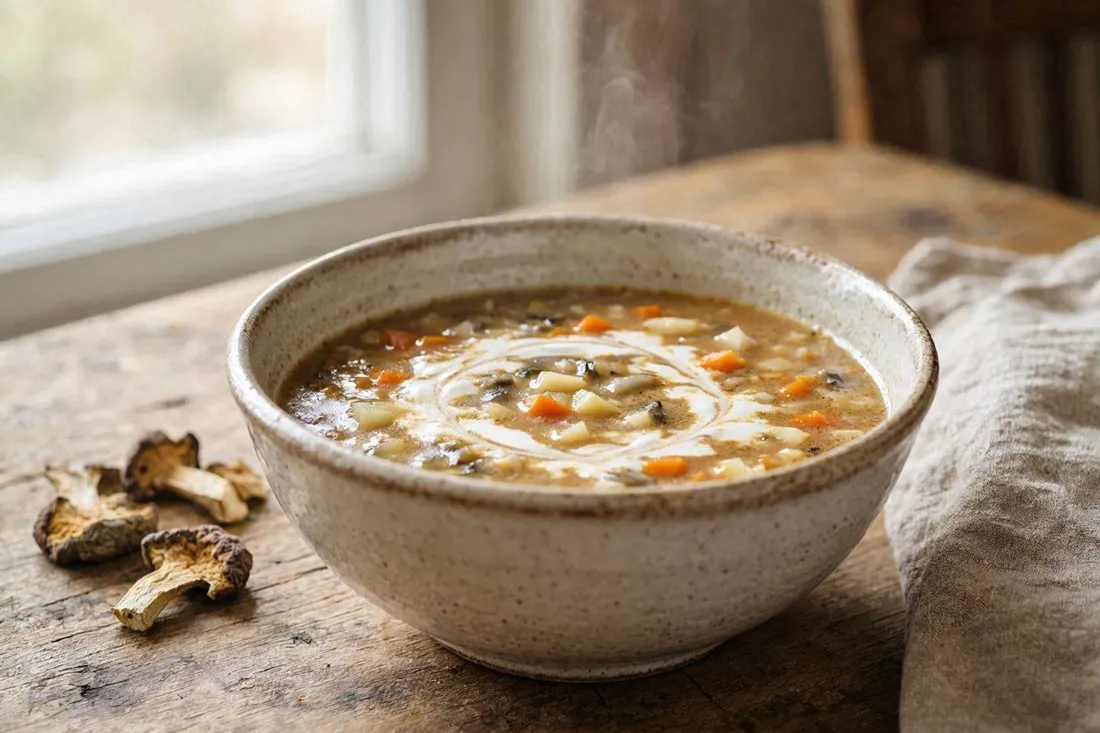
Mushroom Soup with Sour Cream
Dried mushrooms simmered with soup vegetables and finished with a sour cream and flour thickener — a simple, deeply flavored home-style soup.
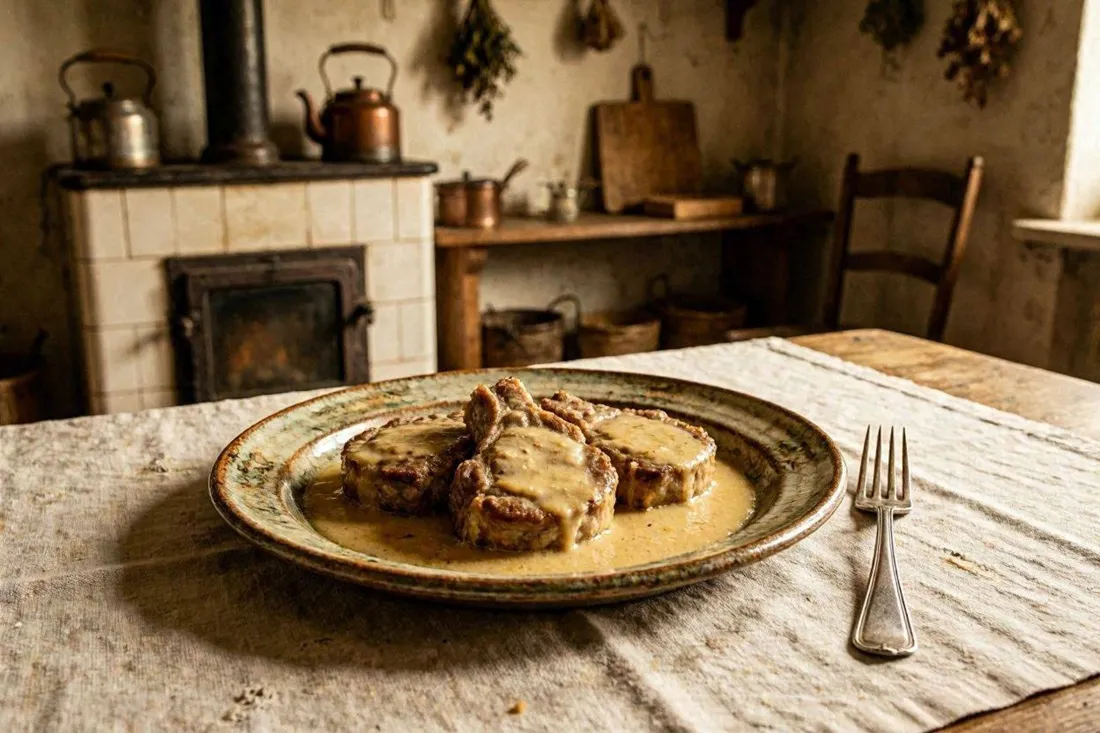
Braised Pork Chops in White Wine and Sour Cream Sauce
Pork loin chops braised with onion, carrot, parsley root, and celery root in white wine, then finished with a strained sour cream sauce.
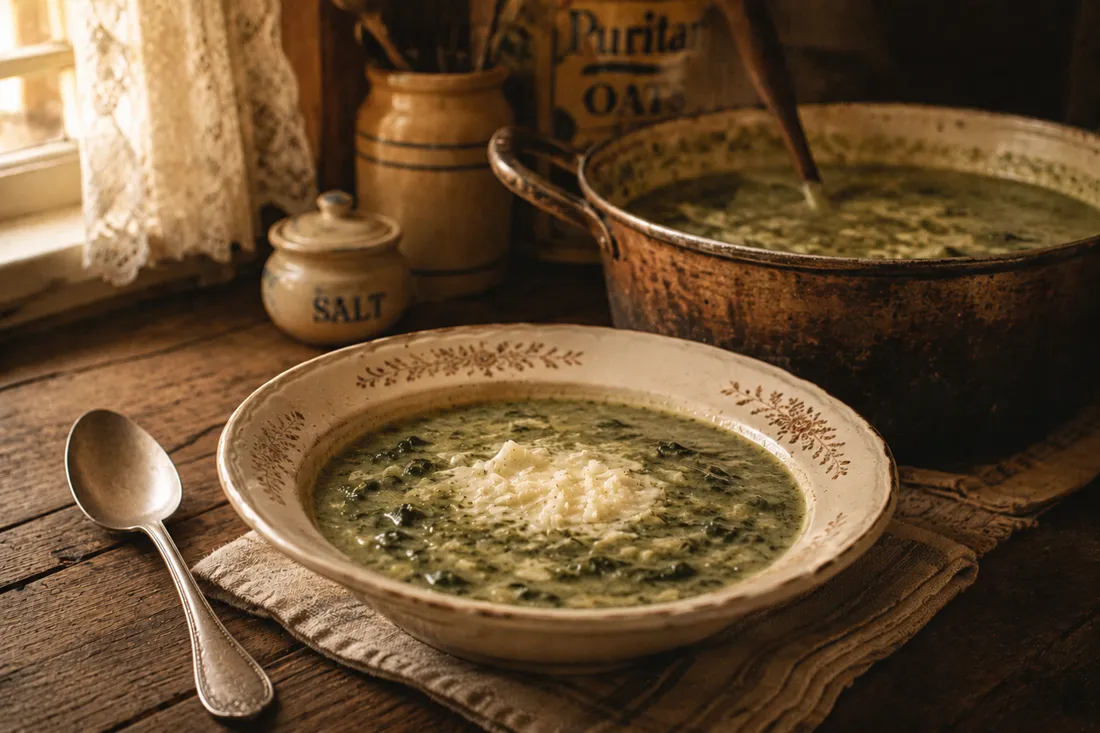
Cheese and Spinach Soup
A hearty soup of leek, spinach, and aged sheep's cheese, thickened with a paprika roux and finished with carefully tempered eggs.