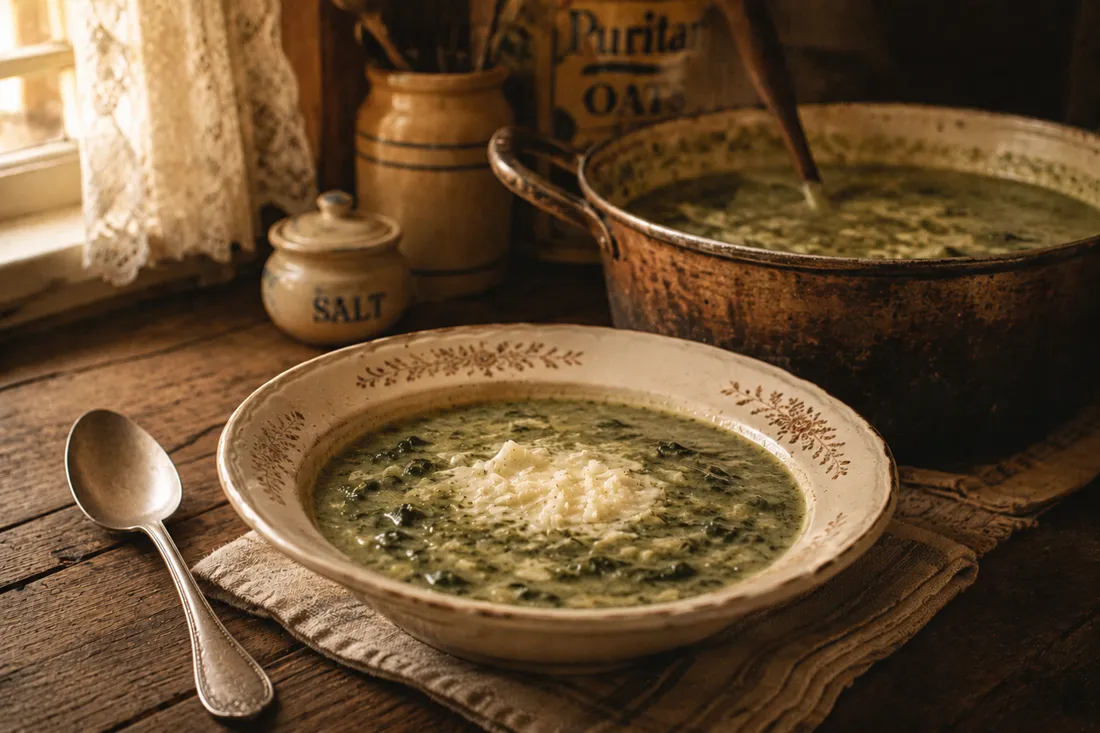
Cheese and Spinach Soup
A hearty soup of leek, spinach, and aged sheep's cheese, thickened with a paprika roux and finished with carefully tempered eggs.
Historical recipe
Modernised adaptation of an early 20th‑century source. Not independently kitchen-tested by Attic Recipes. Quantities, temperatures, and food safety guidance have been updated for a contemporary kitchen — results may vary and errors may exist. Nutritional values, where provided, are estimates only and have not been laboratory tested. Always follow current food safety guidelines for your region. If you have a health condition, allergy, or dietary requirement, consult a qualified professional before preparing this recipe.
Use of this recipe is entirely at your own risk and subject to our Terms of Service and Privacy Policy. Attic Recipes accepts no liability for any adverse outcome.
- Dairy
- Eggs
- Gluten
Additional notes
-
Warning
The eggs are stirred into hot soup at the end of cooking without further boiling. Temper the eggs gradually with hot soup before adding them back to the pot, and ensure the soup reaches a minimum of 74°C (165°F) to fully cook the eggs. This is especially important for pregnant women, children under 18, the elderly, and immunocompromised individuals.
-
Note
This soup is high in saturated fat per serving due to the lard and aged sheep's cheese. Those managing saturated fat intake, including individuals with cardiovascular conditions, may want to enjoy this dish in moderation.
- 1
Bring the 2.5l water to a boil in a large (4L) pot.
- 2
Add the chopped leek and simmer until well cooked.
- 3
Add the whole hot pepper to the pot.
- 4
In a separate pan, melt the 20g lard (or oil) and sauté the chopped onion until softened.
- 5
Add the salted spinach to the softened onion and sauté together until well wilted and cooked down.
- 6
Make the roux: in a small pan, melt the 15g lard (or oil), stir in the flour and paprika, and cook briefly, being careful not to scorch the paprika.
- 7
Stir the roux into the simmering soup.
- 8
Add the sautéed spinach and onion to the soup and let it continue simmering until fully cooked through.
- 9
Add the crumbled sheep's cheese to the soup and simmer until it has melted and fully incorporated.
- 10
In a small bowl, whisk the 2 eggs. Temper them by gradually whisking in a ladleful of the hot soup, a little at a time, until the eggs are warmed through.
- 11
Remove the soup from a hard boil. Very slowly pour the tempered egg mixture back into the pot in a thin stream, stirring constantly with a ladle, until the soup thickens slightly. Do not let it return to a hard boil, and target a gentle 74°C in the soup to fully cook the eggs without curdling them.
- 12
Serve hot.
Nutrition Information per 1 bowl (approx 450g, based on 10 servings)
Nutritional values are approximate estimates and may vary based on specific ingredients used, preparation methods, and portion sizes.
Serving Suggestions
Serve hot as a hearty main course, with crusty bread on the side.
About This Recipe
This soup belongs to a category of Central European dishes that blur the line between soup and stew — thick with wilted spinach, enriched with a generous amount of aged sheep’s cheese, and finished the way many home cooks finished their soups of the era: with a careful stream of beaten egg stirred in at the very end.
The paprika roux does double duty here, both thickening the broth slightly and giving it a warm color and gentle depth of flavor. The sheep’s cheese, added toward the end and left to melt into the broth, turns what could be a simple vegetable soup into something rich and substantial enough to serve as a main course.
The instructions for adding the eggs were unusually specific for the era — a clear sign that curdled eggs in a soup like this were a common enough mistake to warrant a direct warning.
Why It Works
Sautéing the spinach with onion before adding it to the broth concentrates its flavor and removes excess moisture, so it doesn’t dilute the finished soup. The roux, cooked briefly before going into the pot, thickens the broth just enough to help it cling to the wilted spinach and melted cheese rather than separating into a thin broth with solids floating in it. Tempering the eggs — warming them gradually with small amounts of hot soup before combining — is the single most important step for texture: it raises their temperature slowly enough that the proteins set gently into fine strands rather than clumping into curds.
Modern Kitchen Tips
If you’re nervous about the egg step, you can pour the tempered eggs through a fine-mesh strainer directly into the pot while stirring — this catches any small bits that do set before they distribute through the soup. A good quality aged sheep’s cheese, like a well-aged feta or a hard grating sheep’s cheese, will melt into the broth better than a very fresh, mild version.
A classic of early 20th century home cooking, preserved and adapted for the modern kitchen.
The Story Behind This Recipe
Historical Context
Home cooks of the period did not specify a fat for sautéing the onion or for the flour-and-paprika roux, though a roux of this kind traditionally called for some form of fat to properly toast the flour and paprika together. The final step of stirring in eggs was treated with particular care in period instructions, poured in very slowly while stirring constantly with a ladle to prevent them from curdling.
Modern Kitchen Adaptation
The original text did not specify quantities for the water, leek, onion, salt, flour, paprika, or the fat used to sauté the onion and make the roux — these have been estimated here and marked accordingly. Lard is used here as the historically correct fat for both the onion and the roux, with a neutral cooking oil offered as an equal-quantity substitute in both cases. The water quantity has also been adjusted downward from what a literal reading might suggest, so that the finished soup — with 1kg of spinach and 500g of cheese added — fits within a standard 4-liter pot. The egg-tempering step described in the original has been made explicit here with a target temperature of 74°C, achieved through gradual tempering and gentle heat, to fully cook the eggs without curdling them. No additional salt has been added beyond what's used for the spinach, since the aged sheep's cheese already contributes significant salinity.
This recipe is an independent modern adaptation developed from historical sources in the public domain. It is provided for informational and educational purposes only and does not constitute professional dietary, nutritional, or medical advice. Food preparation involves inherent risks. The reader assumes full responsibility for safe food handling, ingredient sourcing, and adherence to current local food safety guidelines. The site operator accepts no liability for outcomes resulting from the preparation or consumption of this recipe.
One recipe.
Every week.
You Might Also Like
More recipes from the same category
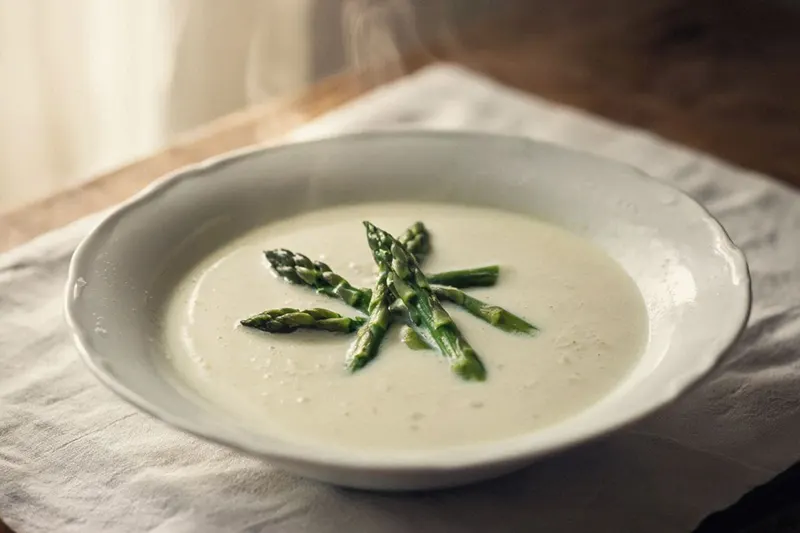
Asparagus Tip Soup
A silky, cream-enriched asparagus soup built on a white roux and finished with tempered egg yolks — an elegant first course from early 20th century cooking.

Bean Soup Cooked with Beef
White beans and beef shoulder slow-simmered with a bouquet garni, finished in the oven with a paprika-spiced pan roux. A deeply satisfying one-pot meal.
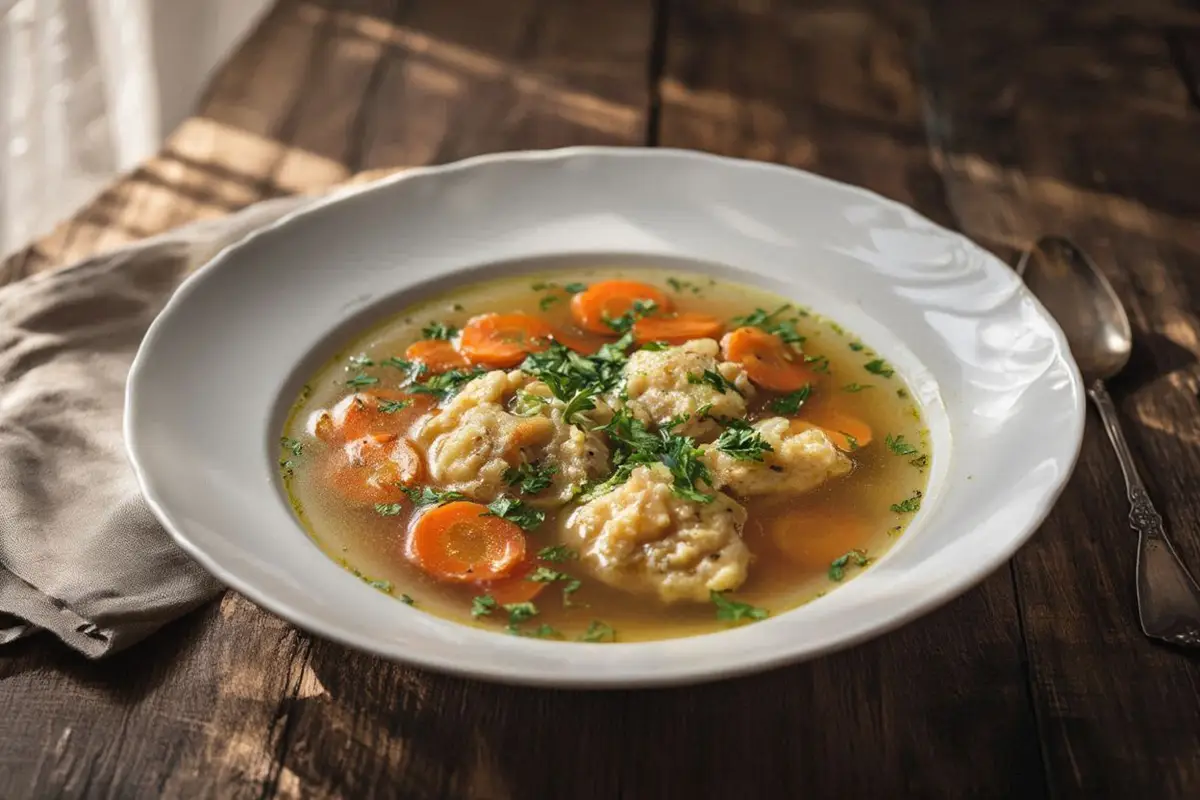
Beef Soup with Carrot-Colored Broth
A rich, golden Central European beef soup with carrot-colored broth, served with semolina or liver dumplings. Hearty, clear, and deeply flavorful.