Flourless Chocolate Almond Torte
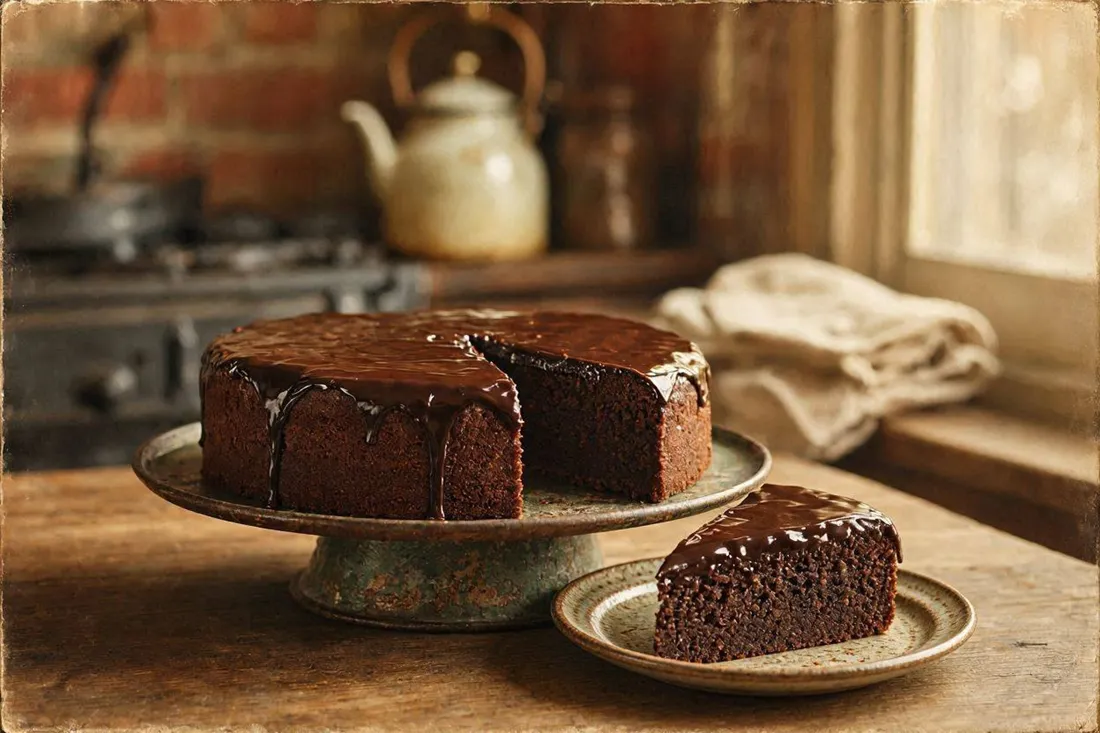
A rich, dense torte of whipped egg yolks, grated chocolate, and ground almonds, lightened with egg whites and finished with a glossy chocolate glaze.
Quick Summary
A Central European flourless torte made from whipped egg yolks, grated chocolate, and ground almonds, folded with egg whites and topped with a glossy chocolate glaze. Takes about 2.5 hours including cooling, and gets its structure entirely from eggs and nuts, not flour.
Historical recipe
Modernised adaptation of an early 20th‑century source. Not independently kitchen-tested by Attic Recipes. Quantities, temperatures, and food safety guidance have been updated for a contemporary kitchen — results may vary and errors may exist. Nutritional values, where provided, are estimates only and have not been laboratory tested. Always follow current food safety guidelines for your region. If you have a health condition, allergy, or dietary requirement, consult a qualified professional before preparing this recipe.
Use of this recipe is entirely at your own risk and subject to our Terms of Service and Privacy Policy. Attic Recipes accepts no liability for any adverse outcome.
- Eggs
- Tree Nuts
- Dairy
- Gluten
Additional notes
-
Warning
The chocolate glaze involves cooking sugar syrup to a thickened state, which can cause serious burns if splashed or touched while hot. Keep children away from the stove during this step, and let the glaze cool slightly before handling.
- 1
In a large bowl, whip the 7 egg yolks with the 200g sugar until pale and foamy.
- 2
Fold in the 200g grated chocolate and 200g ground almonds until well combined.
- 3
Whip the 5 egg whites to stiff peaks, then gently fold them into the chocolate-almond mixture.
- 4
Preheat the oven to 170°C (340°F) / 150°C fan.
- 5
Grease the pan with the 15g butter and dust with the 15g flour. Pour in the batter and spread evenly.
- 6
Bake until a skewer inserted in the center comes out clean, about 40-45 minutes.
- 7
Let the torte cool completely in the pan before glazing, about 60 minutes.
Tip Glazing a warm torte will cause the glaze to run and lose its glossy set. - 8
For the glaze, combine the 90ml water, 30g sugar, and split vanilla bean in a small pot. Stir over medium heat.
- 9
Add the 80g melted chocolate and the remaining 80g sugar. Cook, stirring constantly, until the mixture thickens into a glossy, pourable glaze, about 5-8 minutes.
Tip Hot sugar syrup can cause serious burns — keep children and pets away from the stove during this step and avoid tasting directly from the pot. - 10
Remove the vanilla bean. Let the glaze cool slightly, then pour it over the cooled torte, tilting the pan or platter to coat evenly.
Nutrition Information per 1 slice (approx 100g)
Nutritional values are approximate estimates and may vary based on specific ingredients used, preparation methods, and portion sizes.
Serving Suggestions
Serve at room temperature, on its own or with lightly whipped cream.
About This Recipe
This torte gets its structure entirely from whipped eggs, ground almonds, and grated chocolate — no flour plays any real role in the batter itself. The result is dense and moist rather than light and airy, closer to a flourless chocolate cake than a classic sponge. A glossy chocolate glaze, cooked separately on the stovetop, finishes it off with a deep, slightly bitter contrast to the sweetness underneath.
Nut-and-chocolate tortes without flour were a familiar category in Central European baking well before “flourless” became a marketing term — they were simply a rich, reliable way to build a cake around eggs, nuts, and chocolate. The technique of whipping yolks and whites separately before combining is what keeps a batter this dense from turning heavy or dry.
Why It Works
Whipping the egg yolks with sugar first incorporates air and dissolves the sugar smoothly, giving the batter a stable base before the heavier ingredients — chocolate and ground almonds — are folded in. The separately whipped egg whites are what keep the finished torte from being overly dense, since there’s no flour or leavening agent doing that work. Cooking the glaze’s sugar and chocolate together on the stove, rather than simply melting chocolate alone, gives it a thicker, more stable texture that sets into a smooth, glossy coating rather than staying runny.
Modern Kitchen Tips
- Fold the egg whites in gently and in stages — adding them all at once makes it harder to keep the batter from deflating.
- If the torte’s top cracks slightly while baking, don’t worry — the glaze will cover it completely.
- The two leftover egg whites can be frozen for later use in meringue, macarons, or another torte.
A classic of early 20th century home cooking, preserved and adapted for the modern kitchen.
The Story Behind This Recipe
Historical Context
Flourless tortes built on whipped egg yolks, ground nuts, and grated chocolate were a well-established style in early 20th century Central European baking, valued for their dense, moist texture. Flour appears in this recipe only as a release agent for the pan, not as a structural ingredient in the batter itself. It was also common at the time for a recipe to call for more yolks than whipped whites, using the extra yolks purely for richness rather than needing them for structure.
Modern Kitchen Adaptation
No oven temperature, baking time, or pan size was specified in the period approach; all have been estimated based on standard flourless nut tortes of similar size. Pre-ground blanched almond flour can be substituted for the whole almonds to save a step, in the same quantity. For a fully gluten-free version, the pan can be dusted with a little of the ground almonds or a gluten-free flour blend instead of wheat flour. The vanilla bean quantity has been estimated from the original's 'a piece of vanilla.'
This recipe is an independent modern adaptation developed from historical sources in the public domain. It is provided for informational and educational purposes only and does not constitute professional dietary, nutritional, or medical advice. Food preparation involves inherent risks. The reader assumes full responsibility for safe food handling, ingredient sourcing, and adherence to current local food safety guidelines. The site operator accepts no liability for outcomes resulting from the preparation or consumption of this recipe.
One recipe.
Every week.
You Might Also Like
More recipes from the same category
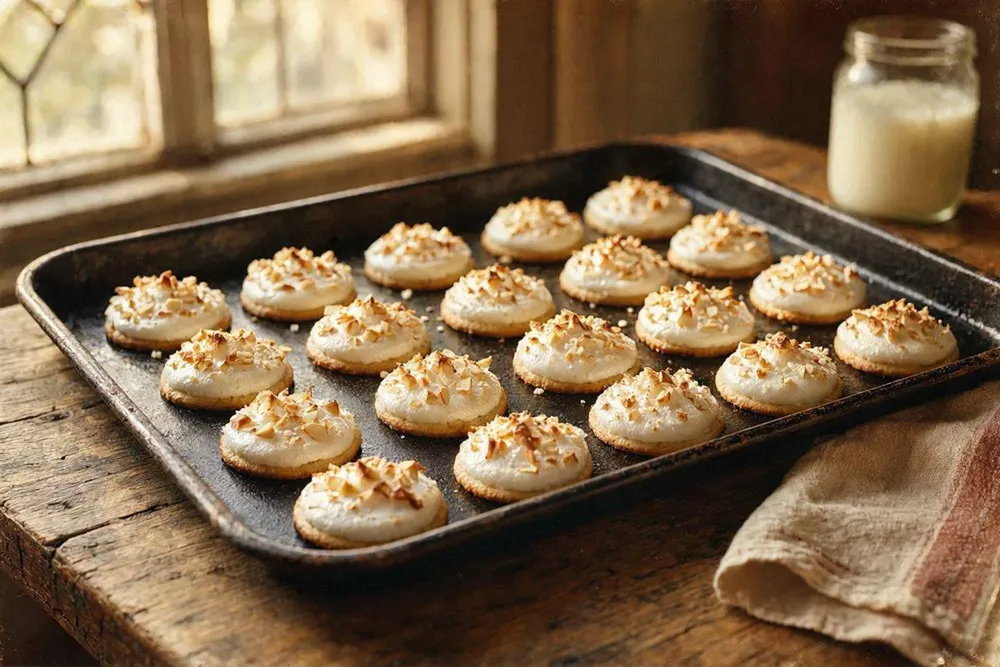
Almond Gurabije Cookies
Small lemon-scented cookies made with lard and egg yolk, indented in the center, coated in whipped egg white, and rolled in sugar and chopped almonds.
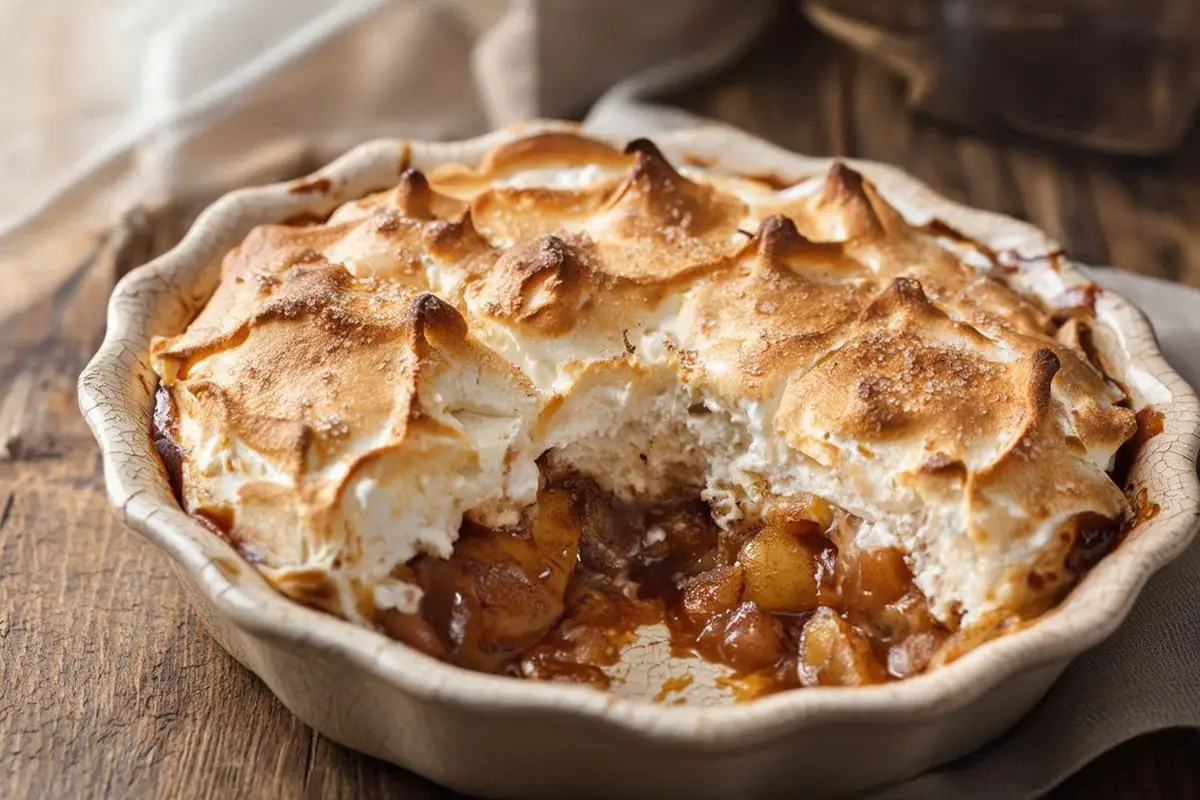
Velvet Apple & Meringue Gratin
A decadent vintage dessert featuring apples slow-cooked in a butter-sugar syrup, topped with a cloud of lemon-scented meringue.
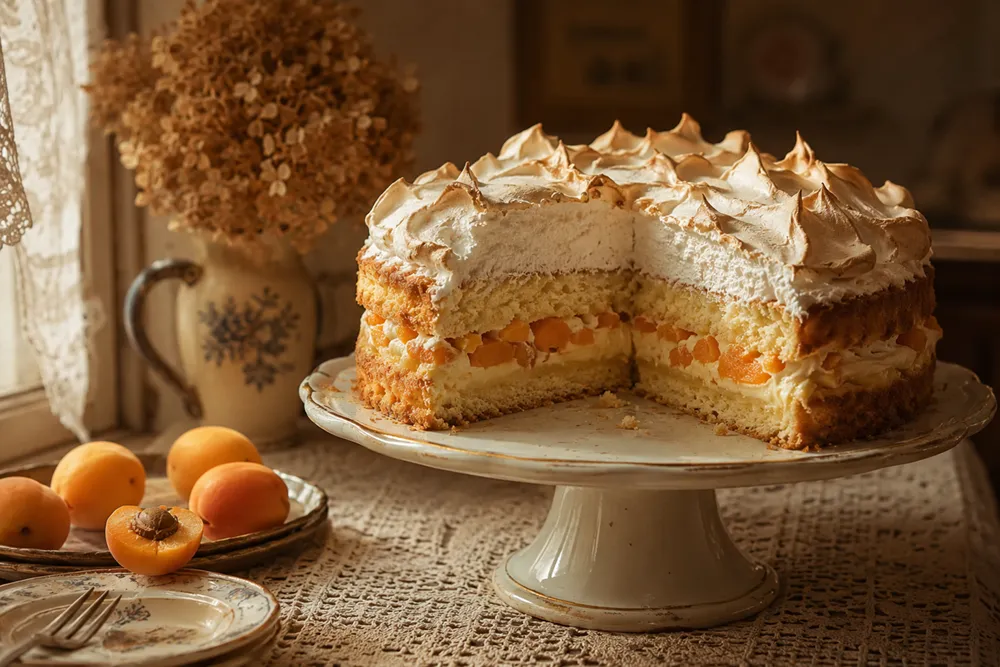
Apricot Cream Torte
Traditional apricot cream cake combining sponge, vanilla custard, and meringue for a timeless European flavor.