Emmental Cheese and Sardine Spread
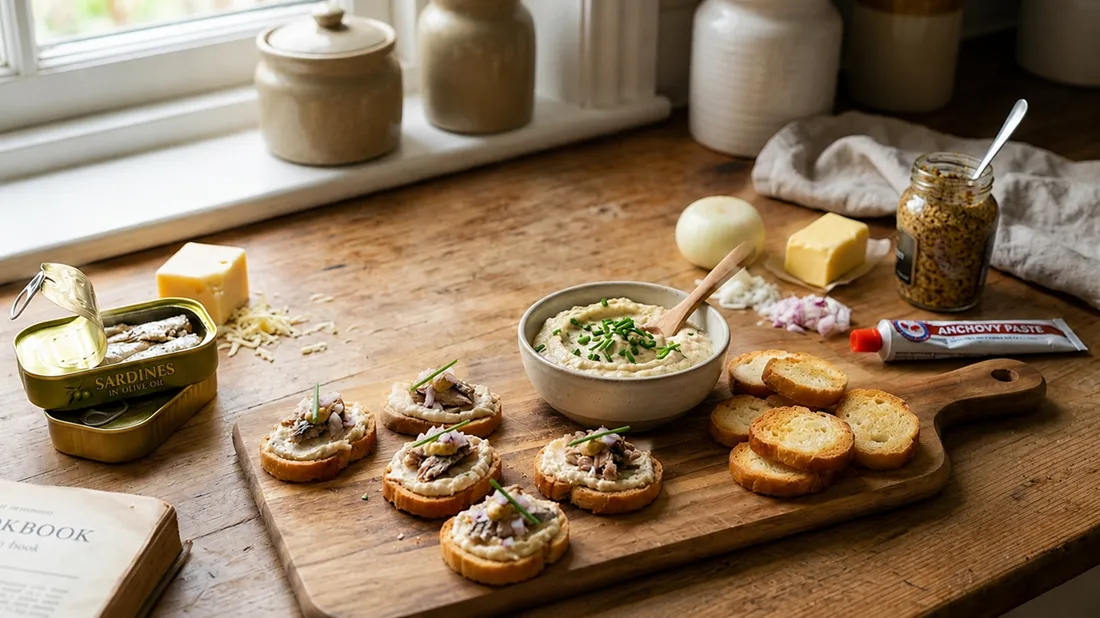
A rich canapé spread of ground Emmental cheese and butter, enriched with sardines, anchovy paste, mustard, and grated onion.
Quick Summary
A rich canapé spread of ground Emmental cheese and butter, enriched with sardines, anchovy paste, mustard, and grated onion.
Historical recipe
Modernised adaptation of an early 20th‑century source. Not independently kitchen-tested by Attic Recipes. Quantities, temperatures, and food safety guidance have been updated for a contemporary kitchen — results may vary and errors may exist. Nutritional values, where provided, are estimates only and have not been laboratory tested. Always follow current food safety guidelines for your region. If you have a health condition, allergy, or dietary requirement, consult a qualified professional before preparing this recipe.
Use of this recipe is entirely at your own risk and subject to our Terms of Service and Privacy Policy. Attic Recipes accepts no liability for any adverse outcome.
- Dairy
- Fish
- Gluten
- Mustard
Additional notes
-
Note
This spread is high in saturated fat (approximately 19g per serving) from the butter and Emmental cheese. Those managing saturated fat intake, including people with cardiovascular risk factors, may wish to adjust portion size.
Reduce the butter quantity slightly, or substitute part of it with a lower-fat cheese, to lower the saturated fat content.
- 1
Pass the Emmental cheese and butter through a meat grinder twice, or process together in a food processor until finely combined.
- 2
Whip the cheese-butter mixture until light and fluffy.
- 3
Gradually beat in the sardine oil until fully incorporated.
- 4
Season with the salt, then fold in the mashed sardines, anchovy paste, and mustard.
- 5
Finely grate the onion and fold it into the mixture. Mix thoroughly until evenly combined.
- 6
Spread generously onto the bread slices and serve.
Nutrition Information per 1 serving (approx 135g, about 3 canapés)
Nutritional values are approximate estimates and may vary based on specific ingredients used, preparation methods, and portion sizes.
Serving Suggestions
Serve as part of a cold appetizer spread alongside other canapés and aperitifs.
About This Recipe
This spread combines two rich ingredients — Emmental cheese and butter, ground together until smooth — with the deep savory notes of sardines, anchovy paste, and mustard. A little grated onion at the end adds sharpness and cuts through the richness. The result is a dense, flavorful canapé topping that holds up well against strong drinks.
Grinding the cheese and butter together first, rather than simply mixing them, produces a much finer, more spreadable texture than mashing alone would achieve — closer to a proper pâté than a chunky cheese spread.
Why It Works
Passing firm cheese through a grinder breaks down its structure far more thoroughly than mashing with a fork, producing a smooth base that readily absorbs the added fats and seasonings. Whipping air into the cheese-butter base lightens what would otherwise be a dense, heavy spread. The combination of sardines, anchovy paste, and mustard layers several sources of savory, umami-rich flavor, while the raw grated onion at the end adds a fresh, sharp contrast that keeps the spread from tasting flat.
Modern Kitchen Tips
Let the butter come fully to room temperature before grinding or processing — cold butter will resist blending smoothly with the cheese. Taste before adding the full amount of mustard and anchovy paste, since both vary significantly in strength between brands.
A classic of early 20th century home cooking, preserved and adapted for the modern kitchen.
The Story Behind This Recipe
Historical Context
Early 20th century recipes for this spread typically called for cheese and butter ground together and enriched with sardines, anchovy paste, and mustard, with the amounts of anchovy paste and mustard left to the cook's taste. The bread base and total yield were not specified.
Modern Kitchen Adaptation
The original described the anchovy paste as "plenty" and the mustard as "to taste" without exact amounts — specific quantities have been estimated here. The bread base and a yield of about 12 canapés have also been estimated, since the original did not specify either.
This recipe is an independent modern adaptation developed from historical sources in the public domain. It is provided for informational and educational purposes only and does not constitute professional dietary, nutritional, or medical advice. Food preparation involves inherent risks. The reader assumes full responsibility for safe food handling, ingredient sourcing, and adherence to current local food safety guidelines. The site operator accepts no liability for outcomes resulting from the preparation or consumption of this recipe.
One recipe.
Every week.
You Might Also Like
More recipes you'll enjoy

Herring Butter Spread Canapés
A smooth spread of pureed herring folded into whipped butter, served on small canapés with grated cheese and paprika.
Fried Spinach Sandwiches
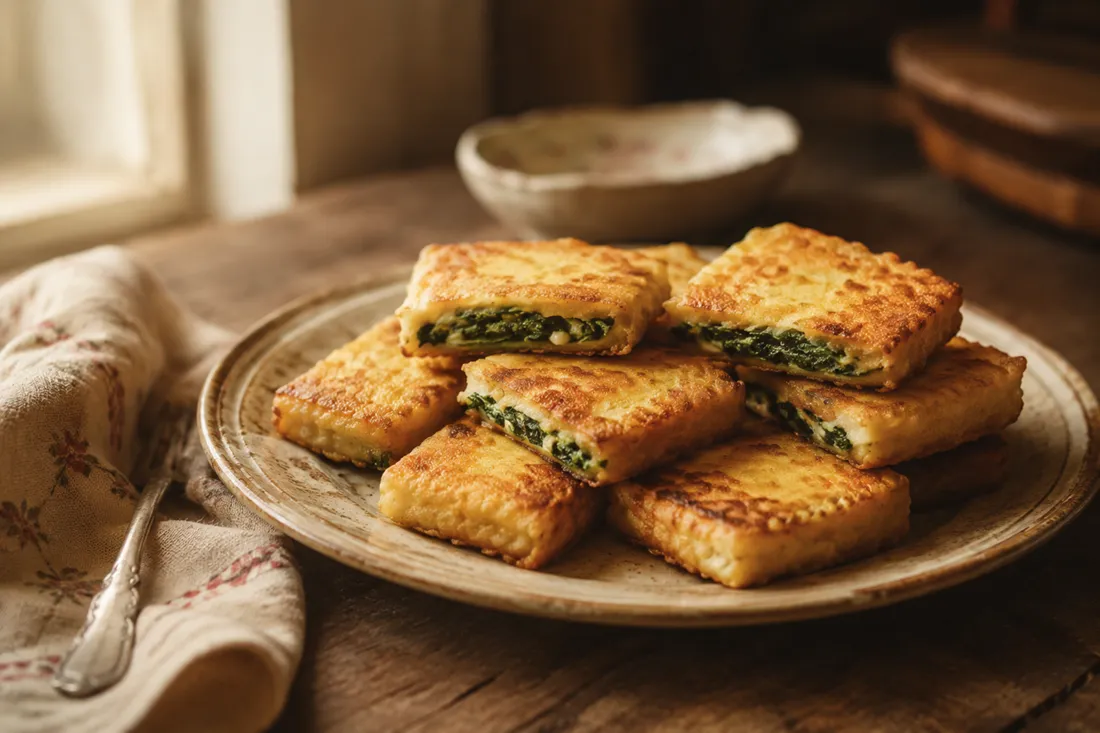
Small toasted bread sandwiches filled with buttery seasoned spinach, dipped in egg, and pan-fried until golden on both sides.
Baked Mushrooms with Hard Cheese and Eggs
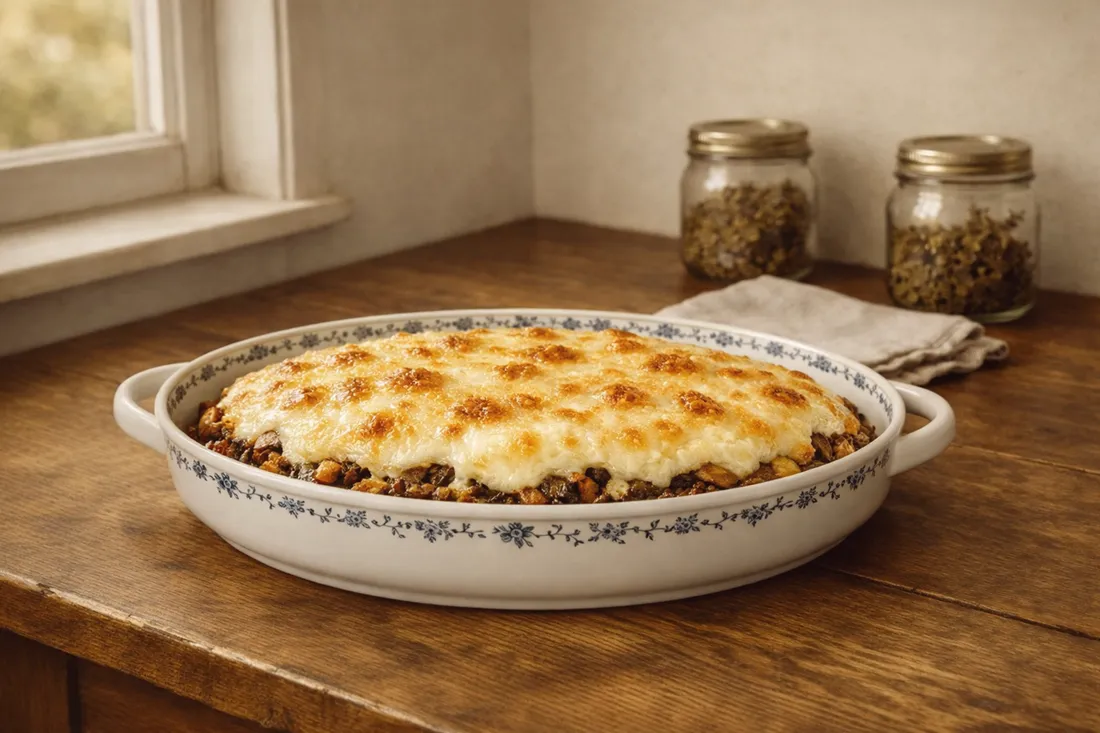
Layers of sliced hard-boiled eggs and grated cheese topped with sautéed mushrooms, baked under a rich egg-enriched sour cream topping.