Cold Summer Pudding
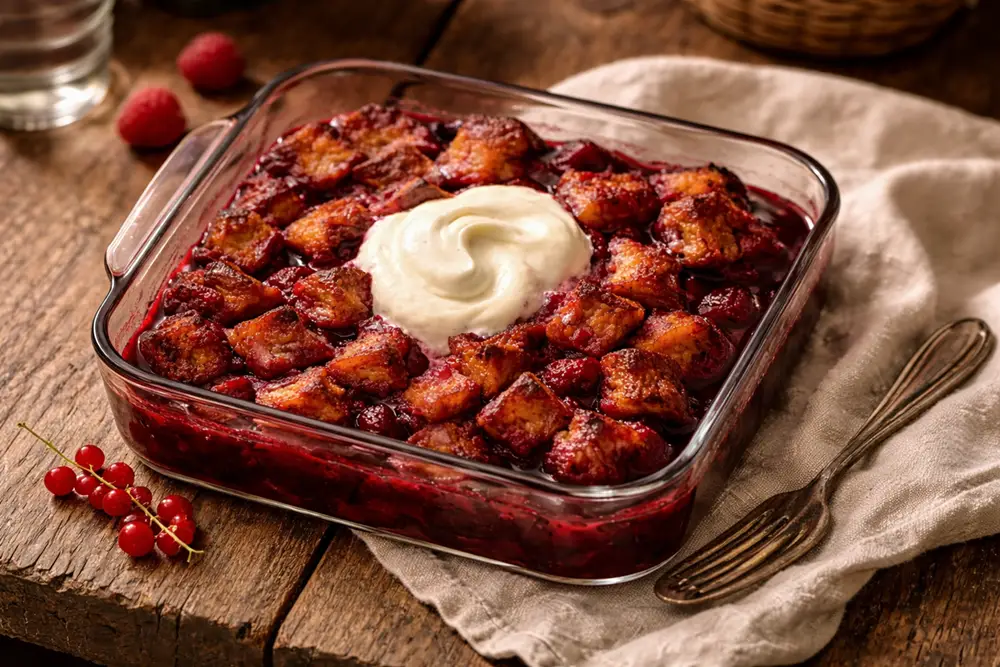
Enriched bread soaked in raw raspberry and red currant purée, finished with a warm berry compote — a no-bake summer dessert served cold with whipped cream.
Historical recipe
Modernised adaptation of an early 20th‑century source. Not independently kitchen-tested by Attic Recipes. Quantities, temperatures, and food safety guidance have been updated for a contemporary kitchen — results may vary and errors may exist. Nutritional values, where provided, are estimates only and have not been laboratory tested. Always follow current food safety guidelines for your region. If you have a health condition, allergy, or dietary requirement, consult a qualified professional before preparing this recipe.
Use of this recipe is entirely at your own risk and subject to our Terms of Service and Privacy Policy. Attic Recipes accepts no liability for any adverse outcome.
- Gluten
- Dairy
- Eggs
Additional notes
-
Note
This dessert contains a significant amount of added sugar (approximately 50g per serving from the compote). People managing blood sugar levels or following a reduced-sugar diet should note the compote sugar can be reduced further or replaced with a small amount of honey.
-
Note
Per-serving saturated fat is approximately 8g, primarily from the cream. People with cardiovascular concerns may substitute with a lower-fat cream alternative or serve with plain yogurt.
- 1
Grease a deep glass baking dish or serving dish (approx. 1.5L) with the 5g of butter. Line the bottom and sides with thin slices of the 200g of enriched white bread, trimming to fit snugly with no gaps.
- 2
Make the raw purée: press the 250g of raspberries and 250g of red currants through a fine-mesh sieve, discarding the seeds and skins. No sugar is added at this stage. Pour the raw purée evenly over the bread layer.
- 3
Place the dish in the refrigerator and leave until the bread has fully absorbed the purée — at least 8 hours, or overnight. The bread should be deeply stained and saturated throughout.
- 4
Make the compote: combine the remaining 250g of raspberries and 250g of red currants with the 300g of granulated sugar in a small saucepan. Heat gently over low heat, stirring occasionally, until the sugar has completely dissolved and the fruit has softened — approximately 5–7 minutes. Do not boil vigorously; the fruit should collapse gently into the syrup.
- 5
Remove the dish from the refrigerator. Transfer the soaked bread base carefully into a clean glass serving dish if not already in one. Pour the warm compote evenly over the soaked bread. Allow to cool to room temperature, then return to the refrigerator until completely cold — at least 2 hours.
- 6
Serve cold, cut into portions directly from the dish. Accompany each portion with the 200ml of heavy cream — whipped to soft peaks or served cold and pourable.
Nutrition Information per 1 serving (approx. 200g)
Nutritional values are approximate estimates and may vary based on specific ingredients used, preparation methods, and portion sizes.
Serving Suggestions
Serve cold from the refrigerator, cut into portions directly from the dish. Whipped cream or cold pourable cream are the traditional accompaniments. A few fresh raspberries or currants scattered over the top add colour and reinforce the fresh fruit flavour.
About This Recipe
This dessert has two distinct layers and two distinct logics. The first is cold and raw: fresh raspberries and red currants pressed through a sieve, no sugar added, poured over enriched bread and left overnight to soak in. The bread absorbs everything — the juice, the colour, the sharp edge of unsweetened fruit. The second layer is warm and cooked: the same fruits simmered briefly with sugar into a loose compote, strained, and poured over the soaked base just before serving.
The contrast is the point. The raw purée soaks in and becomes part of the bread — dense, deeply flavoured, almost jammy. The cooked compote sits on top, sweeter and brighter, the heat having drawn out a different dimension of the same fruit. Served cold with cream, it is one of those desserts that requires almost no skill and rewards patience.
Home cooks of the period specified a “luxurious white bread” — in early 20th century Central European home baking, this meant an enriched milk loaf, the kind made with eggs and butter and reserved for occasions. Plain lean bread would have been considered ordinary. The enriched crumb absorbs liquid differently from a lean loaf: it holds together better, stays soft rather than collapsing, and contributes a subtle richness that plain bread cannot.
Why It Works
The raw purée step works because very ripe summer fruit releases enough juice under pressure to saturate bread completely — no heat, no sugar, no additional liquid needed. The natural pectin in the currants helps the absorbed juice set slightly during the overnight chill, so the bread holds its shape when served.
The compote is cooked only long enough for the sugar to dissolve and the fruit to soften — 5 to 7 minutes at most. Longer cooking drives off the volatile aromatic compounds responsible for the fresh fruit character and produces a flavour closer to jam than to fruit. The straining step — standard practice in period preparations of this type — removes the fruit solids and leaves a clear, intensely coloured syrup that soaks into the already-saturated bread from above rather than sitting on the surface.
Red currants carry more natural acidity than raspberries and provide structural contrast — their pectin content is higher, their flavour sharper. The combination of the two fruits produces a more complex result than either alone.
Modern Kitchen Tips
If red currants are not available, black currants work but give a more astringent, darker result. Gooseberries are a reasonable substitute for currants in the compote. Avoid strawberries in the purée layer — their water content is too high and the bread will become waterlogged rather than saturated.
The dish must be glass or ceramic — the juice will stain plastic permanently and may react with bare metal. A deep glass baking dish or a ceramic gratin dish both work well.
If using store-bought sponge cake instead of bread, reduce the compote sugar to 200g. Commercial sponge is already sweetened and the compote will be unpleasantly sweet at the full 300g.
A classic of early 20th century home cooking, preserved and adapted for the modern kitchen.
The Story Behind This Recipe
Historical Context
Early 20th century versions of this dessert used a 1:1 fruit-to-sugar ratio for the compote — 250g of sugar per 250g of fruit — which was standard practice before modern nutritional guidance and when sugar acted as a more significant preservative. The raw purée layer, with no added sugar, was a deliberate contrast: the unsweetened fruit juice soaked into the bread overnight, creating a sharp, intensely flavoured base that balanced the sweetness of the cooked compote poured over the top. Home cooks of the period specified a 'luxurious white bread' — in the context of Central European baking of the era, this referred to an enriched, milk-based loaf rather than a plain lean white bread, which would have been considered everyday rather than celebratory. The dessert was assembled in a glass baking dish and served directly rather than unmoulded, distinguishing it from the British summer pudding technique of the same period.
Modern Kitchen Adaptation
Sugar in the compote has been reduced from the period quantity of 500g to 300g to reflect contemporary taste preferences and nutritional standards while preserving the dessert's character. The period amount is noted for reference. Enriched milk bread is specified as the modern equivalent of the period 'luxurious white bread.' Store-bought sponge cake (patispanj) is an acceptable substitute — if used, reduce the compote sugar to 200g, as commercial sponge cake contains significant added sugar. Butter quantity for greasing is estimated at 5g. Bread quantity is estimated at 200g (approximately 8 thin slices), sufficient to line a 1.5L dish with a single snug layer. Chilling time is estimated at a minimum of 8 hours based on the requirement for full bread saturation.
This recipe is an independent modern adaptation developed from historical sources in the public domain. It is provided for informational and educational purposes only and does not constitute professional dietary, nutritional, or medical advice. Food preparation involves inherent risks. The reader assumes full responsibility for safe food handling, ingredient sourcing, and adherence to current local food safety guidelines. The site operator accepts no liability for outcomes resulting from the preparation or consumption of this recipe.
One recipe.
Every week.
You Might Also Like
More recipes from the same category
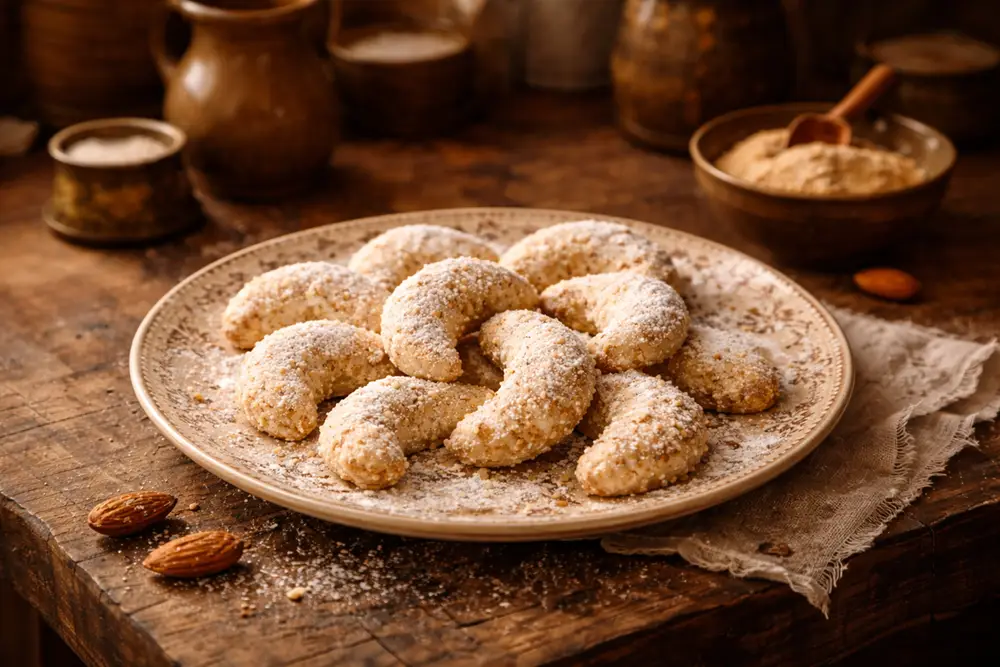
Almond Meringue Crescents
Crisp Central European confections of Swiss meringue shaped into crescents, coated in ground almonds, oven-dried until white and firm.
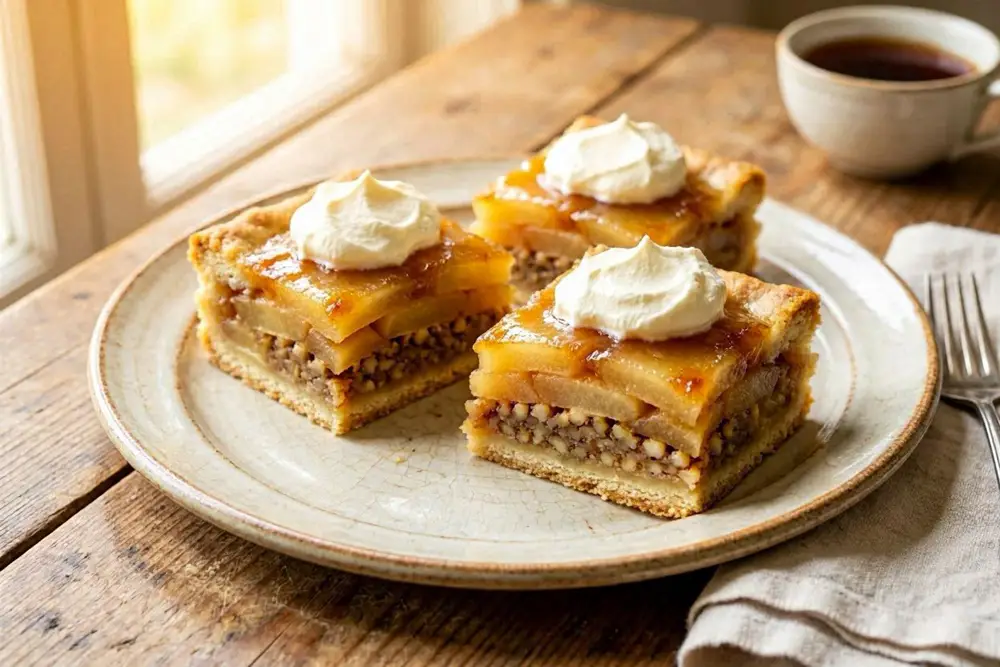
Apple Pie with Whipped Cream
A crisp almond shortcrust base layered with ground walnuts, poached apples, apricot jam, and a thick cloud of sweetened whipped cream.
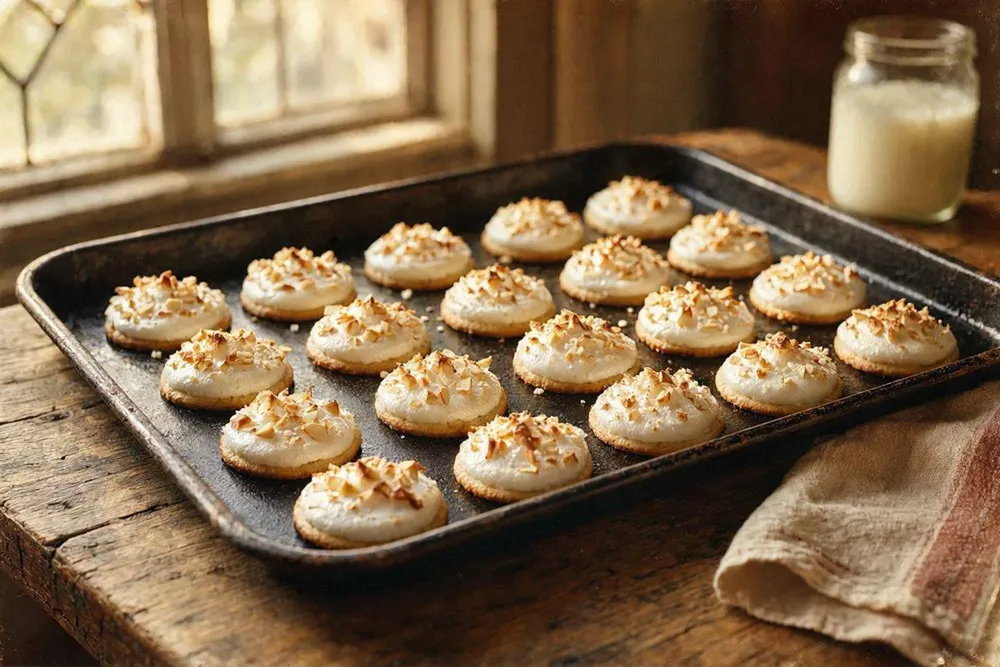
Almond Gurabije Cookies
Small lemon-scented cookies made with lard and egg yolk, indented in the center, coated in whipped egg white, and rolled in sugar and chopped almonds.