Carrot Pudding Cake
A soft, naturally sweet carrot pudding cake with no eggs and no flour in the batter — carrots boiled, sieved, and baked.
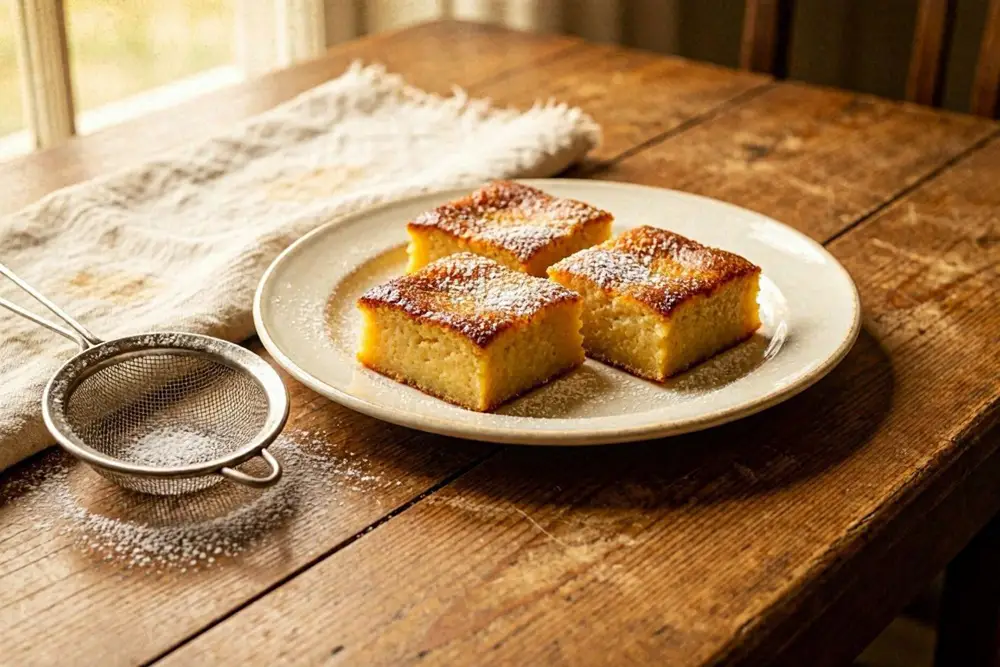
Quick Summary
A soft, naturally sweet carrot pudding cake with no eggs and no flour in the batter — carrots boiled, sieved, and baked.
Historical recipe
Modernised adaptation of an early 20th‑century source. Not independently kitchen-tested by Attic Recipes. Quantities, temperatures, and food safety guidance have been updated for a contemporary kitchen — results may vary and errors may exist. Nutritional values, where provided, are estimates only and have not been laboratory tested. Always follow current food safety guidelines for your region. If you have a health condition, allergy, or dietary requirement, consult a qualified professional before preparing this recipe.
Use of this recipe is entirely at your own risk and subject to our Terms of Service and Privacy Policy. Attic Recipes accepts no liability for any adverse outcome.
- Dairy
- Gluten
Additional notes
-
Note
This recipe contains dairy (butter, whole milk). The pan-dusting flour introduces gluten; substitute with rice flour or cornstarch to make the recipe gluten-free.
- 1
Peel the 400g carrots and cut into uniform rounds of approximately 1cm thickness. Place in a saucepan, cover with cold water, add a pinch of salt, and bring to a boil. Cook for 15–20 minutes until completely fork-tender. Drain thoroughly.
- 2
Press the drained carrots through a fine-mesh sieve into a clean saucepan, or purée in a food processor until completely smooth. No fibrous pieces should remain — the texture must be uniform.
- 3
Place the saucepan with the carrot purée over medium-high heat. Add the 120ml whole milk, 60g granulated sugar, 1 tsp vanilla extract, and 30g unsalted butter. Stir continuously for 4–5 minutes until the butter is fully melted, the sugar dissolved, and the mixture has thickened into a smooth, cohesive paste that pulls away slightly from the sides of the pan.
Tip The mixture should be thick enough to hold a brief furrow when you drag a spoon through it. If it looks too loose, cook for another 1–2 minutes. - 4
Preheat the oven to 180°C (350°F) / 160°C fan. Grease a 20x20cm baking dish generously with butter. Dust the bottom and sides evenly with the 10g plain flour, then tap out any excess.
Tip For a gluten-free version, use fine rice flour or cornstarch for dusting — it works equally well. - 5
Pour the warm carrot mixture into the prepared dish and smooth the top with a spatula. Bake for 25–30 minutes until the edges are deep golden brown and the centre is set — it should not wobble when the dish is gently moved.
- 6
Remove from the oven and leave to cool completely in the dish. Do not attempt to cut while warm — the pudding firms up as it cools and will hold clean square edges once cold.
- 7
Once fully cooled, cut into 9 even squares (3×3). Dust generously with 15g vanilla-scented powdered sugar just before serving.
Tip Dust at the last moment — powdered sugar absorbs moisture and disappears if left to sit.
Nutrition Information per 1 square (approx. 63g)
Nutritional values are approximate estimates and may vary based on specific ingredients used, preparation methods, and portion sizes.
Serving Suggestions
Serve at room temperature or slightly chilled. Works well alongside a spoonful of crème fraîche or a small glass of cold milk. The squares keep well refrigerated for up to 2 days, covered.
About This Recipe
This is a carrot dessert stripped to its essentials. No eggs, no flour in the batter, no leavening — just carrots boiled until tender, pressed through a sieve, and cooked down with milk, butter, and vanilla into a thick paste that bakes into something between a pudding and a firm cake square. The texture is dense and smooth, the flavour clean and naturally sweet.
What makes it work as a recipe is the double cooking: first on the stovetop, where the mixture reduces and the starch in the carrots activates, then in the oven, where the surface caramelises and the interior sets. The result is a golden-edged square with a slightly yielding centre — nothing like a sponge cake, closer in spirit to a baked polenta or a firm custard.
The finish is simple: a dusting of vanilla-scented powdered sugar over cold squares. No frosting, no layering, no additional complexity.
Why It Works
Young carrots are the key ingredient here, not just for sweetness but for texture. Older carrots are more fibrous and hold less moisture — they produce a grainier purée that does not bake as smoothly. Young carrots, properly sieved, yield a paste that is almost uniform in texture, giving the finished cake its characteristic density.
The stovetop reduction step before baking is doing real structural work. Cooking the purée with milk and butter evaporates excess moisture and partially gelatinises the carrot starch. This means the mixture enters the oven already partially set — the bake time is short (25–30 minutes) precisely because the hard work is done on the hob. A mixture poured into the pan raw and wet would take far longer and bake unevenly.
Modern Kitchen Tips
A food processor produces a smoother purée than a sieve with less effort, particularly with younger, smaller carrots. If using a processor, run it long enough that no visible fibre remains — 2–3 minutes on high.
The mixture thickens quickly on the stovetop once it starts to reduce. Keep the heat at medium-high and stir continuously — it can catch on the bottom of the pan in the final minute. A wide, heavy-bottomed saucepan gives the best result.
Allow the cake to cool completely before cutting. The structure firms up substantially as it cools — cutting warm produces ragged, soft edges. Refrigerating for 30 minutes after it reaches room temperature gives the cleanest squares.
A quiet, naturally sweet dessert from early 20th century Central European home cooking — proof that simplicity and good produce are enough.
The Story Behind This Recipe
Historical Context
Home cooks of the period made regular use of root vegetables in baked desserts, particularly for lighter sweets intended for everyday meals. This recipe is notable for its simplicity — no eggs, no flour in the batter — relying instead on the natural starch and sugar in young carrots to provide structure once baked. The original gave no quantities for any ingredient, leaving all proportions to the cook's experience. The instruction to bake 'just long enough for the mixture to turn golden brown' reflects the period's assumption of familiarity with the oven.
Modern Kitchen Adaptation
All quantities in this recipe are estimates derived from the ratio of carrot purée to liquid typical of this style of baked pudding; all are marked accordingly. The original gave no oven temperature — 180°C is estimated based on the expected bake time and texture described. Plain flour appears only as a pan-dusting agent; replacing it with fine rice flour or cornstarch makes the recipe fully gluten-free without any change to the result. Vanilla extract may be used in place of vanilla sugar.
This recipe is an independent modern adaptation developed from historical sources in the public domain. It is provided for informational and educational purposes only and does not constitute professional dietary, nutritional, or medical advice. Food preparation involves inherent risks. The reader assumes full responsibility for safe food handling, ingredient sourcing, and adherence to current local food safety guidelines. The site operator accepts no liability for outcomes resulting from the preparation or consumption of this recipe.
One recipe.
Every week.
You Might Also Like
More recipes you'll enjoy
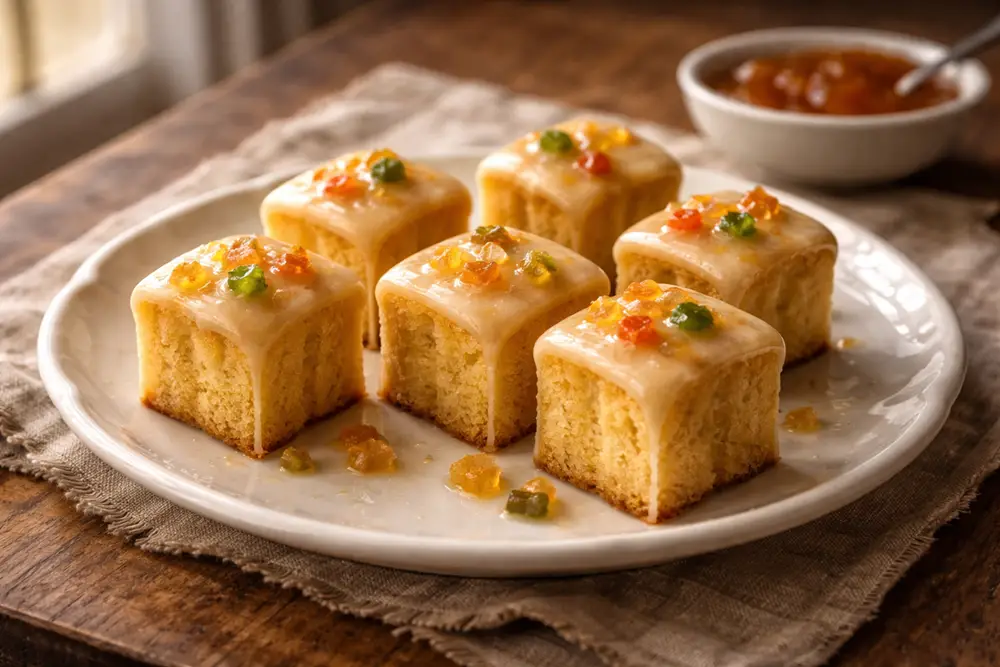
Butter Biscuit with Candied Fruit
A lemon-scented sponge sandwich filled with fruit marmalade, topped with chopped candied fruit and a rum-lemon glaze, cut into small cubes for serving.
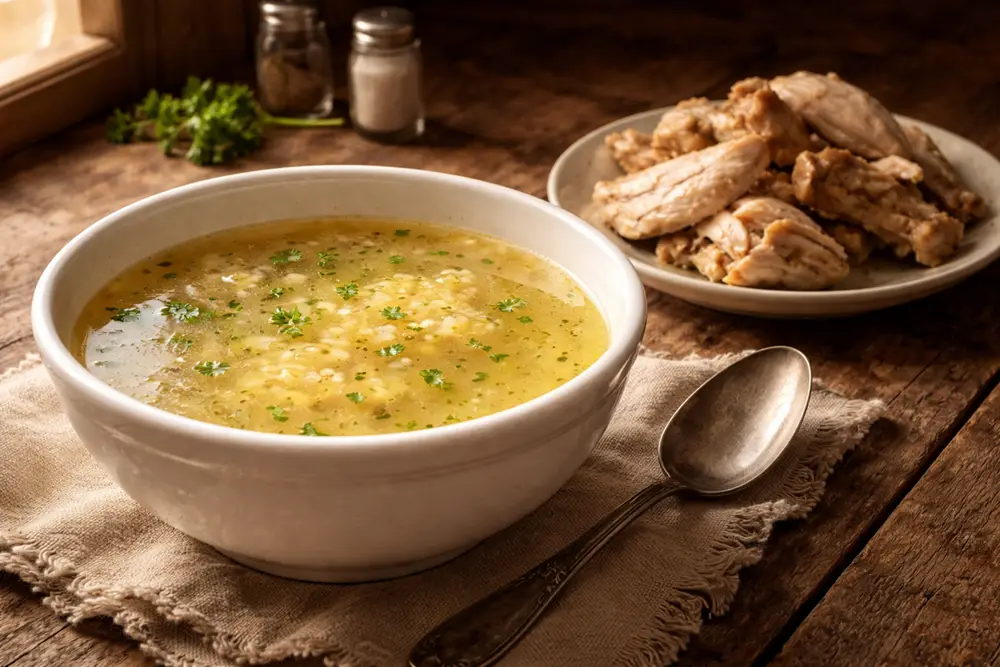
Sour Soup (Kisela Čorba)
A clear poultry broth thickened with egg yolks and mileram, sharpened with wine vinegar or lemon juice, served with rice and meat on the side.
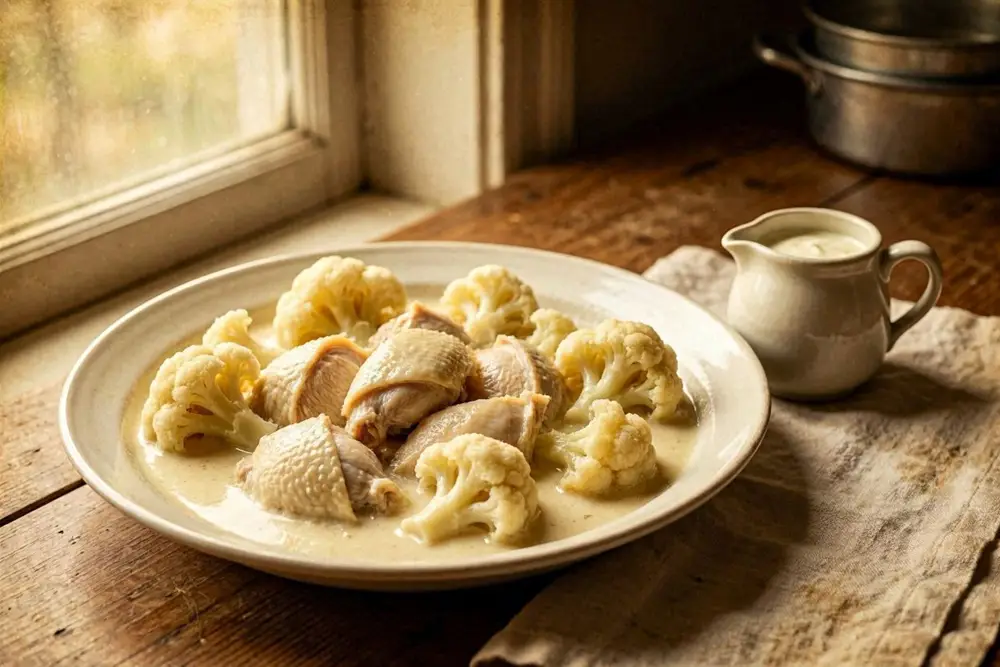
Chicken and Cauliflower in Sour Cream Sauce
A quartered young chicken cooked in a white sour cream roux, served with boiled cauliflower florets arranged around the meat and the cooking sauce poured over.