Cabbage and Sausage Moussaka
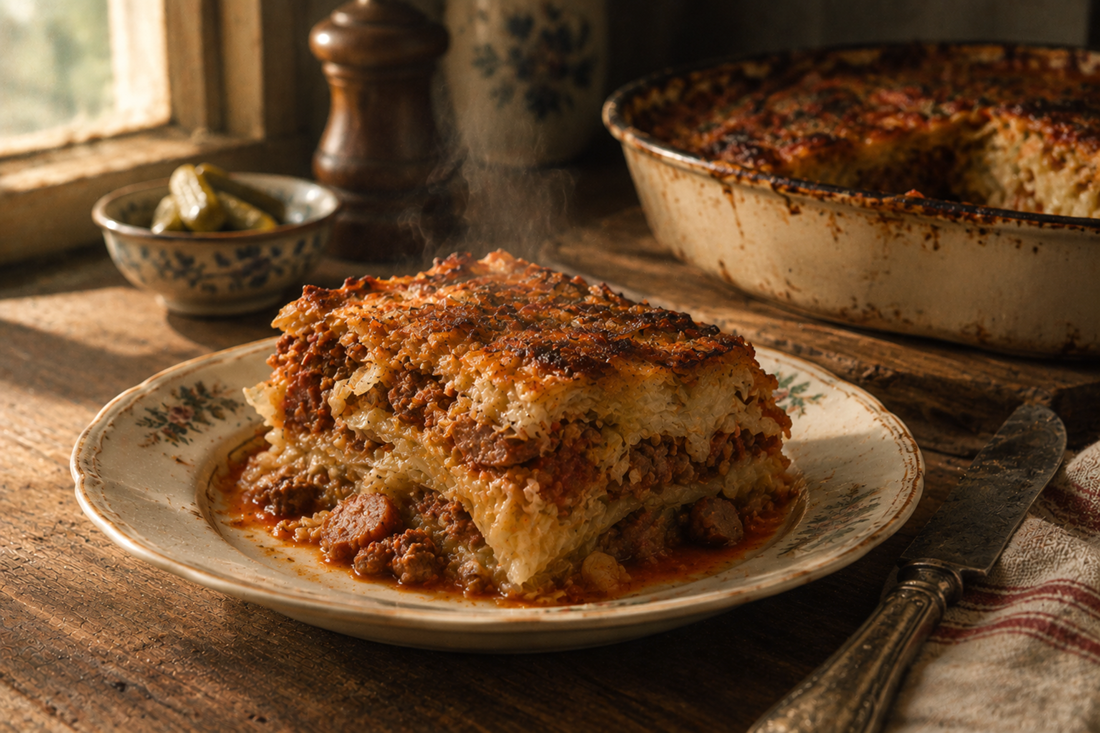
A layered cabbage casserole with a seasoned pork and egg filling, sliced dry sausage, and tomato sauce, cooked until tender and sliced like a cake.
Quick Summary
Softened cabbage leaves are layered with seasoned ground pork, egg, and sliced dry sausage, then cooked in tomato sauce until tender. Turned out and sliced like a cake, this old-fashioned cabbage dish is ready in under two hours.
Historical recipe
Modernised adaptation of an early 20th‑century source. Not independently kitchen-tested by Attic Recipes. Quantities, temperatures, and food safety guidance have been updated for a contemporary kitchen — results may vary and errors may exist. Nutritional values, where provided, are estimates only and have not been laboratory tested. Always follow current food safety guidelines for your region. If you have a health condition, allergy, or dietary requirement, consult a qualified professional before preparing this recipe.
Use of this recipe is entirely at your own risk and subject to our Terms of Service and Privacy Policy. Attic Recipes accepts no liability for any adverse outcome.
- Eggs
Additional notes
-
Warning
The ground pork and egg filling must be cooked all the way through to a safe internal temperature (71°C/160°F). Because this is a dense, layered casserole, the center can cook more slowly than the edges — check with a food thermometer before serving, especially for pregnant women, young children, older adults, and anyone immunocompromised.
- 1
Remove the outer leaves from the cabbage head, wash it, and hollow out the core.
- 2
Place the cabbage head in a pot and pour hot salted water over it. Let it sit until the outer leaves soften enough to peel away.
- 3
Separate the softened leaves from the head one by one, setting them aside, and repeat until you have enough leaves for layering.
- 4
Mix the 250g of ground pork with the 2 eggs, and season with the salt and pepper.
- 5
Cut the 250g of dry sausage into thin rounds.
- 6
In a pot, layer a cabbage leaf on the bottom, spread some of the meat mixture over it, cover with more cabbage leaves, then add a layer of sliced sausage. Repeat the layers, finishing with a layer of cabbage.
- 7
Pour the 500ml of tomato juice over everything, cover the pot, and cook on the stovetop over low heat, or bake in the oven, until the cabbage is tender and the tomato has cooked down.
Tip Check the center of the meat layer with a food thermometer before serving — a dense, layered casserole like this can cook unevenly. - 8
Turn the moussaka out onto a round plate and cut into slices, like a cake, to serve.
Nutrition Information per 1 slice (approx 280g)
Nutritional values are approximate estimates and may vary based on specific ingredients used, preparation methods, and portion sizes.
Serving Suggestions
Serve on its own as a hearty main course, with crusty bread on the side to soak up the tomato sauce.
About This Recipe
This is a layered casserole built around a whole head of cabbage: leaves separated after a hot-water blanch, then stacked with a seasoned ground pork and egg filling and rounds of dry sausage, all cooked down together in tomato sauce. Once it’s tender, the whole thing gets turned out and sliced like a cake rather than spooned out loosely.
It’s a good example of how far a modest amount of meat can stretch when a whole cabbage does most of the volume — the sausage adds concentrated flavor without needing much of it.
Why It Works
The egg mixed into the ground pork acts as a binder, holding the meat layer together as it cooks so the finished casserole can be unmolded and sliced cleanly rather than falling apart. Blanching the cabbage head whole before separating the leaves softens them just enough to layer without tearing, while the tomato sauce reduces around everything as it cooks, tying the layers together into something closer to a firm loaf than a loose braise.
Modern Kitchen Tips
- Let the casserole rest for 5-10 minutes after cooking before turning it out — this helps it hold together better when sliced.
- A springform pan or deep casserole dish makes unmolding easier than a standard pot if you have one on hand.
- Leftovers reheat well covered in the oven, and the slices hold their shape even after a day or two in the fridge.
A classic of early 20th century home cooking, preserved and adapted for the modern kitchen.
The Story Behind This Recipe
Historical Context
In the Balkans, 'moussaka' doesn't necessarily refer to the eggplant-based Greek dish most English-speaking readers know — it's used more broadly for a layered, baked casserole, and cabbage-based versions like this one were a common way to use a whole head of cabbage alongside a modest amount of meat. Building it in distinct layers and unmolding it to slice, rather than serving it as loose braised cabbage, turned an everyday combination of ingredients into something that presented more like a special-occasion dish.
Modern Kitchen Adaptation
The traditional method's final line was cut off in the source material; the ending here — turning the moussaka out and slicing it like a cake — reflects how the dish is meant to hold together once the pork and egg filling sets during cooking, based on how the rest of the method is written. Salt for the blanching water, salt and pepper for the meat mixture, and the tomato liquid amount were all left unspecified and have been estimated as reasonable starting points.
This recipe is an independent modern adaptation developed from historical sources in the public domain. It is provided for informational and educational purposes only and does not constitute professional dietary, nutritional, or medical advice. Food preparation involves inherent risks. The reader assumes full responsibility for safe food handling, ingredient sourcing, and adherence to current local food safety guidelines. The site operator accepts no liability for outcomes resulting from the preparation or consumption of this recipe.
One recipe.
Every week.
You Might Also Like
More recipes you'll enjoy
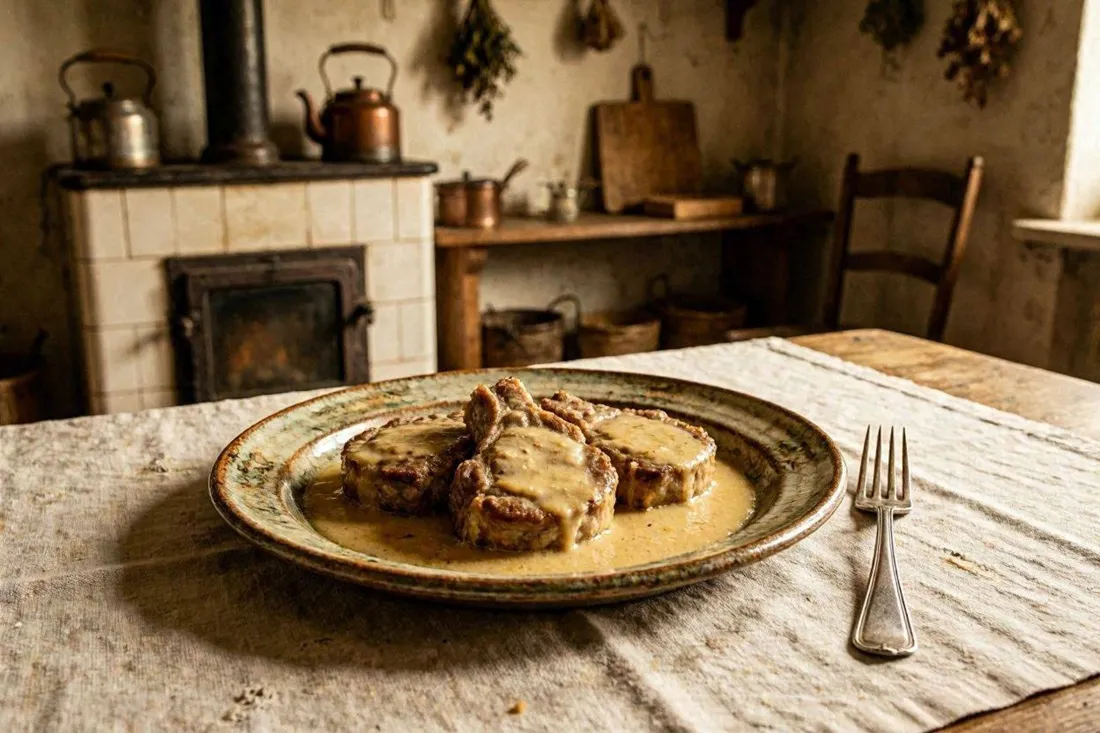
Braised Pork Chops in White Wine and Sour Cream Sauce
Pork loin chops braised with onion, carrot, parsley root, and celery root in white wine, then finished with a strained sour cream sauce.
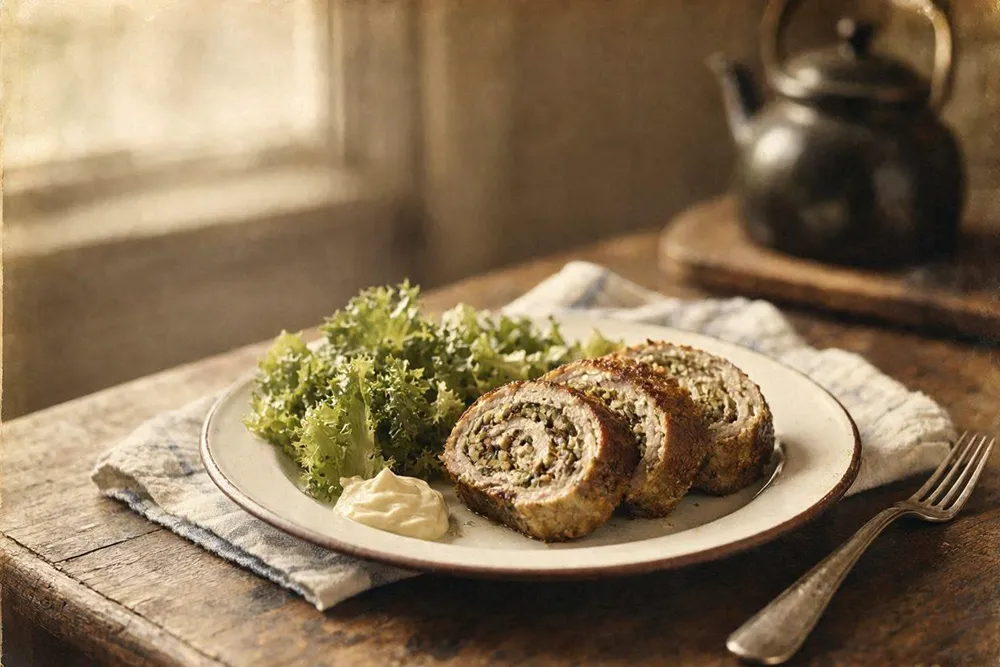
Ground Chicken Roulade with Liver Filling
A large sheet of seasoned ground chicken wrapped around a chicken liver, onion, and egg filling, pan-fried, oven-finished, and sliced into rounds.
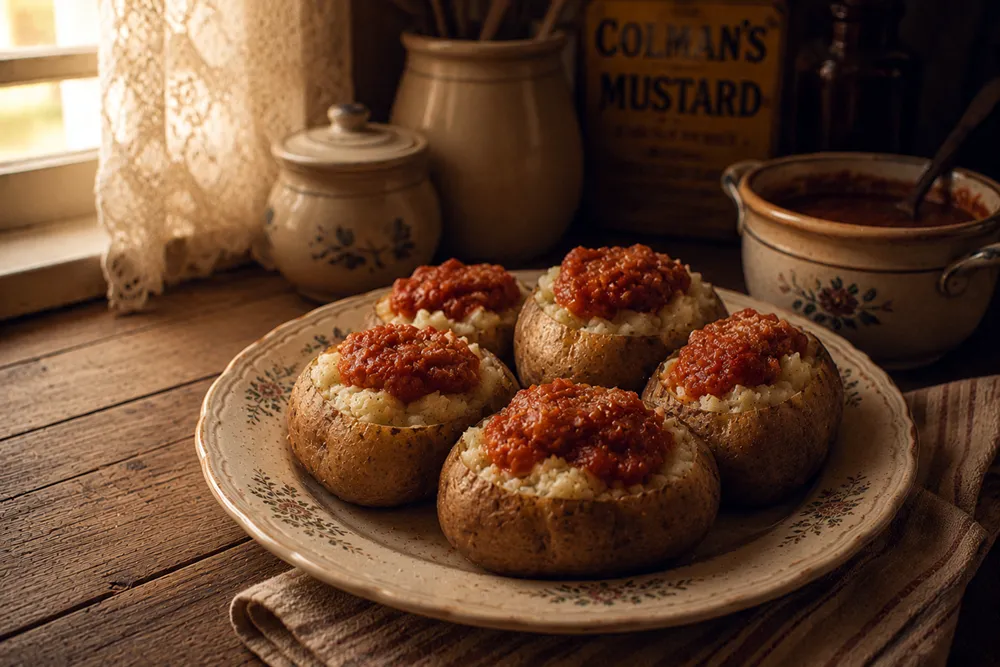
Stuffed Potatoes with Tomato Sauce
Whole potatoes hollowed out, stuffed with a veal and cured pork filling bound with egg and bread, baked until tender, and served with tomato sauce.