Braised Pork Chops in White Wine and Sour Cream Sauce
Pork loin chops braised with onion, carrot, parsley root, and celery root in white wine, then finished with a strained sour cream sauce.
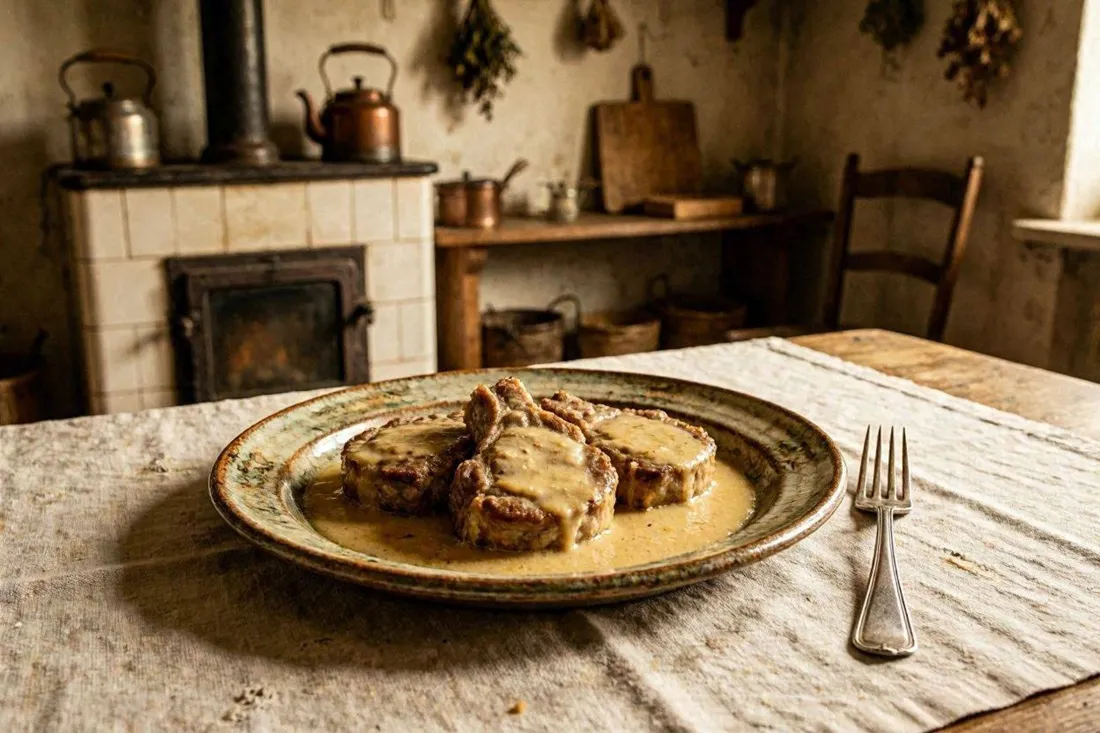
Quick Summary
Central European braised pork loin chops with root vegetables and dry white wine, finished with a smooth strained sour cream sauce. This early 20th-century dish takes about 70 minutes and thickens naturally from braised aromatics, without a roux.
Historical recipe
Modernised adaptation of an early 20th‑century source. Not independently kitchen-tested by Attic Recipes. Quantities, temperatures, and food safety guidance have been updated for a contemporary kitchen — results may vary and errors may exist. Nutritional values, where provided, are estimates only and have not been laboratory tested. Always follow current food safety guidelines for your region. If you have a health condition, allergy, or dietary requirement, consult a qualified professional before preparing this recipe.
Use of this recipe is entirely at your own risk and subject to our Terms of Service and Privacy Policy. Attic Recipes accepts no liability for any adverse outcome.
- Dairy
- Sulphites
Additional notes
-
Note
This dish is high in saturated fat per serving due to the lard and sour cream. Those managing saturated fat intake may want to reduce the lard quantity or use a lighter cream.
- 1
Cut the 1kg pork loin into individual chops. Wash, pat dry, and pound with a wooden mallet to tenderize. Season with the 5g salt.
- 2
Heat the 30g lard in a pan. Once hot, fry the chops on both sides until browned. Remove and set aside.
- 3
In a separate pot, heat the 15g lard. Add the chopped onion, carrot, parsley root, celery root, and peppercorns. Cook, stirring occasionally, until the vegetables soften and turn a light golden color.
- 4
Add the fried chops to the pot with the softened vegetables. Braise, gradually pouring in the 300ml white wine, and simmer until the pork is completely tender.
Tip Internal temperature should reach at least 63°C (145°F) for safe consumption; a proper braise well exceeds this well before the meat is fork-tender. - 5
Remove the tender pork chops and arrange on a serving platter.
- 6
Push the braised vegetables through a sieve to make a smooth sauce base. Let the liquid drip through on its own rather than pressing hard.
- 7
Return the strained sauce to the pot. Add the 80ml white wine and the 200ml sour cream. Warm gently without letting it boil hard.
Tip Temper the sour cream first by stirring in a spoonful of the hot sauce, then return it to the pot — this prevents curdling when it hits the heat. - 8
Pour the sauce over the pork chops and serve.
Nutrition Information per 1 portion (approx 280g)
Nutritional values are approximate estimates and may vary based on specific ingredients used, preparation methods, and portion sizes.
Serving Suggestions
Serve hot with boiled potatoes, dumplings, or crusty bread to soak up the sauce.
About This Recipe
This braised pork dish builds its sauce entirely from the aromatics it’s cooked with — no flour, no separate roux. Onion, carrot, parsley root, and celery root are softened in lard until golden, then the browned pork chops are braised right on top of them with white wine added gradually as they simmer down to tender.
Once the meat is done, the vegetables aren’t discarded — they’re pushed through a sieve to become the base of the sauce, then finished with a splash more wine and a generous amount of sour cream. It’s a simple technique that turns braising liquid and softened root vegetables into a proper sauce with almost no extra effort.
Why It Works
Braising the pork directly in the vegetable base lets the meat pick up flavor from the aromatics as it tenderizes, while the wine keeps the braising liquid loose enough to reduce into a sauce rather than a paste. Pushing the cooked vegetables through a sieve — rather than pureeing them — gives a naturally smooth, lump-free sauce without needing a blender, while the light straining pressure keeps the texture silky instead of pasty.
Modern Kitchen Tips
Pound the chops evenly before cooking so they braise at the same rate. When you fold the sour cream in at the end, keep the heat low — a hard boil is the fastest way to break a cream-based sauce. If your sauce feels thinner than you’d like after straining, simmer it uncovered for a few extra minutes before adding the sour cream.
A classic of early 20th century home cooking, preserved and adapted for the modern kitchen.
The Story Behind This Recipe
Historical Context
Early 20th century recipes for braised pork like this one typically left the exact amounts of aromatics, wine, and salt to the cook's judgment, relying on experience rather than precise measures. Lard was the standard cooking fat of the period, used both for frying the meat and for softening the vegetable base. The finishing touch of a strained vegetable sauce enriched with wine and sour cream was a common way to turn braising liquid into a proper sauce, without any flour-based thickening.
Modern Kitchen Adaptation
Lard can be replaced with butter or a neutral oil in equal quantity if preferred, though it remains the historically accurate fat for this dish. Quantities for the salt, aromatics, and wine were not specified in the original and have been estimated based on the pork quantity and period practice. Sour cream should be gently tempered with a spoonful of the hot sauce before being returned to the pot, since adding it cold to a simmering liquid can cause it to curdle. The pork should reach a minimum internal temperature of 63°C (145°F), though the braising time in this recipe takes it well past that point.
This recipe is an independent modern adaptation developed from historical sources in the public domain. It is provided for informational and educational purposes only and does not constitute professional dietary, nutritional, or medical advice. Food preparation involves inherent risks. The reader assumes full responsibility for safe food handling, ingredient sourcing, and adherence to current local food safety guidelines. The site operator accepts no liability for outcomes resulting from the preparation or consumption of this recipe.
One recipe.
Every week.
You Might Also Like
More recipes you'll enjoy
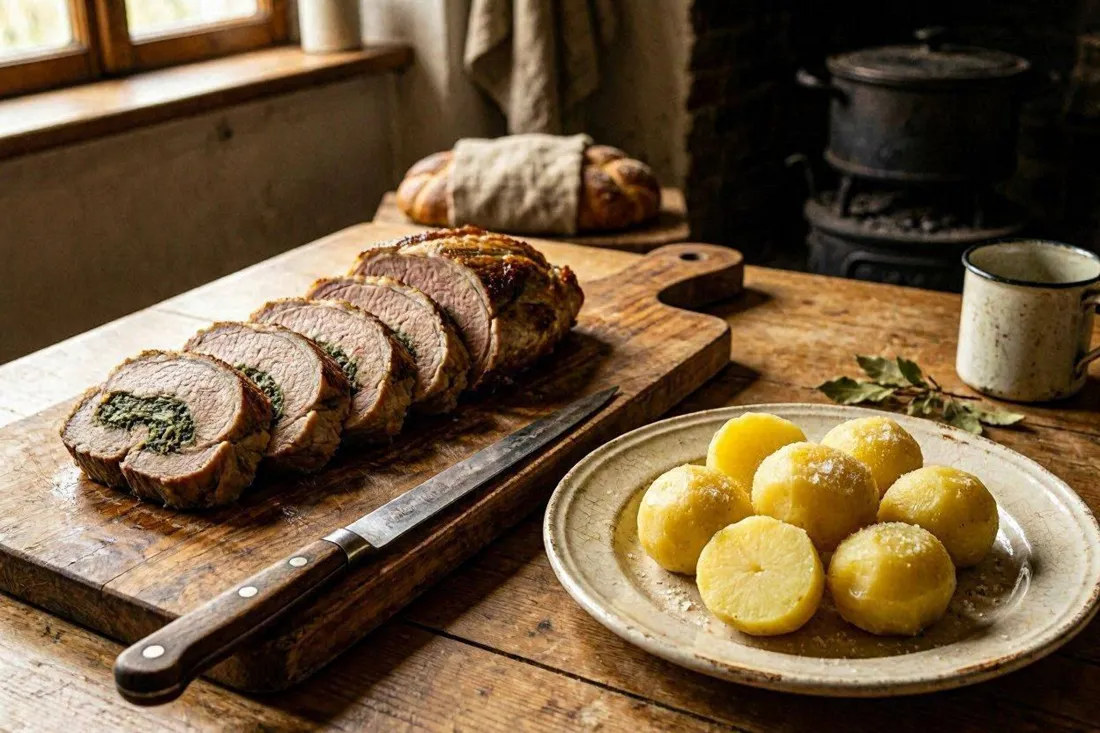
Veal Breast Stuffed with Spinach
Boned veal breast stuffed with spinach folded into a white roux sauce and sour cream, sewn closed and roasted until golden and tender.

Baked Stuffed Squash with Veal and Egg Filling
A whole young squash parboiled, then stuffed with ground veal, hard-boiled and raw egg, milk-soaked bread, and sour cream, baked until the filling sets.
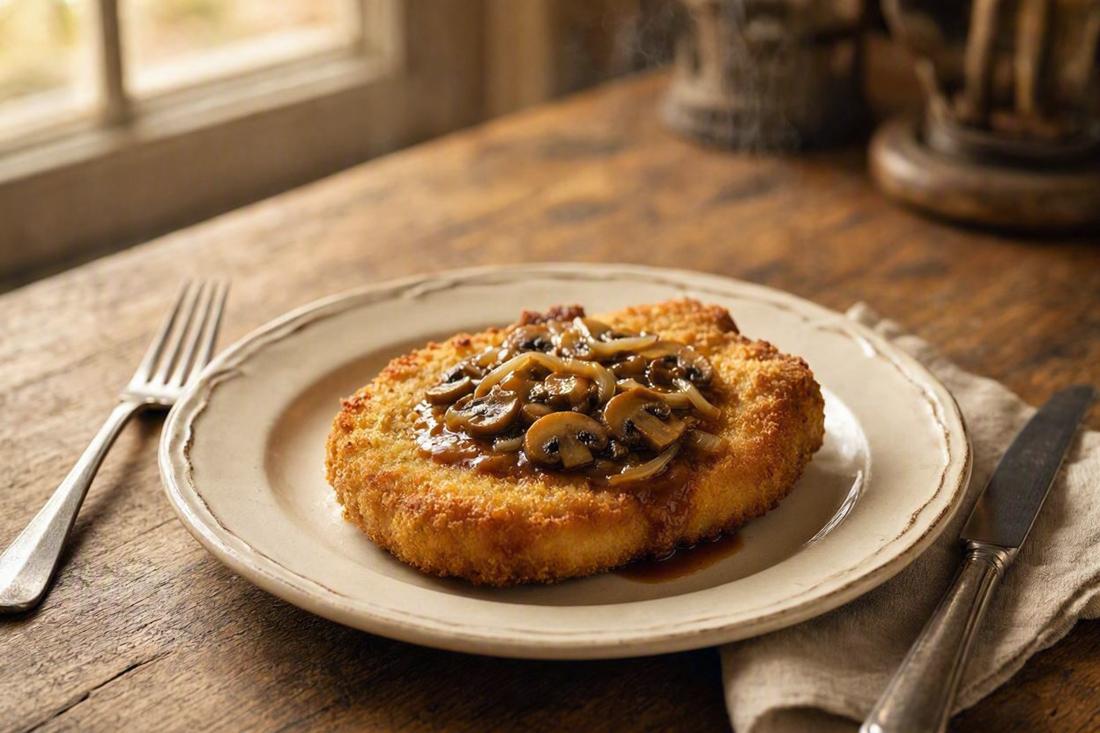
Breaded Pork Chops with Mushroom Sauce
Breaded pork chops, first lightly fried then braised in a caraway-scented broth with onion and mushrooms for a rich pan sauce.