Baked Lamb and Green Bean Casserole
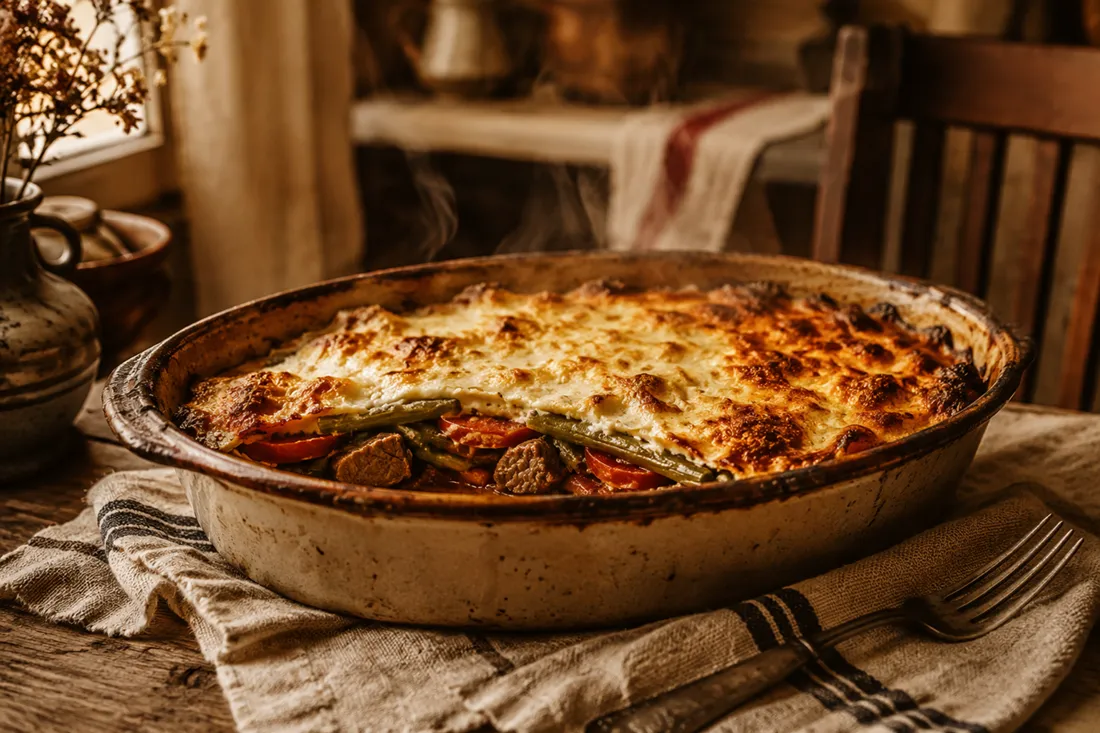
Layers of green beans and sliced tomatoes topped with lamb breast and a baked sour cream topping, finished in the oven until golden.
Quick Summary
This Central European casserole layers green beans, sweet peppers, and sliced tomatoes topped with pan-seared lamb breast. Baked in 105 minutes under a tangy sour cream and egg yolk glaze, it creates a rich, self-contained oven bake.
This recipe uses The Science of Removing Gamey Flavor from Lamb and Mutton — prepare it in advance if you haven't already.
Historical recipe
Modernised adaptation of an early 20th‑century source. Not independently kitchen-tested by Attic Recipes. Quantities, temperatures, and food safety guidance have been updated for a contemporary kitchen — results may vary and errors may exist. Nutritional values, where provided, are estimates only and have not been laboratory tested. Always follow current food safety guidelines for your region. If you have a health condition, allergy, or dietary requirement, consult a qualified professional before preparing this recipe.
Use of this recipe is entirely at your own risk and subject to our Terms of Service and Privacy Policy. Attic Recipes accepts no liability for any adverse outcome.
- Eggs
- Gluten
- Dairy
Additional notes
-
Warning
Frying the lamb involves hot fat and can splatter — use caution and keep children away from the stove during this step.
-
Warning
Lamb pieces must reach a minimum internal temperature of 63°C (145°F) before serving. The sour cream and egg yolk topping should be fully set, not runny, when the casserole comes out of the oven. This is especially important for pregnant women, young children, older adults, and immunocompromised individuals.
- 1
Trim, wash, and cut the green beans crosswise into 2-3cm pieces. Place in a bowl, salt with 1 tsp salt, and set aside to rest while you prepare the rest of the dish.
Tip If using a thicker regular green bean instead of a thin long variety, expect a slightly firmer bite and a few extra minutes of simmering later. - 2
Season the lamb pieces with 1 tsp salt, then dredge in the flour, shaking off any excess.
- 3
Heat the oil or butter in a wide skillet over medium-high heat. Fry the lamb pieces on both sides until only half-cooked, about 4-5 minutes total. Remove to a plate.
Tip The lamb should still be pink at the center at this stage — it finishes cooking later in the oven. - 4
In the same fat, fry the onion, garlic, and bell pepper rings until softened, about 6-8 minutes. Stir in the black pepper and sweet paprika, mix well, and remove the pan from the heat.
- 5
In a separate pot, bring the 1L water to a boil. Add 1 tbsp oil or butter, the chopped parsley, and celery leaves. Add the salted beans and simmer until tender, 20-25 minutes depending on thickness. Drain.
- 6
In a baking dish, layer half the beans, then half the onion-pepper mixture, then a layer of sliced tomatoes. Repeat with the remaining beans, onion mixture, and tomatoes. Arrange the half-cooked lamb pieces on top.
- 7
Whisk the sour cream with the egg yolks and lemon juice until smooth, then pour evenly over the lamb.
- 8
Bake at 180°C (350°F) until the lamb is cooked through and the topping is set and lightly golden, about 35-40 minutes.
Tip Lamb pieces should reach a minimum internal temperature of 63°C (145°F) with a short rest; the topping should look fully set, not liquid, before serving.
Nutrition Information per 1 portion (approx 420g)
Nutritional values are approximate estimates and may vary based on specific ingredients used, preparation methods, and portion sizes.
Serving Suggestions
Serve on its own with crusty bread, or alongside a simple cucumber salad.
About This Recipe
This is a layered oven bake built around a bean variety that’s thinner and longer than what most cooks reach for today. The green beans are cut crosswise into short pieces rather than left long, then par-boiled with parsley and celery before being layered with fried onion, sweet peppers, and sliced tomato. Lamb breast, only half-fried before it goes into the dish, finishes cooking in the oven alongside everything else.
What ties the whole dish together is the topping — a simple whisk of sour cream, egg yolks, and a little lemon juice, poured over the meat just before baking. It sets into a light, tangy layer that holds the casserole together and keeps the lamb from drying out during its second round of cooking.
Why It Works
Frying the lamb only partway before baking is deliberate — it builds a bit of color and flavor on the meat without fully cooking it, leaving room for the oven to finish the job gently alongside the vegetables rather than drying it out with a second full fry. The same logic applies to the beans: parboiling first means they’re already tender by the time everything goes into the oven, so the bake only needs to set the topping and finish the meat rather than cook the vegetables from raw.
The sour cream and egg yolk topping works similarly to a light savory custard. As it bakes, the eggs set the cream into a soft layer that seasons and moistens the meat underneath, while the acid from the lemon juice keeps the richness from feeling heavy.
Modern Kitchen Tips
If you can only find a standard, thicker green bean rather than a thin long variety, don’t worry — just give it a few extra minutes in the boiling water before draining, since thicker pods take slightly longer to soften.
Slice the tomatoes thinly and evenly so the layers cook at the same rate. A mandoline makes this quick work if you have one.
A classic of early 20th century home cooking, preserved and adapted for the modern kitchen.
The Story Behind This Recipe
Historical Context
Early 20th century recipes for this dish called for a thin, long variety of green bean, cut crosswise rather than lengthwise before cooking. Home cooks of the period fried the meat only partway before layering, relying on the final bake to finish the cooking. The sour cream and egg yolk topping, whisked together and poured over the top just before baking, was a common way to enrich and bind a layered vegetable dish of this kind.
Modern Kitchen Adaptation
The layering method and partial pre-frying of the lamb are unchanged, since both are structural to how the dish finishes cooking in the oven. The frying fat has been updated to a neutral oil or butter in place of the lard used traditionally, in both the meat-frying and bean-boiling stages. Garlic clove count, seasoning amounts, tomato quantity, and lemon juice were not specified in the original and have been estimated to standard proportions for this format. Oven temperature was also not given and has been estimated at 180°C (350°F). Lamb should reach a minimum internal temperature of 63°C (145°F); the sour cream and egg topping should be fully set, not liquid, before serving.
This recipe is an independent modern adaptation developed from historical sources in the public domain. It is provided for informational and educational purposes only and does not constitute professional dietary, nutritional, or medical advice. Food preparation involves inherent risks. The reader assumes full responsibility for safe food handling, ingredient sourcing, and adherence to current local food safety guidelines. The site operator accepts no liability for outcomes resulting from the preparation or consumption of this recipe.
One recipe.
Every week.
You Might Also Like
More recipes you'll enjoy
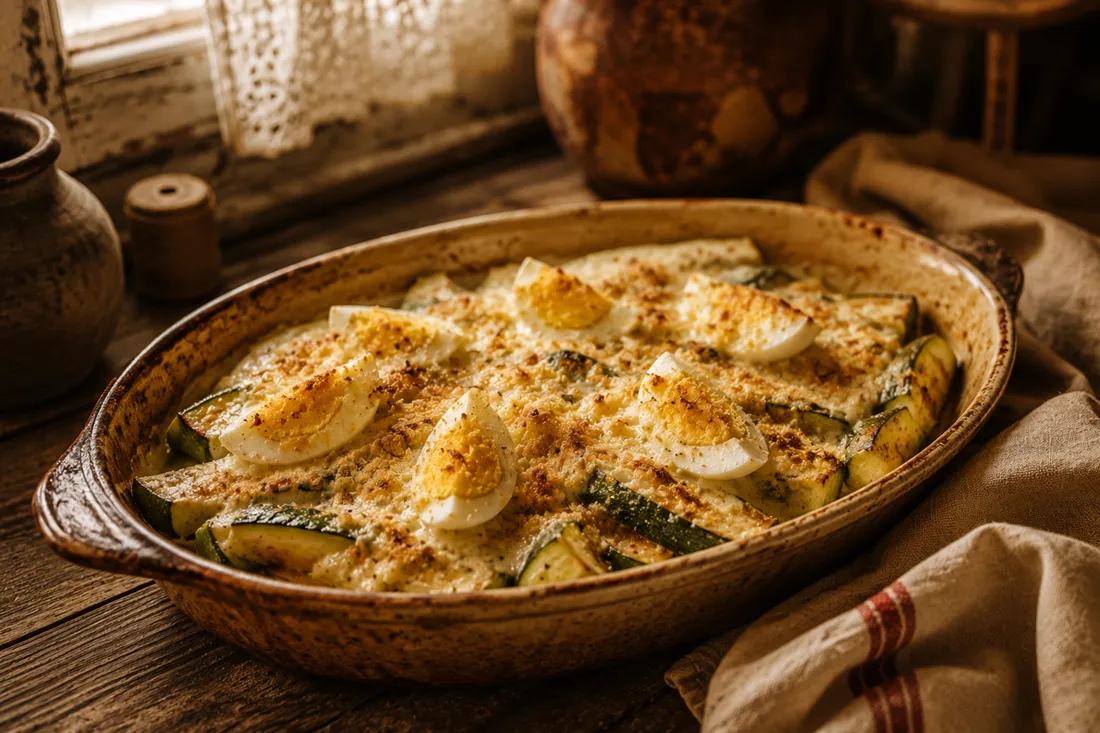
Baked Zucchini with Eggs and Sour Cream
Boiled zucchini layered with sour cream and breadcrumbs, topped with hard-boiled eggs, baked until lightly browned. A simple, old-fashioned vegetable appetizer.
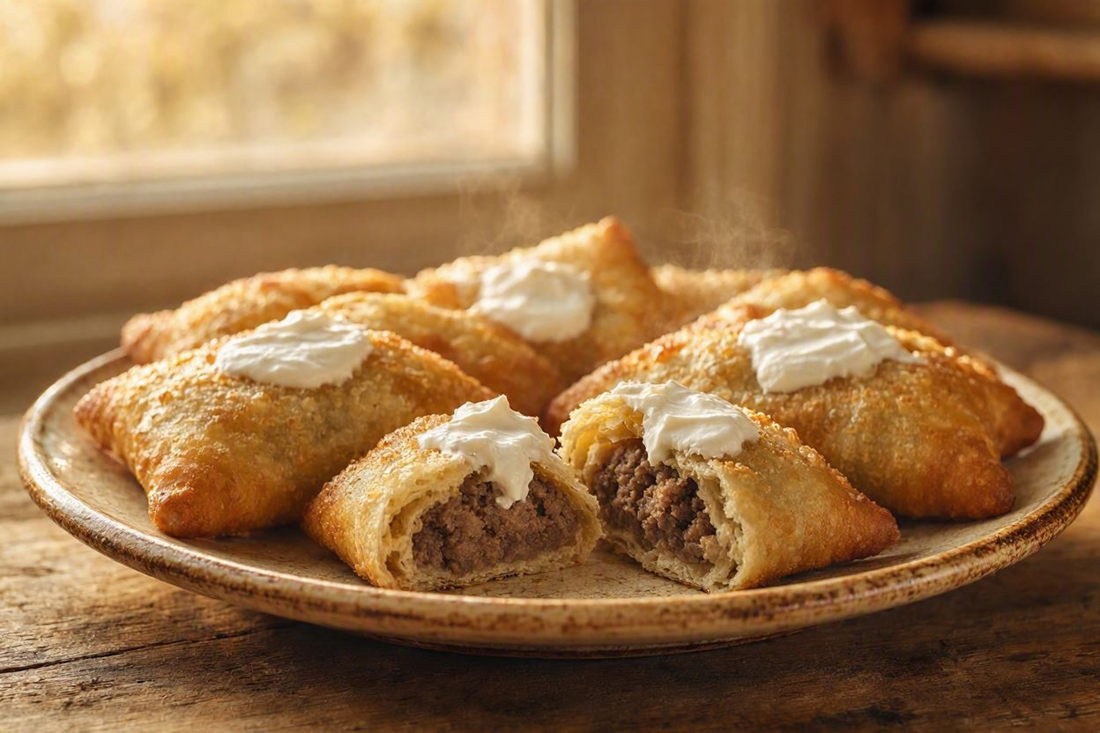
Golden Fried Meat Pastries Baked in Sour Cream
Crispy egg-pasta pockets filled with savory pork, fried golden, then baked under a blanket of sour cream.
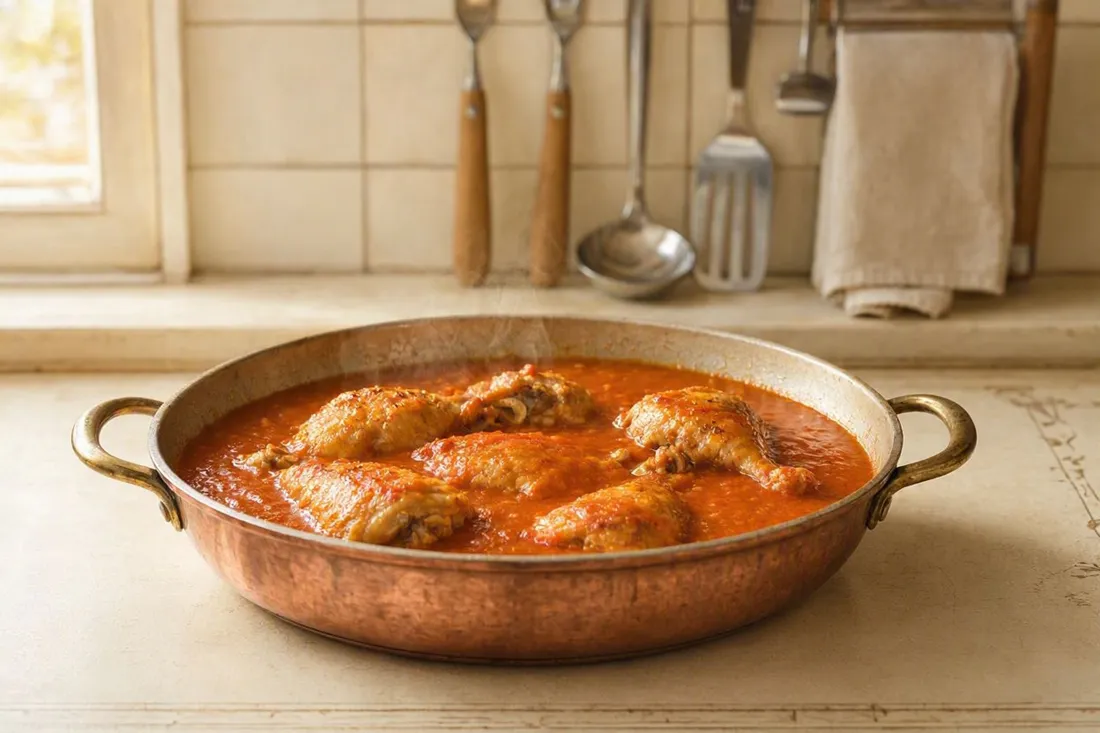
Chicken in Fresh Tomato Sauce
Young chicken poached until tender, then finished in a silky sauce made from fresh tomato passata and a light roux — a comforting one-pot classic.