Five Unusual Vegetables Worth Buying (and Eating)
Celeriac, kohlrabi, okra, Jerusalem artichoke, chayote — five vegetables left on the shelf. What they are, how they taste, and how to cook them.
Introduction
Every produce section has its overlooked corner — the part where things sit quietly until they go soft and get thrown away unsold. In most European and North American supermarkets, that corner tends to contain the same five or six vegetables: the knobby brown root nobody can identify, the pale green gourd that looks like it wandered in from another continent, the pointed pods that inspire curiosity and then immediate replacement on the shelf.
This post is about five of those vegetables. Not because they are rare or exotic — they are not, and that is part of the point. Celeriac, kohlrabi, okra, Jerusalem artichoke, and chayote are all widely grown, globally distributed, and available in mainstream supermarkets in most parts of the world. They are unfamiliar mainly to cooks who did not grow up eating them, and unfamiliarity is a problem with a straightforward solution: knowing what something is, what it tastes like, and what to do with it.
Each of these vegetables appears in the culinary traditions this site works with. Celeriac and kohlrabi are foundational to Central European cooking. Okra has a long history in Ottoman and Eastern Mediterranean cuisines. Jerusalem artichoke is native to North America but has been in European gardens for centuries. Chayote arrived later but is now found in markets on every continent. None of them require special skill or equipment. They just require a willingness to put something unfamiliar in the basket.
Celeriac
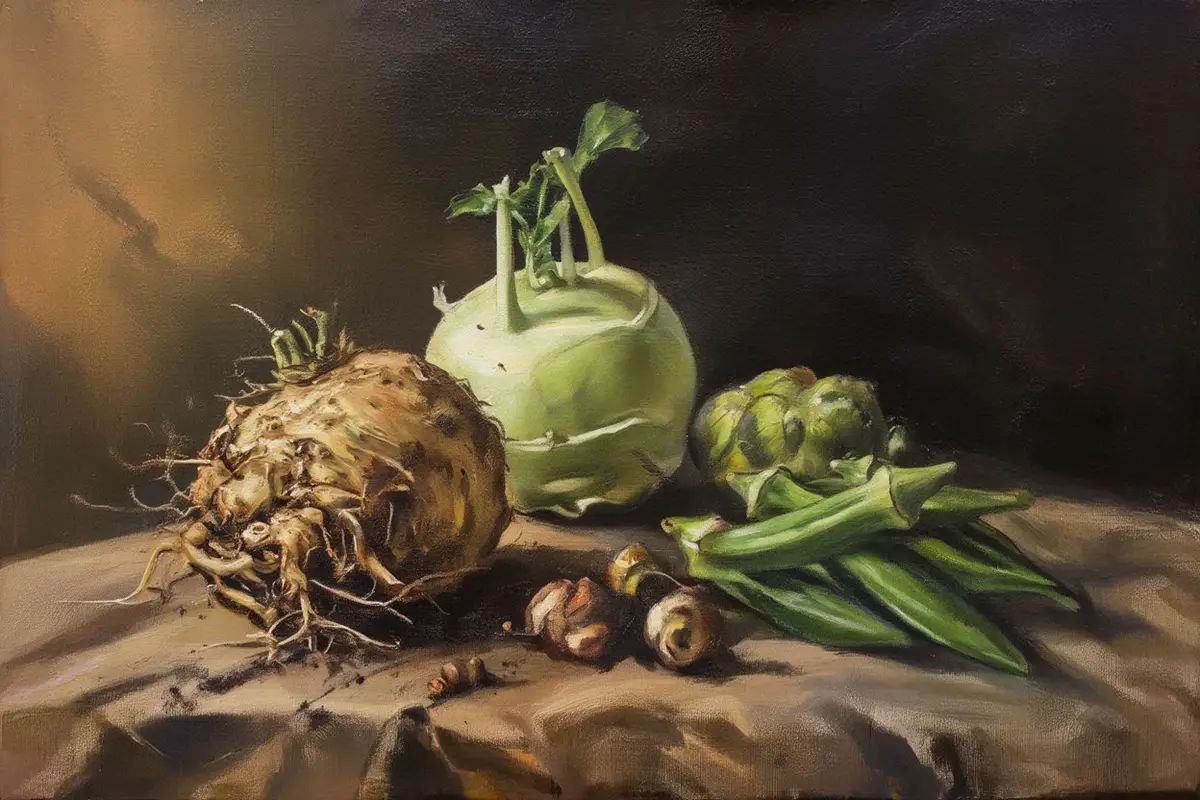
Celeriac — also called celery root — is the swollen underground stem of a variety of celery grown specifically for its root rather than its stalks. What sits in the produce section is an irregular, pale brown sphere, rough-skinned and sometimes still trailing its outer layers of root fiber. It looks like something unearthed from a very old garden, which in some sense it is.
The flavour is earthy and herbal, closer to parsley than to the crisp freshness of stalk celery — more concentrated, slightly starchy, with a faint anise undertone. Raw, it is firm and dense; grated, it becomes the base of the classic French céleri rémoulade. Cooked, it softens considerably and works in soups, purées, gratins, and slow braises where it absorbs surrounding flavours while adding its own quiet depth.
A practical note that applies directly to the recipes in this archive: in Central European cooking from the early 20th century, the word “celery” in recipes almost invariably refers to celeriac, not to stalks. Stalk celery was not widely cultivated in the region at that time. When you encounter it in the archive recipes here, use celeriac.
How to select: Look for firm roots with no soft spots. Size does not indicate quality, but very large celeriac can sometimes be hollow at the centre — press gently to check. How to prep: Peel with a sharp knife (a peeler struggles with the irregular surface) and work quickly; the cut flesh discolours in air, so drop pieces into acidulated water. Shelf life: Celeriac keeps well — a week or more in the refrigerator, longer in cool storage.
Kohlrabi
Kohlrabi is a brassica — the same family as cabbage, broccoli, and cauliflower — and it looks it. What appears on the shelf is a pale green or purple swollen stem sitting above a knot of thin root fibres, with long leaf stalks sprouting upward. The edible part is that bulb: the swollen stem, not a root at all.
The taste is mild and sweet with a faint peppery note — closer to the inner core of a broccoli stalk than to anything turnip-like. Raw kohlrabi is juicy and crunchy, excellent grated into salads or sliced thin for a slaw. Cooked, it becomes tender and slightly sweeter, holding its shape well in soups and stews. It is one of those vegetables that rewards both approaches: a raw kohlrabi salad dressed with vinegar and caraway is a classic Central European preparation; a slow-cooked kohlrabi in stock with a little butter and dill is equally traditional.
Both green and purple varieties taste the same — the colour is only in the outer skin. The leaves, if still attached, are edible and can be cooked like kale. Smaller kohlrabi are more tender; once the bulb grows very large, the texture can become fibrous and slightly woody.
How to select: Firm, heavy for size, no soft patches. How to prep: Peel the outer skin (it is tough regardless of variety), then treat like a firm root vegetable. Shelf life: Refrigerated, a week to ten days.
Okra
Okra — also known as lady’s fingers, bhindi, and gumbo — is a green seed pod from a plant in the hibiscus family, native to Africa and now grown across tropical and subtropical regions worldwide. The word “okra” has West African origins, likely derived from a term in the Igbo language of Nigeria, while “gumbo” — used for both stews and the vegetable itself in parts of the American South — comes from Bantu languages.
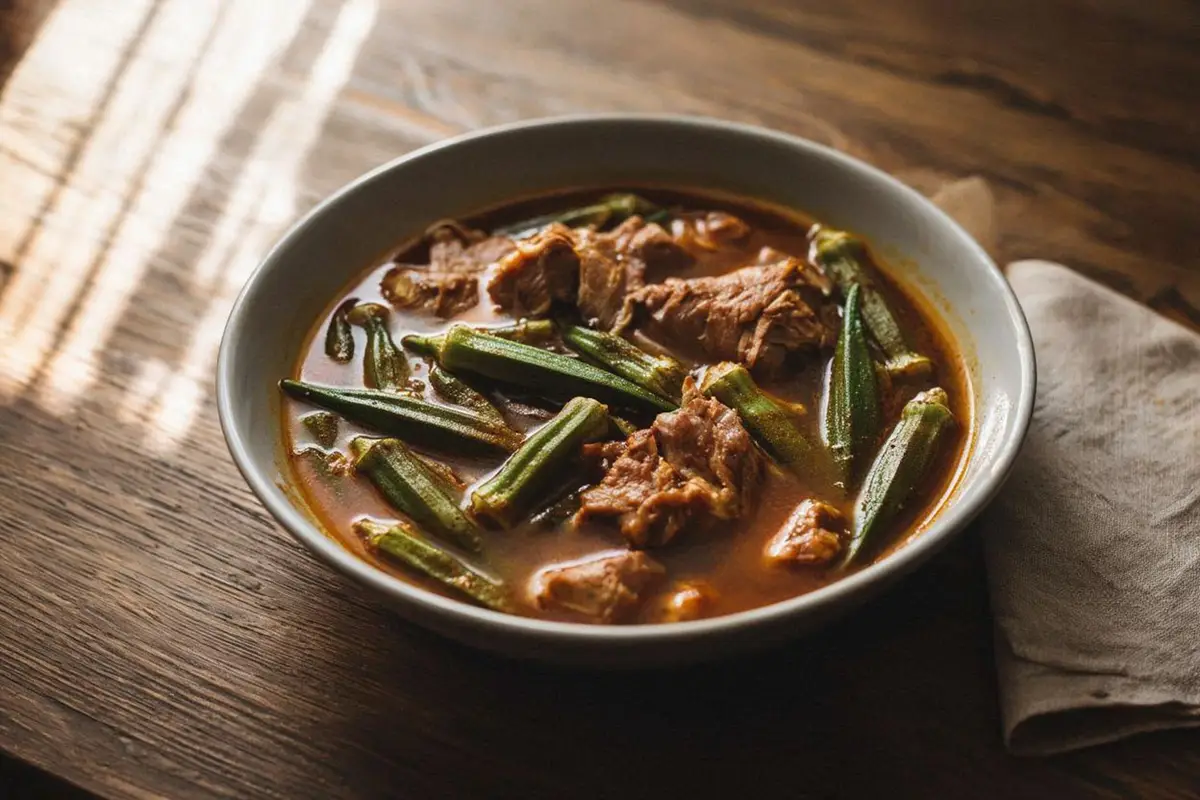
It is a staple in West African, South Asian, Middle Eastern, and American Southern cuisines. In Central European cooking, particularly in the Ottoman-influenced traditions of the southeastern regions, it appears in slow-cooked preparations with tomato, onion, and meat — preparations with close parallels across the Eastern Mediterranean.
The flavour of okra is mild and slightly grassy, not unlike green beans, with a subtle sweetness. Its defining characteristic is texture: when cut and cooked in liquid, okra releases a mucilaginous substance that thickens whatever surrounds it. This is why it is essential in gumbo. It is also why some cooks avoid it. The sliminess is real, but it is manageable: high heat methods like searing, frying, or roasting help dry out the mucilage, as does cooking pods whole or adding acidic ingredients like tomato, citrus, or vinegar to sliced okra.
Look for bright green pods with unblemished skin, ideally under four inches long — smaller pods are more tender and have less developed seeds. Avoid any with browning or soft spots. Fresh okra is highly perishable — use within two to three days. Frozen okra is a reliable substitute for cooked preparations and widely available year-round.
Jerusalem Artichoke
The Jerusalem artichoke is neither from Jerusalem nor related to artichokes. The name most likely comes from girasole, the Italian word for sunflower, which English speakers mispronounced as “Jerusalem.” The artichoke part is because the flavour, when cooked, genuinely resembles cooked artichoke heart. The plant itself is a sunflower species native to North America, and the edible part is its knobby underground tuber — irregular in shape, pale brown-skinned, looking more like ginger root than like any potato.
The flavour raw is crisp and mildly sweet, reminiscent of water chestnuts. Cooked, it becomes deeper and nuttier — earthy with a genuine sweetness and that faint artichoke character. It roasts beautifully, purées to a silky soup, and can be eaten raw, thinly sliced, in salads. After the first frost, the starches begin converting to sugars and the flavour noticeably improves.
One practical note worth knowing: Jerusalem artichokes are rich in inulin, a carbohydrate that is indigestible for many people and can cause significant flatulence. The vegetable has earned the nickname “fartichoke” for this reason. Slow roasting at a lower temperature for a longer time helps break down inulin further and reduces the effect. If you are serving them to guests unfamiliar with the vegetable, a brief forewarning is considerate.
How to select: Firm tubers, no soft patches or heavy wrinkling. How to prep: Scrub well; no need to peel for roasting, peeling needed for smooth purées. The cut flesh discolours quickly — drop into acidulated water if not using immediately. Availability: Late autumn and winter, after the first frost.
Chayote
Chayote (pronounced chai-OH-tee) is a pear-shaped gourd, pale green and slightly ridged, with a single large seed at its centre. Native to Central America, it was a staple food for the Aztecs and spread from there across the Caribbean, into the American South, and onward to India, Asia, and beyond. It goes by many names depending on where you find it: christophine in the French Caribbean, mirliton in Louisiana, choko in Australia, chow chow in India, xuxu in Brazil.
Raw chayote is crunchy and subtly sweet, like cucumber or jicama. When cooked, it takes on a zucchini-like texture and tenderness, and its mild flesh absorbs and highlights the flavours of surrounding ingredients. This neutrality is both its greatest strength and the reason many first-time cooks are underwhelmed: chayote needs seasoning and company. It does not taste of much on its own. Put it in a broth with garlic and herbs, stuff it with seasoned meat and bake it, or slice it thin and dress it with vinegar and chilli — and it becomes something worth having again.
Unlike starchy winter squashes, chayote holds its shape well during prolonged simmering, making it useful in broths and stews. The entire vegetable is edible — skin, flesh, and seed. The skin can be slightly slimy to peel; peeling under cold running water is easier and reduces mild sap irritation. The seed is soft and mildly nutty, not hard like most squash seeds.
How to select: Firm, uniformly green, heavy for its size. Avoid soft spots or wrinkling. Shelf life: Keeps well — two weeks or more in the refrigerator, longer than most squash. Where to find it: Widely available in Latin American, Asian, and Caribbean markets; increasingly stocked in mainstream supermarkets.
Practical Takeaways
- Celeriac is the root in old Central European recipes labelled “celery.” Peel with a knife, not a peeler, and drop into acidulated water immediately. Its depth makes it essential in stocks, braises, and purées.
- Kohlrabi tastes like a sweet, mild broccoli stem. Eat it raw (grated, sliced) or cooked (braised, in soup). Both colours taste identical. Smaller is more tender.
- Okra is not inherently slimy if you cook it correctly. High heat and dry methods prevent mucilage. In slow-cooked stews, the mucilage thickens the sauce — which is the point. Select pods under four inches long.
- Jerusalem artichoke is best after the first frost. Slow-roast at lower temperatures to reduce digestive discomfort. The skin is edible; drop cut pieces into acidulated water to prevent discolouration.
- Chayote needs strong flavours around it — it is a canvas, not a centrepiece. It holds texture in long cooking better than most squash. Peel under cold running water.
Attic Recipes — digitizing and adapting Central European home cooking from the early twentieth century.
Frequently Asked Questions
01Is celeriac the same as celery?▶
Not exactly. They are the same species but different cultivars: celery is grown for its stalks, celeriac for its swollen root. The flavor is similar yet more concentrated and starchy. In older Central European recipes, 'celery' almost always meant celeriac.
02Does okra have to be slimy?▶
No. The mucilage okra releases when cut is greatly reduced by dry cooking methods like roasting, grilling, or frying at high heat. Soaking slices in vinegar water also helps. In stews, that mucilage becomes a natural thickener — which is why okra is essential in gumbo.
03Why is Jerusalem artichoke called Jerusalem artichoke?▶
It has nothing to do with Jerusalem. The name likely comes from a mispronunciation of the Italian word 'girasole' (sunflower), since the plant is a sunflower species. The 'artichoke' part refers to its flavor, faintly reminiscent of cooked artichoke heart.
04Can I eat chayote raw?▶
Yes. Raw chayote is crisp and lightly sweet, similar to jicama or cucumber. It works well thinly sliced in salads or slaws. The skin can cause mild irritation when peeling, so handle it under cold running water. The seed is edible too, with a subtle nutty flavor.
05What does kohlrabi taste like?▶
Kohlrabi tastes like the tender, sweet core of a broccoli stem, with a faint peppery edge when raw. It’s refreshing in salads and slaws, and when cooked it turns tender and slightly sweet — perfect for soups or gratins.
06Can you eat kohlrabi leaves?▶
Yes. Young leaves are edible and taste similar to kale or Swiss chard. They can be sautéed or added to soups.
07Is Jerusalem artichoke hard to digest?▶
Sometimes. It contains inulin, a fiber that can cause gas or bloating in sensitive people. Cooking helps make it easier to digest.