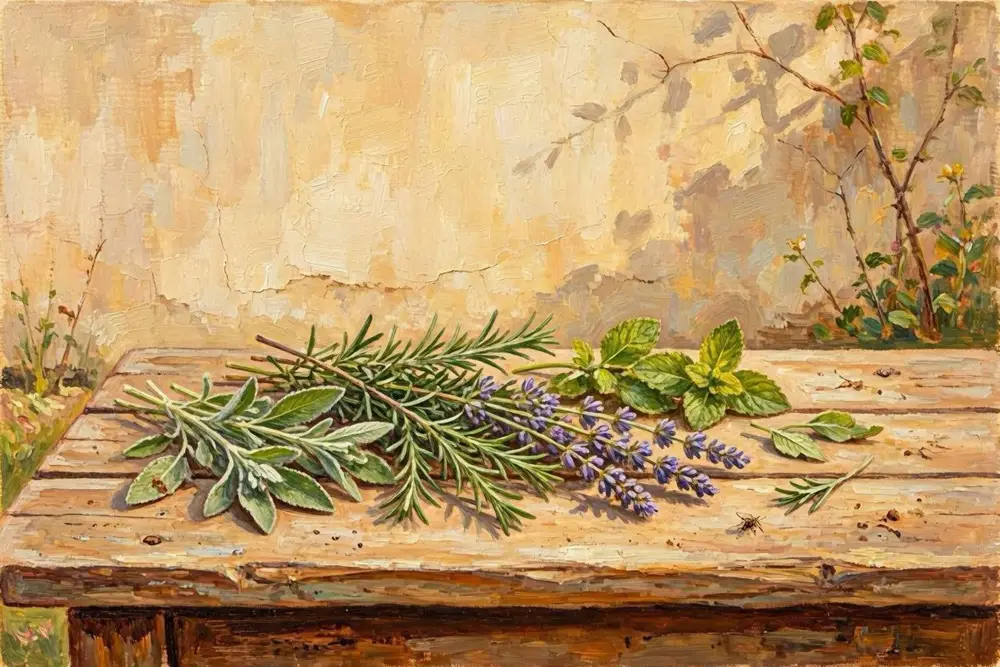
Herbs From My Garden
A small urban garden, a handful of hardy herbs, and what it means to grow food when summers keep getting hotter.
My grandmother did not have a herb garden. She had a garden — full stop. Vegetables, fruit trees, a few chickens some years, and somewhere between the rows of beans and the plum tree, herbs. Sage grew near the fence. Mint showed up wherever it pleased. Parsley was always there, cut back and cut back again until autumn. Nobody called it a herb garden. It was just the yard, and the yard fed you.
I grew up in that yard. My sister, my brother, and I spent our days there while our grandmother watched us — no nursery school, no structured hours, just the garden and whatever it produced. I don’t remember learning the names of plants. I think I simply absorbed them. Dirt on your hands was not something to wash off immediately. It was the texture of an ordinary afternoon.
That’s worth saying plainly, because it is less ordinary than it used to be. My nephew won’t touch soil. It’s dirty, he says, and he means it as a problem. I understand the logic, but I don’t share it. The garden was where I came from.
The Garden I Have Now
My current garden is behind the house. I live in the city, and the space is modest — a city plot, not a country yard. But it’s mine, and for years it had flowers, vegetables, and a fairly ambitious growing list.
Then the summers changed.
Temperatures here regularly exceed 40°C now. Rain from May through September is scarce enough that watering restrictions are common — during the worst stretches, garden irrigation is simply prohibited. I watched flowers burn on their stems. I watered what I could, when I could, and it wasn’t enough. Whole sections of what I’d planted were gone by August.
So I changed what I grow. Most of the flowers are now succulents — varieties that handle hard frost in winter and scorching heat in summer without flinching. And the edible section of the garden is almost entirely herbs, specifically the Mediterranean ones: the plants that evolved in exactly this kind of climate and don’t need much from me to survive it.
What Grows Here
Sage (Salvia officinalis) is the anchor of the garden. It is also the herb I reach for most when cooking from the old recipes — it appears in everything from braised meats to simple potato dishes, usually not as a garnish but as a genuine flavor element cooked into the fat at the beginning. Sage handles heat and drought without complaint. It wants sun and well-drained soil and not much else.
Lavender (Lavandula angustifolia) I grow partly for the bees and partly because it is almost indestructible under current conditions. Culinary lavender has a place in the older Central European pantry — sparingly, in sweets and some infused preparations — though it is easy to overuse. The line between fragrant and medicinal is narrow with lavender, and the old recipes tended to use it with restraint.
Rosemary (Salvia rosmarinus) behaves like a small woody shrub here, and during the worst summer weeks it simply stops growing and waits. It does not die. It waits, and when conditions ease, it continues. For cooking, it is assertive enough that a little goes far — most useful with fatty meats and in bread doughs.
Oregano (Origanum vulgare) is perhaps the most forgiving plant in the garden. It spreads, it self-seeds, it comes back reliably every spring, and it produces more than I ever use. Dried oregano is considerably more pungent than fresh — the drying concentrates the essential oils — which matters when following older recipes that were almost certainly written with dried herbs in mind.
Lemon balm (Melissa officinalis) grows in a contained area, because if given space it will colonize everything near it. It has a clean, citrus-adjacent fragrance and was a familiar presence in Central European household gardens — used for teas, cooling drinks in summer, and occasionally as a flavoring in delicate dishes. Unlike most of the Mediterranean herbs, it prefers some shade and regular moisture, which makes it slightly more demanding in current conditions.
Nasturtium (Tropaeolum majus) is the odd one out — neither woody nor drought-proof — but I grow it along the edges because both flowers and leaves are edible and it reseeds itself with enough enthusiasm to mostly survive without help. The leaves have a clean, peppery bite. The flowers were used in older home cooking more than people expect, mostly in salads and as a garnish where color mattered.
Several types of mint grow in pots, which is the only sensible approach to mint. Left in open ground it becomes the garden. In pots, it stays manageable. The varieties behave somewhat differently in heat — spearmint wilts dramatically in full afternoon sun, peppermint is more tolerant — but all of them recover quickly with evening water.
I sowed basil and parsley last year. The basil was eaten by slugs before it had a chance. The parsley made it through spring and was eaten by slugs before summer. I’ll try again, with better defenses.
Why These Herbs Belong in an Old Recipe Archive
The herbs above are not a curated modern selection. They’re the plants that appear in Central European household cooking across the early twentieth century, because they’re the plants that grew in Central European household gardens — for exactly the same reasons they grow in mine. They’re tough, they’re productive, they require little, and they’re useful.
When a recipe from that period calls for sage cooked in lard before the meat goes in, or a handful of fresh parsley stirred through at the end, or oregano dried and crumbled into a sauce, those aren’t decorative instructions. They’re the flavors that defined how this food tasted. Growing the herbs doesn’t make me a better cook automatically, but it makes the connection between the archive and the kitchen feel like something real — not a historical reconstruction, but a continuation.
The garden smells the same as my grandmother’s yard. I notice that every time I go out to cut something for dinner.
Practical Takeaways
If you’re growing herbs for Central European cooking and dealing with hot, dry summers, lean into the Mediterranean natives — sage, rosemary, oregano, and lavender are your most reliable plants. They’ve evolved for this, and climate change is, in a grim way, moving more of Europe into their preferred conditions.
Keep mint and lemon balm in pots to control spreading. Grow nasturtium from seed each year — it’s fast, easy, and both parts are edible. And if slugs are a problem, don’t give up on basil and parsley — they’re worth the extra effort and the occasional loss.
The herbs you dry in summer carry those flavors into winter. That, too, is something the old recipes understood well.
Attic Recipes — digitizing and adapting Central European home cooking from the early twentieth century.
Frequently Asked Questions
01Which herbs were most commonly used in early 20th century Central European cooking?▶
Sage, marjoram, parsley, and dill appeared most consistently in Central European home kitchens of the period. Rosemary and lavender were less universal but well established in certain regional traditions.
02Can I grow Mediterranean herbs like rosemary and lavender in a hot, dry urban garden?▶
Yes — rosemary and lavender are among the most heat and drought tolerant herbs you can grow. Once established, they handle prolonged dry spells and extreme summer heat far better than most vegetables or flowers.
03What is lemon balm used for in cooking?▶
Lemon balm has a mild citrus fragrance and was traditionally used in teas, cold drinks, and as a subtle flavoring in desserts and sauces. It spreads aggressively, so it benefits from being grown in a contained space.
04How do I keep herbs alive in extreme summer heat without regular watering?▶
Focus on Mediterranean natives — sage, rosemary, oregano, lavender, and thyme — which evolved in hot, dry climates and go largely dormant rather than dying under heat stress. Deep, infrequent watering when permitted encourages deeper root systems than frequent shallow watering.