Young Chicken Salad
A rich cold chicken salad bound with homemade mayonnaise, studded with sardines, capers, ham, and pickles — a classic Central European party dish.
Historical recipe
Modernised adaptation of an early 20th‑century source. Not independently kitchen-tested by Attic Recipes. Quantities, temperatures, and food safety guidance have been updated for a contemporary kitchen — results may vary and errors may exist. Nutritional values, where provided, are estimates only and have not been laboratory tested. Always follow current food safety guidelines for your region. If you have a health condition, allergy, or dietary requirement, consult a qualified professional before preparing this recipe.
Use of this recipe is entirely at your own risk and subject to our Terms of Service and Privacy Policy. Attic Recipes accepts no liability for any adverse outcome.
- Eggs
- Fish
- Sulphites
Additional notes
-
Warning
This recipe contains raw egg yolks in the homemade mayonnaise. Raw eggs carry a risk of Salmonella contamination. Pregnant women, elderly individuals, children under 18, and immunocompromised persons should use commercially pasteurized egg yolks or prepare them using a sous-vide method (57°C for 1 hour 15 minutes) before use.
Use commercially pasteurized egg yolks (available in larger supermarkets) or a sous-vide home pasteurization method: 57°C / 1h 15min. The mayonnaise method remains identical.
-
Note
This dish is relatively high in dietary cholesterol due to egg yolks (both in the mayonnaise and the garnish) and sardines. Individuals managing cardiovascular conditions should be mindful of portion size.
- 1
Clean the chicken inside and out, removing any remaining feathers or pin feathers. Wash thoroughly under cold running water and pat dry. Season all over with 0.5 tsp salt, including the cavity.
- 2
Melt 30g of butter in a heavy-bottomed saucepan over medium heat. When the butter foams, add the whole chicken breast-side down. Brown lightly on all sides — approximately 3–4 minutes per side — then reduce heat to low, cover tightly, and braise until the meat is completely soft and cooked through, approximately 45–50 minutes. The chicken is done when the juices run clear and the meat pulls easily from the bone.
Tip Keep the heat low once covered. The chicken braises in its own steam and the butter — high heat will burn the butter and dry the meat. - 3
Remove the chicken from the pan and set aside to cool until safe to handle. Remove all bones and skin. Cut the meat into small, even pieces approximately 1–2cm. Place in a large glass or ceramic bowl and set aside.
- 4
Make the mayonnaise: ensure all ingredients are at room temperature. Place the 3 egg yolks in a clean bowl. Add a pinch of salt and a few drops of lemon juice. Begin whisking, then start adding the 250ml of oil in the thinnest possible stream — almost drop by drop for the first 50ml. Whisk constantly. As the emulsion forms and thickens, you can increase the oil stream slightly. Alternate the remaining oil with the remaining lemon juice, adding each in small amounts until both are fully incorporated. Taste and adjust salt.
Tip If the mayonnaise breaks, do not discard it. Place a fresh egg yolk in a clean bowl, begin whisking, and slowly add the broken mayonnaise to it as if it were oil. It will re-emulsify. - 5
Add the 100g of finely chopped ham, 60g of mashed sardines, 20g of drained capers, 100g of finely chopped pickles, 0.25 tsp black pepper, and additional salt to taste into the mayonnaise. Mix well until evenly combined.
- 6
Add the chicken pieces to the mayonnaise mixture and fold gently until every piece is evenly coated. Taste and adjust seasoning.
- 7
Transfer the salad to a glass serving bowl. Cover and refrigerate for a minimum of 1 hour before serving to allow the flavors to meld.
- 8
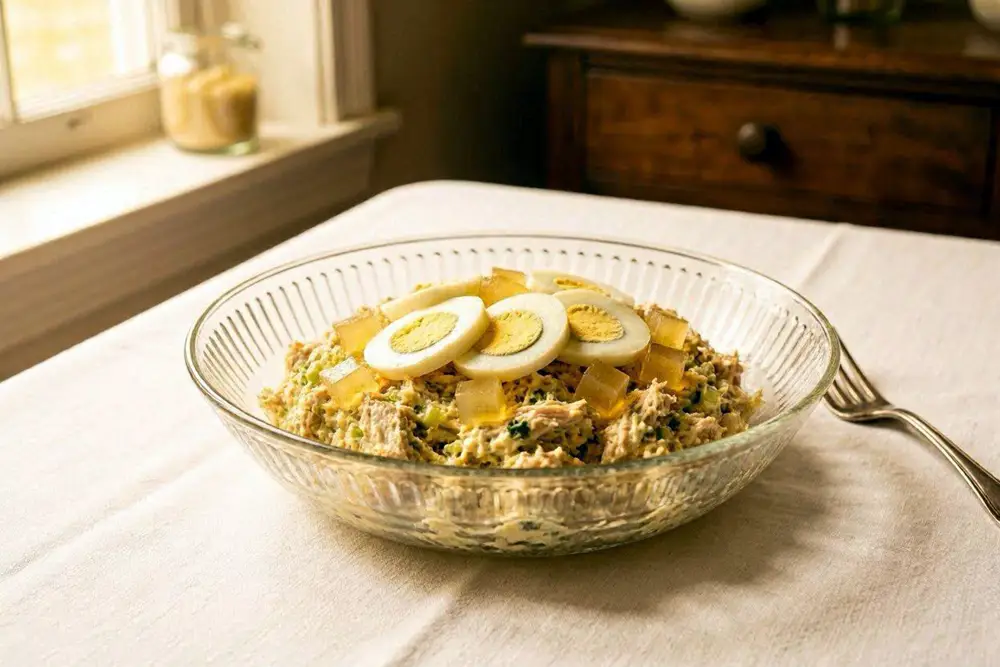
Just before serving, garnish the surface with sliced hard-boiled eggs arranged in overlapping rings around the edge of the bowl, and pieces of aspic placed between or around the egg slices.
Nutrition Information per 1 portion (approx 200g)
Nutritional values are approximate estimates and may vary based on specific ingredients used, preparation methods, and portion sizes.
Serving Suggestions
Serve as a starter or as part of a cold buffet spread. The salad keeps well refrigerated for up to 24 hours after assembly — beyond that, the mayonnaise begins to thin from the moisture released by the vegetables. For aspic preparation, see the linked technique post.
About This Recipe
Cold composed dishes were the backbone of Central European entertaining for generations. This chicken salad belongs to that tradition — a whole young chicken braised until tender, stripped from the bone, and folded into a handmade mayonnaise layered with sardines, capers, cured ham, and pickles. It is the kind of dish that gets better overnight and travels well to the table the next day, which made it indispensable for households that hosted without the luxury of last-minute preparation.
The aspic garnish is not just decoration. A ring of golden aspic cubes around the edge of the bowl was the period equivalent of a lid — it protected the surface of the salad from drying out between kitchen and table, and signaled to guests that the dish had been prepared with care. Aspic-making was a standard skill in this era of cooking, and the instruction that “the hostess can prepare it herself” reads less as a suggestion than a reminder.
What makes this salad interesting today is the sardine. It is not a background note — four fillets mashed into the mayonnaise give it a distinctly savory, oceanic depth that anchors the richness of the egg yolks and cuts through the fat of the chicken. Do not substitute anchovies, which are saltier and more pungent; sardines give a softer, rounder result that fits the balance of this dish precisely.
Why It Works
Mayonnaise is an oil-in-water emulsion stabilized by lecithin, a phospholipid found in egg yolks. Lecithin molecules have a water-attracting head and an oil-attracting tail, which allows them to surround droplets of oil and suspend them in the acidic aqueous phase created by the lemon juice. The key to a stable emulsion is surface area: the oil must be added slowly enough that the lecithin molecules can coat each new droplet before the next arrives. Add too fast, and the emulsion breaks.
The braising method — butter, covered, low heat — serves a different purpose than roasting. High-heat roasting develops a crust and drives off moisture; braising keeps the surface moist and the internal temperature even, producing meat that shreds cleanly into the kind of small, even pieces that hold mayonnaise well without becoming dry. A roasted chicken salad and a braised chicken salad are genuinely different in texture.
Capers, pickles, and lemon juice all contribute acidity to the finished dish, which is necessary to balance the fat content of the mayonnaise and the richness of the ham and sardines. The black pepper is not just seasoning — it provides a mild heat that builds gradually and lifts the dish out of heaviness.
Modern Kitchen Tips
All ingredients for the mayonnaise — egg yolks, oil, lemon juice — must be at room temperature before you begin. Cold oil will not emulsify with room-temperature yolks, and the emulsion will break before it forms. Take the eggs out of the refrigerator at least 30 minutes ahead.
The chicken can be braised the day before and refrigerated overnight. The next day, the fat in the pan will have solidified and can be skimmed off before reheating — or the cold braising juices can be reduced and used as a base for the aspic.
If you are making the salad for a gathering, assemble it fully — including the aspic garnish — up to 12 hours before serving. Cover tightly with cling film and refrigerate. Add the hard-boiled egg garnish no more than 2 hours before serving, as cut hard-boiled eggs oxidize and lose their clean white appearance over time.
A classic of early 20th century home cooking, preserved and adapted for the modern kitchen.
The Story Behind This Recipe
Historical Context
Early 20th century Central European entertaining relied heavily on composed cold dishes that could be prepared the day before a gathering. This chicken salad follows the classic format: a protein bound with homemade mayonnaise, flavored with preserved and pickled ingredients that were pantry staples — sardines in oil, capers, cured ham, pickles. The aspic garnish served both a decorative and a practical function, as a thin coat of aspic over the surface protected the salad from drying and oxidizing between preparation and serving. Home cooks of the period made their own mayonnaise as a matter of course, incorporating the oil slowly by hand — electric mixers were not yet standard kitchen equipment.
Modern Kitchen Adaptation
The original recipe specified approximately 500g of oil for 3 egg yolks, which is approximately double the modern standard emulsion ratio and would produce an unusably stiff, heavy mayonnaise. This recipe uses 250ml, which is the current professional standard for a stable, spreadable result. The braising method has been adjusted: the original called for one tablespoon of butter (15g), which is insufficient to cover the base of a pan large enough for a whole chicken. 30g is the practical minimum. For vulnerable groups — pregnant women, elderly, young children, immunocompromised individuals — pasteurized egg yolks are strongly recommended. These are available commercially or can be prepared at home using a sous-vide method: 57°C for 1 hour 15 minutes. Sardines (sardelе) are used as written in the original; the English-language recipe maintains this distinction from anchovies, which are a different species with a stronger, saltier flavor profile.
This recipe is an independent modern adaptation developed from historical sources in the public domain. It is provided for informational and educational purposes only and does not constitute professional dietary, nutritional, or medical advice. Food preparation involves inherent risks. The reader assumes full responsibility for safe food handling, ingredient sourcing, and adherence to current local food safety guidelines. The site operator accepts no liability for outcomes resulting from the preparation or consumption of this recipe.
One recipe.
Every week.
You Might Also Like
More recipes from the same category
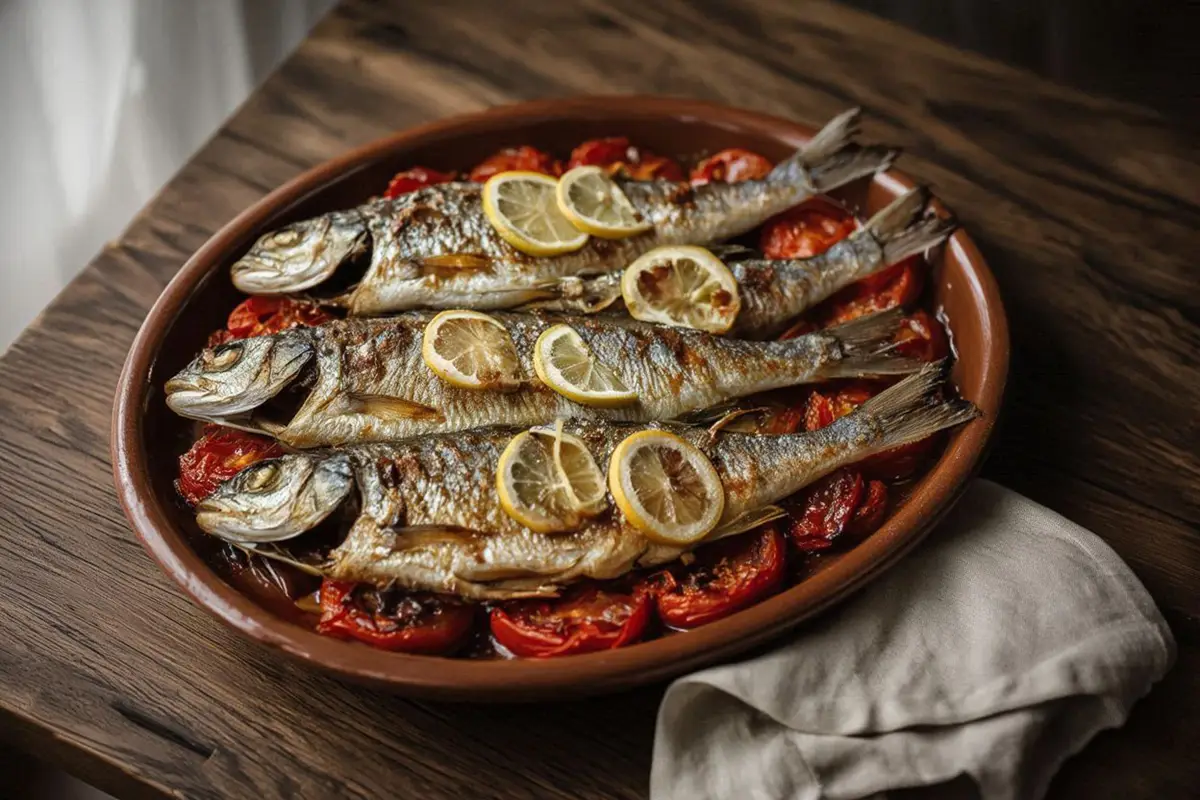
Baked Fish with Tomatoes
Whole fish baked over ripe tomatoes with generous olive oil and lemon — a simple, fragrant Central European oven dish.
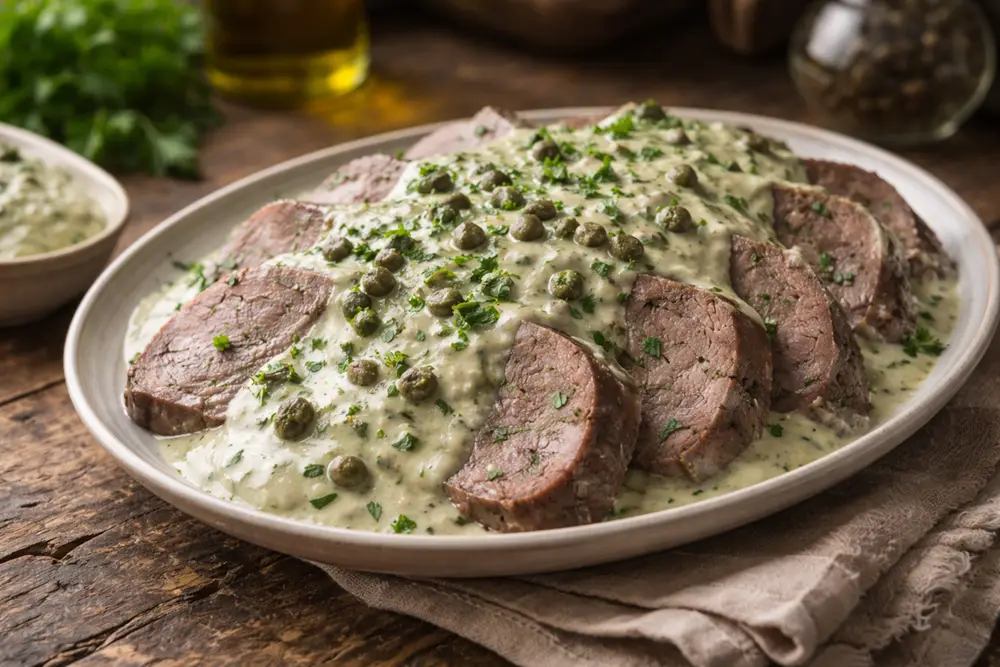
Baked Tongue in Green Sauce
Beef tongue braised with herbs, larded with bacon and roasted until golden, served in a green sauce of capers, anchovy, parsley and sour cream.
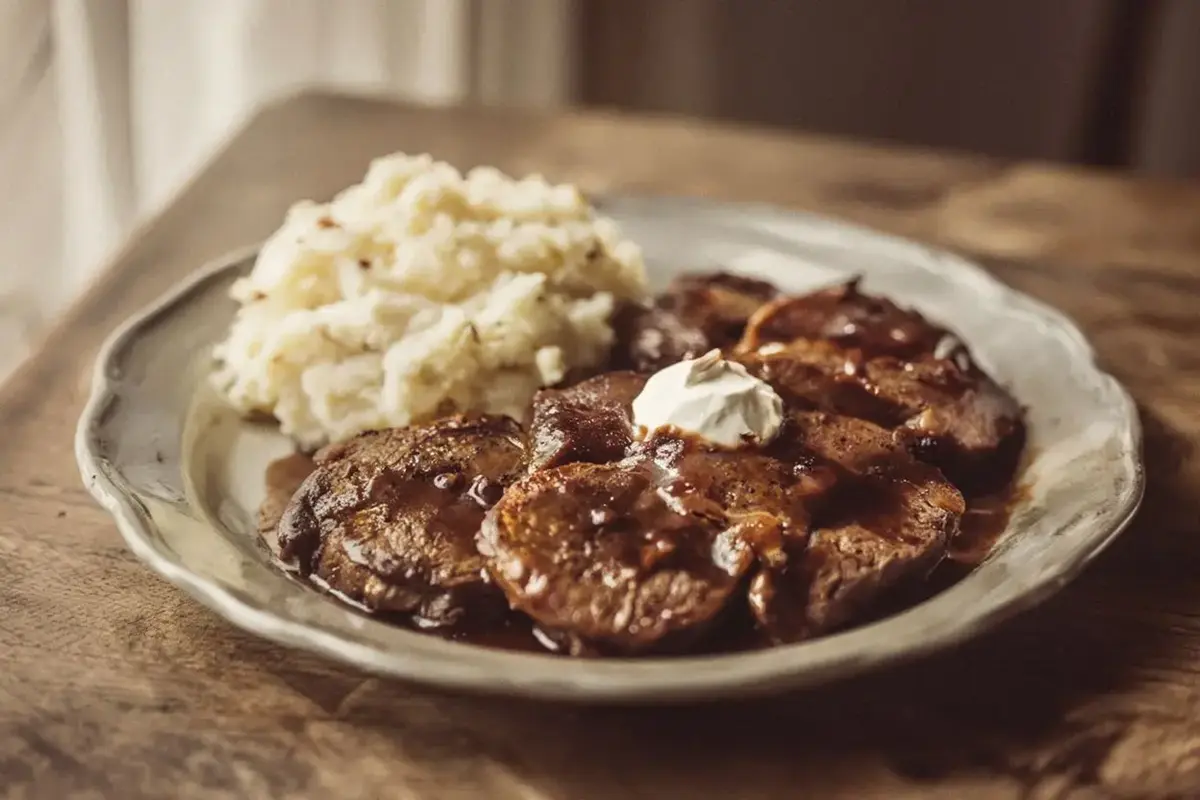
Beef Kidney with Wine
Beef kidney marinated in red wine, braised with herbs, finished with sour cream. Tender, rich, and deeply flavored.