Veal Cutlets in Cucumber Sauce
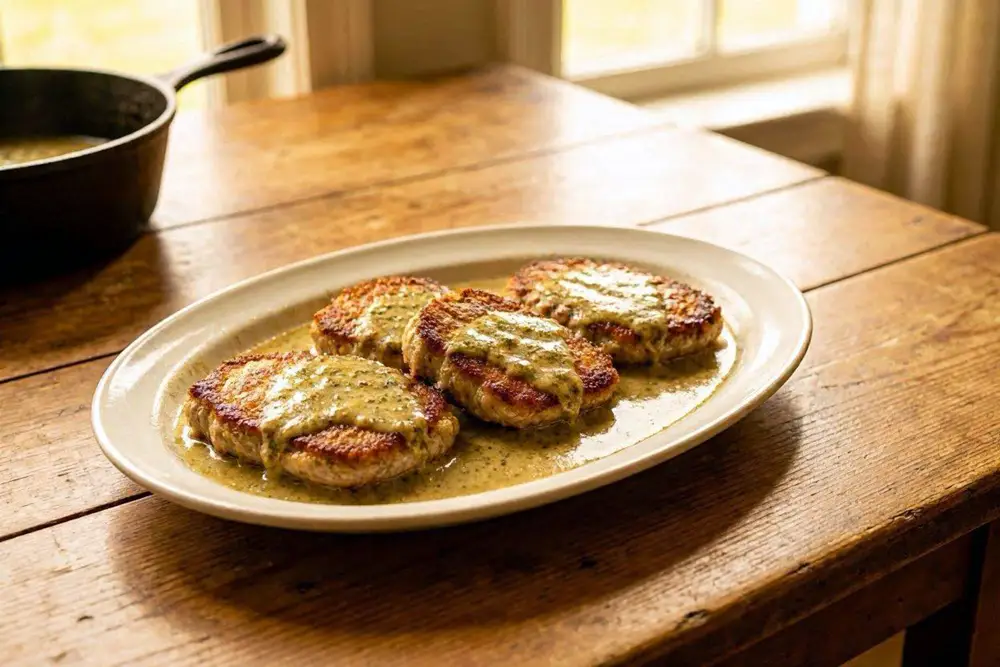
Pan-fried veal cutlets simmered in broth until tender, finished with a pickle sauce built directly in the pan from the meat juices.
Historical recipe
Modernised adaptation of an early 20th‑century source. Not independently kitchen-tested by Attic Recipes. Quantities, temperatures, and food safety guidance have been updated for a contemporary kitchen — results may vary and errors may exist. Nutritional values, where provided, are estimates only and have not been laboratory tested. Always follow current food safety guidelines for your region. If you have a health condition, allergy, or dietary requirement, consult a qualified professional before preparing this recipe.
Use of this recipe is entirely at your own risk and subject to our Terms of Service and Privacy Policy. Attic Recipes accepts no liability for any adverse outcome.
- Dairy
- Gluten
Additional notes
-
Note
Veal cutlets should reach an internal temperature of 71°C (160°F) before serving. After 30 minutes of gentle simmering from a browned state, this is reliably achieved, but use a meat thermometer if uncertain.
- 1
Wash the veal cutlets and pat dry. Place each cutlet between two sheets of baking paper and pound with a meat mallet until an even thickness of approximately 1cm. Season both sides with salt.
- 2
Spread the flour on a plate. Dredge each cutlet in flour, shaking off any excess.
- 3
Melt the butter in a wide, heavy-bottomed saucepan or sauté pan over medium-high heat until foaming. Place the cutlets in the hot butter and fry for 3–4 minutes per side until golden brown. Work in batches if necessary — do not crowd the pan.
Tip The pan must be properly hot before the cutlets go in. A cold pan stews rather than fries, and the cutlets will not colour properly. - 4
Once all cutlets are browned and returned to the pan, pour in the broth. Reduce heat to low, cover, and simmer gently for 30 minutes until the meat is completely tender.
Tip Check occasionally — if the liquid reduces too quickly, add a small splash of broth or water to keep the pan from drying out. - 5
Remove the cutlets from the pan and set aside on a warm plate. Add the finely chopped pickles directly to the pan juices. Stir over low heat for 1–2 minutes — just long enough to warm the pickles through without softening them.
Tip Do not boil the pickles in the pan sauce. Brief heat in the meat juices is enough — extended cooking dulls their texture and releases excess brine. - 6
Arrange the cutlets on a serving dish. Pour the pickle pan sauce over them and serve immediately.
Nutrition Information per 1 porcija (approx. 220g)
Nutritional values are approximate estimates and may vary based on specific ingredients used, preparation methods, and portion sizes.
Serving Suggestions
Serve with boiled potatoes, buttered egg noodles, or steamed rice. A simple green salad alongside balances the richness of the meat.
About This Recipe
This is the simpler of the two approaches to veal with cucumber sauce in the archive. Rather than building a separate roux-based sauce, the pickles go directly into the pan after the meat is removed, warming briefly in the braising juices before being poured over the cutlets on the serving dish. The result is leaner and more direct than the roux version — the sauce carries the flavour of the meat, the acidity of the pickles, and nothing else.
Veal cutlets prepared this way — pounded, floured, browned in butter, then simmered in broth — are a recurring format in Central European home cooking of the period. The braising step after browning is what distinguishes them from a schnitzel: the cutlets finish soft and yielding rather than crisp, and the pan liquid becomes the sauce base.
Why It Works
Pounding the cutlets serves two purposes: it breaks down the muscle fibres for tenderness, and it creates an even thickness so the meat cooks uniformly. Veal is lean and can tighten quickly over high heat — pounding and the subsequent braising step counteract this.
Browning in butter before braising is not optional. The Maillard reaction during frying creates the flavour compounds that carry through the entire braise. A cutlet that goes into broth without first being browned produces a pale, flat-tasting result.
The pickles cook for only a minute or two in the pan juices — long enough to warm through and release a small amount of brine into the sauce, but not long enough to soften or lose their sharpness.
Modern Kitchen Tips
A wide, heavy-bottomed sauté pan or a straight-sided frying pan works better than a deep saucepan here — you need room to brown the cutlets without steaming them. If your pan is not wide enough for all four cutlets, brown in batches and return all to the pan before adding the broth.
Veal cutlets vary considerably in thickness depending on the cut. If yours are thicker than 1.5cm after pounding, increase the simmering time to 40 minutes and check for tenderness before removing from the pan.
A classic of early 20th century home cooking, preserved and adapted for the modern kitchen.
The Story Behind This Recipe
Historical Context
Period versions of this dish used the pan juices directly as the sauce base — no separate sauce was made. The pickles were cooked briefly in the braising liquid left after the meat was removed, then poured over the cutlets on the serving dish. This is a simpler approach than the standalone cucumber sauce, which uses a butter-flour roux. Both methods were used in the period; this one suits everyday cooking where speed and simplicity were the priority.
Modern Kitchen Adaptation
The original quantity of ¾ kg veal cutlets appears to have been a period measurement for four servings; this has been standardised to 750g. Butter quantity for frying was given as 'a piece' — standardised to 30g based on pan size and quantity of meat. Broth quantity was given as 'a little soup' — standardised to 150ml, sufficient for a 30-minute gentle simmer without drying the pan. No flour or cream is added to the pan sauce in this version, keeping it lighter and more direct than the standalone cucumber sauce recipe.
This recipe is an independent modern adaptation developed from historical sources in the public domain. It is provided for informational and educational purposes only and does not constitute professional dietary, nutritional, or medical advice. Food preparation involves inherent risks. The reader assumes full responsibility for safe food handling, ingredient sourcing, and adherence to current local food safety guidelines. The site operator accepts no liability for outcomes resulting from the preparation or consumption of this recipe.
One recipe.
Every week.
You Might Also Like
More recipes from the same category
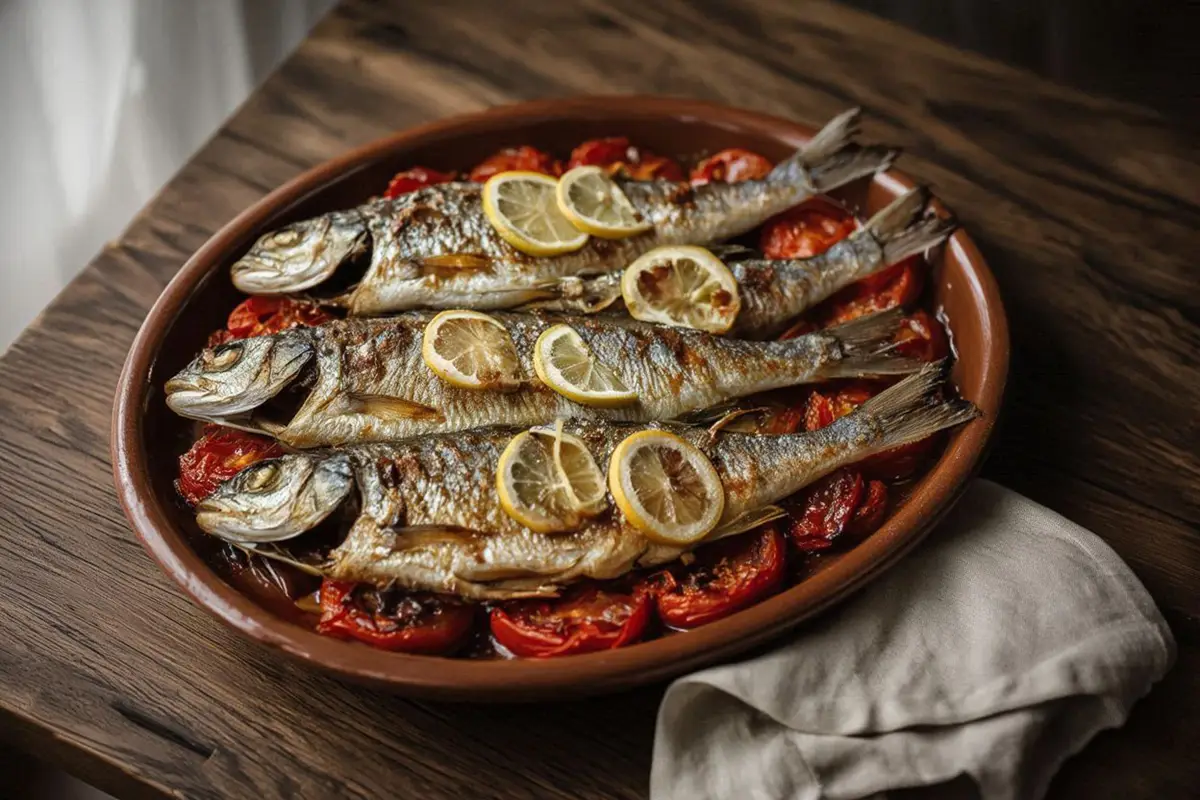
Baked Fish with Tomatoes
Whole fish baked over ripe tomatoes with generous olive oil and lemon — a simple, fragrant Central European oven dish.
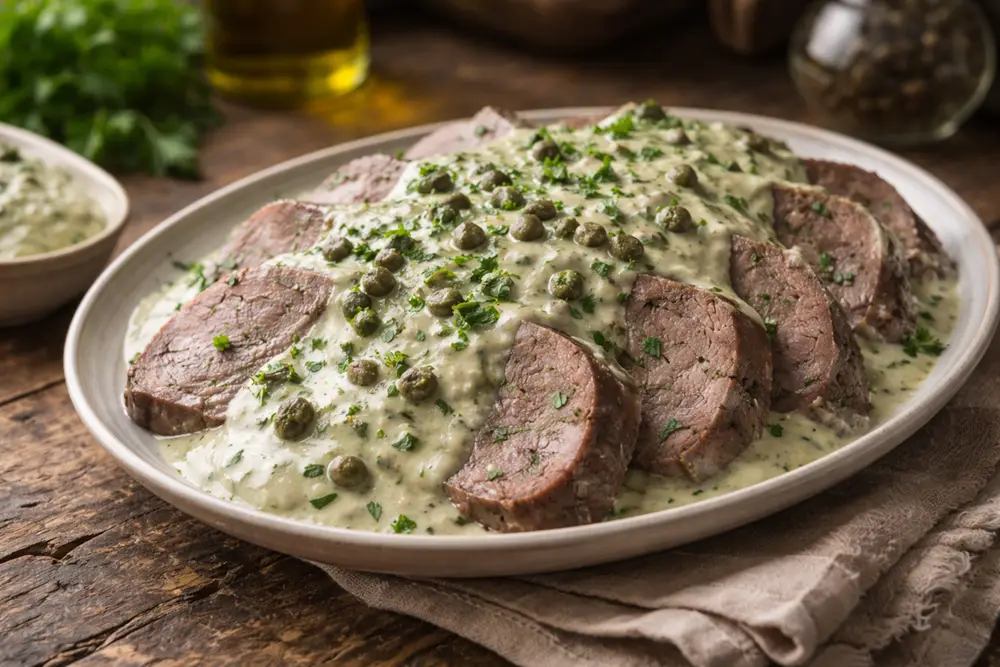
Baked Tongue in Green Sauce
Beef tongue braised with herbs, larded with bacon and roasted until golden, served in a green sauce of capers, anchovy, parsley and sour cream.
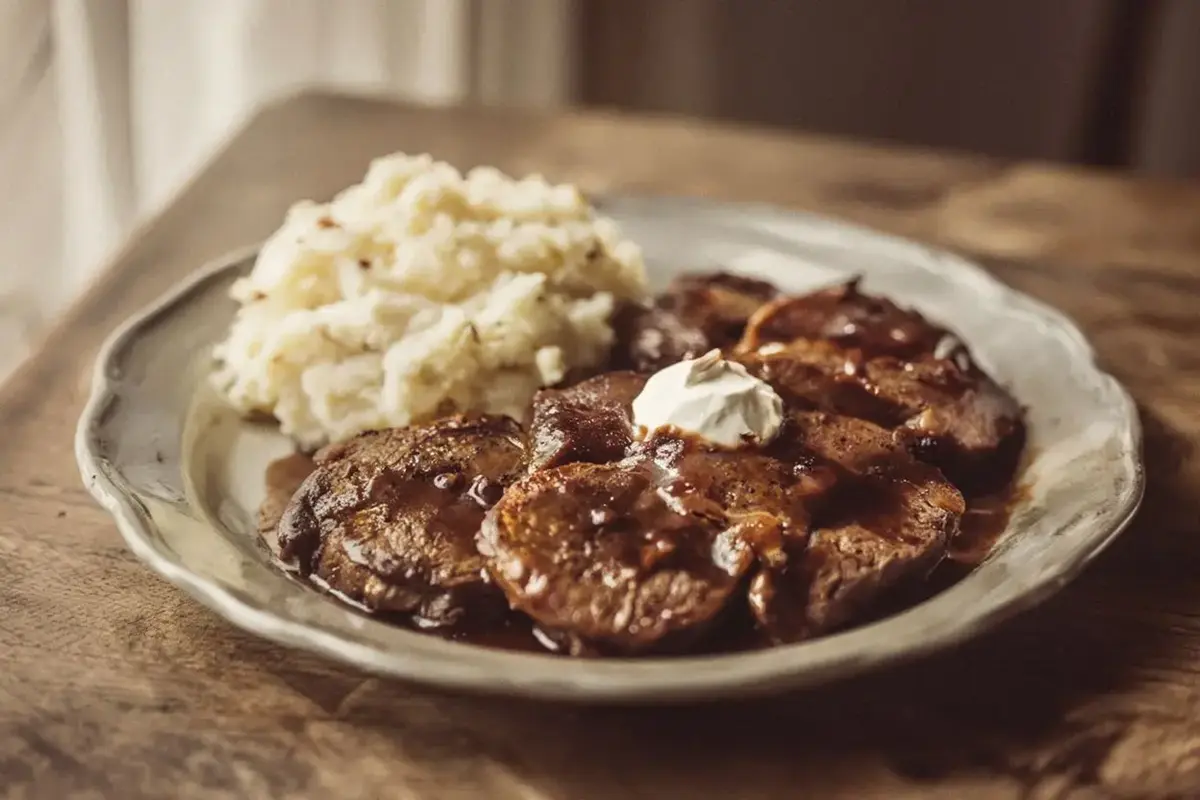
Beef Kidney with Wine
Beef kidney marinated in red wine, braised with herbs, finished with sour cream. Tender, rich, and deeply flavored.