Snow Cake with Chocolate
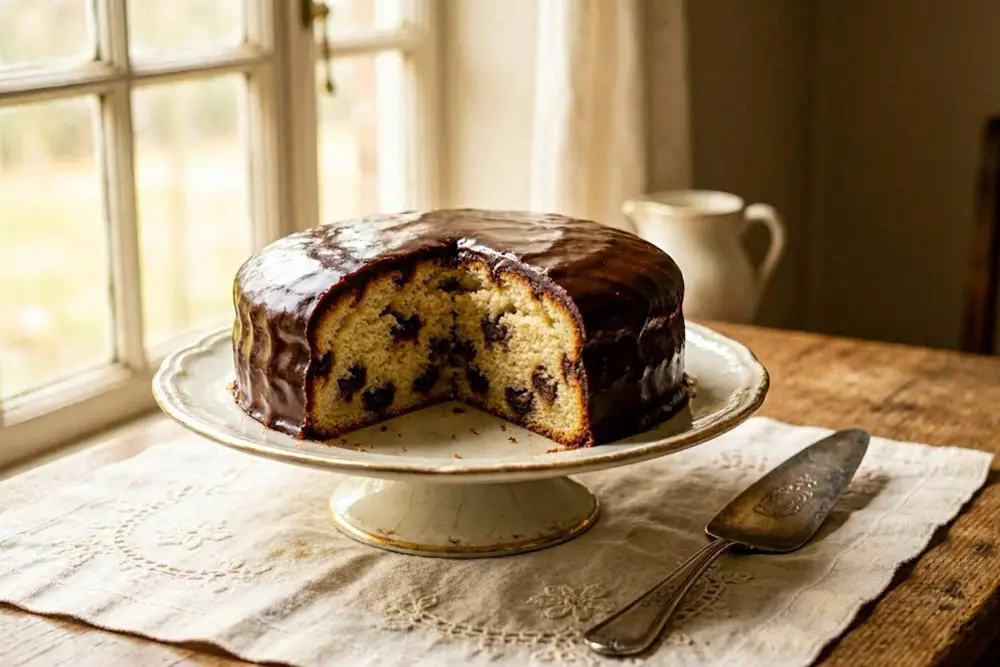
Flourless almond meringue cake with dark chocolate, candied orange peel, and a poured chocolate glaze — light as snow, rich as the season.
Quick Summary
Flourless almond meringue cake with dark chocolate, candied orange peel, and a poured chocolate glaze — light as snow, rich as the season.
Historical recipe
Modernised adaptation of an early 20th‑century source. Not independently kitchen-tested by Attic Recipes. Quantities, temperatures, and food safety guidance have been updated for a contemporary kitchen — results may vary and errors may exist. Nutritional values, where provided, are estimates only and have not been laboratory tested. Always follow current food safety guidelines for your region. If you have a health condition, allergy, or dietary requirement, consult a qualified professional before preparing this recipe.
Use of this recipe is entirely at your own risk and subject to our Terms of Service and Privacy Policy. Attic Recipes accepts no liability for any adverse outcome.
- Tree Nuts
- Eggs
- Gluten
Additional notes
-
Warning
This cake contains 8 egg whites that are baked at 160°C. Ensure the cake is fully set before removing from the oven — the centre should read at least 74°C (165°F) on an instant-read thermometer. Individuals who are pregnant, elderly, immunocompromised, or children under 18 should ensure the cake is thoroughly baked through before consuming.
-
Note
This cake contains nuts (almonds) and candied orange peel, which may contain sulphites depending on the brand. Check the label of your candied peel if sulphite sensitivity is a concern.
- 1
Prepare all mix-ins before beating the egg whites — this is essential. Grind 140g of the blanched almonds finely in a nut grinder or food processor. Chop the remaining 140g coarsely with a knife. Warm the 110g dark chocolate slightly (a few seconds in a warm oven or a brief moment over hot water) until just soft enough to cut into small cubes, then set aside to re-harden completely. Chop 100g candied orange peel finely. Zest 1 lemon.
Tip Having everything pre-measured and ready before you touch the egg whites is not optional — meringue cannot wait. - 2
Preheat the oven to 160°C (320°F) / 140°C fan. Grease a 24cm round springform tin thoroughly with 10g softened butter, then dust with 10g all-purpose flour, tapping out any excess.
- 3
Place 8 large egg whites in a perfectly clean, dry bowl. Add ¼ tsp fine salt and ½ tsp cream of tartar. Beat with a wire whisk or electric mixer on medium speed until soft peaks form, then increase speed and continue beating until the meringue is stiff and glossy — it should hold a firm peak and not slide when the bowl is tilted.
Tip Any trace of fat, yolk, or moisture in the bowl will prevent the whites from reaching full volume. Wipe the bowl and whisk with a cut lemon or white vinegar before starting. - 4
Sift 140g caster sugar over the beaten meringue in three additions, folding gently with a large rubber spatula after each. Use a wide, sweeping motion from the bottom of the bowl — fold, do not stir.
- 5
Add the ground almonds, chopped almonds, chocolate cubes, candied orange peel, and lemon zest. Fold everything in with the same gentle motion — the minimum number of strokes needed to distribute the ingredients evenly. Stop as soon as no dry pockets remain.
Tip This is the highest-risk step. Over-folding deflates the meringue and results in a dense, gummy cake. Err on the side of under-mixing. - 6
Pour the mixture into the prepared tin. Smooth the top lightly with a spatula — do not press down. Place in the preheated oven and bake for 45–55 minutes, until the top is set and a toothpick inserted into the centre comes out with moist crumbs (not wet batter). The cake will be firm to the touch but will not dome like a conventional sponge.
Tip Do not open the oven in the first 35 minutes. A sudden drop in temperature can cause the meringue structure to collapse. - 7
Remove from the oven and allow the cake to cool completely in the tin on a wire rack — at least 1 hour. Do not attempt to unmould while warm.
- 8
Make the chocolate glaze: put 150g sugar in a small heavy-bottomed saucepan and pour over 150ml water. Place over medium heat and stir until the sugar dissolves. Once the syrup comes to a boil, stop stirring. Add 80g melted dark chocolate and stir continuously over medium heat until the glaze thickens enough to coat the back of a spoon — approximately 5–8 minutes.
Tip Test the glaze by dipping a cold spoon: the glaze should coat it and not run off immediately. It will continue to thicken slightly as it cools. - 9
Unmould the cooled cake onto a wire rack set over a tray. Pour the warm glaze immediately and evenly over the top of the cake. Dip a wide palette knife or flat knife in cold water and use it to smooth the glaze over the sides, catching the run-off from the tray and applying it to any bare patches.
- 10
Allow the glaze to set completely at room temperature for at least 30 minutes before slicing. Slice with a sharp knife dipped in hot water and wiped dry between cuts.
Nutrition Information per 1 slice (approx. 95g)
Nutritional values are approximate estimates and may vary based on specific ingredients used, preparation methods, and portion sizes.
Serving Suggestions
Serve at room temperature, in thin slices — this is a dense, rich cake that carries well in small portions. It pairs well with unsweetened whipped cream or a small glass of dessert wine. The cake keeps exceptionally well: stored in a covered tin at room temperature, it will remain moist and flavourful for up to one week, as the nut content stabilises the moisture. Do not refrigerate unless the kitchen is very warm, as cold will dull the chocolate glaze.
About This Recipe
The name comes from the method. Eight egg whites beaten to stiff snow — snijeg, as it is called in the region — carry the entire structure of this cake. There is no flour to speak of (only a dusting on the tin), no butter in the batter, no leavening agent. What rises and holds in the oven is air, trapped in protein, set by heat.
Into that snow go 280 grams of almonds — half ground fine, half chopped coarse — along with dark chocolate cut into small cubes, candied orange peel, sugar, and lemon zest. The result after baking is something between a torte and a macaroon: dense but not heavy, with a yielding interior that cuts cleanly and keeps exceptionally well. A poured chocolate glaze, made by boiling sugar syrup with melted chocolate until it thickens, finishes the cake.
This type of recipe appears in Central European home baking from at least the early 20th century, under various names. The defining characteristic is always the same: egg whites doing the structural work that flour would do in a conventional cake, supported by the fat content of a large quantity of ground nuts.
Why It Works
Ground almonds serve two functions here. The fine-ground portion absorbs moisture from the egg white foam, giving the meringue body and preventing it from collapsing entirely as it bakes. The coarsely chopped portion provides textural contrast — pockets of nut that resist the surrounding set structure.
The instruction to warm the chocolate, cut it into cubes, and then allow it to re-harden before folding is not merely aesthetic. Softened chocolate would smear into the batter and discolour the meringue grey. Re-hardened chocolate cubes hold their shape through folding and distribute as discrete pieces in the finished cake — visible in the cross-section, distinct in each bite.
Cream of tartar stabilises the meringue at a structural level. It lowers the pH of the egg white foam, which increases the strength of the protein bonds that form during beating. A stabilised meringue is more resistant to over-beating, less likely to weep, and better able to hold its volume through the folding stage — which, with 280 grams of heavy mix-ins to incorporate, is considerable.
The glaze is a reduced sugar syrup with chocolate stirred in. Unlike a ganache (which relies on the emulsification of cream and chocolate), this glaze sets by water evaporation — it thickens as it cooks, then firms further as it cools. The result is a matte, slightly hard glaze that cracks faintly under the knife, revealing the pale interior of the cake beneath.
Modern Kitchen Tips
Beat the egg whites in a metal or glass bowl, not plastic — plastic surfaces retain microscopic traces of fat that interfere with foam formation. Wipe the bowl and whisk with half a lemon or a little white vinegar before starting.
Fold in the almonds and chocolate with a large, wide spatula — not a spoon, not a whisk. The goal is to move the mixture from the bottom of the bowl up and over itself, turning the bowl as you go. Count your strokes if it helps: twenty to twenty-five should be sufficient to incorporate everything without significant deflation.
Do not test the cake before 40 minutes have elapsed. Opening the oven door before the structure has set causes the foam to collapse under the sudden change in temperature and pressure.
The glaze is most workable when poured immediately after reaching the right consistency. Have the unmoulded cake on a rack and a wet knife ready before you take the glaze off the heat.
A classic of early 20th century home cooking, preserved and adapted for the modern kitchen.
The Story Behind This Recipe
Historical Context
Early 20th century Central European baking manuals frequently included recipes of this type — flourless almond cakes built entirely on beaten egg whites, with the whipped whites doing the work that flour and leavening do in a conventional sponge. The technique of warming the chocolate before cutting and then re-hardening it was a standard period method for producing clean chocolate pieces that would not melt into the batter during folding. The glaze method — sugar syrup brought to a boil, then chocolate added and stirred until thickened — is a classic poured ganache precursor, typical of the period before stabilised ganache techniques became standard. Oven temperature was given as 'moderate heat', the conventional description in pre-thermostat domestic baking. The quantity of water for the glaze was specified as 'one cup', without a standardised volume.
Modern Kitchen Adaptation
Cream of tartar has been added as a meringue stabiliser — not specified in the original, which called only for a small amount of salt. Salt slows protein denaturation but does not stabilise the foam structure the way tartaric acid does; modern technique consistently uses an acid stabiliser for baked meringues. Oven temperature has been set at 160°C / 140°C fan, estimated from 'moderate heat' — standard for baked meringue cakes of this density. The original did not specify a baking time or tin size; a 24cm springform tin and 45–55 minute baking window have been established based on the volume of the batter. Water for the glaze has been standardised to 150ml, a 1:1 ratio with the sugar, which produces a glaze of the correct pouring consistency when reduced with chocolate. 'Sharp white flour' for dusting the tin is all-purpose flour in modern terms — the period distinction between 'sharp' and 'soft' flour referred to milling grade, not gluten content in the contemporary sense.
This recipe is an independent modern adaptation developed from historical sources in the public domain. It is provided for informational and educational purposes only and does not constitute professional dietary, nutritional, or medical advice. Food preparation involves inherent risks. The reader assumes full responsibility for safe food handling, ingredient sourcing, and adherence to current local food safety guidelines. The site operator accepts no liability for outcomes resulting from the preparation or consumption of this recipe.
One recipe.
Every week.
You Might Also Like
More recipes you'll enjoy
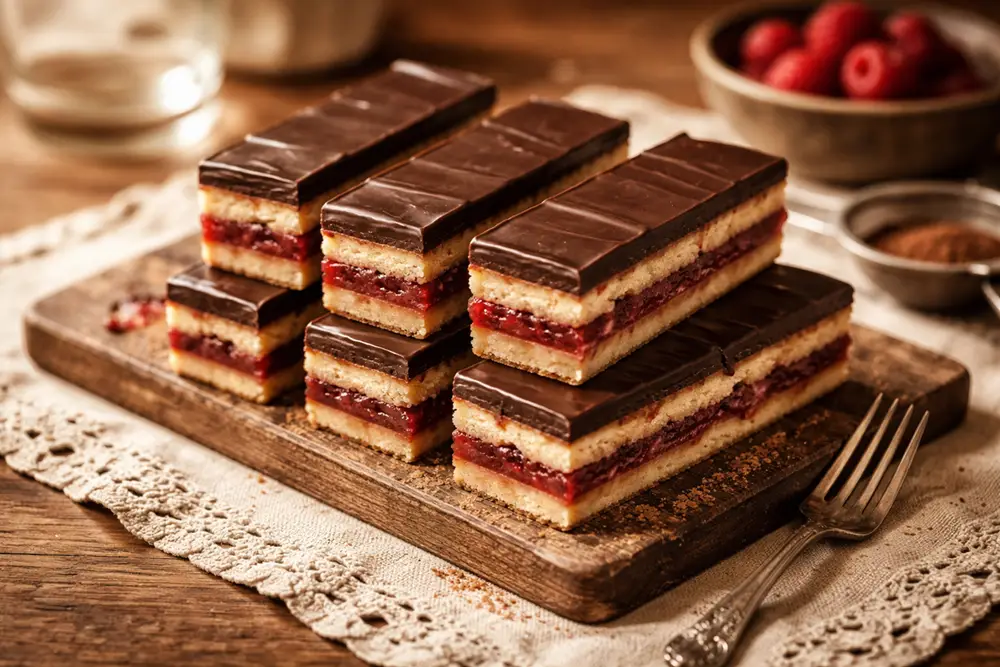
Raspberry Bars with Chocolate Glaze
Crisp almond shortcrust stacked in three layers with raspberry jam and finished with a dark chocolate glaze — a classic Central European bar cookie.
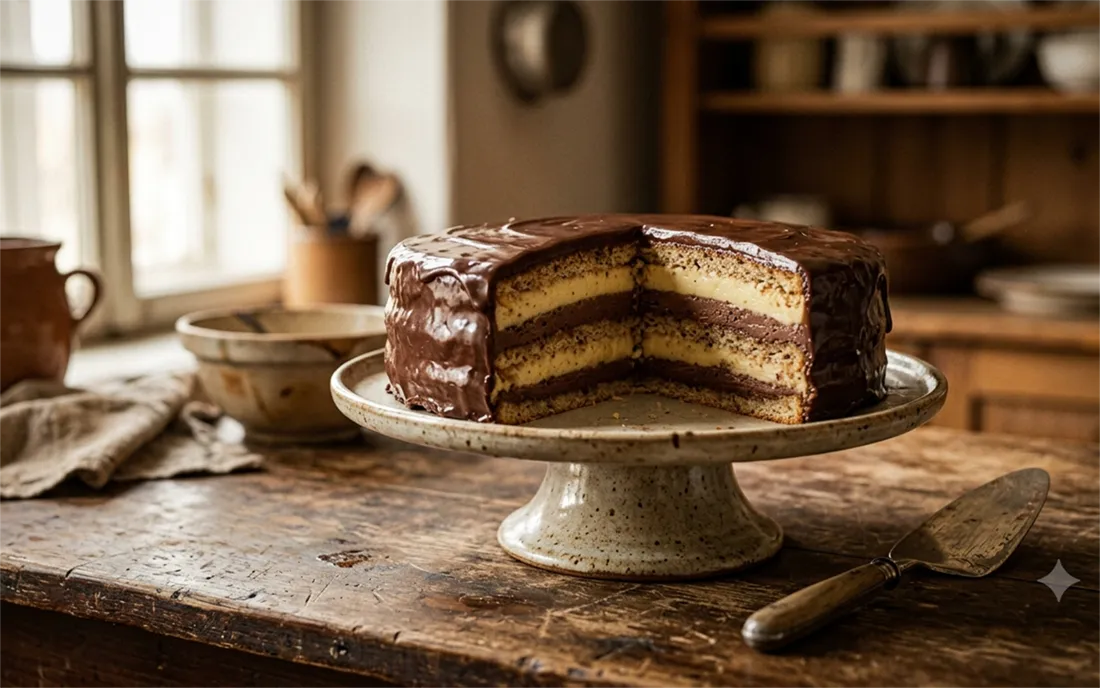
Layered Almond Torte with Two Fillings
A rich four-layer almond torte with two contrasting fillings — vanilla custard and chocolate-hazelnut — finished in a poured chocolate glaze.
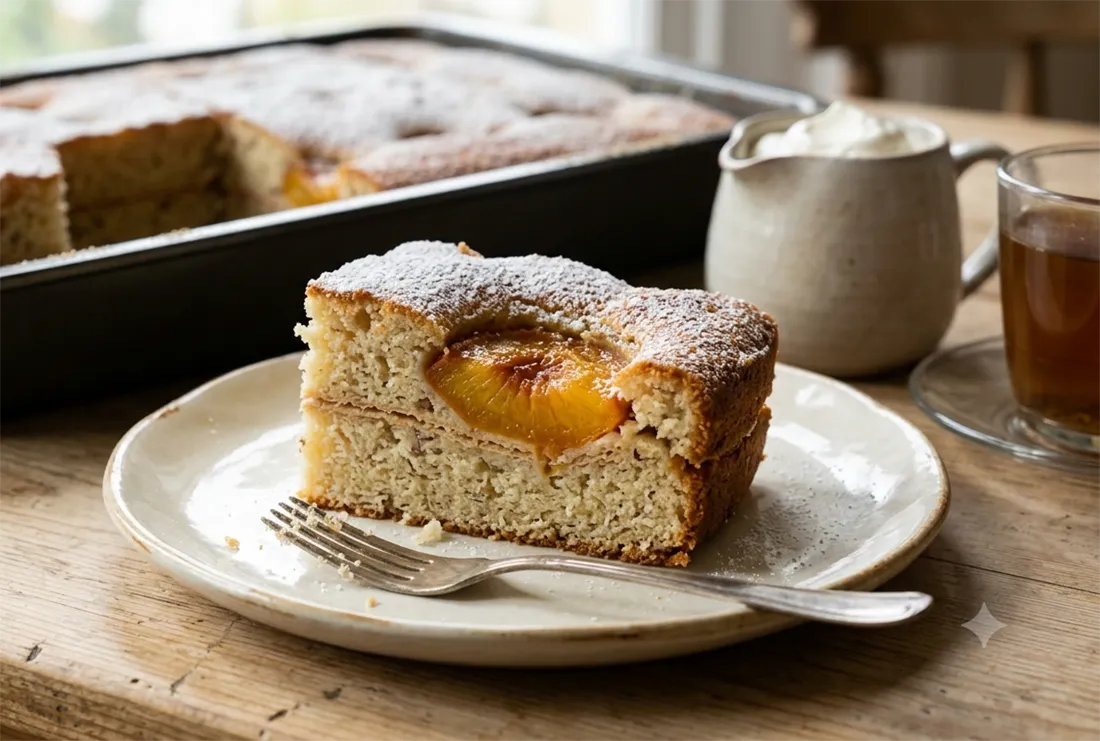
Peach Almond Sponge Cake with Wafer Layer
A flourless almond sponge cake with a hidden wafer layer and a row of baked peaches through the middle, finished with a dusting of sugar.