Savory Potato Bread Bites
Small, buttery rolls enriched with mashed potato and folded for extra tenderness - a classic savory bite from early 20th century Central European kitchens.
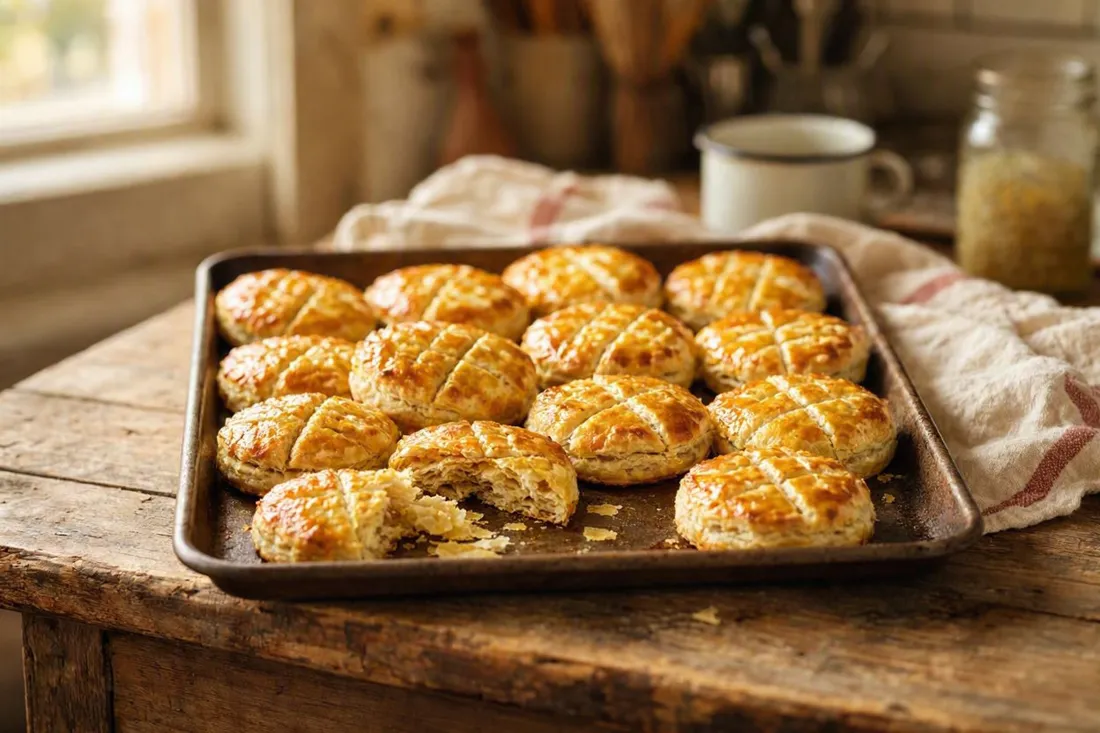
Quick Summary
These small savory rolls get their tender crumb from mashed potato worked into a rich, buttery yeasted dough. The dough rests overnight, then gets folded a few times before baking into golden, bite-sized pieces perfect for serving with drinks or soup.
This recipe uses Buttertajh: How Central European Laminated Dough Works — prepare it in advance if you haven't already.
Historical recipe
Modernised adaptation of an early 20th‑century source. Not independently kitchen-tested by Attic Recipes. Quantities, temperatures, and food safety guidance have been updated for a contemporary kitchen — results may vary and errors may exist. Nutritional values, where provided, are estimates only and have not been laboratory tested. Always follow current food safety guidelines for your region. If you have a health condition, allergy, or dietary requirement, consult a qualified professional before preparing this recipe.
Use of this recipe is entirely at your own risk and subject to our Terms of Service and Privacy Policy. Attic Recipes accepts no liability for any adverse outcome.
- Eggs
- Dairy
- Gluten
- 1
Whip the softened butter and lard together until the mixture is light and fluffy.
- 2
While whipping, boil the potatoes until tender.
- 3
Peel the boiled potatoes and pass them through a ricer. Measure out 200g of the riced potato and add it to the butter and lard mixture.
- 4
Add the flour, the whole egg, and the egg yolk to the mixture.
- 5
Dissolve the yeast in the warm milk, then add it to the dough.
- 6
Add the salt last.
Tip Salt is added at the end so it doesn't come into direct contact with the yeast for too long before mixing. - 7
Mix everything together thoroughly into a smooth dough, place it in a bowl, cover, and let it rest overnight in a cool place.
- 8
The next day, turn the dough out onto a floured board and fold it over itself two to three times, in the same manner used for laminated pastry dough.
Tip This is a light folding motion, not a full lamination with a separate butter block - it's meant to build a little extra tenderness and layering into the crumb. - 9
Roll the dough out with a rolling pin to about half a finger thick.
- 10
Cut small rounds from the dough using a small cutter, about 2cm (3/4 in) in diameter.
- 11
Arrange the rounds on a baking tray and brush each one with the beaten egg.
Tip For a decorative finish, score the tops lightly with a knife in a crosshatch pattern before baking. - 12
Bake immediately.
Tip Bake at 200°C (400°F) / 180°C fan for about 15 minutes, until golden, since the original did not specify a temperature or time.
Nutrition Information per 1 roll (approx 25g)
Nutritional values are approximate estimates and may vary based on specific ingredients used, preparation methods, and portion sizes.
Serving Suggestions
Serve warm or at room temperature alongside soup, as a savory nibble with drinks, or split and filled with a little butter or soft cheese.
About This Recipe
These small savory rolls owe their tenderness to an unusual addition for a yeasted dough: mashed potato, worked in alongside a generous amount of butter and lard. The result is a rich, almost pastry-like crumb rather than a typical bread texture - dense enough to hold its shape, but noticeably softer than a plain yeasted roll.
The dough gets an overnight rest in a cool place before it’s briefly folded the next day, a step that borrows from laminated pastry technique without going through the full process of enclosing a separate butter block. It’s a small touch, but it adds a bit of extra tenderness and structure to what would otherwise be a straightforward enriched dough.
Cut small and brushed with egg before baking, these rolls were the kind of thing a household could keep on hand for unexpected guests or a light accompaniment to a meal - equally at home next to a bowl of soup or set out on a plate with drinks.
Why It Works
Riced potato adds starch and moisture to the dough without adding significant gluten-forming protein, which is part of why enriched potato doughs bake up tender rather than chewy. Combined with the butter and lard worked in early, the fat coats flour proteins and limits gluten development further, softening the crumb overall. The light folding step the next day adds a few extra layers to the dough’s structure - not the dozens of layers of a true laminated pastry, but enough to give a slightly flakier bite than a plain yeasted roll.
Modern Kitchen Tips
If you don’t own a small round cutter, the rim of a shot glass or a bottle cap works well for cutting rolls this size. Keep the scraps and re-roll them once - after that, the dough gets tough from overworking and is better used for a second, less delicate batch.
A classic of early 20th century home cooking, preserved and adapted for the modern kitchen.
The Story Behind This Recipe
Historical Context
Early 20th century Central European households commonly enriched yeasted doughs with mashed potato to keep small baked goods tender for longer. The light folding step in this recipe echoes the technique used for fully laminated pastry doughs of the period, though without a separate butter block - a simplified way to build a bit of extra tenderness into an everyday yeasted dough rather than a true laminated pastry.
Modern Kitchen Adaptation
The 20g of fresh yeast can be substituted with about 7g (roughly 2 teaspoons) of active dry yeast or instant yeast; if using active dry yeast, dissolve it in the warm milk as described and let it stand for a few minutes until foamy before proceeding. The milk quantity, salt quantity, and quantity of egg used for the wash were not given precisely in the original and have been estimated here. The oven temperature and baking time were also not specified and have been estimated at 200°C (400°F) / 180°C fan for about 15 minutes, appropriate for small enriched rolls of this size; check for a golden color as the real indicator of doneness.
This recipe is an independent modern adaptation developed from historical sources in the public domain. It is provided for informational and educational purposes only and does not constitute professional dietary, nutritional, or medical advice. Food preparation involves inherent risks. The reader assumes full responsibility for safe food handling, ingredient sourcing, and adherence to current local food safety guidelines. The site operator accepts no liability for outcomes resulting from the preparation or consumption of this recipe.
One recipe.
Every week.
You Might Also Like
More recipes you'll enjoy
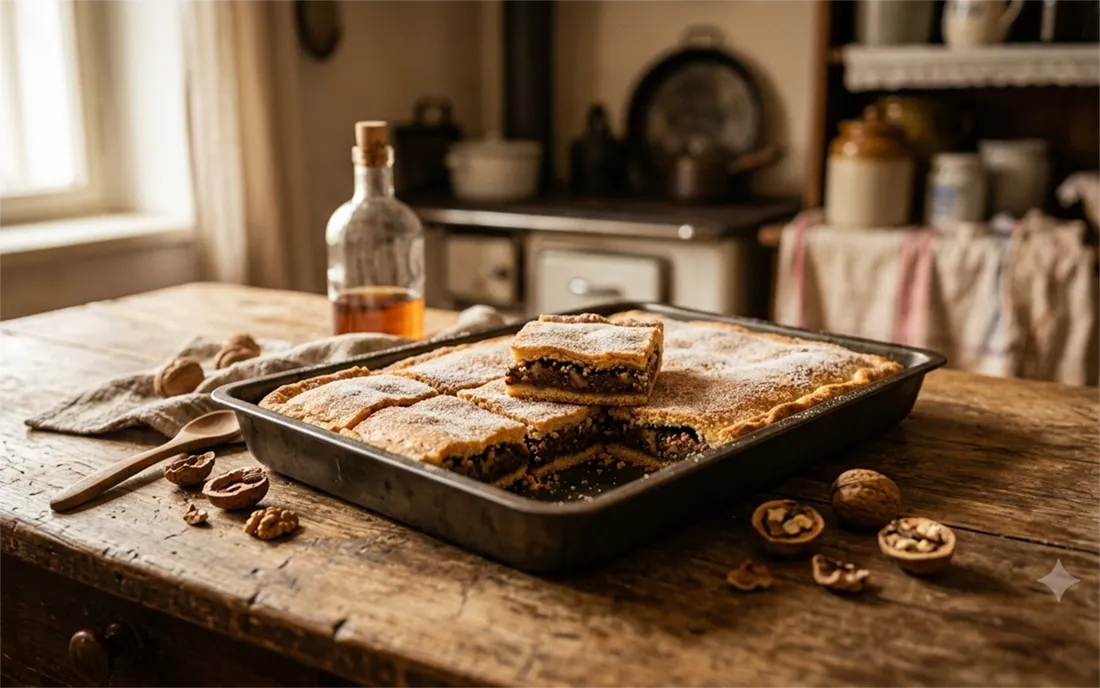
Walnut and Chocolate Rum Pastry
A two-crust pastry with a walnut, chocolate, and rum filling, encased in a buttery rum-scented dough — a rich Central European baking classic.
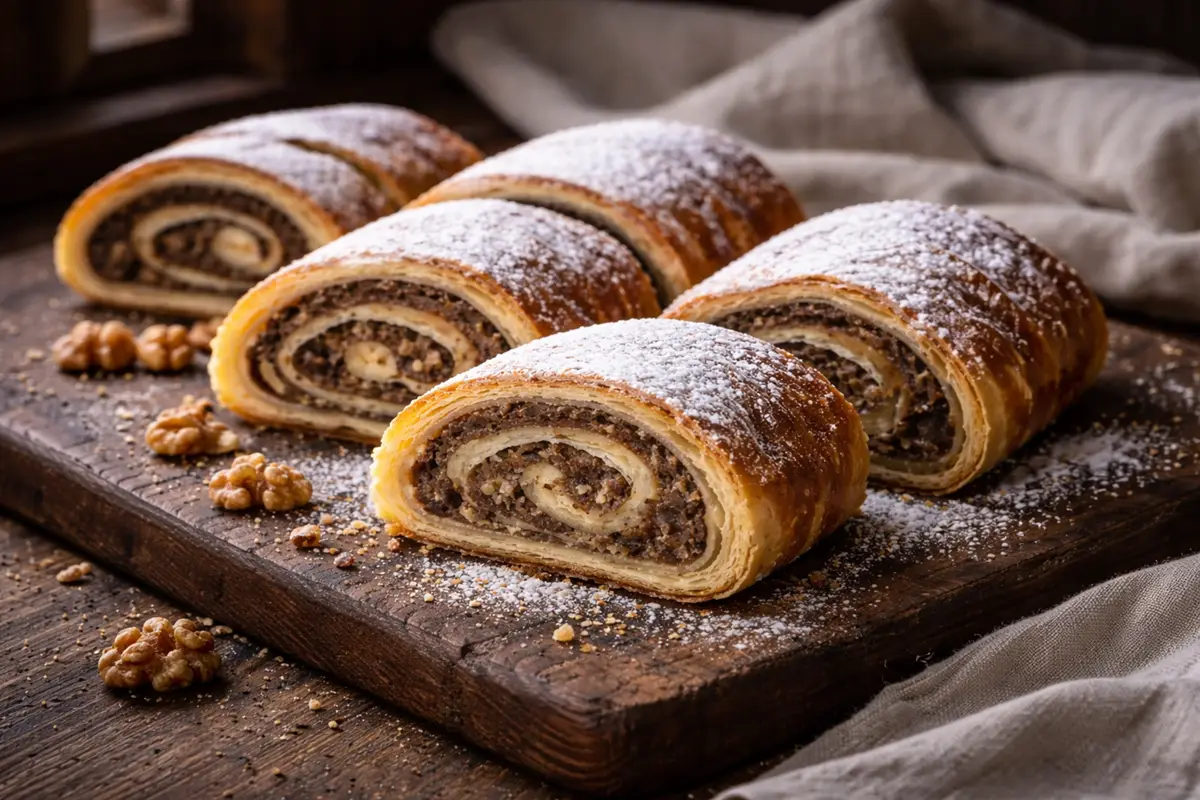
Fatback Walnut Roll
Flaky yeasted pastry laminated with raw pork fatback, filled with milk-cooked walnuts, raisins, and lemon zest. Sliced and dusted with sugar.
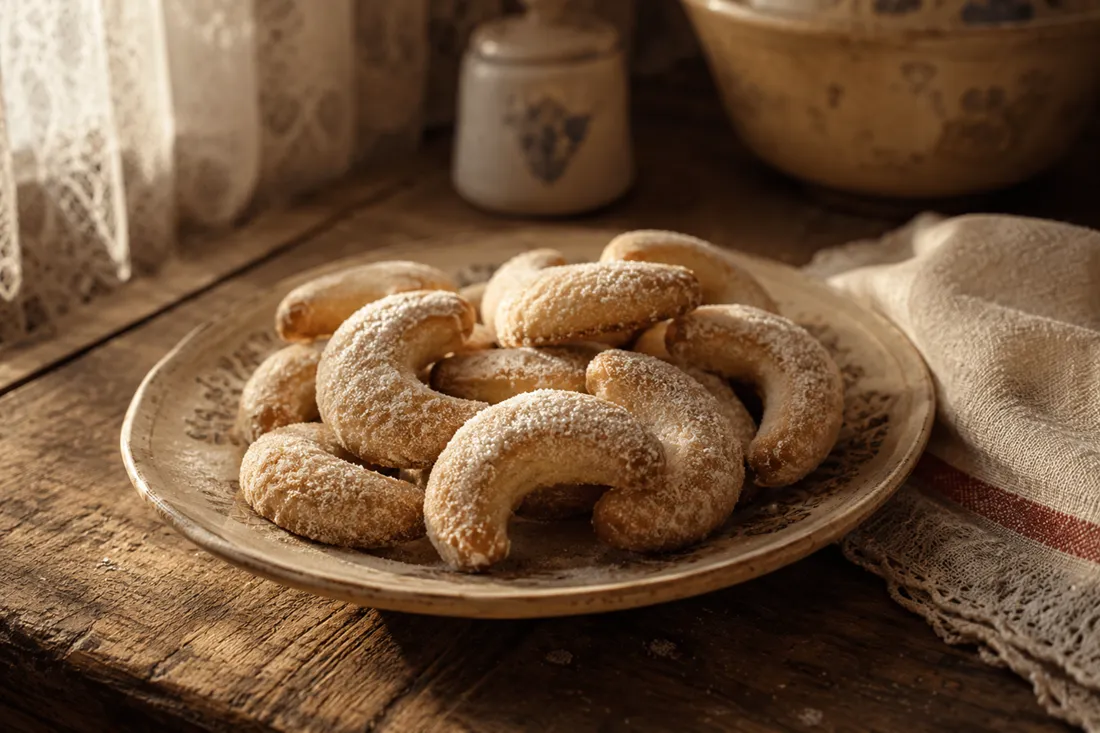
Cooked Egg Yolk Crescent Cookies
Delicate butter cookies made with hard-boiled egg yolks, rolled into crescents and coated in vanilla sugar — a forgotten Central European baking technique.