Rosto in Tomato Sauce
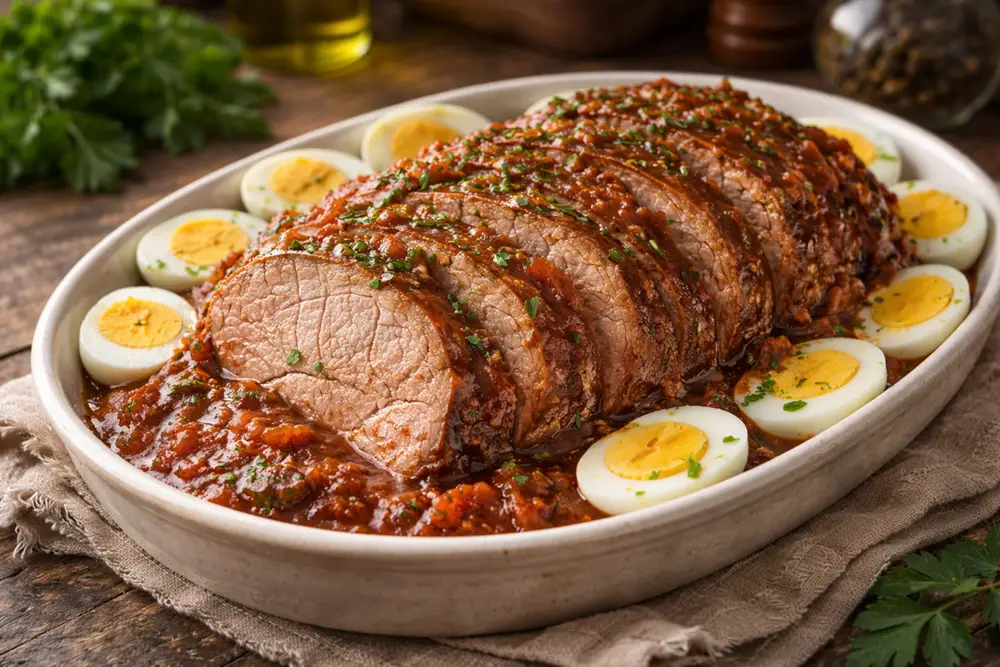
Pork leg fillet studded with garlic, braised in white wine, sliced and served in a rich tomato sauce with hard-boiled egg — a Central European pot roast.
Historical recipe
Modernised adaptation of an early 20th‑century source. Not independently kitchen-tested by Attic Recipes. Quantities, temperatures, and food safety guidance have been updated for a contemporary kitchen — results may vary and errors may exist. Nutritional values, where provided, are estimates only and have not been laboratory tested. Always follow current food safety guidelines for your region. If you have a health condition, allergy, or dietary requirement, consult a qualified professional before preparing this recipe.
Use of this recipe is entirely at your own risk and subject to our Terms of Service and Privacy Policy. Attic Recipes accepts no liability for any adverse outcome.
- Eggs
- Gluten
- Sulphites
Additional notes
-
Warning
Pork must reach an internal temperature of 71°C (160°F) before serving. Use a meat thermometer to verify doneness at the thickest point of the roast.
-
Note
Each serving contains approximately 13g of saturated fat. This dish is intended for occasional consumption.
-
Note
This recipe contains white wine. The alcohol largely evaporates during the long braise, but trace amounts may remain. Pregnant women, children under 18, and individuals avoiding alcohol should be aware.
- 1
Hard-boil the 3 eggs: place in cold water, bring to a boil, cook for 10 minutes, then transfer to cold water. Peel and set aside.
- 2
Using a sharp, narrow-bladed knife, make deep punctures at regular intervals across the entire surface of the 1500g pork leg fillet. Into each puncture, push one small garlic clove (or half a large one) along with a small pinch of salt and pepper, pressing it in as deep as possible.
Tip Work along the full 30cm length of the piece so the garlic is evenly distributed throughout the roast. - 3
Tie the stuffed pork tightly with kitchen string at regular intervals to form a compact loaf shape. This holds the meat together during the long braise and keeps the garlic in place.
- 4
Heat 2 tbsp of lard in a deep, heavy-bottomed pan over medium-low heat. Place the tied pork in the hot fat, cover with a lid, and fry slowly, turning the meat once the underside is well browned. Do not rush this step — the meat should colour slowly.
- 5
Once the first side is browned, turn the meat. Pour in the 200ml of dry white wine in two or three additions, allowing each addition to reduce before adding the next. Continue cooking covered over low heat, turning the meat occasionally, until the pork is completely tender — approximately 90–100 minutes total. The meat is done when a meat thermometer inserted into the thickest part reads 71°C (160°F).
Tip If the pan dries out before the meat is done, add a small splash of water or stock. Preserve the pan drippings — they are the base of the sauce. - 6
Remove the cooked pork from the pan and set aside to rest. Remove and discard the kitchen string. Slice the pork into thin pieces and reassemble the slices on a baking dish in the original loaf shape.
- 7
Return the pan with its drippings and fat to medium heat. Add 1 tbsp of plain flour and stir it into the fat, cooking and stirring constantly until the flour turns golden brown — about 2 minutes.
- 8
Pour the 500ml of tomato passata over the browned flour, stirring to combine. Reduce the heat to low and simmer gently, stirring occasionally, until the fat rises to the surface of the sauce — about 10–15 minutes. This is the sign the sauce is ready.
- 9
Pour the hot tomato sauce over the reassembled sliced pork on the baking dish. Arrange the sliced hard-boiled eggs around the edge of the meat. Serve immediately.
Nutrition Information per 1 serving (approx. 320g)
Nutritional values are approximate estimates and may vary based on specific ingredients used, preparation methods, and portion sizes.
Serving Suggestions
Serve with boiled potatoes, mashed potatoes, or egg noodles to absorb the tomato sauce. A simple cucumber salad or pickled vegetables alongside cuts the richness of the braised pork.
About This Recipe
Rosto — from the Italian arrosto, simply meaning roast — arrived in Central European kitchens via the long culinary exchange of the Austro-Hungarian period and settled in comfortably. This version is a whole pork leg fillet, roughly 30 centimetres long, studded along its entire length with small garlic cloves pressed deep into knife punctures, tied into a loaf, and braised slowly in white wine until completely tender. It is then sliced, reassembled on a dish, and blanketed in a tomato sauce built from the pan drippings.
The hard-boiled egg slices arranged around the edge of the platter are not decoration in the modern sense — they are part of the dish, intended to be eaten alongside the meat and sauce. The combination of braised pork, tomato, and egg reads as complete and deliberate.
This is Sunday lunch food — unhurried, requiring a covered pan and low heat and patience, producing a result that looks more elaborate than the technique behind it.
Why It Works
Studding the meat with garlic before braising rather than after means the garlic softens and mellows inside the roast over the full cooking time, losing its raw sharpness and becoming part of the flavour of the meat itself rather than a separate element. The wine added gradually during braising keeps the pan from drying out and contributes acidity that balances the fat of the pork.
The sauce is built in the same pan — the flour absorbs and browns in the pork fat, and the tomato passata is poured over that roux base. Simmering until the fat rises to the surface is the period’s visual cue for a sauce that has cooked through and separated properly, which concentrates the flavour and removes the raw flour taste.
Modern Kitchen Tips
A Dutch oven or cast-iron casserole with a tight-fitting lid is ideal — it retains heat evenly and prevents the braising liquid from evaporating too quickly. A standard covered pan works, but check more frequently that the bottom is not drying out.
If the pork leg fillet from your butcher is thicker than 30cm or oddly shaped, the tying step is especially important — a compact, even loaf shape ensures the meat cooks through uniformly without the outside drying before the centre is done.
The reassembled sliced roast holds its shape on the dish for serving but portions easily — lift each slice individually with a spatula.
A classic of early 20th century home cooking, preserved and adapted for the modern kitchen.
The Story Behind This Recipe
Historical Context
Home cooks of the period commonly prepared large braised pork roasts of this type — known as *rosto* (from the Italian *arrosto*, roast) — for family Sunday meals and gatherings. The technique of studding the raw meat with garlic before tying and slow-braising in wine was widespread in Central European households influenced by both Austro-Hungarian and Italian culinary traditions. Bottled tomato passata was already in use by the early twentieth century as a pantry staple in the region, and the combination of a flour-thickened tomato sauce poured over sliced braised meat was a characteristic presentation of the era. The garnish of hard-boiled egg slices arranged around the platter was standard for roasts served at table.
Modern Kitchen Adaptation
The original recipe specified no quantity for garlic, wine, fat, tomato sauce, or eggs — all quantities here are estimated based on the weight of the meat, the braising method described, and standard period proportions. Small-cloved garlic is specified because early twentieth century garlic varieties were considerably smaller than most commercially available garlic today; large modern cloves should be halved or quartered before inserting. Lard is the historically correct fat; neutral oil substitutes in equal quantity. The term *zapraška* in the original refers to a flour-and-fat roux base — this has been described by method rather than terminology for clarity.
This recipe is an independent modern adaptation developed from historical sources in the public domain. It is provided for informational and educational purposes only and does not constitute professional dietary, nutritional, or medical advice. Food preparation involves inherent risks. The reader assumes full responsibility for safe food handling, ingredient sourcing, and adherence to current local food safety guidelines. The site operator accepts no liability for outcomes resulting from the preparation or consumption of this recipe.
One recipe.
Every week.
You Might Also Like
More recipes from the same category
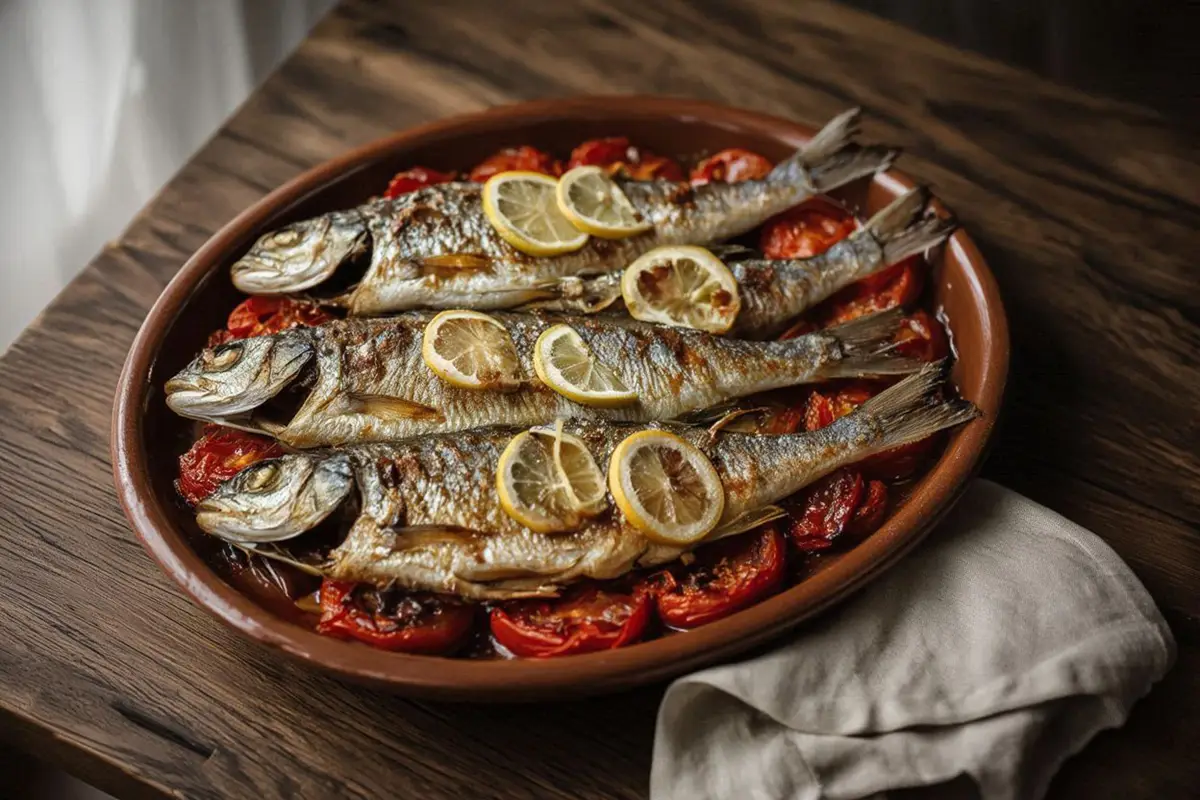
Baked Fish with Tomatoes
Whole fish baked over ripe tomatoes with generous olive oil and lemon — a simple, fragrant Central European oven dish.
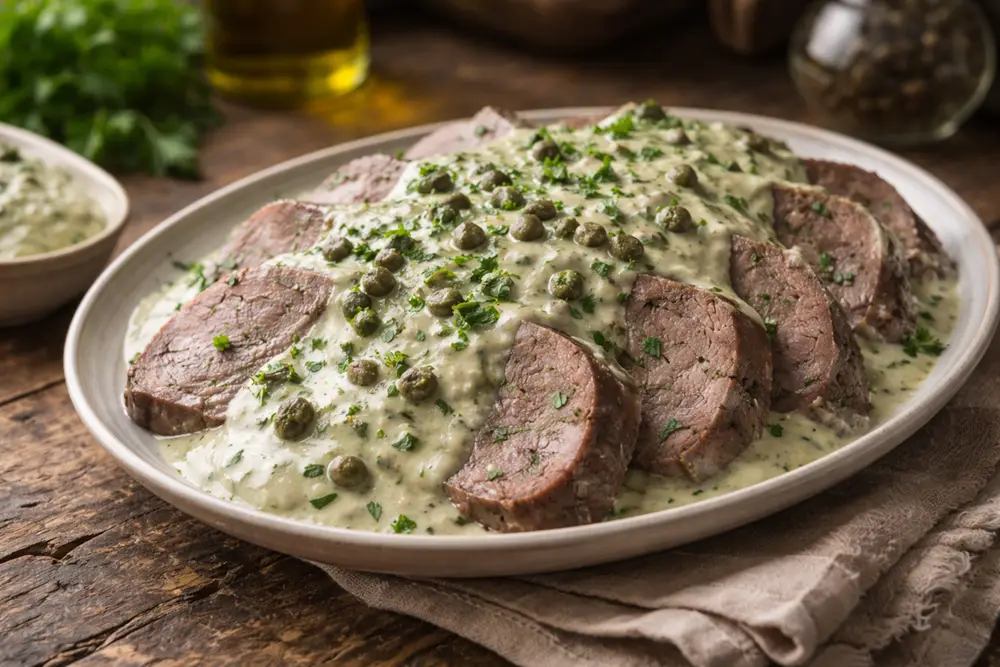
Baked Tongue in Green Sauce
Beef tongue braised with herbs, larded with bacon and roasted until golden, served in a green sauce of capers, anchovy, parsley and sour cream.
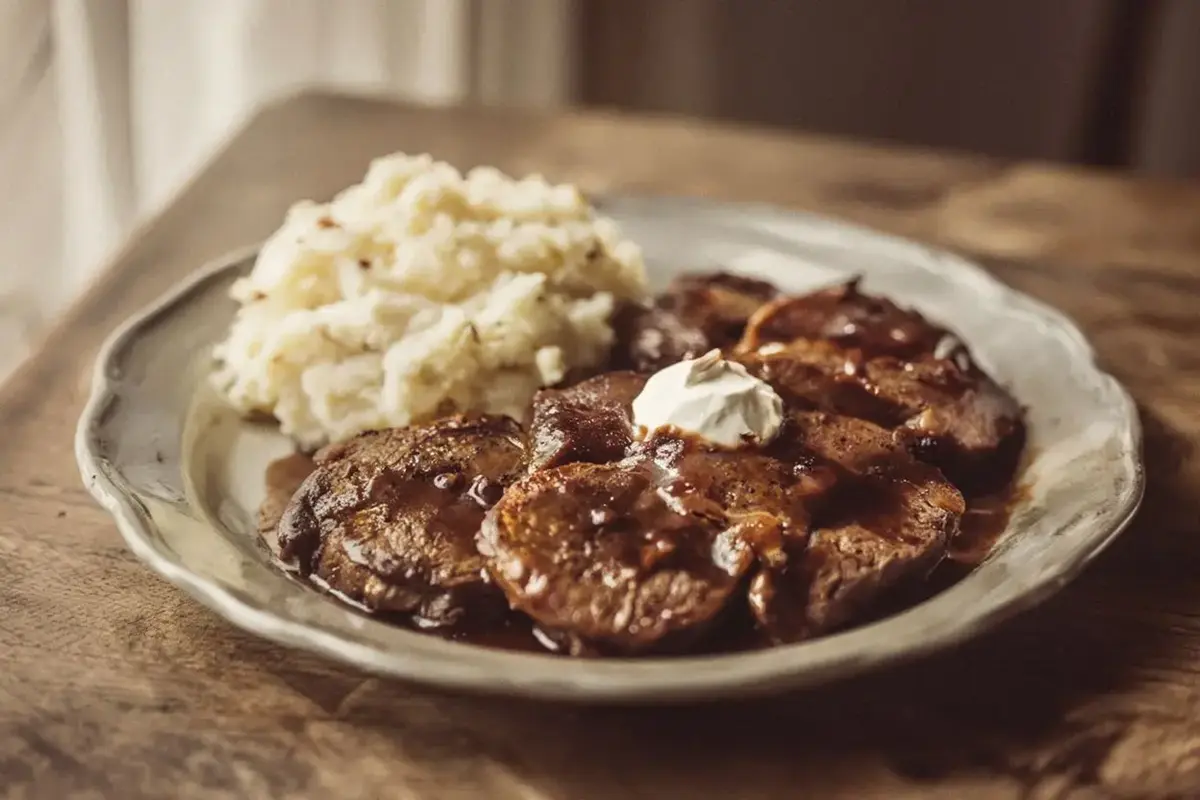
Beef Kidney with Wine
Beef kidney marinated in red wine, braised with herbs, finished with sour cream. Tender, rich, and deeply flavored.