Rose Spoon Sweet
Fragrant rose petals slowly simmered with sugar and lemon juice into a ruby-red syrup. A traditional Central European spoon sweet, served with coffee.
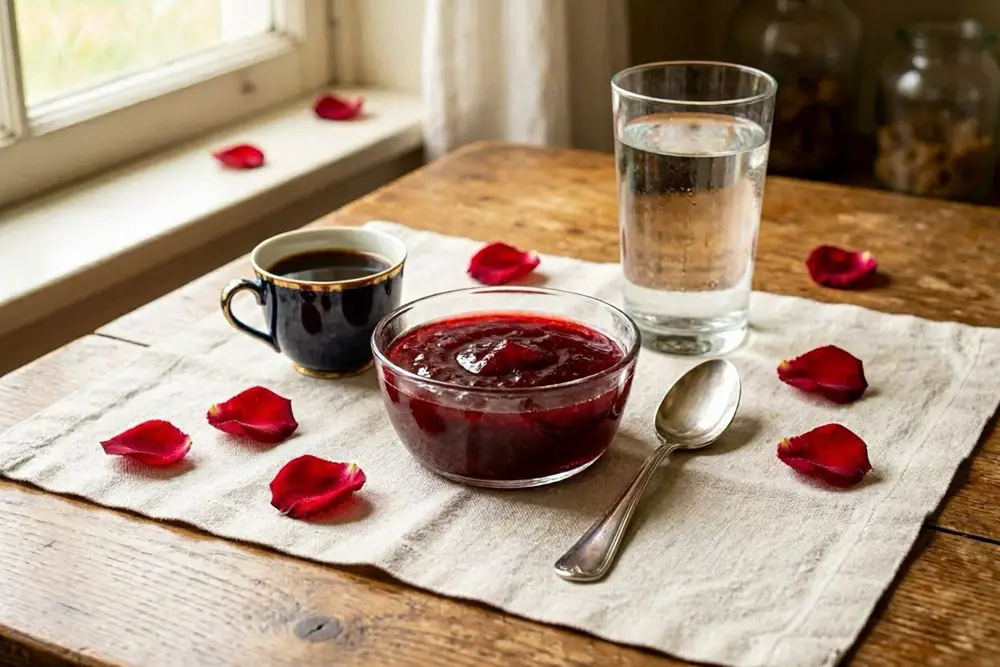
Quick Summary
Fragrant rose petals slowly simmered with sugar and lemon juice into a ruby-red syrup. A traditional Central European spoon sweet, served with coffee.
Historical recipe
Modernised adaptation of an early 20th‑century source. Not independently kitchen-tested by Attic Recipes. Quantities, temperatures, and food safety guidance have been updated for a contemporary kitchen — results may vary and errors may exist. Nutritional values, where provided, are estimates only and have not been laboratory tested. Always follow current food safety guidelines for your region. If you have a health condition, allergy, or dietary requirement, consult a qualified professional before preparing this recipe.
Use of this recipe is entirely at your own risk and subject to our Terms of Service and Privacy Policy. Attic Recipes accepts no liability for any adverse outcome.
Additional notes
-
Warning
Use only roses that have been grown without pesticides or synthetic fertilizers. Roses from florists, garden centres, or supermarkets are almost always treated with systemic pesticides that cannot be washed off. Only use roses you have grown yourself without chemicals, or roses sourced specifically for culinary use.
-
Warning
Hot sugar syrup reaches temperatures above 104°C (219°F) and causes severe burns on contact with skin. Keep children away from the stove during cooking. Do not leave boiling syrup unattended. If syrup spatters, do not touch it — let it cool before cleaning.
Use a long-handled spoon for stirring and a deep, heavy-bottomed pan to minimize splashing.
-
Note
Rose allergies are rare but possible, particularly in individuals sensitive to fragrances. People with known pollen or fragrance allergies should exercise caution when consuming rose petal preparations.
- 1
Prepare the rose petals: working petal by petal, pinch off and discard the small white or pale base of each petal — this part is bitter and will affect the flavour of the finished preserve. Rinse the trimmed petals gently in cold water and drain.
Tip Handle the petals lightly — bruising them before cooking releases colour unevenly. - 2
Pour the 1000ml of water into a clean, heavy-bottomed saucepan and bring to a full boil. Add the 60g of prepared rose petals. Reduce the heat to a steady simmer and cook for 15 minutes. Do not be alarmed when the water turns green — this is a normal reaction from the rose pigments under heat.
- 3
Pour the contents of the pan through a fine-mesh sieve or muslin cloth into a clean bowl or jug. Press the petals gently to extract all the liquid, then discard the spent petals. Return the strained liquid to the saucepan.
Tip The liquid at this stage will be an olive-green colour. It will transform when the lemon juice is added. - 4
Add the 1000g of sugar to the strained liquid. Stir over medium heat until the sugar has fully dissolved — do not allow the liquid to boil before the sugar is dissolved, or the syrup may crystallise later.
- 5
Once the sugar is dissolved, increase the heat to medium-high and bring the syrup to a boil. Add the 50ml of fresh lemon juice immediately. The syrup will transform within seconds from green to a vivid ruby red — this is the acid reacting with the rose pigments. Stir once to combine.
Tip The colour change is instantaneous and dramatic. If using white rose petals, the syrup will turn pink rather than red. - 6
Continue cooking the syrup at a steady boil, skimming off any foam that rises to the surface with a spoon. Cook until the syrup reaches the desired consistency — approximately 30 to 45 minutes depending on your stove and pan. Use one of the three tests below to determine when it is ready.
- 7
To test for consistency: (1) Cold plate test — place a small plate in the freezer before you begin cooking. Drop a small amount of syrup onto the cold plate, wait 30 seconds, then tilt the plate. The syrup should move slowly and hold a slight body, not run like water. (2) Bubble test — early in cooking, bubbles are large and fast; when the syrup is nearly ready, they become smaller, slower, and the surface looks heavier and more viscous. (3) Temperature test — the most reliable method for beginners: use a candy thermometer and cook to 104–105°C (219–221°F). At this temperature the syrup will set to a spoonable consistency once cooled.
Tip The syrup thickens further as it cools — remove it from the heat slightly before it looks fully done, or it may set too firmly in the jar. - 8
Remove the pan from the heat. Cover the surface of the syrup directly with a clean, damp cloth or piece of baking paper and leave undisturbed to cool overnight at room temperature. This slow, covered cooling prevents a skin from forming and allows the syrup to settle evenly.
- 9
The following day, pour the cooled preserve into a sterilized glass jar. Seal tightly and store in a cool, dark place.
Tip To sterilize the jar: wash in hot soapy water, rinse well, then place upright in an oven at 120°C (250°F) for 15 minutes. Fill while still warm.
Nutrition Information per 1 tbsp (approx. 20g)
Nutritional values are approximate estimates and may vary based on specific ingredients used, preparation methods, and portion sizes.
Serving Suggestions
Serve one spoonful per person in a small dish alongside a glass of cold water and a cup of black coffee — this is the traditional Central European hospitality sequence. The preserve keeps well for up to 12 months in a sealed, sterilized jar stored in a cool, dark place. Refrigerate after opening and use within 4 weeks. It can also be stirred into plain yogurt, spooned over vanilla ice cream, or dissolved in warm water as a simple rose syrup for drinks.
About This Recipe
Rose spoon sweet is made once a year, during the few weeks in May when the right roses are in bloom, and then kept in a jar for the rest of the year — brought out whenever guests arrive, a small dish of it set on the table alongside a glass of cold water and a cup of black coffee. The sequence matters: the spoonful of sweet first, then the water, then the coffee. It is a gesture of welcome as much as a recipe.
The roses used for this preserve are not the long-stemmed varieties from a florist. They are the old, fragrant garden roses — Rosa gallica, the Apothecary’s rose, with its deep crimson petals and intense scent, or Rosa damascena, the Damask rose, soft pink and powerfully aromatic. These bloom early and briefly, and they are grown for their fragrance rather than their appearance. If the petals have no scent when you hold them, they will have no flavour in the jar.
The chemistry of the colour change is one of the small pleasures of making this preserve. The petals turn the water green as they simmer — a disconcerting shade that gives no hint of what is coming. Then the lemon juice goes in, and within seconds the entire pot shifts to a deep, vivid ruby red. This is the acid reacting with the anthocyanin pigments in the petals, the same compounds that make red cabbage turn pink in vinegar. It is reliable, repeatable, and still surprising every time.
Why It Works
The two-stage method — simmering the petals separately, then straining before adding sugar — serves a clear purpose. Cooking the petals in plain water first extracts the fragrance compounds and pigments without the interference of sugar, which would slow the extraction and produce a less vivid result. The spent petals are then discarded; their flavour and colour are now in the liquid, and their texture is no longer needed.
Adding sugar only after straining follows the same logic as the two-stage technique in jam-making: the fruit (or in this case the petals) releases what it has to offer into the water first, and the sugar is added to that concentrated base rather than to the raw material. This produces a cleaner, more intensely flavoured syrup.
The lemon juice does two things simultaneously: it drops the pH of the syrup, triggering the colour transformation, and it acts as a mild preservative, helping to stabilise the finished preserve alongside the high sugar concentration.
Modern Kitchen Tips
A candy thermometer removes all guesswork from testing consistency. Cook to 104–105°C (219–221°F) and the syrup will set correctly once cooled. If you do not have a thermometer, the cold plate test is the most reliable alternative: put a small plate in the freezer at the start of cooking and use it to test a drop of syrup every few minutes once the syrup has been boiling for 20 minutes or so.
The preserve thickens noticeably as it cools, so the syrup in the pan should look slightly thinner than you want the finished product to be. If it sets too firmly, it can be gently reheated with a tablespoon of water and re-jarred.
For the sterilization step: a clean jar that goes straight from a hot oven into a warm preserve will not crack. Let the filled jar cool completely at room temperature before moving it to storage.
A classic of early 20th century home cooking, preserved and adapted for the modern kitchen.
The Story Behind This Recipe
Historical Context
Rose petal preserves of this type were a fixture of early 20th century Central European home hospitality — prepared once a year during the brief May rose season and brought out for guests alongside a small glass of cold water and a cup of black coffee. The custom of serving a spoonful of slatko on arrival was a mark of welcome; the guest ate it from the spoon, drank the water, then took the coffee. Early recipes of this kind called for ungrafted, unsprayed May roses — typically the deep-fragrant Rosa gallica varieties that bloomed earliest in the season and were grown in kitchen gardens specifically for culinary and medicinal use. The distinctive colour transformation from green to ruby red was understood empirically by home cooks of the period: the addition of lemon juice or crystalline citric acid (sold under the name limontus in the region) was known to 'fix' the colour of the syrup, though the chemistry behind it — the reaction of citric acid with the anthocyanin pigments in the petals — was not part of the household vocabulary. Some period versions included a few drops of alkermes, a spiced red liqueur used across Central and Southern European baking as both a flavouring and a natural dye, to deepen the colour of slatko made from pale or white rose petals.
Modern Kitchen Adaptation
The original recipe did not specify sterilization of jars — washing was considered sufficient. Proper sterilization (120°C oven, 15 minutes) is now recommended for food safety and shelf life. Lemon juice and crystalline citric acid (¼ tsp dissolved in a little water) are fully interchangeable in this recipe; the function is identical. Alkermes liqueur, used historically to colour pale-petal versions, is not included in the modernized recipe — it is difficult to source outside Italy and contains alcohol (21–32% ABV). A few drops of natural food-grade red colouring or a teaspoon of beetroot juice may be substituted if a deeper colour is desired when using white or pale pink roses, though this step is entirely optional and affects appearance only.
This recipe is an independent modern adaptation developed from historical sources in the public domain. It is provided for informational and educational purposes only and does not constitute professional dietary, nutritional, or medical advice. Food preparation involves inherent risks. The reader assumes full responsibility for safe food handling, ingredient sourcing, and adherence to current local food safety guidelines. The site operator accepts no liability for outcomes resulting from the preparation or consumption of this recipe.
One recipe.
Every week.
You Might Also Like
More recipes you'll enjoy
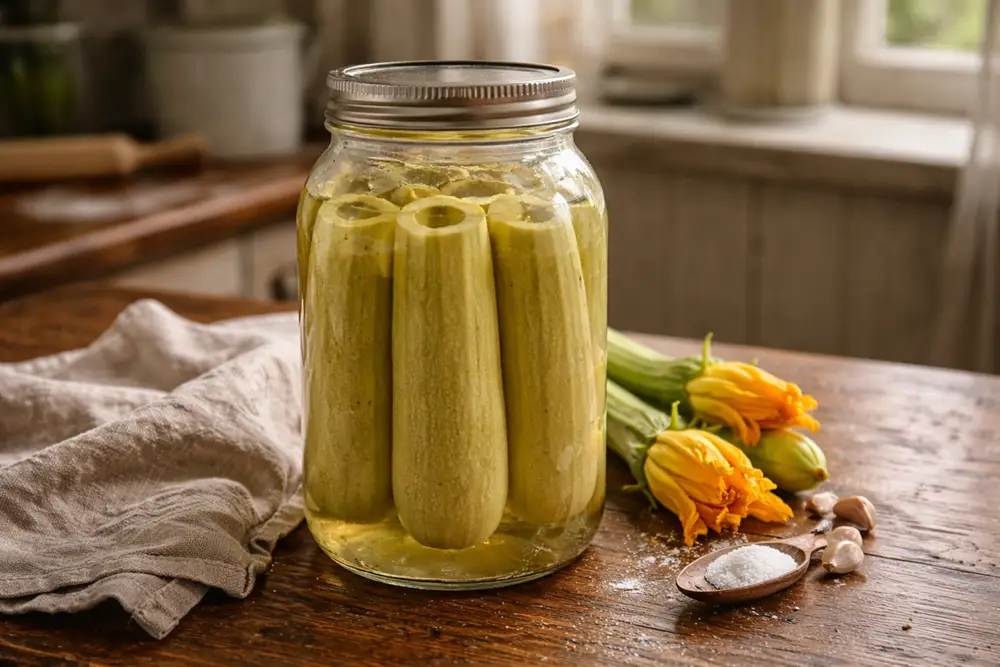
Preserved Zucchini for Stuffing
Hollowed young zucchini preserved in salt brine with nigella seeds — a traditional Central European pantry staple for winter stuffed dishes.
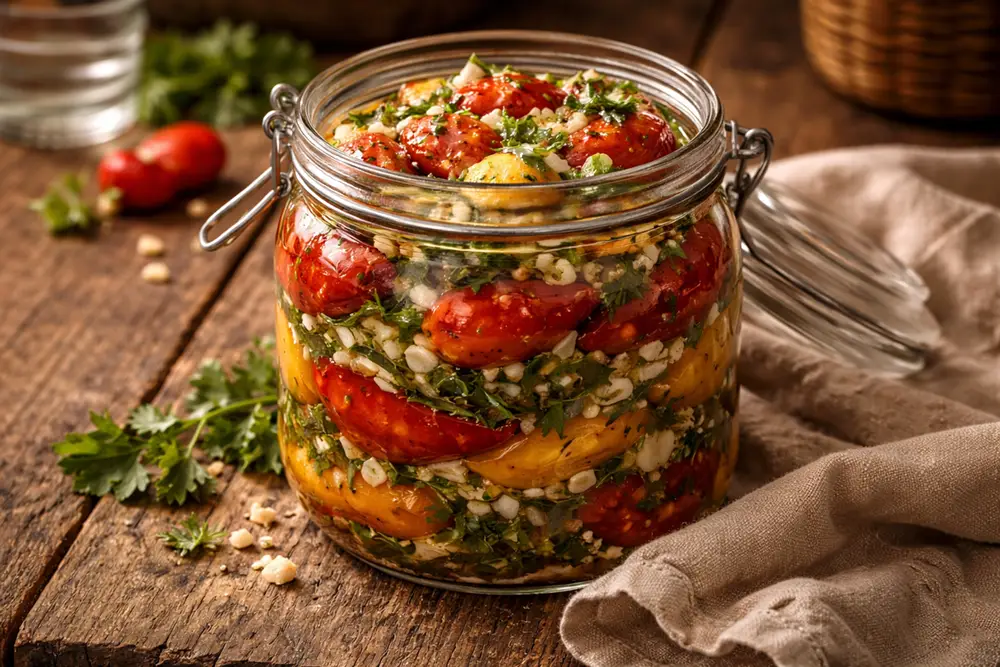
Fried Peppers in Oil and Vinegar
Pan-fried peppers layered with garlic, parsley, celery, and horseradish, then preserved in wine vinegar — a tangy, aromatic winter relish.
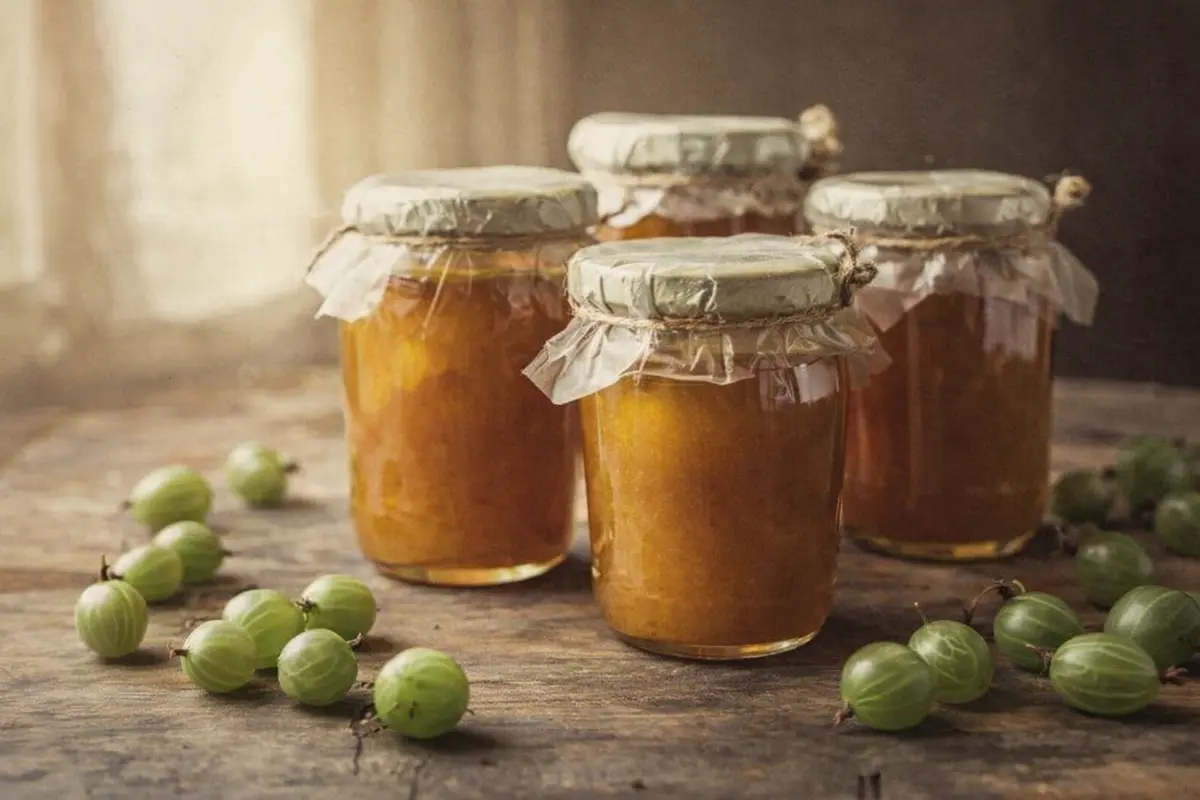
Gooseberry Marmalade
Traditional gooseberry preserve with precise two-stage cooking technique, strained for a smooth texture and perfect set.