Roasted Stuffed Pheasant
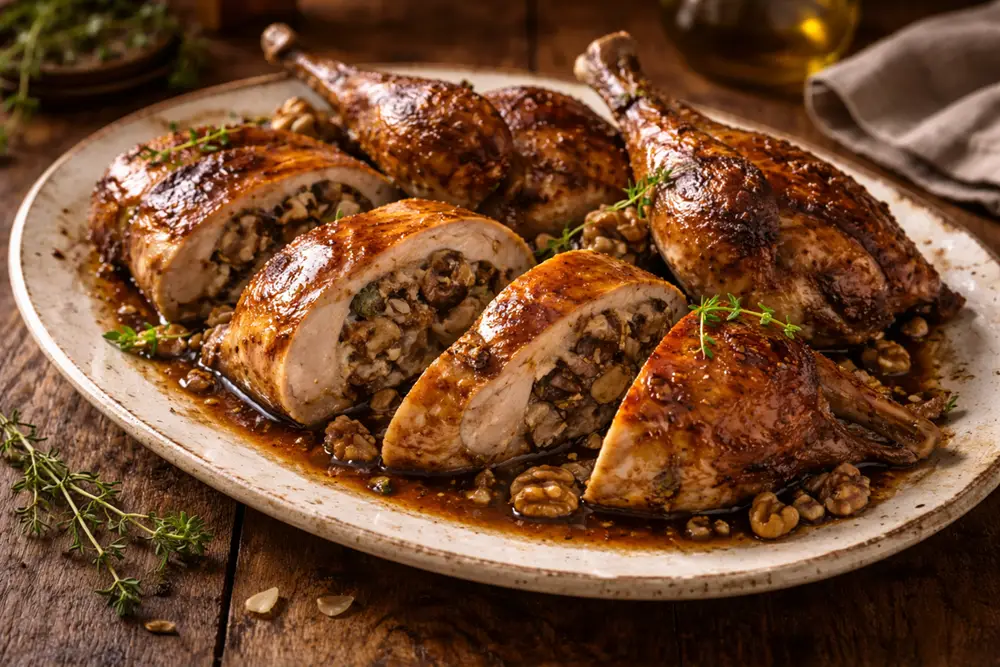
A whole pheasant stuffed with a pan-fried filling of bread, fresh mushrooms, bacon, walnuts, and white wine, roasted with butter and basted with pan juices.
Historical recipe
Modernised adaptation of an early 20th‑century source. Not independently kitchen-tested by Attic Recipes. Quantities, temperatures, and food safety guidance have been updated for a contemporary kitchen — results may vary and errors may exist. Nutritional values, where provided, are estimates only and have not been laboratory tested. Always follow current food safety guidelines for your region. If you have a health condition, allergy, or dietary requirement, consult a qualified professional before preparing this recipe.
Use of this recipe is entirely at your own risk and subject to our Terms of Service and Privacy Policy. Attic Recipes accepts no liability for any adverse outcome.
- Eggs
- Dairy
- Gluten
- Tree Nuts
- Sulphites
Additional notes
-
Warning
Poultry and game birds must reach an internal temperature of 74°C (165°F) at the thickest part of the thigh before serving. Use a meat thermometer — do not rely on colour or timing alone. Stuffed birds take longer to reach safe temperature than unstuffed; verify the stuffing temperature separately.
-
Warning
The stuffing contains raw eggs that are cooked inside the bird. Ensure the stuffing itself reaches 74°C (165°F) before serving. This dish is not suitable for pregnant women, children under 18, elderly individuals, or the immunocompromised unless internal temperature is confirmed.
-
Note
Contains sulphites from white wine. Individuals with sulphite sensitivity should substitute chicken stock or apple juice for the white wine in the stuffing.
- 1
Soak the 2 bread rolls in the 150ml whole milk for 10 minutes until fully saturated. Squeeze firmly to remove as much liquid as possible, then press through a fine-mesh sieve into a bowl. Discard the milk.
- 2
Heat a wide frying pan over medium heat. Add the 50g minced smoked bacon and fry for 2 minutes until the fat begins to render. Add the 150g finely chopped mushrooms, sieved bread, 15g chopped parsley, 30g grated walnuts, 2 tbsp white wine, 0.5 tsp salt, and 0.25 tsp black pepper. Fry over medium heat, stirring frequently, until the mushrooms have softened and all excess liquid has evaporated, approximately 8–10 minutes. Remove from heat and leave to cool completely to room temperature — at least 30 minutes.
Tip Do not add the eggs until the stuffing is fully cool. Warm stuffing will begin to cook the eggs before the bird goes into the oven. - 3
Once the stuffing is completely cool, add the 2 fresh eggs and mix thoroughly until fully incorporated.
- 4
Preheat the oven to 180°C (350°F) / 160°C fan. Rub the cavity and skin of the pheasant all over with the 1 tsp salt. Pack the stuffing firmly into the cavity where the giblets were. Do not overfill — leave a small gap at the opening to allow the stuffing to expand during roasting. Truss the opening closed with kitchen twine.
- 5
Place the stuffed pheasant breast-side up in a casserole dish. Add the 30g butter and 100ml water to the base of the dish. Cover with the lid or tightly with foil. Roast for 45 minutes, then remove the lid or foil and continue roasting for a further 20–30 minutes, basting the bird with the pan juices every 15 minutes.
Tip The pheasant is done when a meat thermometer inserted into the thickest part of the thigh (not touching bone) reads 74°C (165°F), and the juices run clear when the thigh is pierced. - 6
Remove the pheasant from the oven. Rest uncovered on a warm board for 10 minutes before carving. Cut into pieces, arrange on a warm serving platter with the stuffing alongside, and pour the pan juices over the top before serving.
Nutrition Information per 1 portion pheasant with stuffing (approx. 280g)
Nutritional values are approximate estimates and may vary based on specific ingredients used, preparation methods, and portion sizes.
Serving Suggestions
Serve with roasted root vegetables, braised red cabbage, or buttered egg noodles. Pour the pan juices over the carved meat at the table. A glass of dry white wine or a light Pinot Noir complements the gamey flavour of the pheasant and the earthiness of the mushroom stuffing.
About This Recipe
Pheasant is a bird that needs help in the oven. Its meat is lean, its skin is thin, and it has none of the self-basting fat that keeps a chicken moist through an hour of roasting. The answer in this recipe is threefold: a substantial stuffing that holds moisture from within, butter and water in the base of the casserole that generate steam around the bird, and frequent basting with the pan juices that builds up a lacquered, savoury skin as the roasting progresses.
The stuffing does considerable work. Bread soaked in milk and pressed through a sieve becomes the base — soft, neutral, absorbent. Into it go pan-fried mushrooms, minced smoked bacon, parsley, a small amount of grated walnuts, and white wine, all cooked together until the liquid is gone and the mixture is fragrant and dry. Two eggs bind it once it has cooled. It goes into the bird dense and compact, and comes out of the oven puffed, savoury, and deeply flavoured with the juices that have run down through it during roasting.
Home cooks of the period who made this dish were cooking seasonal game — pheasant in autumn and winter, when the bird was plentiful and the kitchen already smelled of roasting and basting.
Why It Works
Pre-cooking the stuffing before it goes into the bird is not an optional step. Raw mushrooms contain a large proportion of water which, if released inside the bird during roasting, would steam the stuffing from within and prevent it from developing any flavour. Frying the filling dry first means the moisture is gone before assembly, and the stuffing roasts rather than steams once inside the bird.
The cooling step before adding the eggs is equally important. Eggs added to a warm stuffing begin to coagulate immediately, which changes the texture of the filling and makes it harder to pack into the cavity evenly. A fully cooled stuffing mixed with raw eggs stays loose and pliable until it hits the heat of the oven.
Basting every 15 minutes does more than keep the surface moist — each application of hot pan juices slightly dehydrates the outer layer of skin, concentrating the proteins and sugars and building the browned, flavourful crust that develops over the final uncovered phase of roasting.
Modern Kitchen Tips
Wild pheasant, if available, will be smaller and more flavourful than farmed birds but will also be leaner and will cook faster. Reduce the uncovered roasting time to 15 minutes and check the internal temperature at 55 minutes total.
If a meat thermometer is not available, pierce the thickest part of the thigh with a skewer — the juices should run completely clear with no trace of pink.
Leftover stuffing that does not fit in the cavity can be formed into small balls and roasted alongside the bird in the final 20 minutes, basted with the same pan juices.
A classic of early 20th century Central European home cooking, preserved and adapted for the modern kitchen.
The Story Behind This Recipe
Historical Context
Early 20th century recipes for roasted stuffed pheasant left nearly all quantities to the cook's judgment — the bread rolls and wine were specified by count and spoon, while mushrooms, bacon, parsley, and walnuts were given only as handfuls or described as 'a little.' The stuffing technique of pan-frying the filling before it goes into the bird was standard practice in Central European game cookery of the period, ensuring the mushrooms released their moisture outside the oven rather than steaming the stuffing from within. Eggs were added only after cooling, which was understood rather than stated. The roasting instruction was simply 'bake in the oven and baste frequently with the pan juices' — no temperature, no time.
Modern Kitchen Adaptation
All stuffing quantities except bread rolls, eggs, and white wine are estimated based on the proportions implied by the recipe and marked accordingly: mushrooms at 150g (three handfuls), bacon at 50g, parsley at 15g, walnuts at 30g. Milk quantity for soaking is estimated at 150ml. Roasting butter and water are estimated at 30g and 100ml respectively. Oven temperature is estimated at 180°C (350°F) / 160°C fan, appropriate for a lean game bird of this size. Roasting time is estimated at 65–75 minutes total for an 800–1000g oven-ready pheasant, verified by internal temperature of 74°C (165°F) rather than by time alone. Covering the casserole dish for the first 45 minutes is a modern addition to compensate for the leanness of farmed pheasant, which has less fat than wild birds of the period.
This recipe is an independent modern adaptation developed from historical sources in the public domain. It is provided for informational and educational purposes only and does not constitute professional dietary, nutritional, or medical advice. Food preparation involves inherent risks. The reader assumes full responsibility for safe food handling, ingredient sourcing, and adherence to current local food safety guidelines. The site operator accepts no liability for outcomes resulting from the preparation or consumption of this recipe.
One recipe.
Every week.
You Might Also Like
More recipes from the same category
Baked Fish with Tomatoes
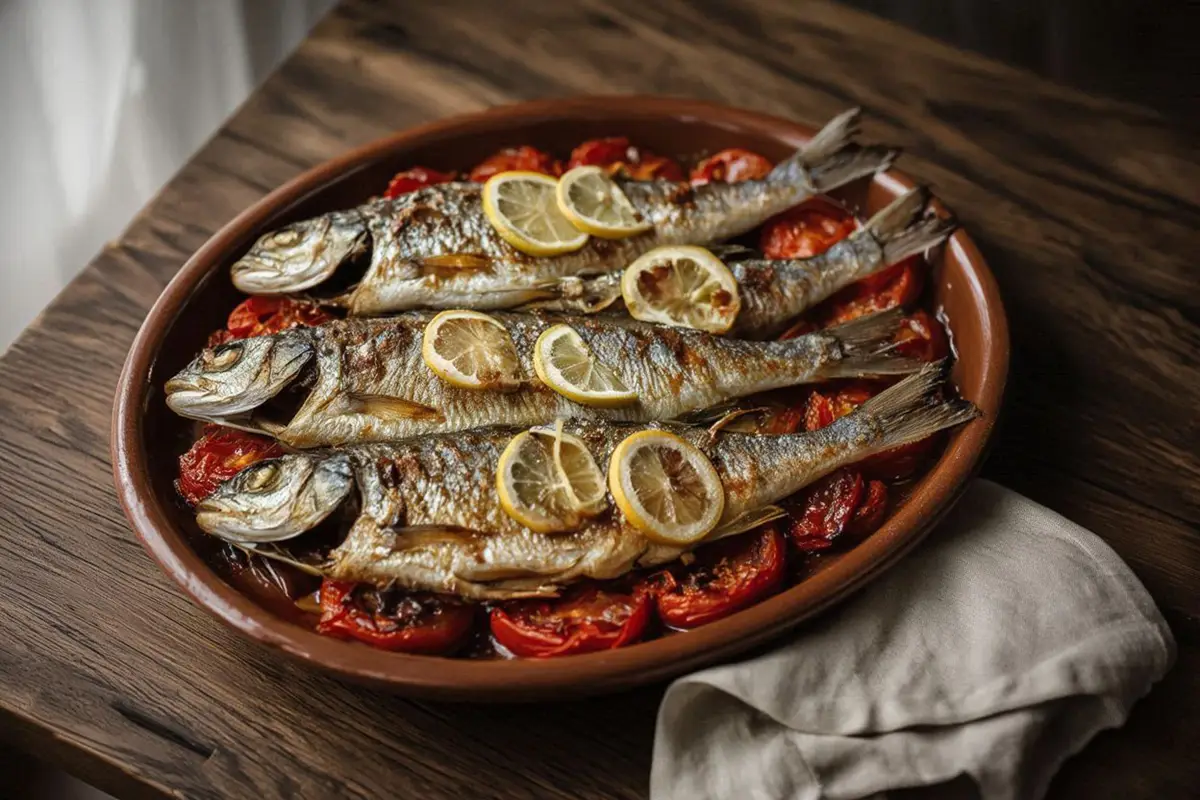
Whole fish baked over ripe tomatoes with generous olive oil and lemon — a simple, fragrant Central European oven dish.
Baked Tongue in Green Sauce
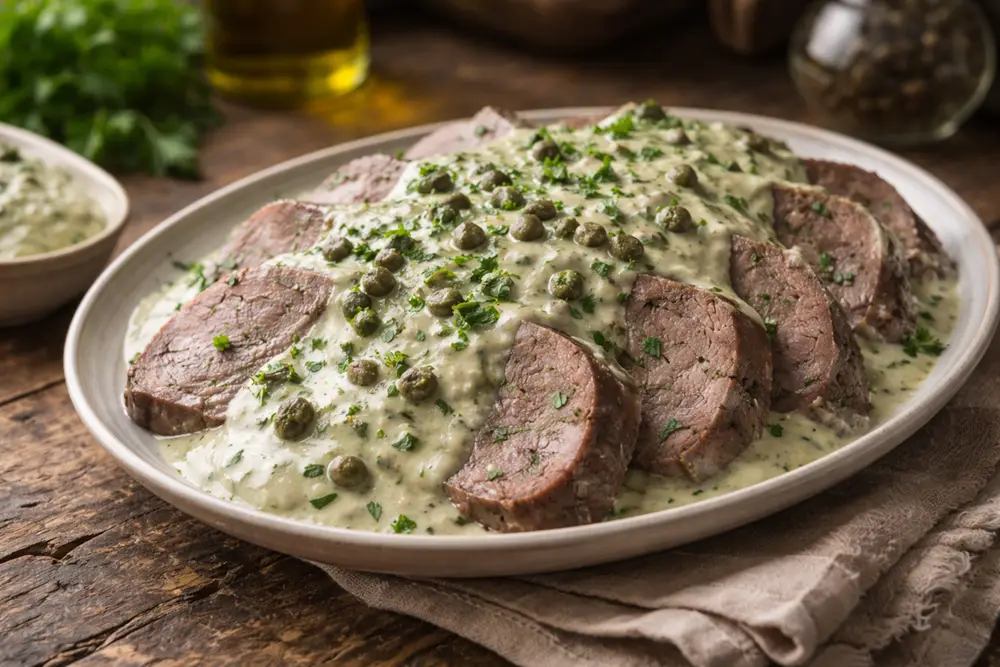
Beef tongue braised with herbs, larded with bacon and roasted until golden, served in a green sauce of capers, anchovy, parsley and sour cream.
Beef Kidney with Wine
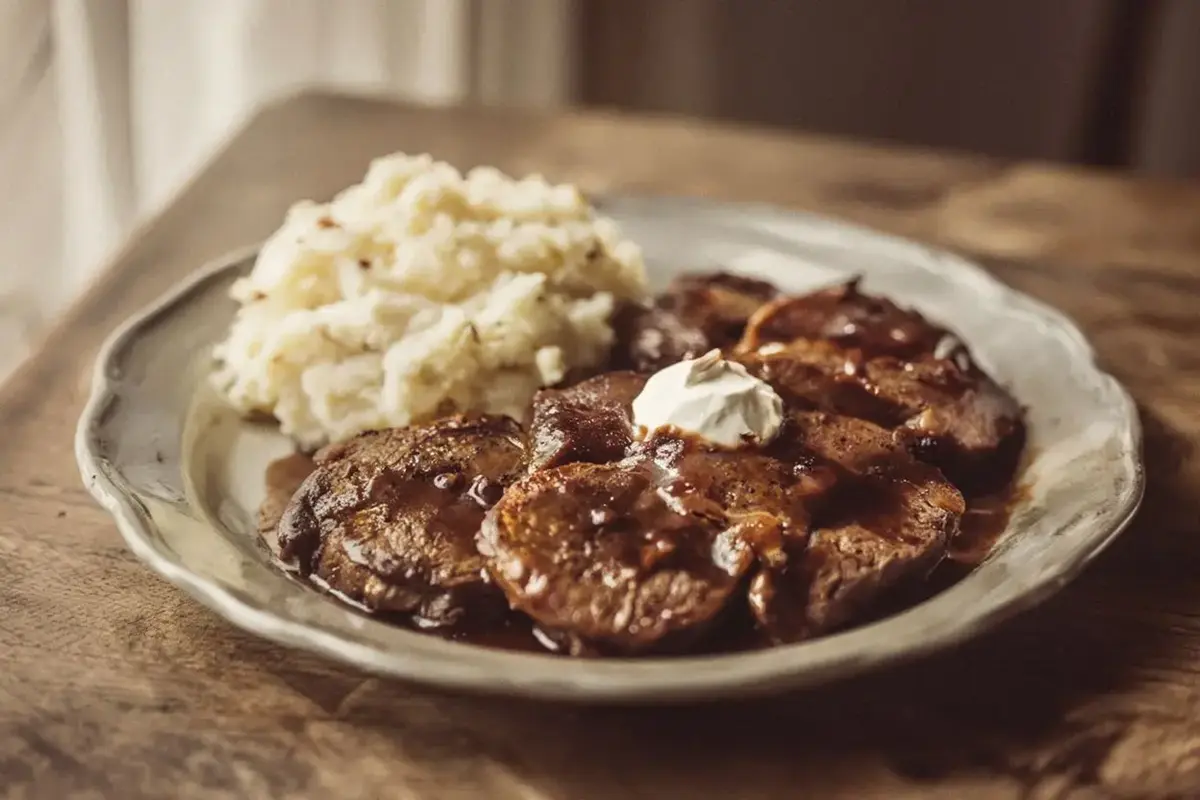
Beef kidney marinated in red wine, braised with herbs, finished with sour cream. Tender, rich, and deeply flavored.