Raspberry Bars with Chocolate Glaze
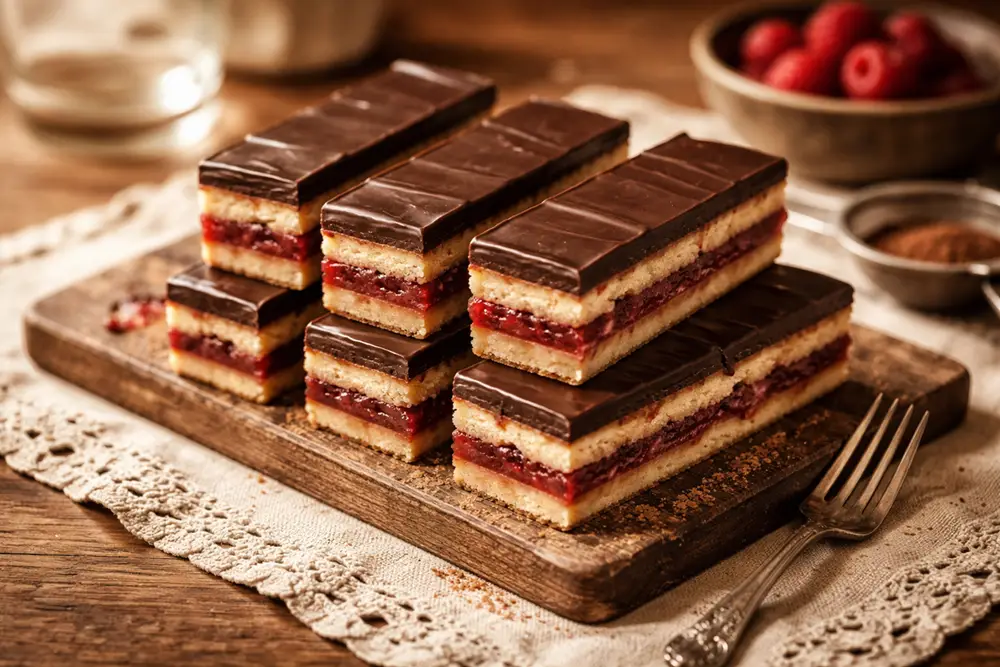
Crisp almond shortcrust stacked in three layers with raspberry jam and finished with a dark chocolate glaze — a classic Central European bar cookie.
Quick Summary
Crisp almond shortcrust stacked in three layers with raspberry jam and finished with a dark chocolate glaze — a classic Central European bar cookie.
This recipe uses How to Blanch Almonds: The Technique Behind the White Kernel — prepare it in advance if you haven't already.
Historical recipe
Modernised adaptation of an early 20th‑century source. Not independently kitchen-tested by Attic Recipes. Quantities, temperatures, and food safety guidance have been updated for a contemporary kitchen — results may vary and errors may exist. Nutritional values, where provided, are estimates only and have not been laboratory tested. Always follow current food safety guidelines for your region. If you have a health condition, allergy, or dietary requirement, consult a qualified professional before preparing this recipe.
Use of this recipe is entirely at your own risk and subject to our Terms of Service and Privacy Policy. Attic Recipes accepts no liability for any adverse outcome.
- Gluten
- Dairy
- Tree Nuts
Additional notes
-
Note
Each bar contains approximately 5g saturated fat. Those monitoring saturated fat intake — including individuals with cardiovascular conditions — should be mindful of portion size.
- 1
Beat 110g softened butter with 50g granulated sugar until pale and fluffy, about 3–4 minutes by hand or 2 minutes with a hand mixer.
Tip The butter must be genuinely soft — not melted, not fridge-cold. Press a finger in; it should yield without resistance. - 2
Stir in 50g ground almonds until evenly combined.
- 3
Add 185g flour in two additions, mixing gently after each. The dough is ready when it holds together cleanly when pressed — it should not stick to your hands. If it feels too crumbly, add 1 tsp cold water; if sticky, dust lightly with flour.
Tip Do not overwork. This is a shortcrust — minimal handling keeps it tender. - 4
Wrap the dough in cling film and rest in the fridge for 15 minutes. Preheat the oven to 180°C (350°F) / 160°C fan.
- 5
Divide the dough into 3 equal portions. On a lightly floured surface, roll each portion into a thin oblong strip, approximately 10 × 25 cm and 3–4 mm thick. Aim for all three strips to be as similar in size as possible.
Tip Cut around a paper template if uniformity matters to you — it makes assembly and slicing much cleaner. - 6
Line an inverted baking sheet with parchment paper. Transfer the dough strips onto it, spacing them slightly apart. Bake at 180°C for 12–14 minutes, until just barely golden at the edges and set in the centre. They should not colour deeply.
Tip Baking on an inverted sheet — the flat underside — eliminates raised edges that would distort the strips. This is the traditional technique and it works. - 7
Remove from the oven and let the strips cool on the baking sheet for 10 minutes. They will firm up as they cool — do not attempt to move them while warm.
- 8
Place the first cooled strip on a flat board or serving plate. Spread half of the 200g raspberry jam evenly to the edges. Place the second strip on top and spread the remaining jam. Top with the third strip, pressing gently to level.
- 9
Melt 100g dark chocolate with 15g butter and 10ml vegetable oil in a heatproof bowl set over barely simmering water (or microwave in 30-second bursts, stirring between each). Stir until completely smooth and glossy.
- 10
Pour the warm chocolate glaze over the top layer and spread it quickly and evenly with a palette knife or the back of a spoon. Tilt the board slightly to encourage it toward the edges.
Tip Work fast — the glaze sets quickly. A single, confident pass gives the cleanest result. - 11
Leave the glazed pastry at room temperature for 90 minutes, or refrigerate for 30 minutes, until the chocolate is fully set and does not yield to a light finger-press.
- 12
Trim the rough edges with a sharp, thin knife. Then slice into narrow bars, approximately 2–2.5 cm wide. Wipe the knife blade clean between cuts to prevent chocolate from cracking and dragging.
Tip For the cleanest cuts, warm the knife briefly under hot water and dry it before each slice.
Nutrition Information per 1 bar (approx. 35g)
Nutritional values are approximate estimates and may vary based on specific ingredients used, preparation methods, and portion sizes.
Serving Suggestions
Serve at room temperature alongside coffee or tea. These bars keep well in a covered tin at room temperature for up to 4 days, or refrigerated for up to a week — though they are best the day after assembly, once the jam has softened the crust slightly.
About This Recipe
There is something quietly precise about this bar cookie. Three identical strips of almond shortcrust, baked flat on an inverted baking sheet — a technique that appears in Central European home baking manuals from the early 1900s — layered with raspberry jam and finished with a poured chocolate glaze. The result is sliced into narrow bars, which is where the name stanglice comes from: little rods, little bars.
The dough is richer than it looks. Ground almonds replace a portion of the flour, which keeps the crumb short and slightly moist even after baking. The raspberry jam provides the necessary acidity — without it, the butter and chocolate would read as dense and one-note. The chocolate glaze, once set, cracks cleanly under a sharp knife, giving each bar that satisfying visual contrast between the dark top, the red middle, and the pale crust beneath.
These are the kind of pastry that appear on every holiday table without fanfare, made the day before and kept in a tin. They are not difficult. They require patience at two moments: waiting for the baked strips to cool before assembly, and waiting for the glaze to fully set before cutting. Both waits are worth it.
Why It Works
The decision to bake on an inverted baking sheet is not an accident. A standard sheet has raised edges that trap steam and prevent the dough from drying evenly at the sides. Inverting it gives you an entirely flat surface with open edges, producing a crispier, more uniform result — particularly important here, since the three strips must be flat enough to stack without wobbling.
Ground almonds in shortcrust dough do two things: they interrupt the gluten network (keeping the texture short and tender) and they add fat, which means the dough needs slightly less butter than an all-flour version while still achieving the same richness. The ratio here — 50g almonds to 110g butter and 185g flour — lands in the range that is firm enough to roll thin but relaxed enough to not shatter when sliced.
The addition of oil and butter to the chocolate glaze is the key to cutting cleanly. Straight melted chocolate sets too rigid and tends to crack when a knife passes through. A small amount of fat — butter for flavour, oil for fluidity — keeps the glaze at a consistency that yields cleanly rather than fracturing across the surface.
Modern Kitchen Tips
Let the dough rest in the fridge before rolling — even 15 minutes makes a significant difference in how it handles. Cold fat is slower to melt into the flour, which means the dough relaxes rather than tearing when you roll it thin.
If your three strips come out slightly uneven, trim them with a knife before assembling. The final cut into bars will expose the edges anyway, and clean layers matter more than you might expect.
For the cleanest chocolate cuts, run a long, thin knife under hot water, wipe it dry, and slice in a single downward motion. Do not saw. Repeat the hot-water step between each cut.
The bars improve overnight. The jam gradually softens the crust from the inside, and the flavours — butter, almond, raspberry, dark chocolate — settle into something more coherent than they are on day one.
A classic of early 20th century home cooking, preserved and adapted for the modern kitchen.
The Story Behind This Recipe
Historical Context
Early 20th century home baking manuals from the Central European region frequently featured this style of layered shortcrust bar — butter-rich, almond-enriched dough baked in flat strips, assembled with fruit preserves, and finished with chocolate. The instruction to bake on an inverted baking sheet is period-original, a practical technique for producing flat, even pastry without a raised tin edge. The quantity of flour was left open in early versions — home cooks were expected to judge dough consistency by hand, a skill so assumed it required no elaboration. Raspberry jam was the standard filling of choice, its acidity cutting the richness of both the almond crust and the chocolate glaze.
Modern Kitchen Adaptation
The flour quantity has been standardised to approximately 185g, which produces a workable shortcrust at the given butter-to-almond ratio; the original instruction simply read 'enough flour to form a crust.' A short refrigerator rest for the dough has been added — not specified in period versions, but it reduces shrinkage during baking and makes rolling significantly easier. The chocolate glaze in the original was not detailed beyond 'pour chocolate glaze on top'; the version here adds a small quantity of butter and neutral oil to improve spreadability and achieve a clean cut without cracking. Vegetable oil can be replaced with coconut oil for a slightly different gloss and a faint coconut note.
This recipe is an independent modern adaptation developed from historical sources in the public domain. It is provided for informational and educational purposes only and does not constitute professional dietary, nutritional, or medical advice. Food preparation involves inherent risks. The reader assumes full responsibility for safe food handling, ingredient sourcing, and adherence to current local food safety guidelines. The site operator accepts no liability for outcomes resulting from the preparation or consumption of this recipe.
One recipe.
Every week.
You Might Also Like
More recipes you'll enjoy
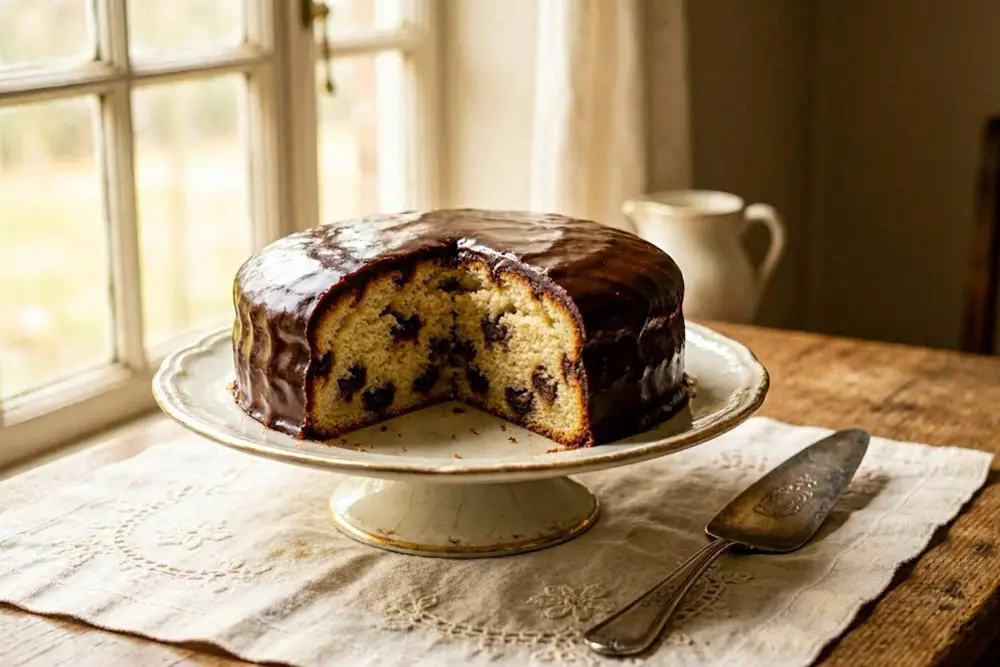
Snow Cake with Chocolate
Flourless almond meringue cake with dark chocolate, candied orange peel, and a poured chocolate glaze — light as snow, rich as the season.
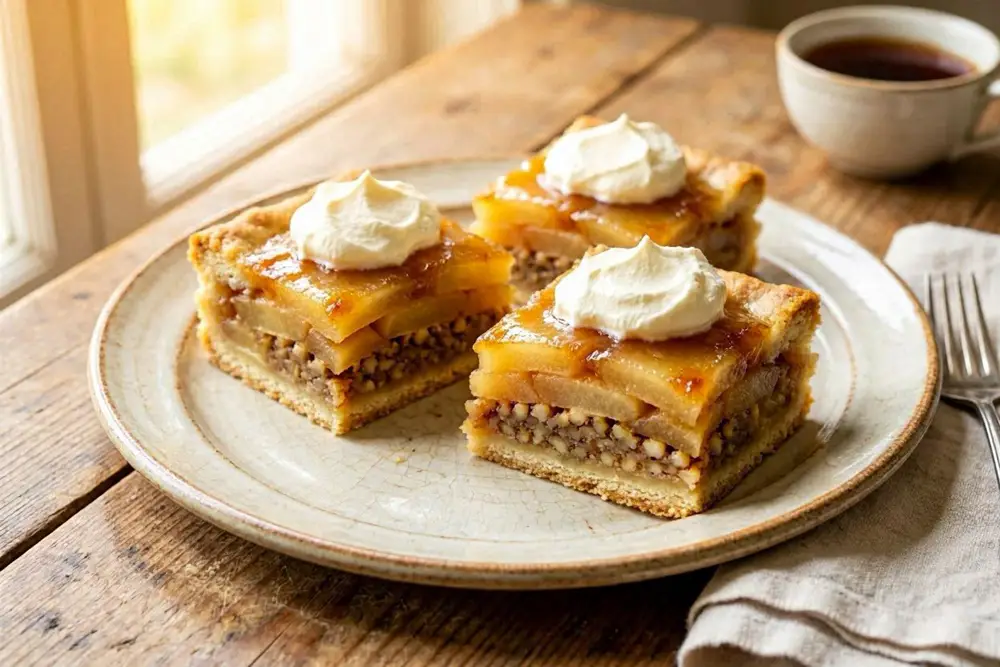
Apple Pie with Whipped Cream
A crisp almond shortcrust base layered with ground walnuts, poached apples, apricot jam, and a thick cloud of sweetened whipped cream.
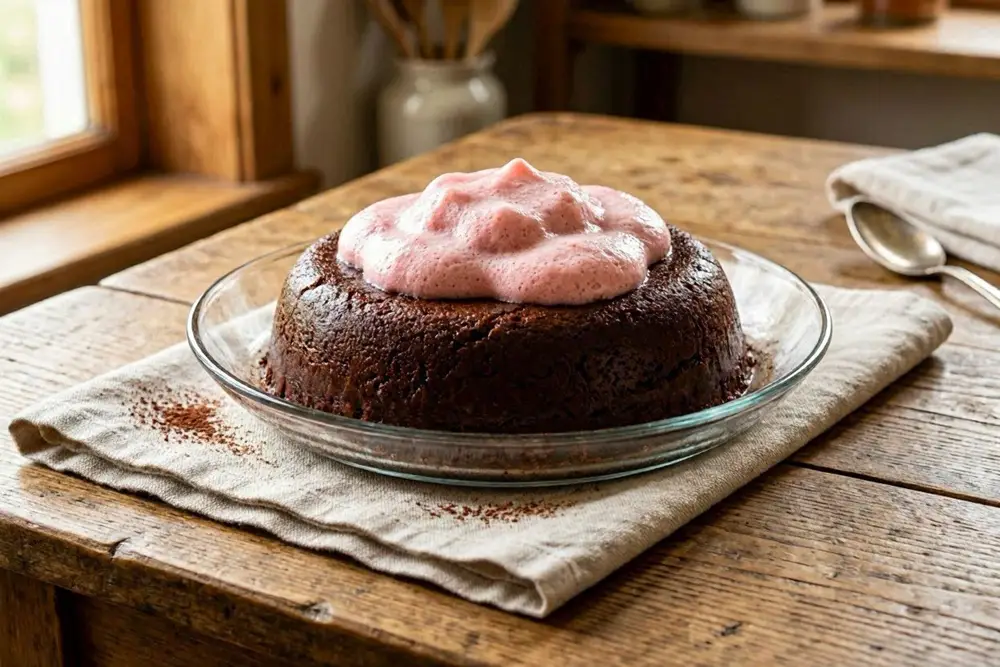
Cold Chocolate Koh with Strawberry Foam
A flourless steamed chocolate pudding with ground almonds and egg whites, served cold beneath fresh strawberry foam — an early twentieth century classic.