Queen's Torte (Caramelized Walnut Cake with Vanilla Custard Cream)
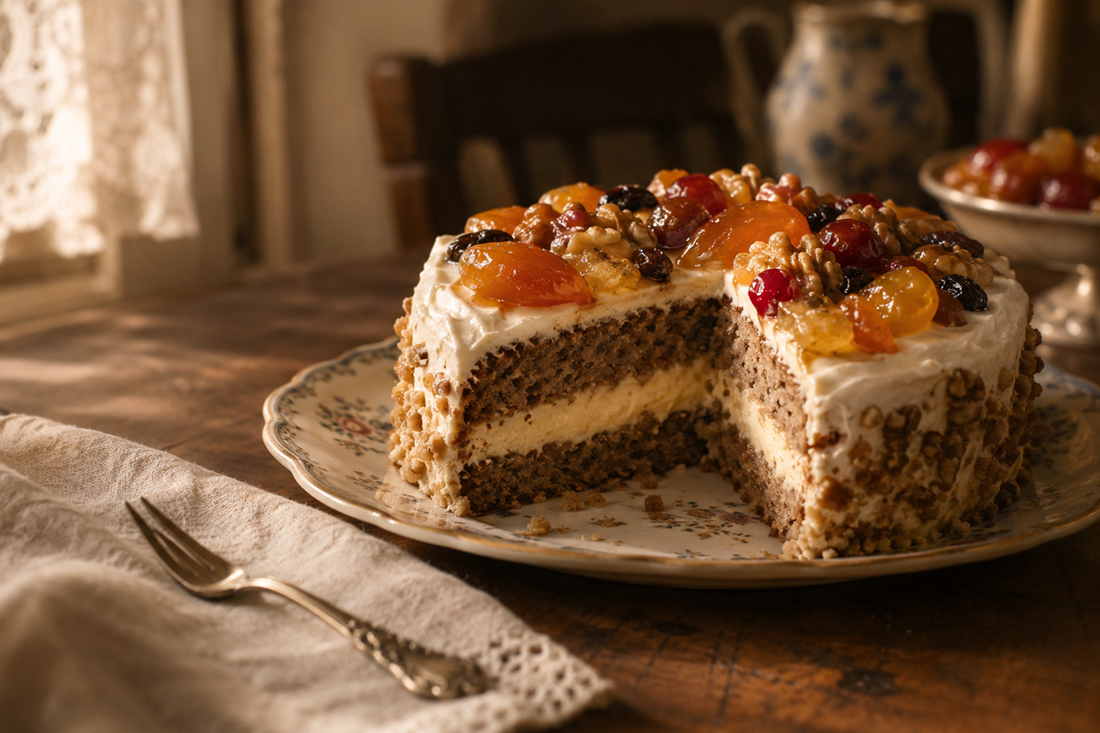
A dense caramelized walnut cake layered with a silky vanilla custard cream, stabilized with gelatin for clean slices. A showstopping celebration torte.
Quick Summary
This torte layers a caramelized walnut praline cake with a vanilla custard cream set with gelatin and whipped cream. The caramel-nut base gives a deep toasted flavor, while the filling stays firm enough to slice cleanly. A rich, make-ahead dessert suited to celebrations.
Historical recipe
Modernised adaptation of an early 20th‑century source. Not independently kitchen-tested by Attic Recipes. Quantities, temperatures, and food safety guidance have been updated for a contemporary kitchen — results may vary and errors may exist. Nutritional values, where provided, are estimates only and have not been laboratory tested. Always follow current food safety guidelines for your region. If you have a health condition, allergy, or dietary requirement, consult a qualified professional before preparing this recipe.
Use of this recipe is entirely at your own risk and subject to ourTerms of Service andPrivacy Policy. Attic Recipes accepts no liability for any adverse outcome.
- Eggs
- Dairy
- Gluten
- Tree Nuts
- Sulphites
Additional notes
Warning
The dry caramel reaches very high temperatures and can cause severe burns on contact with skin. Keep children away from the stove during this step and handle the hot caramel and praline with care.
Note
This is a rich, high-calorie dessert with significant sugar, fat, and cholesterol per serving. Pregnant women, young children, older adults, and immunocompromised individuals should enjoy it in moderation.
Note
Contains tree nuts (walnuts). Not suitable for anyone with a nut allergy.
Note
Candied fruit is often preserved with sulphites. Check the label if you're sensitive to sulfites, or omit the garnish.
- 1
Put 140g sugar in a dry saucepan over medium heat. Let it melt and cook, swirling occasionally, until it turns a deep amber-brown caramel.
TipWork over medium heat, not high — dry caramel goes from amber to burnt very quickly. - 2
Off the heat, immediately stir the 800g ground walnuts into the caramel until evenly coated.
TipMove fast here — the caramel starts to set as soon as it cools. - 3
Pour the walnut-caramel mixture onto a lightly moistened marble slab, heatproof tray, or parchment-lined sheet. Spread it out thin and let it cool completely to room temperature.
- 4
Once fully cooled and hardened, break the praline into pieces and grind it fine in a food processor (or pound in a mortar), then pass through a coarse sieve. Set aside.
TipChill the broken praline in the fridge for 10–15 minutes before processing — cold caramel is brittle and grinds much more evenly than caramel at room temperature. - 5
Preheat the oven to 180°C (350°F) / 160°C fan. Grease the springform pan with the 15g butter, then dust with the 1 tbsp flour, tapping out the excess.
- 6
Beat the 6 egg yolks with 80g sugar until pale, thick, and doubled in volume.
- 7
Fold the ground walnut-caramel praline into the yolk mixture until evenly combined.
- 8
In a clean, dry bowl, whip the 6 egg whites to stiff peaks. Fold them into the batter in two or three additions, working gently to keep the volume.
- 9
Pour the batter into the prepared pan and bake for 35–40 minutes, until set and a toothpick comes out clean. Cool in the pan for 10 minutes, then turn out onto a rack to cool completely.
- 10
Meanwhile, make the filling: whisk the 5 egg yolks and 1 whole egg with 100g sugar until pale.
- 11
Whisk in the 250ml milk, the scraped vanilla seeds, and 20g flour until completely smooth with no lumps.
- 12
Set the bowl over a pot of gently simmering water (bain-marie) and cook, stirring constantly, until the custard thickens enough to coat the back of a spoon.
TipAim for around 74°C (165°F) and keep the heat gentle — direct high heat will curdle the egg yolks. - 13
Remove the custard from the heat and stir occasionally as it cools to room temperature.
TipPress plastic wrap directly onto the surface to stop a skin from forming. - 14
Soak the 2 gelatin sheets in cold water for 5 minutes, squeeze out the excess water, then melt gently (a few seconds in the microwave or over very low heat). Stir the melted gelatin into the cooled custard.
- 15
Whip the 125ml heavy cream to soft peaks and fold it into the custard until smooth and airy.
- 16
Once the cake is completely cool, slice it horizontally into two even layers. Spread about a third of the cream filling over the bottom layer and set the top layer back in place. Spread the remaining cream over the top and sides of the cake, smoothing evenly.
TipThe cake is layered and coated, not hollowed out — all the filling goes between the two layers and over the outside. - 17
Chill the assembled cake for at least 4 hours, or overnight, until the gelatin sets the filling firm enough to slice cleanly.
- 18
Decorate generously with the candied fruit just before serving.
Nutrition Informationper 1 slice (approx 140g)
Nutritional values are approximate estimates and may vary based on specific ingredients used, preparation methods, and portion sizes.
Serving Suggestions
Serve chilled or at cool room temperature, in thin slices, with coffee or a glass of dessert wine.
About This Recipe
This torte builds its flavor from the base up: sugar is caramelized dry, then worked directly into ground walnuts while still hot, so the nuts toast and take on the caramel’s color and bitterness before they ever go into the batter. That praline base is then folded into a yolk-and-whipped-egg-white sponge, giving the cake its dense, nutty crumb without any flour in the cake itself.
Once baked and cooled, the cake is split and filled with a vanilla custard cream lightened with whipped cream and set with gelatin — enough structure to hold a clean slice, but still soft and spoonable. The same cream coats the top and sides before a generous topping of candied fruit finishes it off.
It’s a project cake, with several components to make and cool in sequence, but each step is straightforward on its own, and the torte keeps well chilled for a day or two — making it a good make-ahead choice for a gathering.
Why It Works
Caramelizing the sugar before adding the walnuts does two things: it drives off moisture from the sugar so the nut-caramel mixture hardens into a brittle praline rather than staying sticky, and it adds the deep, faintly bitter notes of caramelization that raw sugar and raw nuts alone wouldn’t produce. Grinding that praline fine — easier when it’s cold and brittle rather than at room temperature — distributes toasted flavor evenly through the whole cake rather than leaving pockets of nuts and caramel.
The custard filling relies on egg yolks and flour for body, the way pastry cream was made before cornstarch became standard, then gets extra lift from whipped cream and enough structure from gelatin to hold its shape between two cake layers and around the outside. That combination is what lets the finished torte be sliced cleanly instead of oozing filling.
Modern Kitchen Tips
- Chill the walnut-caramel praline in the fridge for about 10–15 minutes before grinding — cold caramel is brittle and processes into an even, fine texture, while room-temperature caramel turns gummy and clumps in the blades.
- Make the custard filling and bake the cake the day before assembling; both need to be fully cool, and starting cold makes spreading much easier.
- Do a thin “crumb coat” of cream over the cake first if you want an especially smooth finish, then chill briefly before the final coat.
A classic of early 20th century home cooking, preserved and adapted for the modern kitchen.
The Story Behind This Recipe
Historical Context
Caramelizing sugar with ground walnuts before working it into a cake batter was a common technique in early 20th century home baking, producing a deeper, toasted nut flavor than folding raw ground nuts directly into the batter. Custard fillings lightened with whipped cream and set with gelatin were a period solution for a cream rich enough to spread thickly yet firm enough to hold clean slices without refrigeration as reliable as today's.
Modern Kitchen Adaptation
The custard is thickened with a high-protein 'sharp' flour rather than cornstarch, which was the standard approach before cornstarch was common in home kitchens; cornstarch can be substituted in the same 20g amount, though the texture will be slightly less structured. The recipe as written requires cracking 12 eggs in total but only uses 7 of the whites (6 in the cake, 1 from the whole egg in the filling) — the 5 remaining whites from the filling's yolks are not used and are worth setting aside for meringues or another recipe rather than discarding. No oven temperature was given originally; 180°C (350°F) is a standard estimate for a yolk-and-nut sponge of this density. Powdered gelatin (about 2 tsp / 5.5g, bloomed in 2 tbsp cold water) can substitute for the 2 gelatin sheets if that's what's on hand.
This recipe is an independent modern adaptation developed from historical sources in the public domain. It is provided for informational and educational purposes only and does not constitute professional dietary, nutritional, or medical advice. Food preparation involves inherent risks. The reader assumes full responsibility for safe food handling, ingredient sourcing, and adherence to current local food safety guidelines. The site operator accepts no liability for outcomes resulting from the preparation or consumption of this recipe.
One recipe.
Every week.
You Might Also Like
More recipes you'll enjoy
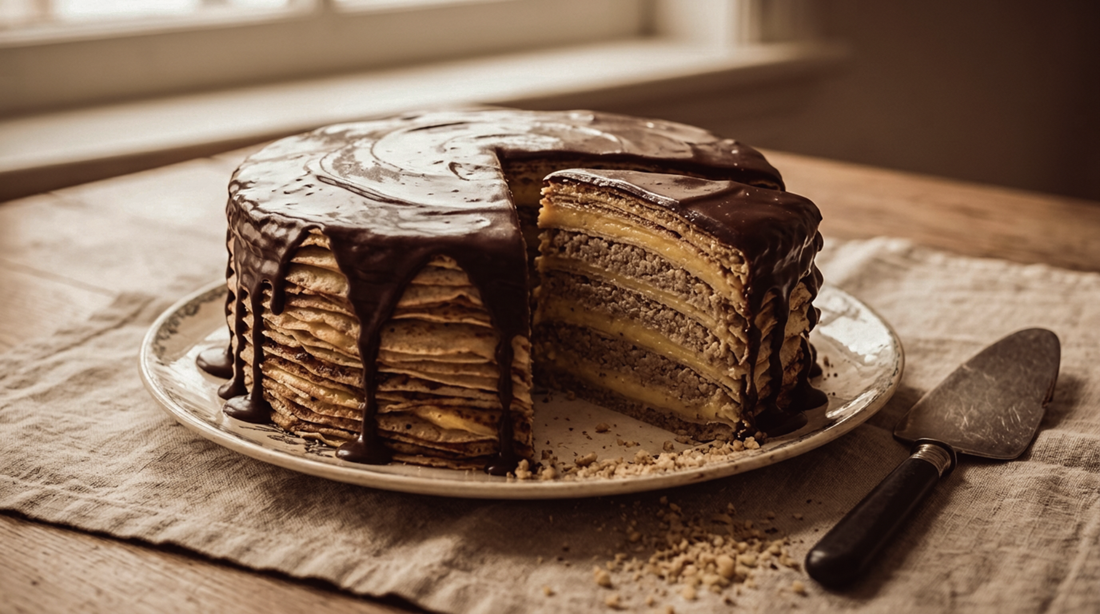
Walnut and Custard Crêpe Torte
Sixteen crêpes layered with a baked vanilla custard filling, walnuts, and biscuit crumbs, then glazed with chocolate for a rich, sliceable torte.
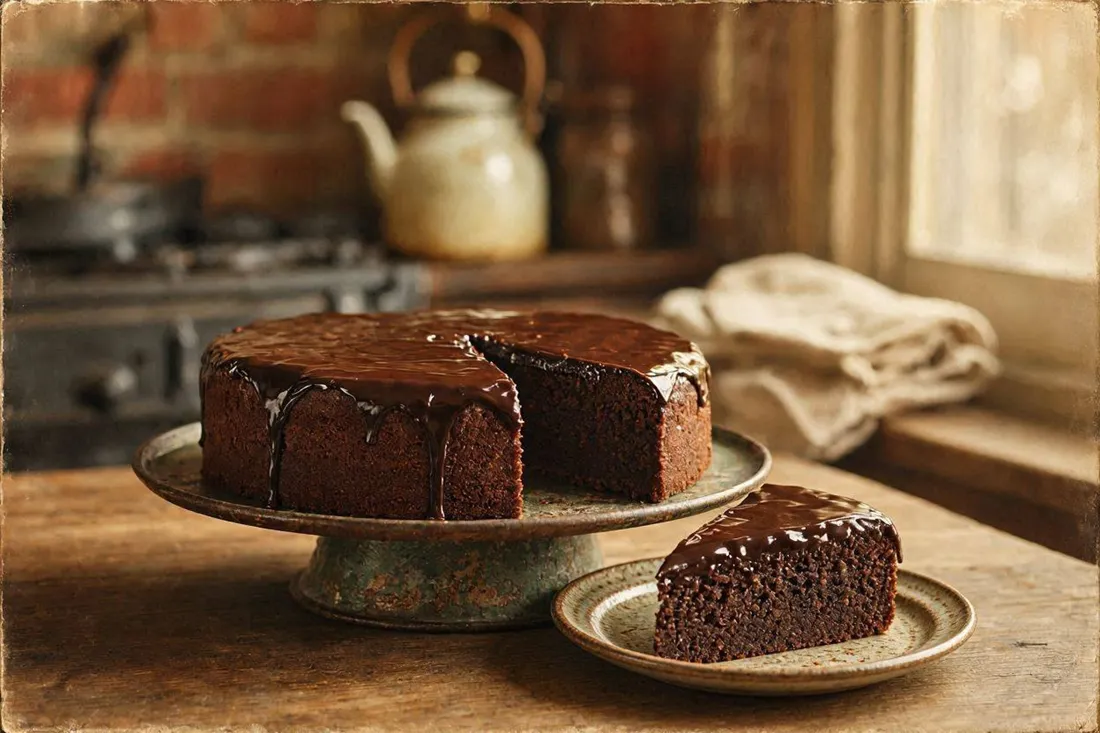
Flourless Chocolate Almond Torte
A rich, dense torte of whipped egg yolks, grated chocolate, and ground almonds, lightened with egg whites and finished with a glossy chocolate glaze.
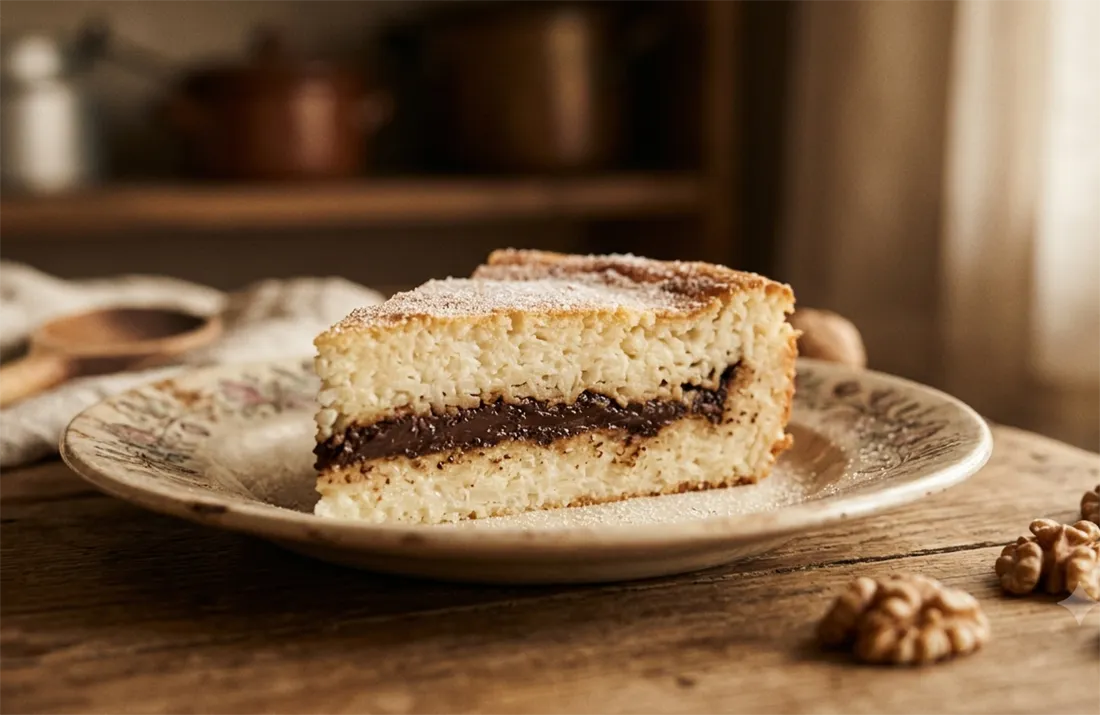
Baked Rice Pudding with Rum and Chocolate
Rice cooked in a citrus-rum syrup, layered with walnuts and grated chocolate, then baked under a golden egg white glaze.