Preserved Zucchini for Stuffing
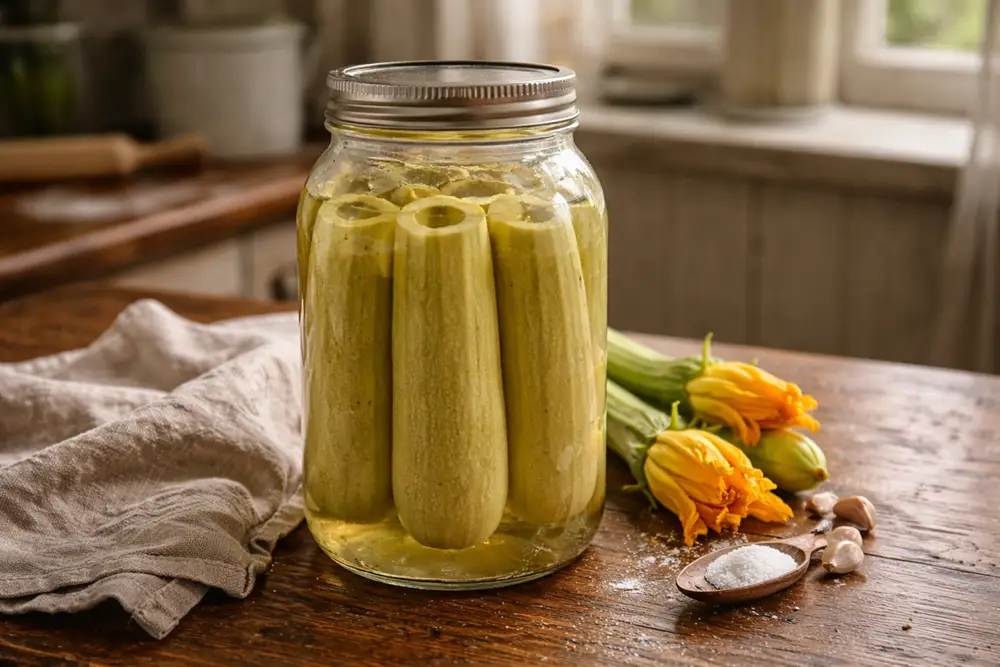
Hollowed young zucchini preserved in salt brine with nigella seeds — a traditional Central European pantry staple for winter stuffed dishes.
Historical recipe
Modernised adaptation of an early 20th‑century source. Not independently kitchen-tested by Attic Recipes. Quantities, temperatures, and food safety guidance have been updated for a contemporary kitchen — results may vary and errors may exist. Nutritional values, where provided, are estimates only and have not been laboratory tested. Always follow current food safety guidelines for your region. If you have a health condition, allergy, or dietary requirement, consult a qualified professional before preparing this recipe.
Use of this recipe is entirely at your own risk and subject to our Terms of Service and Privacy Policy. Attic Recipes accepts no liability for any adverse outcome.
Additional notes
-
Warning
This is a low-acid vegetable preserve (zucchini pH ~6). Water-bath processing at 100°C does not reach temperatures sufficient to destroy Clostridium botulinum spores in low-acid foods. Store only in a cool, dark environment below 15°C and consume within 3 months. Discard without tasting if the lid is not vacuum-sealed on opening, if the brine is cloudy or discolored beyond a slight natural haze, or if there is any off odor. Do not store at room temperature. This risk applies to all individuals, including children under 18, pregnant women, elderly individuals, and immunocompromised individuals — these groups should exercise particular caution with any home-preserved low-acid vegetables.
For the safest home preservation, use the freezer method described in Modern Kitchen Tips: blanch, cool, and freeze in food-safe bags or rigid containers. No botulism risk, no desalting required, and zucchini keep for up to 12 months.
-
Note
Sodium content before desalting is significantly higher than the per-serving nutrition estimate, which reflects sodium remaining after multiple soakings. Individuals on sodium-restricted diets should soak thoroughly and taste before use. This applies particularly to children, elderly individuals, and those managing hypertension or kidney conditions.
- 1
Wash the zucchini thoroughly. Using a vegetable peeler or paring knife, lightly scrape the skin smooth — remove any rough patches but keep the skin intact. Cut off the stem end to create a flat opening. Using the handle of a long teaspoon, carefully hollow out each zucchini, rotating as you work. Remove the core and seeds entirely, leaving walls approximately 5mm thick. Do not puncture the closed bottom end. Wash the hollowed zucchini under cold running water, letting water run through the cavity.
Tip Test wall thickness by pressing gently from outside — you should feel resistance but slight give. If you can see your fingers through the wall, it is too thin. - 2
Stand the hollowed zucchini upright in the clean jar, cavity-side up, leaving space between each one — they should not press against each other. Pour cold water into the jar until the zucchini are covered and floating slightly. Pour this measured water out into a saucepan and note the volume. This is your brine base.
- 3
Add the salt to the measured water. Bring to a rapid boil, stirring to dissolve the salt completely. Remove from heat and add the nigella seeds. Allow the brine to cool completely to room temperature before using — this is essential to prevent thermal shock to the jar and to the zucchini structure.
Tip Speed cooling by setting the saucepan in a basin of cold water. - 4
Pour the fully cooled brine over the zucchini in the jar. The zucchini should float with visible space between them and the top of the jar. Do not pack them in — this gap is not wasted space, it is necessary for even brine circulation and to allow for slight expansion during processing.
- 5
Seal the jar with its lid — finger-tight, not overtightened. Line the bottom of a large deep pot with a folded kitchen towel or a layer of straw. Place the sealed jar inside, ensuring it sits firmly upright. Fill the pot with cold water up to the neck of the jar (not over the lid). Bring to a boil and process for 10 to 15 minutes from the moment boiling begins.
Tip If processing multiple jars, ensure none touch each other during processing. - 6
Remove the pot from heat. Leave the jar in the water as it cools — do not lift it out while hot. The next day, once the water is fully cold, remove the jar, wipe the exterior clean, and check the seal. Store in a cool, dark place (cellar or larder, below 15°C) for up to 3 months.
- 7
Before using: remove the zucchini from the brine and soak in several changes of cold water for at least 1 hour, tasting periodically, until the salt level is acceptable. Because the preserved zucchini will soften quickly once heated, the filling must be fully cooked and well browned before stuffing. After stuffing, heat the zucchini only until warmed through — bake at 180°C (350°F) for 15 to 20 minutes, or pan-finish gently.
Nutrition Information per 1 preserved zucchini (approx. 130g after processing)
Nutritional values are approximate estimates and may vary based on specific ingredients used, preparation methods, and portion sizes.
Serving Suggestions
Use as the vessel for any cooked meat or vegetable stuffing — rice and minced meat (ćufte), mushroom and buckwheat, or a simple egg and cheese filling. Because the zucchini have already been partially softened by the brine and processing, they require only brief final heating. Serve alongside sour cream, a thin tomato sauce, or pan juices from the stuffing.
About This Recipe
Before the year-round produce supply that supermarkets now take for granted, the end of zucchini season was a genuine culinary problem. Young summer squash — tender enough to hollow cleanly, with walls that hold their shape through cooking — simply did not exist in Central European markets or gardens once autumn arrived. The solution was to hollow them at peak season, preserve them in salt brine, and pull them from the cellar through winter as needed, ready to receive whatever stuffing the household had on hand.
This recipe follows that tradition closely. The technique is straightforward but requires attention: the hollowing must be done without puncturing the base, the brine must be cooled completely before pouring, and the zucchini must float freely in the jar rather than being packed in. These are not decorative details — each one affects the final texture and safety of the preserve.
The nigella seeds contribute a faint warmth and slight bitterness to the brine that carries through into the finished dish, complementing meat and rice fillings in particular. They are not incidental to the flavor; they are part of it.
Why It Works
Salt brine preserves by drawing moisture from the vegetable tissue through osmosis, which simultaneously firms the cell walls and creates an environment hostile to spoilage organisms. At 2% concentration — 20g of salt per liter of water — the brine is strong enough to inhibit most bacterial growth without making the zucchini unpleasantly salty after soaking. Lower concentrations were common in older recipes and carry higher risk; higher concentrations require more soaking and can leave the texture rubbery.
Water-bath processing creates a partial vacuum as the jar cools, which prevents recontamination from the environment. For acid-preserved foods (tomatoes, vinegar pickles), this is sufficient for long-term shelf stability. Zucchini are low-acid vegetables, which means water-bath processing alone cannot guarantee safety beyond a few months in a cold cellar. The freezer method avoids this limitation entirely: frozen at -18°C, there is no risk of bacterial growth and the texture, once blanched and cooled, holds well for up to a year.
Modern Kitchen Tips
Freezer method (recommended): Hollow the raw zucchini as described. Blanch in lightly salted boiling water for 2 minutes. Transfer immediately to ice water to stop cooking, then drain and pat completely dry. Freeze flat in zip-lock bags, squeezing out as much air as possible, or in rigid freezer containers. Do not freeze in glass — thermal expansion will crack the jar. Thaw overnight in the refrigerator before stuffing. No desalting needed; season your filling to taste.
Jar selection: Wide-mouth preserving jars work best for this recipe. The zucchini need to slide in and out without force — a jar that is too narrow will damage them on retrieval.
Desalting before use: Remove preserved zucchini from the brine and soak in cold water for at least 1 hour, changing the water two or three times. Taste before stuffing — the salt level should be noticeable but not sharp.
The filling rule: Because preserved zucchini soften quickly once heated, the filling must be completely cooked, seasoned, and cooled slightly before stuffing. Do not stuff with raw meat or undercooked grain and expect the oven to finish it — the zucchini will collapse before the filling is done.
A staple of the Central European winter larder — hollowed, brined, and ready for whatever the season brings.
The Story Behind This Recipe
Historical Context
Early 20th century home cooks in Central Europe preserved hollowed zucchini in this way as a practical solution to the seasonality of young summer squash — unavailable fresh once harvest ended. The brine traditionally included nigella seeds, valued both for their mild anise-pepper flavor and their antimicrobial properties, and a small quantity of nipakombin (a combination preservative common in the region) alongside stipsa — alum — used to maintain the crispness of the cell walls. The water-bath method used improvised sealing: cloth tied over the jar mouth, topped with dampened parchment. Jars were cushioned with straw or cloth both on the pot bottom and wrapped around the glass to prevent cracking from direct heat contact. Cooling overnight in the processing water was standard practice, allowing gradual equalization of pressure as the jars sealed.
Modern Kitchen Adaptation
Nipakombin and alum have been removed from this recipe. Neither is recommended for home preservation today: alum is no longer approved as a food additive for vegetables under EU regulations, and commercial preservative blends are unnecessary when correct salt concentration and water-bath processing are used. The brine here uses 2% salt by water weight (20g per liter), which is the current standard for low-acid vegetable preservation. Non-iodized salt is specified because iodine can inhibit microbial balance and darken the brine. Modern jar lids (two-piece canning lids or single-piece preserving lids) replace the cloth-and-parchment seal and create a reliable vacuum during processing. For the freezer method — the most practical modern alternative — blanch the hollowed raw zucchini in lightly salted boiling water for 2 minutes, cool immediately in ice water, pat dry, and freeze flat in zip-lock bags or rigid freezer containers. Do not freeze in glass jars. Frozen preserved zucchini keep for up to 12 months and require no desalting before use. Important: this water-bath recipe is suitable for short-term cellar storage (up to 3 months) in a cool, dark environment. It is not equivalent to pressure canning and should not be treated as long-term shelf-stable preservation for low-acid vegetables.
This recipe is an independent modern adaptation developed from historical sources in the public domain. It is provided for informational and educational purposes only and does not constitute professional dietary, nutritional, or medical advice. Food preparation involves inherent risks. The reader assumes full responsibility for safe food handling, ingredient sourcing, and adherence to current local food safety guidelines. The site operator accepts no liability for outcomes resulting from the preparation or consumption of this recipe.
One recipe.
Every week.
You Might Also Like
More recipes from the same category
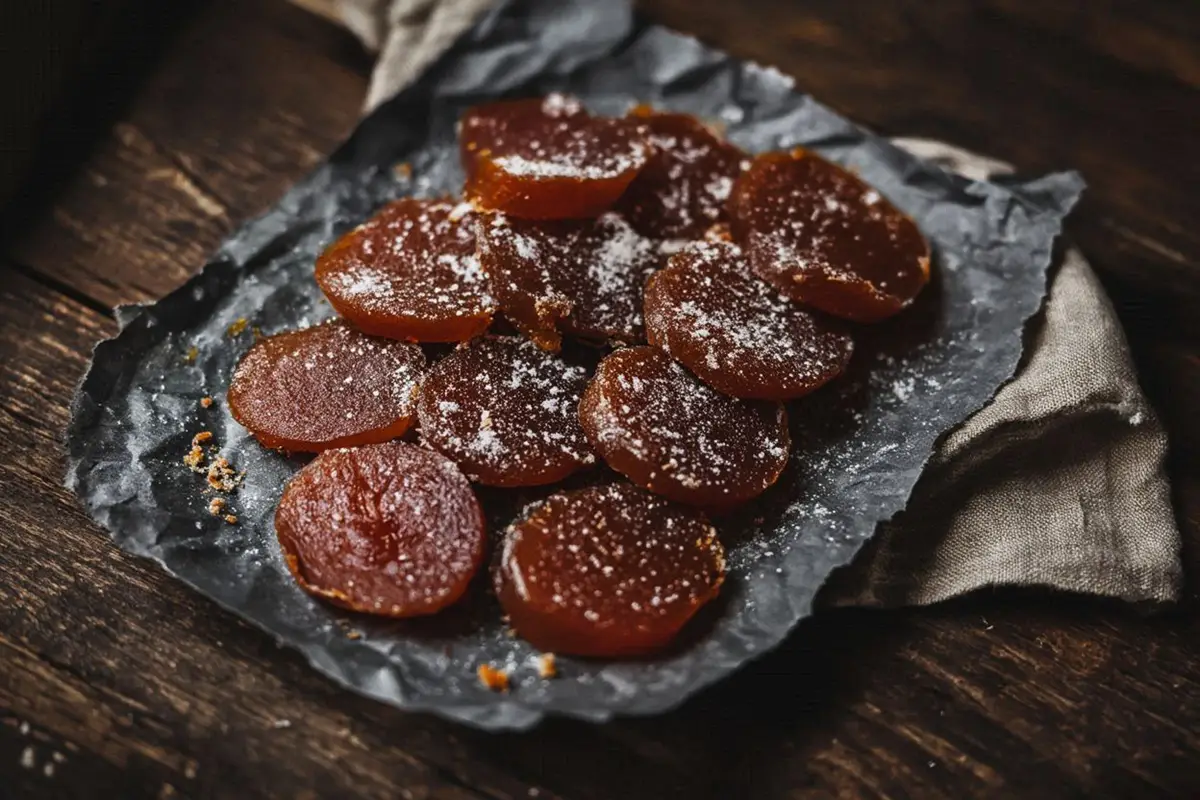
Apricot Fruit Paste
Sieved ripe apricots cooked with equal weight sugar and lemon juice, poured into molds and air-dried — from early 20th century Central European kitchens.
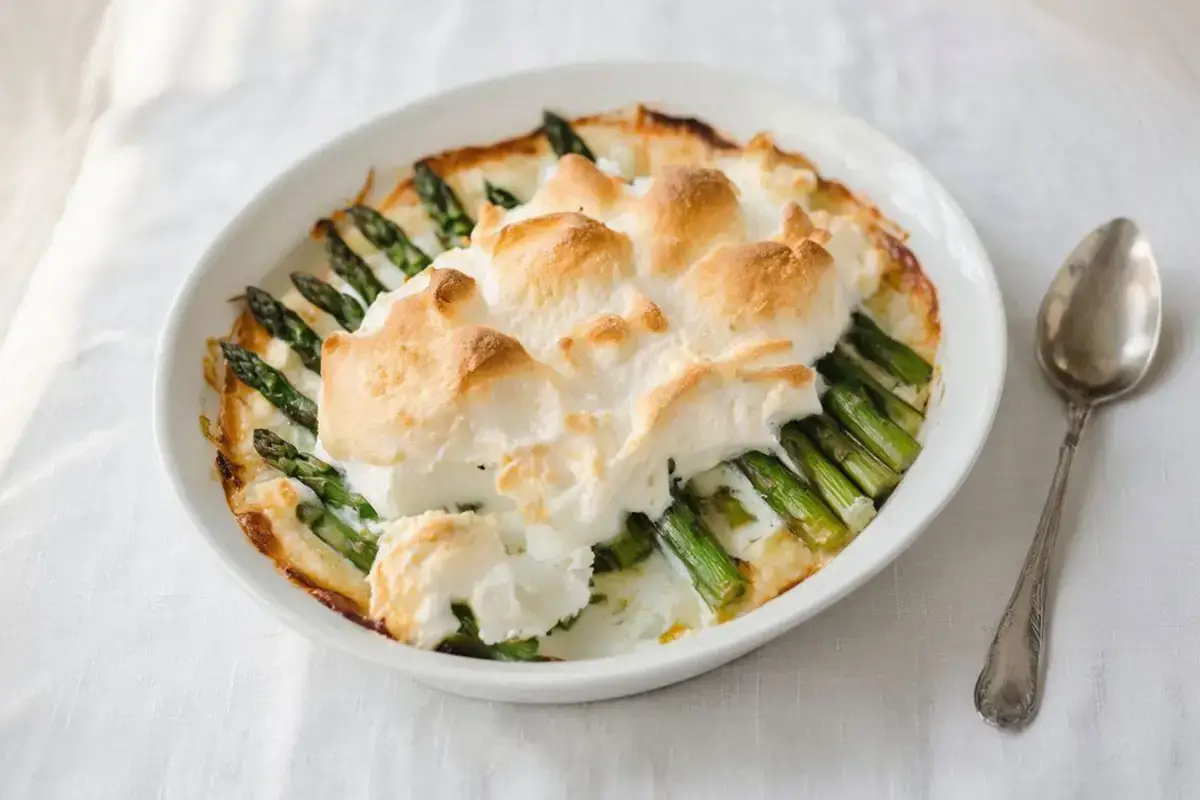
Asparagus Venetian Style
Fresh asparagus baked under a rich egg yolk cream sauce and a golden meringue-cheese topping. An elegant Central European appetizer.
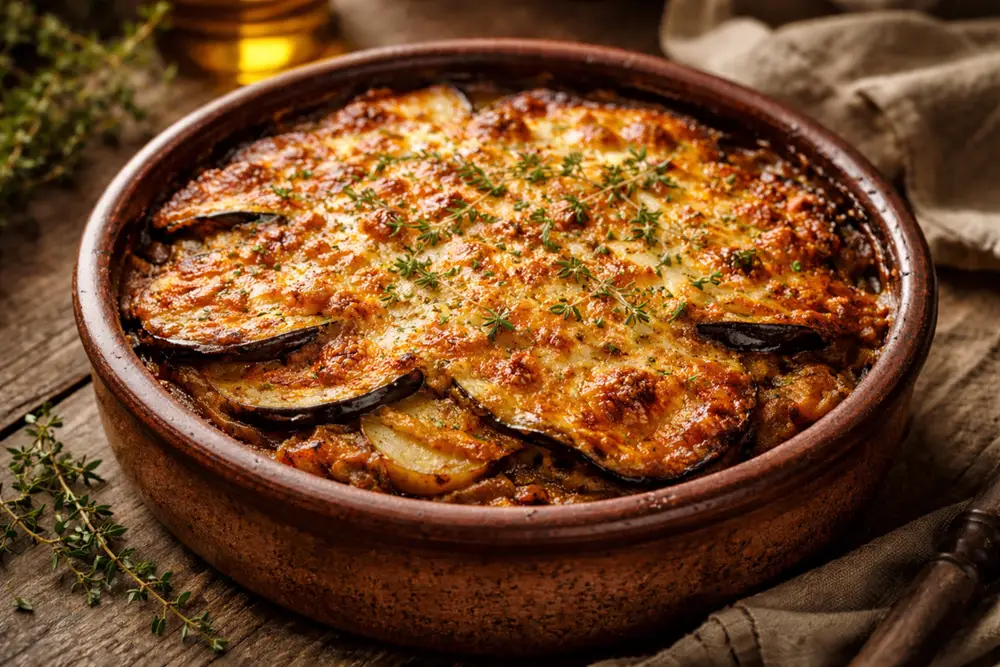
Baked Eggplant with Potatoes
A slow-baked layered casserole of eggplant, parboiled potatoes, golden fried onion, and melted cheese.