Potato Dumplings with Meat
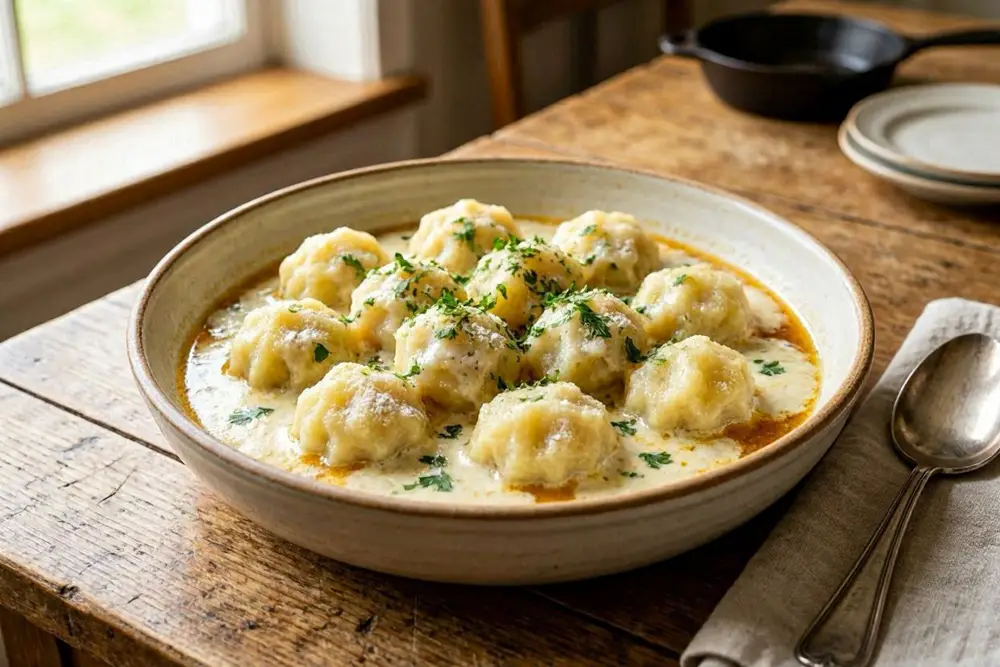
Soft potato dumplings filled with ground pork, finished in pan juices with sour cream — a hearty Central European one-pot classic.
Historical recipe
Modernised adaptation of an early 20th‑century source. Not independently kitchen-tested by Attic Recipes. Quantities, temperatures, and food safety guidance have been updated for a contemporary kitchen — results may vary and errors may exist. Nutritional values, where provided, are estimates only and have not been laboratory tested. Always follow current food safety guidelines for your region. If you have a health condition, allergy, or dietary requirement, consult a qualified professional before preparing this recipe.
Use of this recipe is entirely at your own risk and subject to our Terms of Service and Privacy Policy. Attic Recipes accepts no liability for any adverse outcome.
- Eggs
- Dairy
- Gluten
Additional notes
-
Warning
Pork must be cooked to a safe internal temperature of 71°C (160°F) before grinding. Undercooked pork carries a risk of Trichinella and Salmonella. Use a meat thermometer to verify doneness before removing from the pan.
-
Note
Each serving contains approximately 15g of saturated fat from lard and sour cream. This dish is intended for occasional consumption. Individuals managing cardiovascular conditions should consider using unsalted butter or neutral oil in place of lard.
- 1
Wash and pat dry 500g of pork shoulder. Season on all sides with 1 tsp salt and ½ tsp black pepper.
- 2
Heat 1 tbsp lard in a heavy-bottomed saucepan over medium-high heat. Add the seasoned pork and sear until browned on all sides, turning as needed. Gradually add water in small amounts — about 150ml total over the course of cooking — so the meat braises rather than fries dry. The goal is to finish with a generous pool of flavourful pan juices in the saucepan. Cook until the pork is fully cooked through, approximately 35–40 minutes.
Tip Do not add all the water at once — add it in 2–3 small additions as the pan dries out, so the liquid reduces and concentrates between additions. - 3
Remove the pork from the pan and reserve all pan juices in the saucepan. Pass the cooked pork through a meat grinder or pulse in a food processor until finely ground.
- 4
Finely chop 1 medium onion and fry in a small pan with a little fat until soft and golden. Add the fried onion, 1 whole egg, 15g of chopped parsley, salt, and pepper to the ground pork. Mix thoroughly until the filling is well combined. Set aside.
- 5
Boil 1kg of potatoes in well-salted water until completely tender. Drain, peel while still hot, and grate coarsely onto a clean work surface or mixing board. Allow to cool slightly — just enough to handle — but do not let them cool completely.
Tip Grating rather than mashing gives a rougher texture that holds together better in the dough without needing flour. - 6
Add 2 whole eggs, 1 tbsp lard, and 1 tsp salt to the warm grated potato. Knead quickly and firmly into a cohesive dough. Do not overwork it.
- 7
On a surface dusted with a little potato starch or flour, roll the dough out to approximately 5mm thickness. Cut into squares of roughly 8×8cm.
- 8
Place a heaped tablespoon of meat filling in the centre of each square. Fold the dough over the filling and press the edges firmly to seal, shaping into compact dumplings. You should get approximately 16–20 dumplings.
- 9
Bring a large pot of salted water to a boil, then reduce to a steady simmer. Carefully lower the dumplings in batches — do not crowd the pot. Cook for 10–12 minutes, or until the dumplings float to the surface and feel firm when gently pressed. # estimated cooking time
Tip Cook in two batches if necessary. Vigorous boiling will break the dumplings apart. - 10
Using a slotted spoon, carefully transfer the cooked dumplings directly into the saucepan with the reserved pork pan juices. Pour in 100ml of sour cream and bring to a brief simmer over medium heat, turning the dumplings gently to coat. Do not boil hard.
- 11
Transfer to a round serving bowl and serve immediately while hot.
Nutrition Information per 1 serving (approx. 450g)
Nutritional values are approximate estimates and may vary based on specific ingredients used, preparation methods, and portion sizes.
Serving Suggestions
Serve directly from the round bowl, hot. No additional garnish is required, though a little extra chopped parsley and a spoonful of cold sour cream alongside are appropriate. This is a complete one-dish meal and needs no accompaniment.
About This Recipe
Potato dumplings filled with meat occupy a distinct place in Central European home cooking — sturdy enough to be a full meal, simple enough to have been made weekly in households where nothing was wasted. The technique here is practical in the best sense: the pork is braised to build up pan juices, then ground and used as a filling, and the cooked dumplings are finished in those same juices with sour cream. Every part of the process feeds the next.
The dough is pure potato — no flour, which keeps the dumplings softer and more delicate than the denser flour-potato versions found elsewhere in the region. This makes them more fragile during cooking, which is why a gentle simmer matters, but it also means they absorb the sour cream sauce readily and serve as something between a dumpling and a pasta in texture.
This is cold-weather food in the most direct sense: filling, warm, and complete on its own.
Why It Works
The braising liquid built up during the pork’s cooking is the sauce — not an afterthought. Adding water gradually while the meat fries allows it to reduce and concentrate between additions, picking up the fond from the bottom of the pan. By the time the pork is done, the liquid left behind is already seasoned and flavoured from the meat itself.
Grating the potatoes coarsely rather than ricing or mashing them creates a slightly fibrous texture in the dough that helps it hold together around the filling without needing additional flour as a binder. The two eggs in the dough provide structure; the single tablespoon of fat keeps the dough pliable enough to roll and seal without cracking.
Modern Kitchen Tips
A meat grinder gives the most authentic texture for the filling — coarse and with some body. A food processor works but tends to make the pork paste-like if over-processed; use short pulses and stop while there is still some texture.
If the potato dough is too sticky to roll, let it rest uncovered for 5 minutes — the surface dries slightly and becomes easier to handle. Adding flour will make the dumplings noticeably heavier, so resist the instinct.
Leftover dumplings reheat well in a covered pan with a splash of water or stock over low heat.
A classic of early 20th century home cooking, preserved and adapted for the modern kitchen.
The Story Behind This Recipe
Historical Context
Home cooks of the period relied on potato dough as a base for filled dumplings across Central Europe, using whatever braised or roasted meat was available — pork was the most common. The technique of finishing cooked dumplings in the same pan juices used to cook the meat was standard practice, producing a simple sauce from the braising liquid without any separate preparation. Sour cream stirred in at the end was a characteristic finishing step in the region.
Modern Kitchen Adaptation
The original recipe specified no cut of pork — pork shoulder is recommended here for its fat content, which keeps the filling moist after grinding. Lard is the historically correct fat for both the dough and the frying; unsalted butter or neutral oil can be substituted in equal quantities. The original gave no water quantity for building the pan juices; 150ml added gradually during frying is estimated based on the braising method described. Cooking time for the dumplings is not given in the original; 10–12 minutes or until they float is standard for potato dumplings of this size and thickness.
This recipe is an independent modern adaptation developed from historical sources in the public domain. It is provided for informational and educational purposes only and does not constitute professional dietary, nutritional, or medical advice. Food preparation involves inherent risks. The reader assumes full responsibility for safe food handling, ingredient sourcing, and adherence to current local food safety guidelines. The site operator accepts no liability for outcomes resulting from the preparation or consumption of this recipe.
One recipe.
Every week.
You Might Also Like
More recipes from the same category
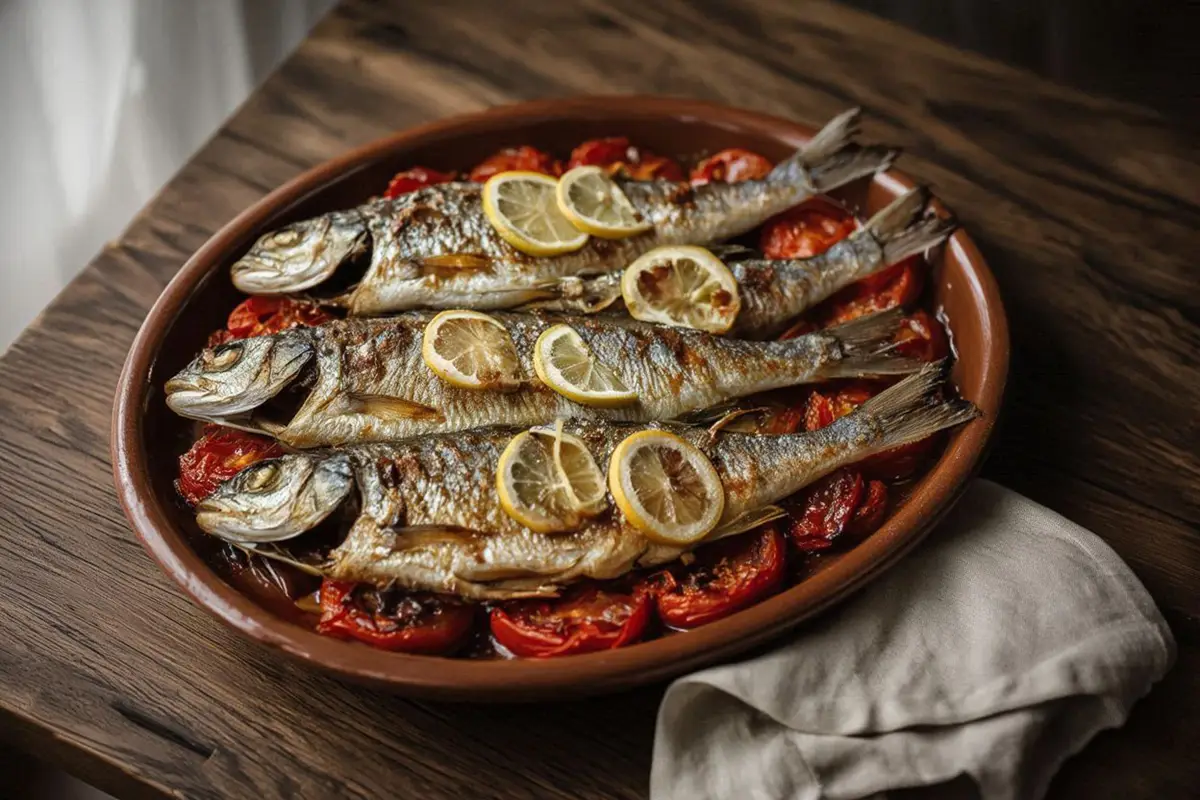
Baked Fish with Tomatoes
Whole fish baked over ripe tomatoes with generous olive oil and lemon — a simple, fragrant Central European oven dish.
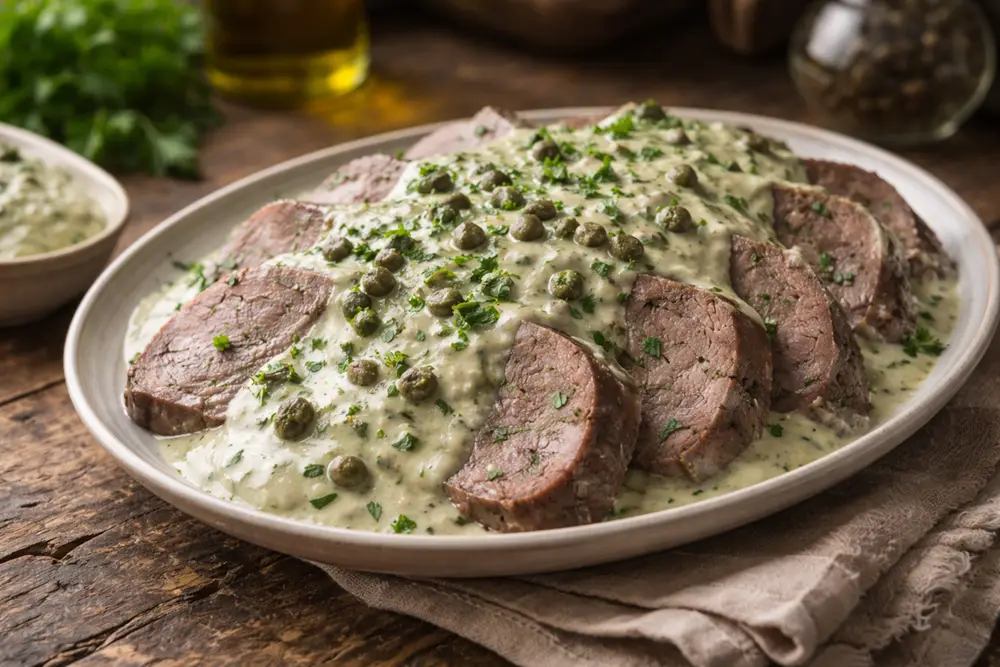
Baked Tongue in Green Sauce
Beef tongue braised with herbs, larded with bacon and roasted until golden, served in a green sauce of capers, anchovy, parsley and sour cream.
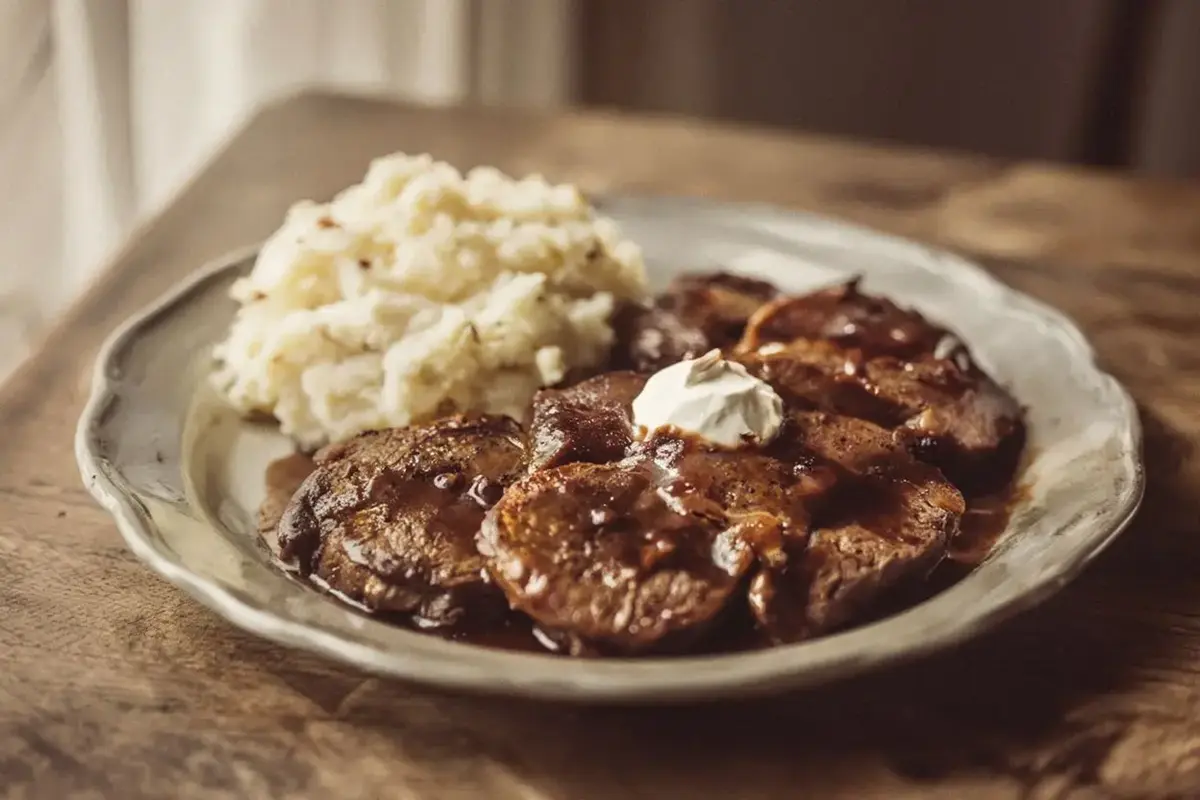
Beef Kidney with Wine
Beef kidney marinated in red wine, braised with herbs, finished with sour cream. Tender, rich, and deeply flavored.