Braised Pork Loin with Caramelized Sweet Cabbage
Whole pork loin braised until tender, served over cabbage slow-cooked with caramelized sugar, onion, and caraway, finished with a splash of vinegar.
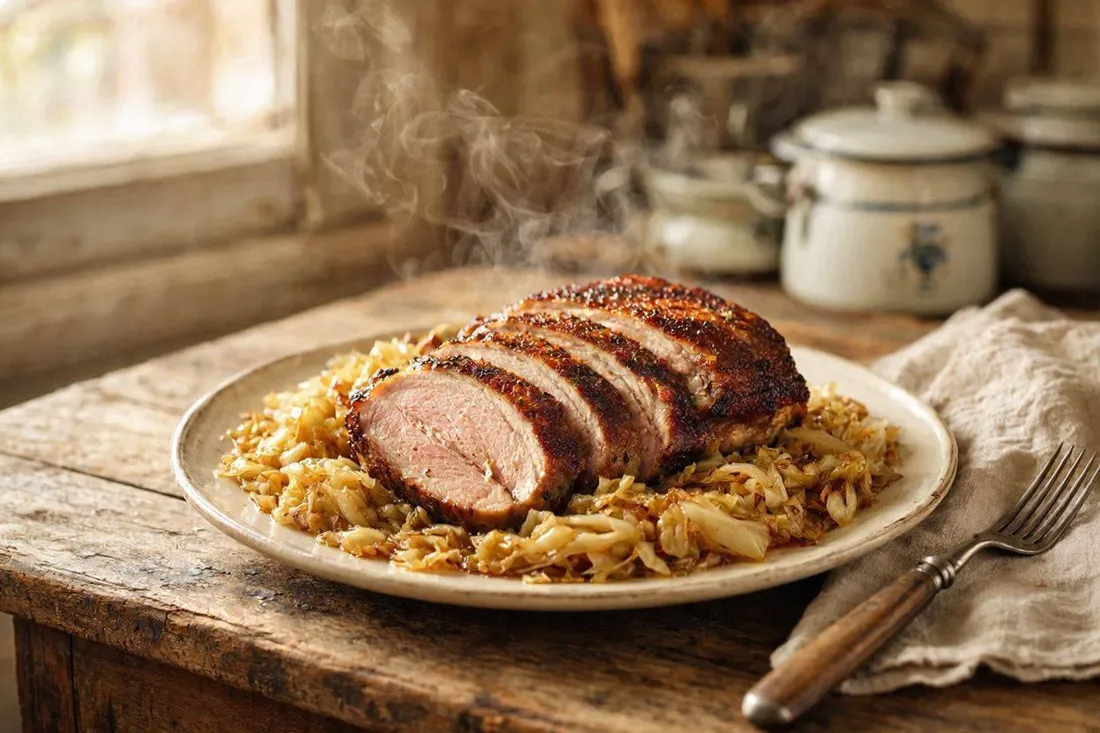
Quick Summary
A one-pot Central European main pairing braised pork loin with cabbage cooked down in caramelized sugar, onion, and caraway. Takes about 3.5 hours. The caramelized sugar base, cooked before the onion goes in, is what sets this cabbage apart from a plain braise.
Historical recipe
Modernised adaptation of an early 20th‑century source. Not independently kitchen-tested by Attic Recipes. Quantities, temperatures, and food safety guidance have been updated for a contemporary kitchen — results may vary and errors may exist. Nutritional values, where provided, are estimates only and have not been laboratory tested. Always follow current food safety guidelines for your region. If you have a health condition, allergy, or dietary requirement, consult a qualified professional before preparing this recipe.
Use of this recipe is entirely at your own risk and subject to our Terms of Service and Privacy Policy. Attic Recipes accepts no liability for any adverse outcome.
Additional notes
-
Warning
Caramelizing sugar reaches very high temperatures and can cause serious burns from splatters or contact. Keep children away from the stove during this step.
-
Note
This dish is higher in saturated fat due to the lard used in both components. Those managing saturated fat intake, including pregnant women, elderly, or immunocompromised individuals with specific dietary guidance, may wish to substitute a neutral oil and reduce the quantity.
- 1
Melt the 45g lard in a large heavy pot over medium heat. Add the granulated sugar and cook, without stirring too much, until it turns a deep golden color. Watch closely — it should not blacken or burn.
Tip This caramelized-sugar base is what gives the cabbage its distinct flavor. A pale gold color is the goal; dark brown will taste bitter. - 2
Add the chopped onions to the caramel and cook, stirring, until soft and golden.
- 3
Stir in the 1 tsp caraway seeds, then add the shredded cabbage. Mix well to coat the cabbage in the caramelized onion base.
- 4
Cover the pot and cook over low heat for about 1 hour, stirring occasionally. Do not add water — the cabbage releases enough liquid on its own.
- 5
Uncover for the last few minutes to let the cabbage brown lightly, then stir in the vinegar and 1 tsp salt. Remove from heat and set aside, covered, to keep warm.
- 6
Season the pork loin with 1 tsp salt on all sides. Place it in a separate pot or clean the same pot, then pour the 30g hot melted lard over the meat. Sprinkle with the remaining 0.5 tsp caraway seeds.
- 7
Cover and cook over low heat for about 2 hours, adding the 250ml water gradually, a little at a time, to keep the pot from drying out.
Tip Add water only as needed — the goal is a moist braise, not a soup. - 8
Once the meat is tender, uncover the pot and turn the loin on all sides over higher heat until it develops a browned, caramelized crust.
- 9
Remove the meat and let it rest briefly. Drain the pan juices into the cabbage and stir to combine.
- 10
Slice the pork loin and serve hot on a round platter, alongside the cabbage.
Nutrition Information per 1 portion (approx 380g)
Nutritional values are approximate estimates and may vary based on specific ingredients used, preparation methods, and portion sizes.
Serving Suggestions
Serve with boiled or mashed potatoes, or crusty bread to soak up the pan juices. A dollop of sour cream on the side is a period-appropriate addition, though not part of the traditional preparation of this dish. Leftovers keep well refrigerated for up to 3 days and reheat gently on the stovetop.
About This Recipe
This dish builds its flavor from an unusual starting point: sugar caramelized in fat before anything else touches the pot. Onion and shredded cabbage go in afterward, absorbing that deep amber base as they cook down slowly, with no added water — just their own released liquid and patience. A whole pork loin braises separately in the same style, finished with a hot fat pour and a light dusting of caraway.
It’s a dish built for the kind of slow afternoon cooking that early 20th century kitchens were designed around: two components, minimal ingredients, and a long simmer that does most of the work.
Why It Works
Caramelizing sugar before adding the onion and cabbage changes the chemistry of the dish. Instead of a straightforward braise, the sugar undergoes partial caramelization first, developing bittersweet, slightly toasted notes that plain sautéed onion alone wouldn’t produce. Combined with the vinegar added near the end, the cabbage lands closer to an agrodolce profile — sweet, faintly sharp, and rounded rather than flat.
Braising the pork loin whole, rather than in pieces, keeps it moist through the long cook time, while the final uncovered browning step gives the exterior a caramelized crust that contrasts with the tender interior.
Modern Kitchen Tips
Use a heavy-bottomed pot for the cabbage step — thin pots are more likely to scorch the sugar before the onions are added. If the caramel seizes or hardens when the onions go in, don’t panic: it will loosen and dissolve back into the sauce as the onions release moisture. Taste the cabbage before serving and adjust the vinegar; the traditional quantity is light, and many modern palates prefer more acidity to balance the sugar.
A classic of early 20th century home cooking, preserved and adapted for the modern kitchen.
The Story Behind This Recipe
Historical Context
Early 20th century recipes for this dish began the cabbage with caramelized sugar rather than plain fat, a technique that gives the finished dish a deeper, slightly agrodolce character than a simple braised cabbage. The traditional approach did not specify a quantity of water for braising the meat — cooks added it gradually by feel over the roughly two-hour cooking time. Salt was also left unspecified, assumed knowledge for a home cook of the period.
Modern Kitchen Adaptation
Lard is kept as the historically correct fat for both the cabbage and the meat; a neutral oil (such as sunflower or canola) or butter can be substituted in equal quantity if preferred. The 250ml water for braising the pork and the 1 tsp salt for each component are estimated, since the traditional approach specified no quantities for either. The small amount of vinegar (1 tsp) for 2kg of cabbage is unusually low for a balanced sweet-sour result — taste and adjust upward if a sharper finish is preferred.
This recipe is an independent modern adaptation developed from historical sources in the public domain. It is provided for informational and educational purposes only and does not constitute professional dietary, nutritional, or medical advice. Food preparation involves inherent risks. The reader assumes full responsibility for safe food handling, ingredient sourcing, and adherence to current local food safety guidelines. The site operator accepts no liability for outcomes resulting from the preparation or consumption of this recipe.
One recipe.
Every week.
You Might Also Like
More recipes from the same category
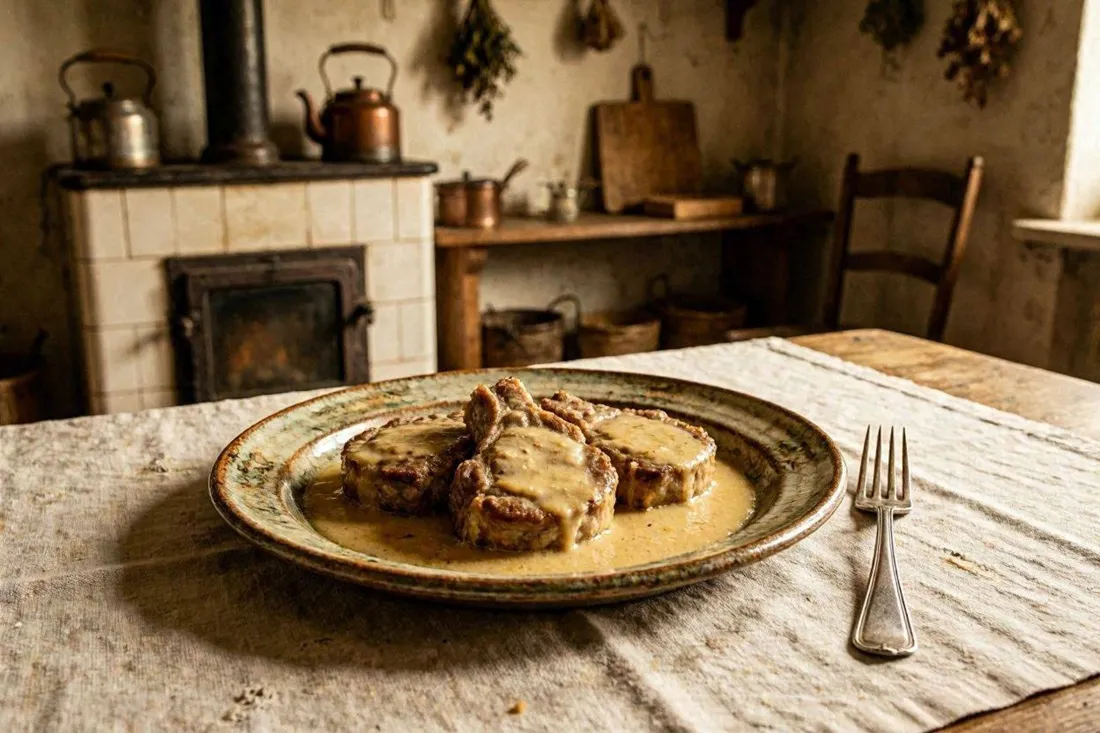
Braised Pork Chops in White Wine and Sour Cream Sauce
Pork loin chops braised with onion, carrot, parsley root, and celery root in white wine, then finished with a strained sour cream sauce.
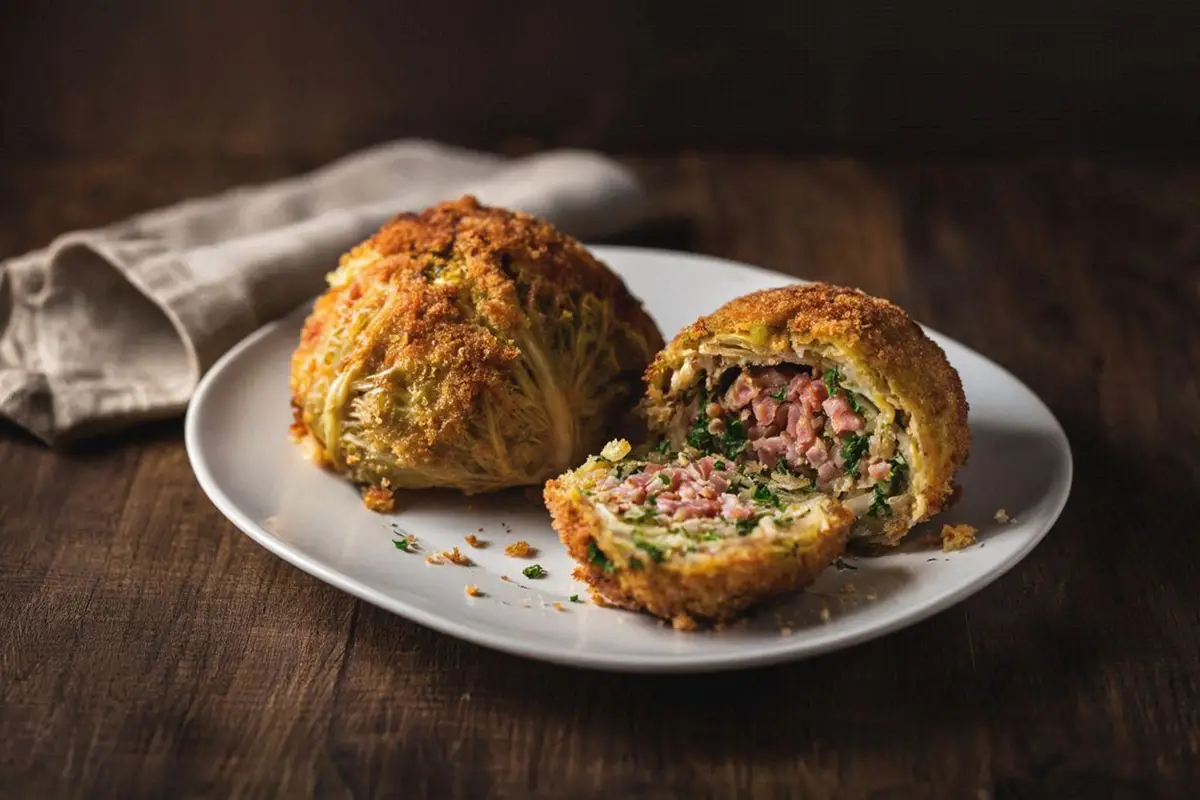
Breaded Savoy Cabbage Stuffed with Ham
Tender young savoy cabbage heads filled with ground ham, fried onion, and herbs, breaded and pan-fried until golden. A hearty Central European classic.
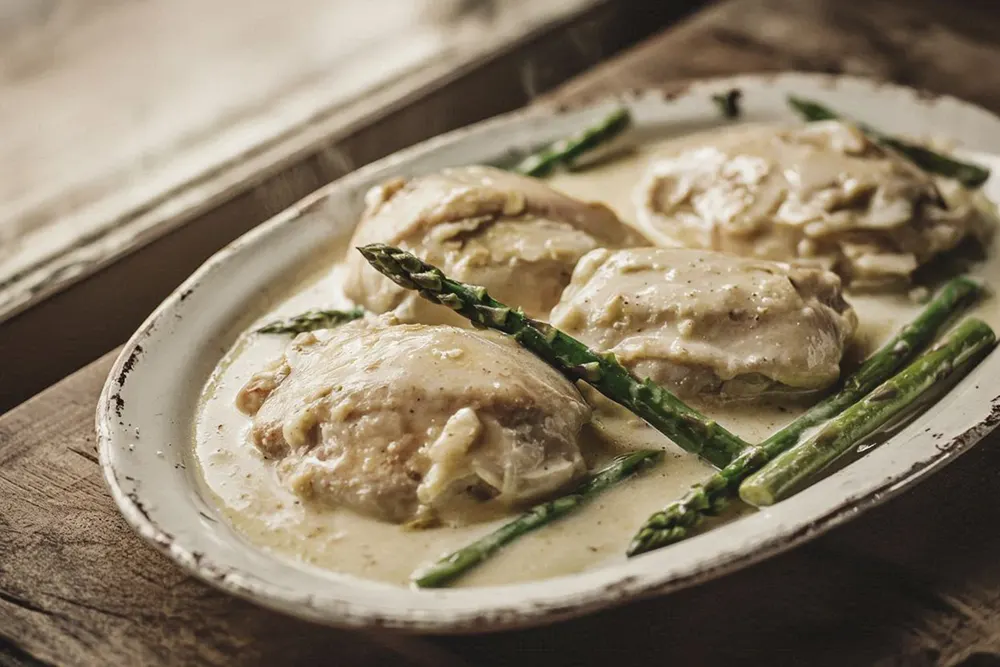
Chicken in Asparagus Sauce
A whole chicken poached in spiced broth, then finished in a silky velouté enriched with egg yolks and cream, garnished with tender asparagus tips.