Pears Poached in Red Wine
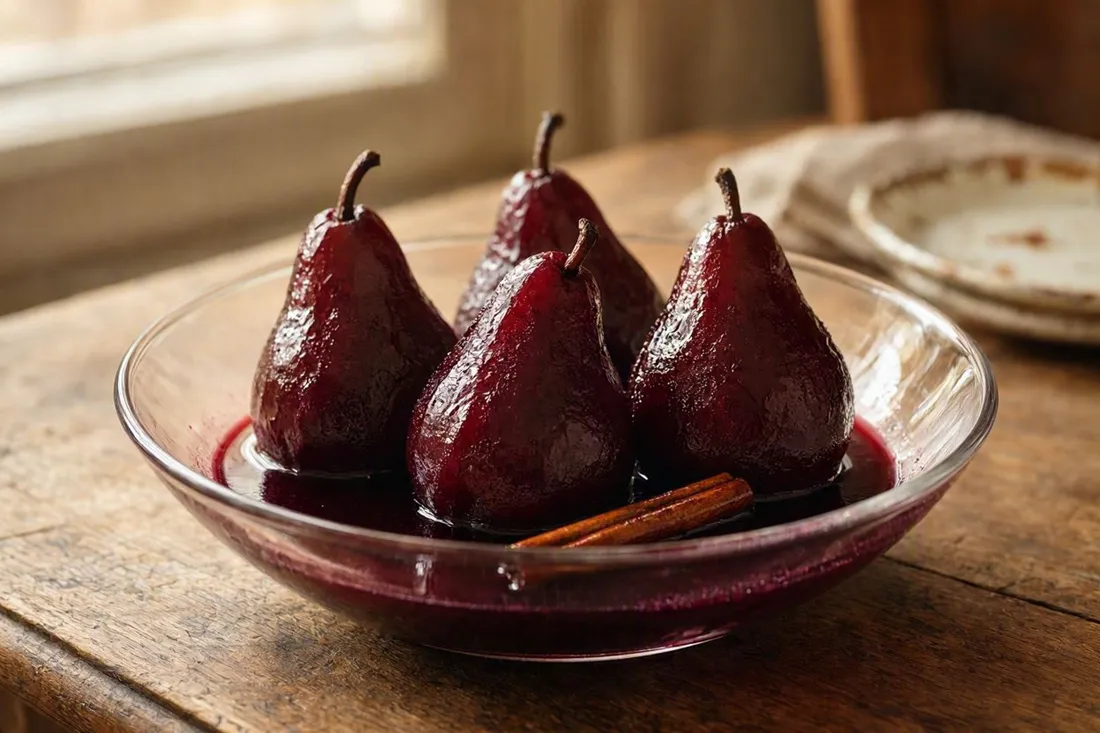
Whole pears gently poached in red wine with cinnamon and sugar until tender, then chilled and served in their own syrup. A simple, old-fashioned dessert.
Quick Summary
This Central European dessert gently simmers whole peeled pears in red wine, sugar, and cinnamon until tender. Taking 40 minutes to prepare, the fruit is chilled directly in the infused wine syrup for a sweet, spiced finish.
Historical recipe
Modernised adaptation of an early 20th‑century source. Not independently kitchen-tested by Attic Recipes. Quantities, temperatures, and food safety guidance have been updated for a contemporary kitchen — results may vary and errors may exist. Nutritional values, where provided, are estimates only and have not been laboratory tested. Always follow current food safety guidelines for your region. If you have a health condition, allergy, or dietary requirement, consult a qualified professional before preparing this recipe.
Use of this recipe is entirely at your own risk and subject to our Terms of Service and Privacy Policy. Attic Recipes accepts no liability for any adverse outcome.
- Sulphites
Additional notes
-
Note
This dessert contains alcohol from the red wine. Gentle poaching does not fully cook off the alcohol content the way flambéing or a hard reduction would — some alcohol remains in the finished syrup. Consider this when serving to children, pregnant women, or anyone avoiding alcohol.
- 1
Peel the {0001} whole, leaving the stems on. Pierce each pear in several places with the tip of a knife so they cook faster and more evenly.
- 2
Place the pears in a clean pot. Pour over the {0002} and {0004}. Add the {0003} and {0005}.
- 3
Bring to a gentle simmer and cook the pears in this liquid until tender, about 20-25 minutes.
Tip Time depends on ripeness — test by piercing with the tip of a knife. It should slide in with little resistance. - 4
Transfer the pears and their cooking liquid to a glass bowl.
- 5
Chill for at least 1 hour before serving.
- 6
Serve cold, after a meal, spooning a little of the syrup over each pear.
Nutrition Information per 1 pear with syrup (approx 280g)
Nutritional values are approximate estimates and may vary based on specific ingredients used, preparation methods, and portion sizes.
Serving Suggestions
Serve chilled, directly from the glass bowl, spooning some of the wine syrup over each pear. A dollop of lightly sweetened whipped cream or a plain butter biscuit on the side makes it feel more substantial without changing the dish itself.
About This Recipe
There isn’t much to this one beyond letting the pears do their work in a pot of spiced wine — which is exactly its appeal. Whole pears, peeled and pierced so they cook evenly, simmer gently until tender in a mixture of red wine, water, sugar, and a single stick of cinnamon, then cool slowly in that same liquid until it’s time to serve.
It’s the kind of dessert that asks almost nothing of technique and everything of patience: a slow simmer, then a longer chill, so the pears have time to take on the wine’s color and the cinnamon’s warmth all the way through. Served cold at the end of a meal, it reads as something both simple and slightly formal — the kind of dish that shows up at the close of a dinner rather than as an everyday treat.
Why It Works
Piercing the pears before cooking does two things: it lets heat and liquid move into the fruit faster, and it gives the wine syrup a way in past the skin’s natural resistance, so the flesh takes on color and flavor rather than staying pale in the center. Cooking gently, at a simmer rather than a boil, keeps the pears from breaking down before they’ve had time to absorb the liquid around them.
Letting the pears cool in the same pot they cooked in — rather than draining and cooling separately — means they keep absorbing wine and sugar as the liquid cools, which is why a longer chill produces a more deeply flavored result than serving them straight from the pot.
Modern Kitchen Tips
If you’d like a thicker syrup to spoon over the pears, remove the fruit once tender and simmer the liquid alone for another 5-10 minutes to reduce it slightly, then pour it back over the pears before chilling. A twist of orange peel added alongside the cinnamon is a common modern variation that pairs well with the wine.
A classic of early 20th century home cooking, preserved and adapted for the modern kitchen.
The Story Behind This Recipe
Historical Context
This is one of the simpler desserts of its kind — whole pears simmered gently in a spiced, sweetened wine until tender, then left to cool in their own liquid. Period usage of 'crno vino' (literally 'black wine') refers to what's called red wine today; there was no separate category of wine implied by the term. Home cooks of the period did not specify a cooking time, relying instead on testing the pears directly with a knife tip until they judged them soft enough.
Modern Kitchen Adaptation
Quantities originally given in deciliters (3 dl wine, 3 dl water) are converted here to milliliters (300ml each), since deciliters aren't used in this format. Cooking time is estimated at 20-25 minutes, since the original gives none and ripeness varies considerably between pears. The pears are served together with their full poaching liquid as a syrup, rather than drained, which is standard practice for poached fruit and keeps more of the wine's flavor in the finished dish.
This recipe is an independent modern adaptation developed from historical sources in the public domain. It is provided for informational and educational purposes only and does not constitute professional dietary, nutritional, or medical advice. Food preparation involves inherent risks. The reader assumes full responsibility for safe food handling, ingredient sourcing, and adherence to current local food safety guidelines. The site operator accepts no liability for outcomes resulting from the preparation or consumption of this recipe.
One recipe.
Every week.
You Might Also Like
More recipes you'll enjoy
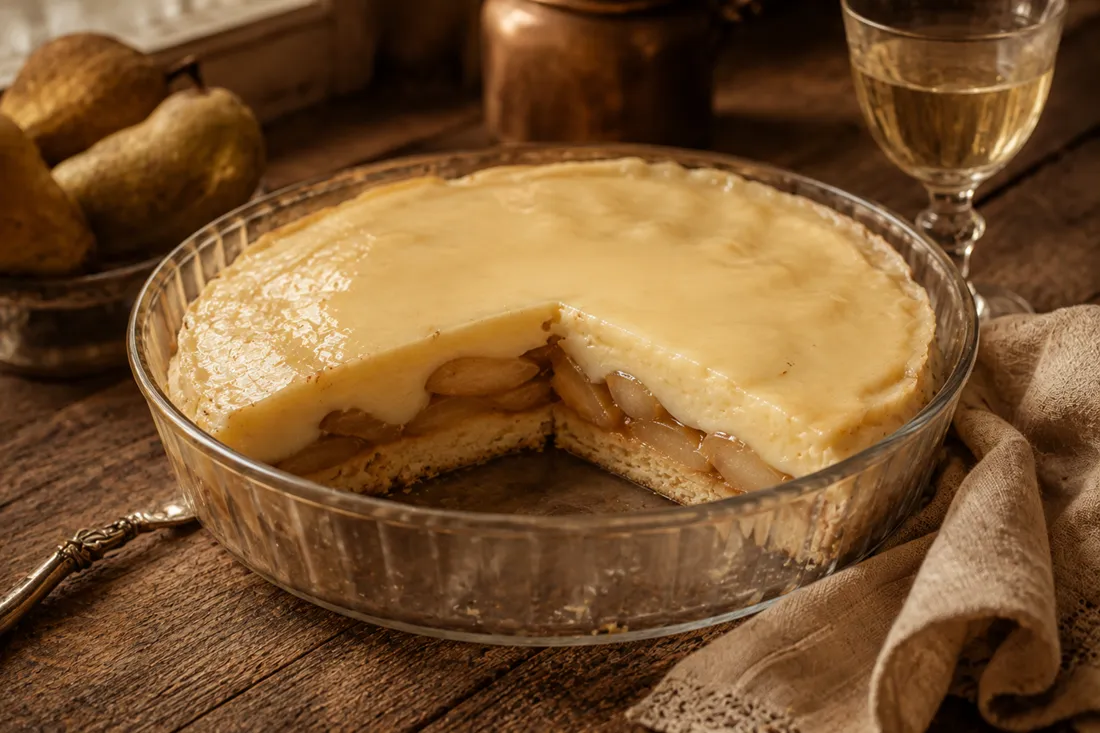
Pear Torte with Wine Cream
A buttery pastry base topped with jam, poached pears in spiced wine syrup, and a whisked wine custard — an elegant layered torte.
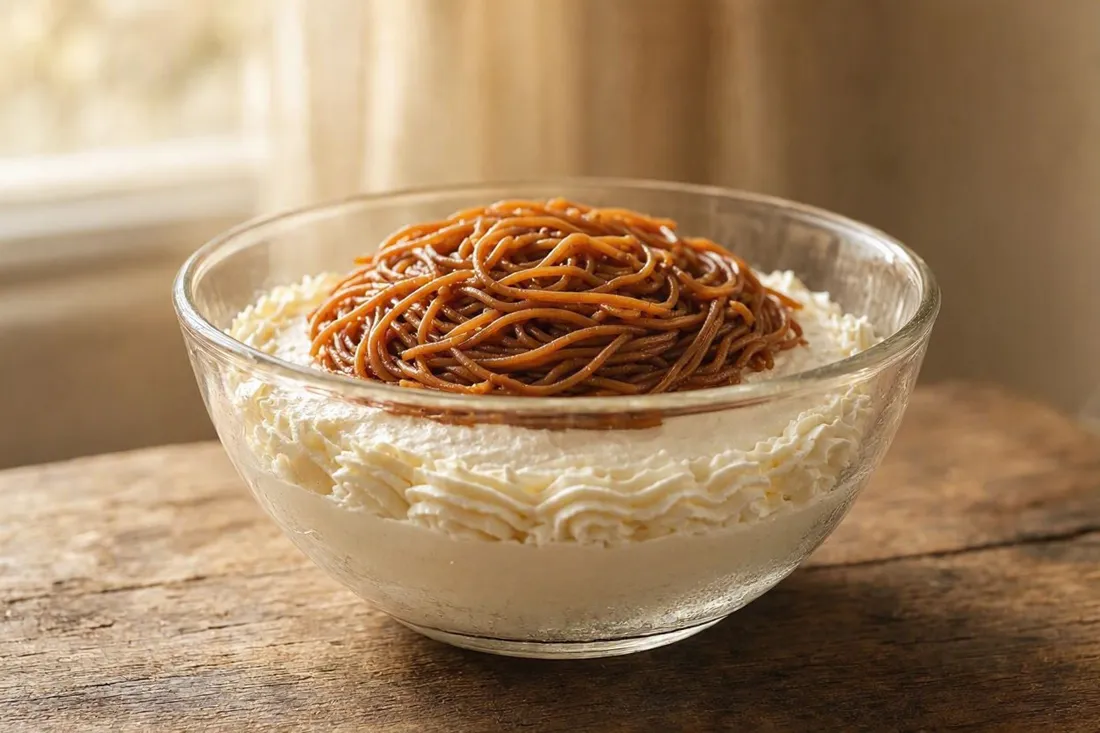
Chestnut Purée with Whipped Cream
Sweetened chestnut puree is pressed through a ricer over whipped cream and finished with a piped border of cream — a rich chestnut dessert.
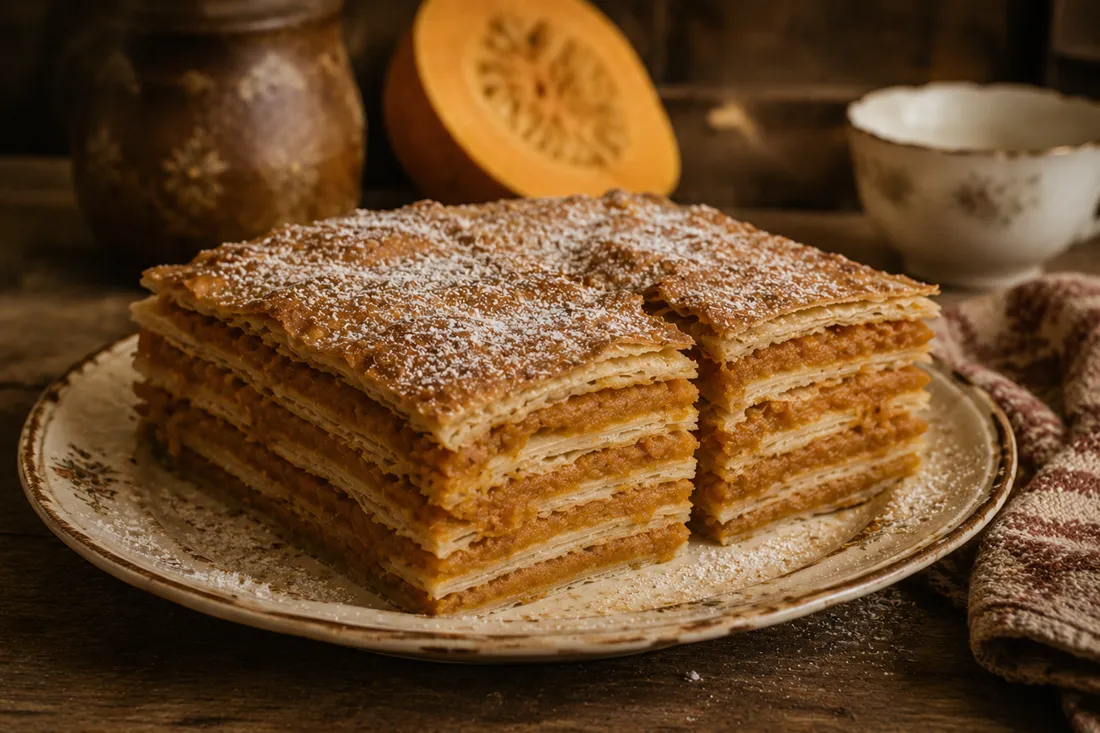
Layered Pumpkin Pastry with Griddle-Baked Dough Sheets
Homemade dough sheets pre-baked on a griddle, layered with a sauteed pumpkin, whipped egg, and cinnamon filling, then baked and finished with vanilla sugar.