Peach Almond Sponge Cake with Wafer Layer
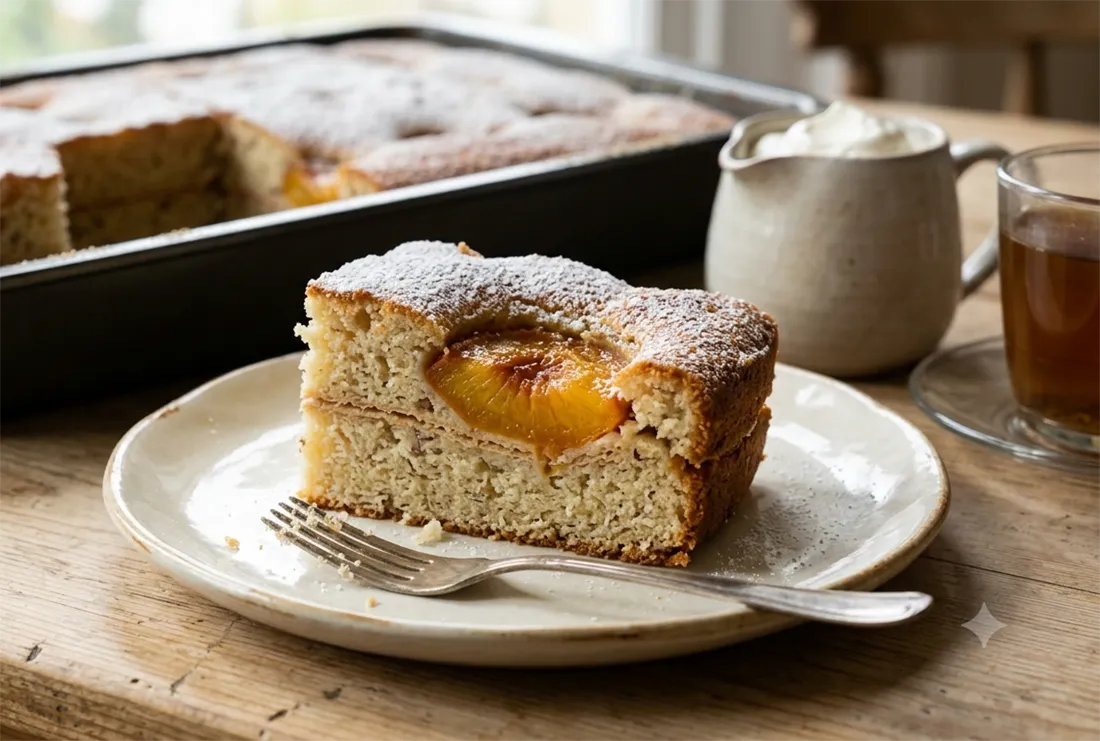
A flourless almond sponge cake with a hidden wafer layer and a row of baked peaches through the middle, finished with a dusting of sugar.
Quick Summary
This Central European dessert is a flourless peach almond sponge with a hidden wafer layer. Ready in 75 minutes, it stands out as the wafer absorbs peach juices during baking, keeping the nut-based sponge light and not soggy.
This recipe uses How to Blanch Almonds: The Technique Behind the White Kernel — prepare it in advance if you haven't already.
Historical recipe
Modernised adaptation of an early 20th‑century source. Not independently kitchen-tested by Attic Recipes. Quantities, temperatures, and food safety guidance have been updated for a contemporary kitchen — results may vary and errors may exist. Nutritional values, where provided, are estimates only and have not been laboratory tested. Always follow current food safety guidelines for your region. If you have a health condition, allergy, or dietary requirement, consult a qualified professional before preparing this recipe.
Use of this recipe is entirely at your own risk and subject to our Terms of Service and Privacy Policy. Attic Recipes accepts no liability for any adverse outcome.
- Eggs
- Dairy
- Gluten
- Tree Nuts
- 1
Preheat the oven to 160°C (320°F) / 140°C fan. Grease a 24x33cm (9x13in) baking pan with the butter and dust with the dry breadcrumbs, tapping out any excess.
- 2
In a large bowl, whisk the 7 egg yolks with 120g sugar until pale, thick, and foamy.
- 3
In a separate, clean bowl, whip the 7 egg whites to stiff peaks.
- 4
Gently fold the whipped egg whites into the yolk mixture, then fold in the 140g chopped almonds until just combined.
- 5
Pour half of the batter into the prepared pan and spread evenly.
- 6
Lay the wafer sheet on top of the batter layer, trimming as needed so it fits the pan.
- 7
Arrange the peach halves cut-side up in a single, even row over the wafer sheet. Sprinkle evenly with the 45g sugar.
- 8
Pour the remaining batter over the peaches, spreading gently to cover them completely.
- 9
Bake for about 45 minutes, until the top is golden and a toothpick inserted into the batter (avoiding a peach) comes out clean.
- 10
Let the cake cool completely in the pan, then invert onto a board or tray. Slice and dust with the 2 tbsp powdered sugar before serving.
Nutrition Information per 1 slice (approx 155g)
Nutritional values are approximate estimates and may vary based on specific ingredients used, preparation methods, and portion sizes.
Serving Suggestions
Serve at room temperature or lightly chilled, on its own or with a dollop of lightly sweetened whipped cream. Pairs well with coffee or tea.
About This Recipe
This is a flourless almond sponge cake built around a technique you don’t see often: a plain wafer sheet baked directly into the batter, sitting between two layers of egg-and-almond sponge with a row of fresh peaches in the middle. The wafer isn’t decorative — it acts as a moisture barrier, soaking up juice released by the baking peaches so the sponge above and below it stays tender instead of turning soggy.
The batter itself is a classic technique from an era before baking powder and flour were the default base for a sponge: whipped egg yolks and whites, lightened with finely chopped almonds, hold the structure entirely on their own.
Why It Works
Whipping the yolks with sugar until pale and thick, and the whites separately to stiff peaks, builds the air structure that this flourless batter depends on entirely — there’s no starch to fall back on for lift. The wafer sheet placed under the peach layer is the real trick: it’s thin enough to bake through invisibly, but absorbent enough to catch the juice that would otherwise pool and weigh down the sponge above it.
Modern Kitchen Tips
Use a fine, even chop on the almonds rather than almond flour — a slightly coarse texture holds up better against the peach juice than a fine meal. Ripe but firm peaches work best; very soft, juicy peaches will release more liquid than the wafer layer can absorb. If fresh peaches aren’t in season, well-drained canned peach halves are a reasonable substitute.
A classic of early 20th century home cooking, preserved and adapted for the modern kitchen.
The Story Behind This Recipe
Historical Context
Early 20th century recipes for this kind of almond sponge cake often called for a slightly uneven split between egg yolks and whites — home bakers frequently used up whatever eggs were on hand rather than following a strict ratio. Here the yolk and white counts have been standardized to match, for a more consistent, reproducible texture. The traditional approach did not specify a baking pan size, oven temperature, or baking time; instructions of the period simply called for baking on a quiet, steady fire, leaving exact timing to the cook's judgment. Likewise, no precise amount of sugar was given for topping the peaches or finishing the baked cake — this was left to taste, in keeping with home-baking habits of the era.
Modern Kitchen Adaptation
The wafer layer is a thin, store-bought wafer sheet of the kind sold for wafer torte-style desserts; here it is baked into the cake rather than used as an unbaked spacer. The ground stale bread roll used to dust the pan translates to plain dry breadcrumbs in a modern kitchen. Oven temperature and baking time are estimated based on the batter type and pan size, since the original text specified only a low, steady heat with no further detail. Sugar quantities for topping the peaches and finishing the baked cake were also estimated to keep the dessert balanced, since the original left these to the cook's discretion. Egg yolk and white counts were standardized to a matching quantity (7 and 7) rather than the original's uneven split, for a more predictable texture.
This recipe is an independent modern adaptation developed from historical sources in the public domain. It is provided for informational and educational purposes only and does not constitute professional dietary, nutritional, or medical advice. Food preparation involves inherent risks. The reader assumes full responsibility for safe food handling, ingredient sourcing, and adherence to current local food safety guidelines. The site operator accepts no liability for outcomes resulting from the preparation or consumption of this recipe.
One recipe.
Every week.
You Might Also Like
More recipes you'll enjoy
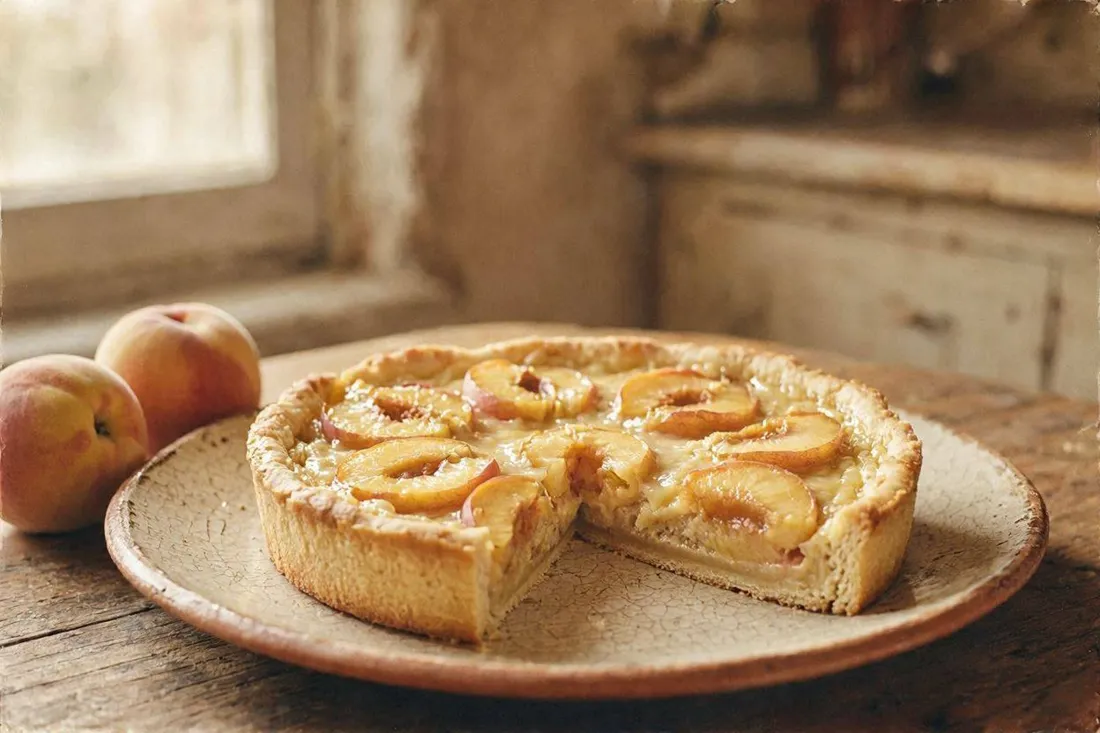
Fresh Peach Tart with Almond Custard Cream
A pale pastry crust topped with fresh peaches and a chilled almond custard cream, cooked over a double boiler — a light Central European fruit dessert.
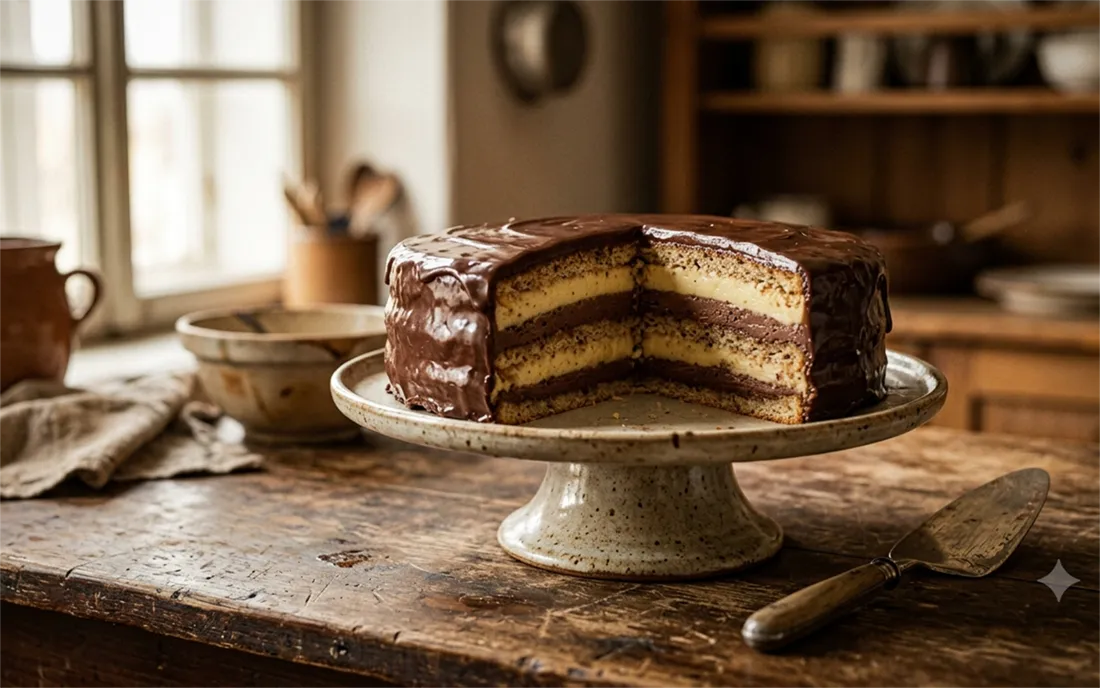
Layered Almond Torte with Two Fillings
A rich four-layer almond torte with two contrasting fillings — vanilla custard and chocolate-hazelnut — finished in a poured chocolate glaze.
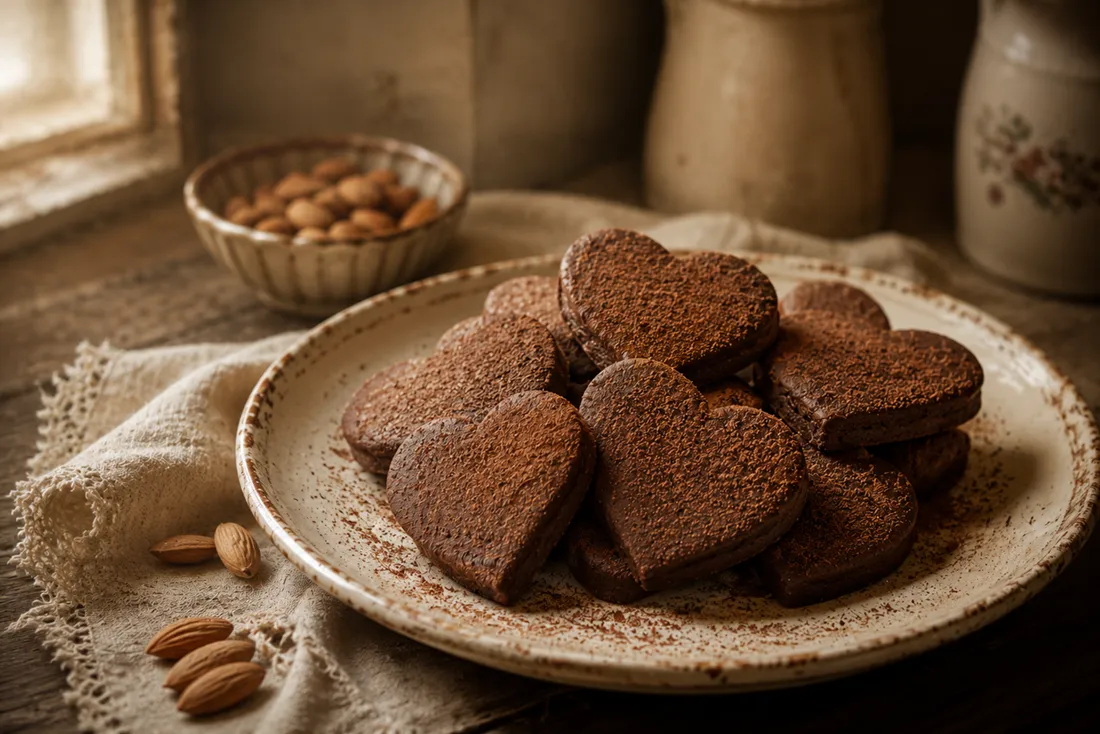
Chocolate Almond Hearts
Flourless chocolate almond cookies, cut into hearts and dried in a low oven until firm outside and soft within.