Parsley Sarma
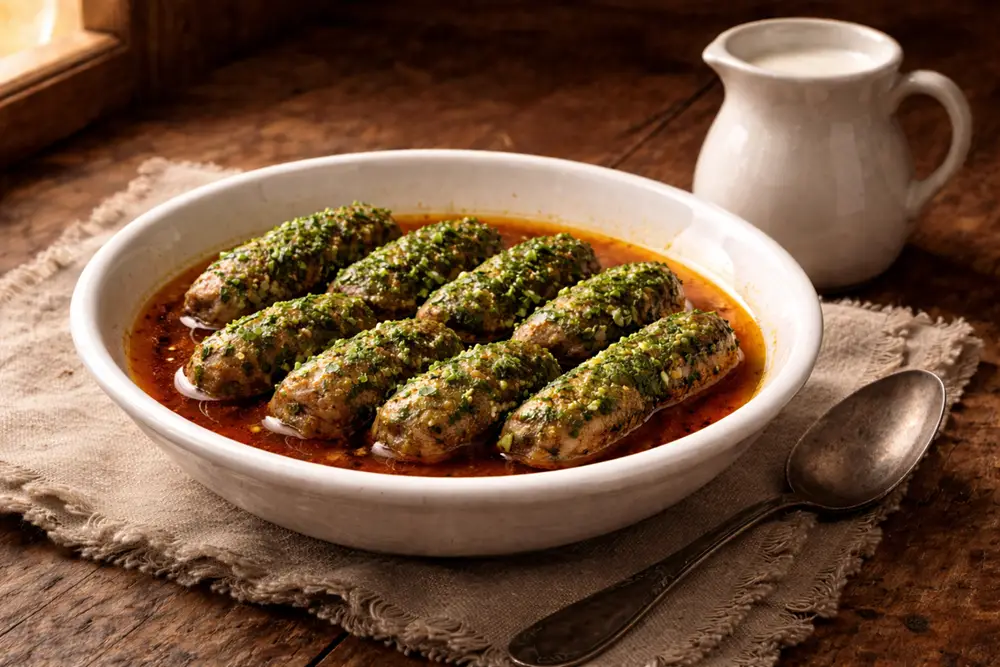
Ground young lamb and rice rolls coated in finely chopped fresh parsley, simmered in a light paprika roux — a meatball-adjacent dish.
Quick Summary
Ground young lamb and rice rolls coated in finely chopped fresh parsley, simmered in a light paprika roux — a meatball-adjacent dish.
Historical recipe
Modernised adaptation of an early 20th‑century source. Not independently kitchen-tested by Attic Recipes. Quantities, temperatures, and food safety guidance have been updated for a contemporary kitchen — results may vary and errors may exist. Nutritional values, where provided, are estimates only and have not been laboratory tested. Always follow current food safety guidelines for your region. If you have a health condition, allergy, or dietary requirement, consult a qualified professional before preparing this recipe.
Use of this recipe is entirely at your own risk and subject to our Terms of Service and Privacy Policy. Attic Recipes accepts no liability for any adverse outcome.
- Eggs
- Gluten
- Dairy
Additional notes
-
Note
This recipe is served with sour milk or plain yogurt, which contains dairy. Individuals with lactose intolerance or dairy allergy should omit the accompaniment or use a dairy-free alternative.
- 1
Bring a small saucepan of water to a boil. Add the 50g white rice and cook until completely soft, approximately 15–18 minutes. Drain thoroughly and spread on a plate to cool completely — no moisture should remain.
- 2
In a large bowl, combine the 1000g minced lamb, the cooled rice, 2 whole eggs, 1 tsp salt, and 0.25 tsp white pepper. Mix and knead firmly until the mixture comes together into a cohesive, smooth dough.
- 3
Spread the 80g finely chopped parsley on a flat plate or board. Lightly spray or wet a separate board with cold water. With wet hands, take a portion of meat mixture (approximately 50g per roll) and shape into an oblong sarma — elongated, not too short, with rounded ends.
- 4
Roll each shaped piece in the chopped parsley, pressing gently so the parsley adheres on all sides. Arrange on the wet board. When all 20 rolls are shaped and coated, refrigerate uncovered for 30 minutes to allow the rolls to firm up and the parsley coating to set.
- 5
After 30 minutes, prepare the cooking liquid. Pour the 1000ml water into a 5-litre saucepan and place over medium heat to warm while you make the roux.
- 6
In a small saucepan over medium heat, melt the 15g lard. Add the 2 tbsp flour and stir constantly for 1–2 minutes until the roux is smooth and lightly cooked — it should not colour. Remove from heat and stir in the 0.5 tsp sweet paprika powder.
- 7
Pour the finished roux into the warming water and whisk to combine. Bring to a boil and cook for 5 minutes, stirring occasionally, until the liquid is lightly thickened and smooth. Move the saucepan to the edge of the heat (or reduce to the lowest setting) — the liquid should be hot but no longer actively boiling.
- 8
Carefully lower the chilled sarma rolls into the hot paprika liquid one by one. Return to a gentle simmer over low-medium heat. Cook for 20–25 minutes, turning the rolls once carefully halfway through, until cooked through. The meat should be firm and fully opaque throughout.
- 9
Once cooked, move the saucepan back to the edge of the heat or remove from the burner. Allow to rest for 5 minutes before serving. Serve warm with cold sour milk or plain full-fat yogurt on the side.
Tip The contrast between the warm, paprika-scented rolls and cold sour milk is intentional — do not warm the milk.
Nutrition Information per 1 sarma (approx. 46g cooked)
Nutritional values are approximate estimates and may vary based on specific ingredients used, preparation methods, and portion sizes.
Serving Suggestions
Serve 2–3 rolls per person as a main course with crusty bread to absorb the paprika broth. Cold sour milk (kiselo mleko) is the traditional accompaniment — plain full-fat yogurt is a suitable modern substitute. A simple cucumber salad alongside balances the richness of the lamb.
About This Recipe
Most people encounter sarma wrapped in pickled cabbage or vine leaves — the slow-braised, tomato-scented rolls that anchor winter tables across Central Europe. This recipe takes the same principle in a different direction entirely: oblong ground-lamb rolls, coated in finely chopped fresh parsley, simmered in a light paprika roux. No wrapping, no brining, no hours of cooking.
The result sits somewhere between a meatball and a roulade — a format that turns the parsley from garnish into structure. The coating is not decorative. It holds the shape, adds a clean herbal note to each bite, and visually transforms a simple minced-meat dish into something that reads as carefully made.
The pairing with cold sour milk is deliberate. The warmth of the paprika broth and the cold acidity of the kiselo mleko are meant to contrast. This is a dish built around temperature and simplicity.
Why It Works
The chilling step — 30 minutes in a cool place before cooking — is the technical core of this recipe. Minced lamb with egg and cooked rice is a soft mixture. Without refrigeration, the parsley coating slides off during poaching and the rolls flatten. Chilling firms the fat in the meat, tightens the egg proteins slightly, and allows the parsley to bond to the surface. It is the difference between a dish that holds together and one that does not.
The zaprška (paprika roux) serves two purposes: it lightly thickens the poaching liquid so it clings to the rolls when served, and it carries the sweet paprika flavour through the broth without overwhelming the lamb. Two tablespoons of flour to 1 litre of liquid keeps it thin — more of a flavoured broth than a sauce.
Modern Kitchen Tips
Young lamb shoulder works best here — it has enough fat to keep the rolls moist during poaching without making them greasy. If only older lamb is available, mix in a small amount of minced pork (up to 20% by weight) to add fat. Beef is not recommended — the flavour is too strong and the texture drier.
Grinding twice through a meat grinder (or asking a butcher to do so) is not optional. A single pass leaves the mixture too coarse to hold together without an egg-heavy binder. Twice-ground meat binds with one egg per 500g — which is exactly what this recipe uses.
The parsley must be genuinely fine. A rough chop creates thick pieces that fall off during handling. A proper fine chop — close to a paste — adheres. Take the time with a sharp knife.
A forgotten format from early 20th century Central European home cooking — where the sarma principle met the season’s fresh herb.
The Story Behind This Recipe
Historical Context
Early 20th century home cooking occasionally produced dishes that sat outside the standard repertoire of pickled-cabbage or vine-leaf wraps. This recipe represents that category — the sarma shape and poaching technique applied to a different coating entirely. Period versions specified that the lamb be slaughtered the day before use, reflecting an expectation of freshness that is now standard practice. The original did not give a quantity for parsley, white pepper, or lard, leaving these to the cook's judgment.
Modern Kitchen Adaptation
Lard in the roux may be replaced with an equal weight of unsalted butter or a neutral vegetable oil. The chilling step (30 minutes) is essential — without it the parsley coating does not adhere and the rolls lose their shape during cooking. White pepper quantity (0.25 tsp) and parsley quantity (80g) are estimates based on period practice and standard recipe ratios; both are marked accordingly. No serving count was given; 20 rolls is calculated from the total meat weight using a standard 50g-per-roll size.
This recipe is an independent modern adaptation developed from historical sources in the public domain. It is provided for informational and educational purposes only and does not constitute professional dietary, nutritional, or medical advice. Food preparation involves inherent risks. The reader assumes full responsibility for safe food handling, ingredient sourcing, and adherence to current local food safety guidelines. The site operator accepts no liability for outcomes resulting from the preparation or consumption of this recipe.
One recipe.
Every week.
You Might Also Like
More recipes you'll enjoy
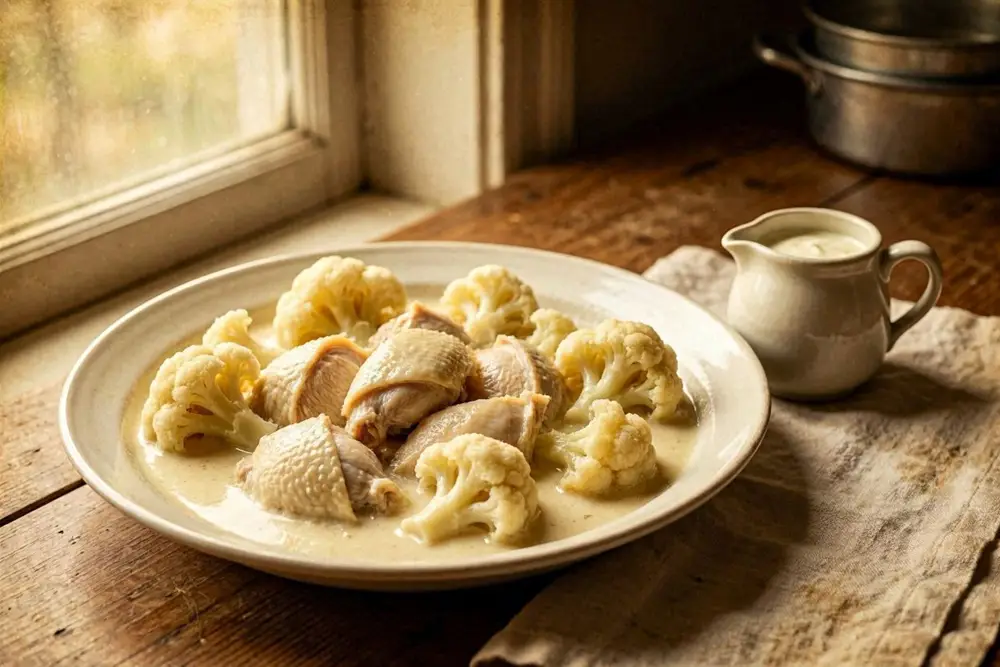
Chicken and Cauliflower in Sour Cream Sauce
A quartered young chicken cooked in a white sour cream roux, served with boiled cauliflower florets arranged around the meat and the cooking sauce poured over.
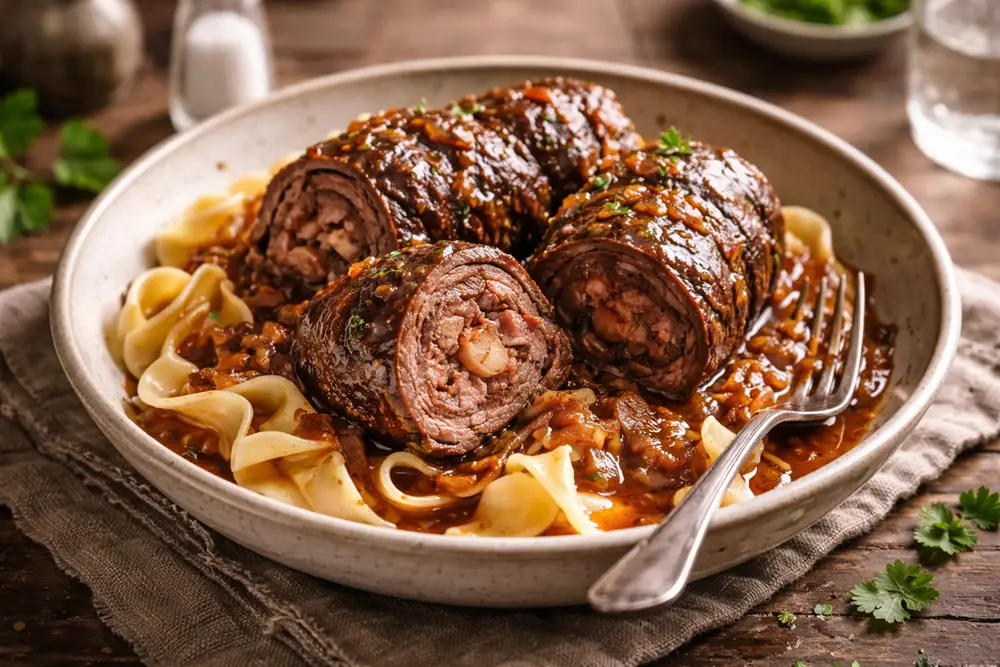
Little Birds — Stuffed Beef Rolls
Thin beef slices pounded flat, stuffed with bacon and garlic, rolled and braised in a thick onion and pepper sauce until tender.
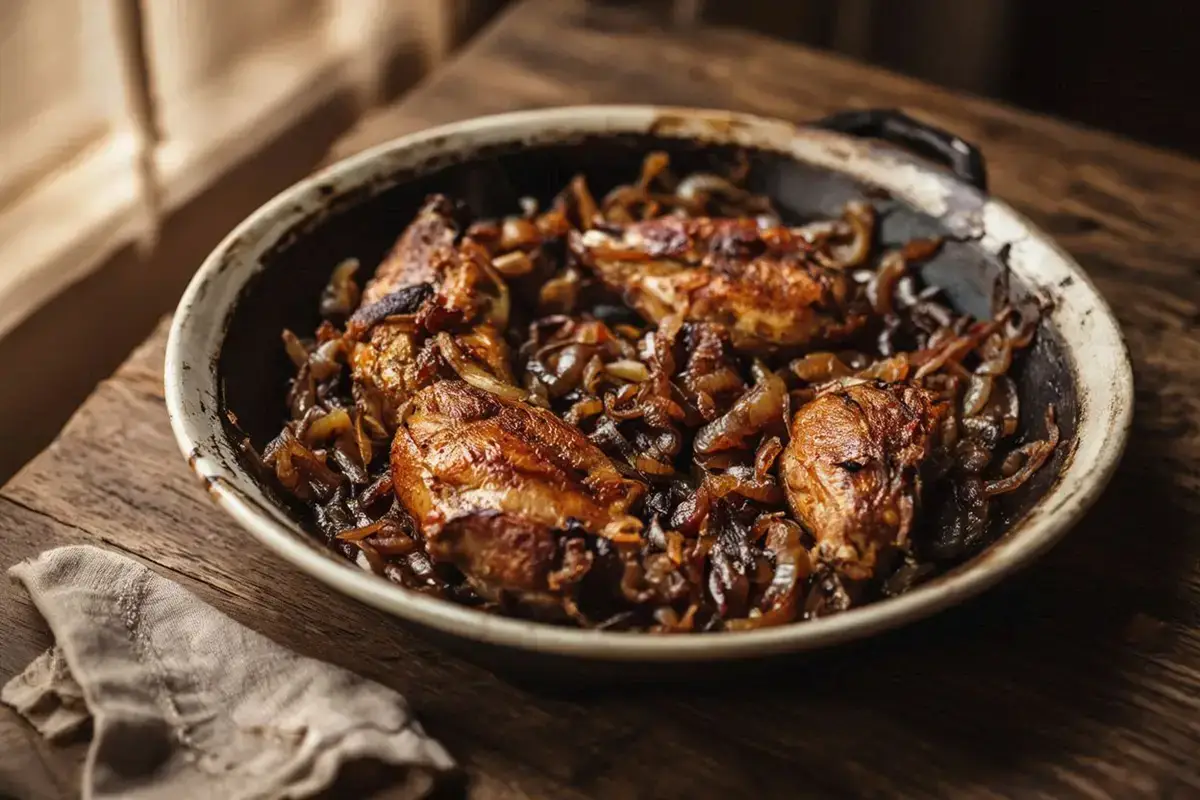
Rabbit Roasted with Onion
Rabbit thighs and back slow-fried in lard with caramelized onion — a simple, deeply flavourful Central European stovetop roast.