Oven-Baked Plums with Sugar
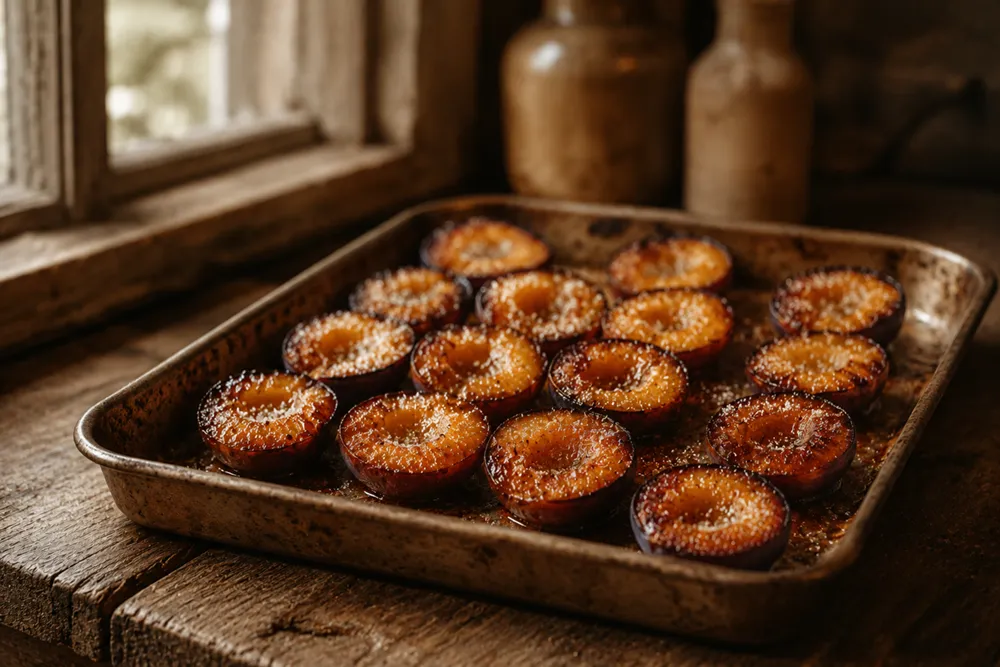
Ripe plums halved, buttered, and baked with sugar until soft and lightly caramelized at the edges. Best served cold.
Quick Summary
Ripe plums halved, buttered, and baked with sugar until soft and lightly caramelized at the edges. Best served cold.
Historical recipe
Modernised adaptation of an early 20th‑century source. Not independently kitchen-tested by Attic Recipes. Quantities, temperatures, and food safety guidance have been updated for a contemporary kitchen — results may vary and errors may exist. Nutritional values, where provided, are estimates only and have not been laboratory tested. Always follow current food safety guidelines for your region. If you have a health condition, allergy, or dietary requirement, consult a qualified professional before preparing this recipe.
Use of this recipe is entirely at your own risk and subject to our Terms of Service and Privacy Policy. Attic Recipes accepts no liability for any adverse outcome.
- Dairy
- 1
Wash the plums, halve them, and remove the pits.
- 2
Generously grease a baking pan with the butter.
- 3
Arrange the plum halves cut-side up in the pan.
- 4
Sprinkle the plums evenly with the fine sugar.
- 5
Bake at 180°C (350°F) / 160°C fan for 25–30 minutes, until the plums are soft and caramelized at the edges.
- 6
Let cool before serving; this dessert is best enjoyed cold.
Nutrition Information per 1 serving (approx 215g)
Nutritional values are approximate estimates and may vary based on specific ingredients used, preparation methods, and portion sizes.
Serving Suggestions
Serve chilled on its own, or with a spoonful of plain yogurt or lightly whipped cream.
About This Recipe
There’s a category of old dessert that asks almost nothing of the cook: wash, halve, arrange, sugar, bake. Oven-baked plums belong squarely to it. Ripe plum halves are set into a buttered pan, dusted with sugar, and left to soften and caramelize in the oven — no batter, no custard, no technique beyond patience.
It’s the kind of recipe that made sense in a household kitchen with fruit on hand and little time to spare, and it still does. The natural tartness of plums against caramelized sugar is enough on its own.
Modern Kitchen Tips
Choose plums that are ripe but still firm enough to hold their shape — overripe fruit will collapse into sauce rather than baking into soft, distinct halves. A shallow, wide pan gives more surface area for caramelization than a deep dish. If the sugar on top starts to darken too quickly, loosely tent the pan with foil for the remaining bake time.
A classic of early 20th century home cooking, preserved and adapted for the modern kitchen.
The Story Behind This Recipe
Historical Context
Early 20th century recipes for baked plums typically gave no oven temperature or precise baking time, relying instead on visual cues — softened fruit and caramelized edges — to judge doneness. Home cooks of the period noted that these plums tasted best once fully cooled.
Modern Kitchen Adaptation
The original recipe did not specify an oven temperature or baking time; 180°C (350°F) / 160°C fan for 25–30 minutes is estimated based on standard practice for baked stone fruit of this size. The butter quantity for greasing the pan is also estimated, since the original called only for a generous coating.
This recipe is an independent modern adaptation developed from historical sources in the public domain. It is provided for informational and educational purposes only and does not constitute professional dietary, nutritional, or medical advice. Food preparation involves inherent risks. The reader assumes full responsibility for safe food handling, ingredient sourcing, and adherence to current local food safety guidelines. The site operator accepts no liability for outcomes resulting from the preparation or consumption of this recipe.
One recipe.
Every week.
You Might Also Like
More recipes you'll enjoy
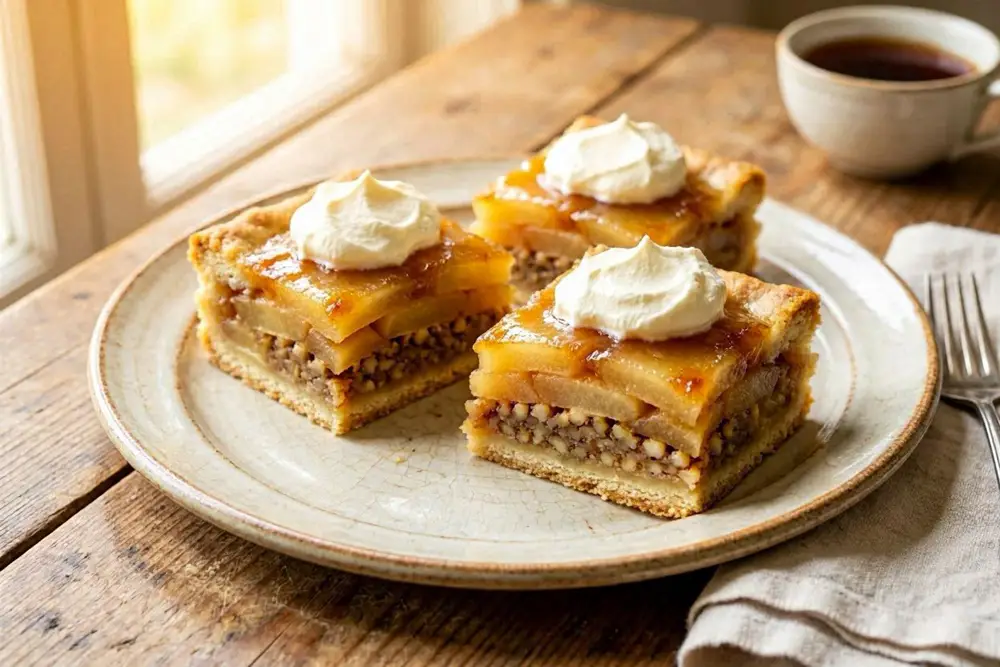
Apple Pie with Whipped Cream
A crisp almond shortcrust base layered with ground walnuts, poached apples, apricot jam, and a thick cloud of sweetened whipped cream.
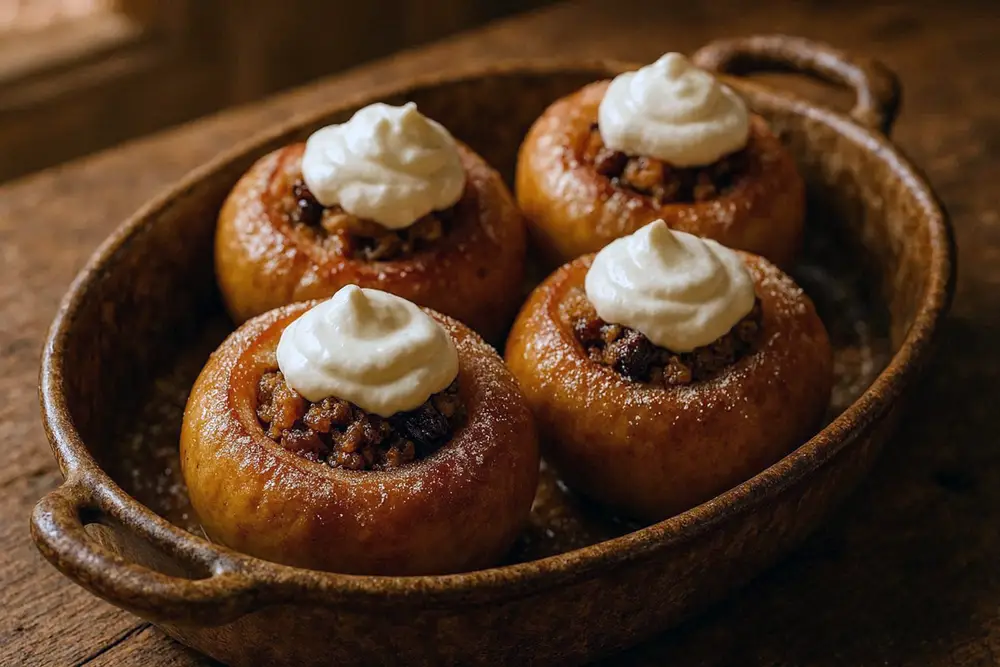
Quinces Stuffed with Walnuts and Raisins
Whole quinces hollowed out and filled with ground walnuts, raisins, and sugar, baked in butter and finished with whipped sour cream.
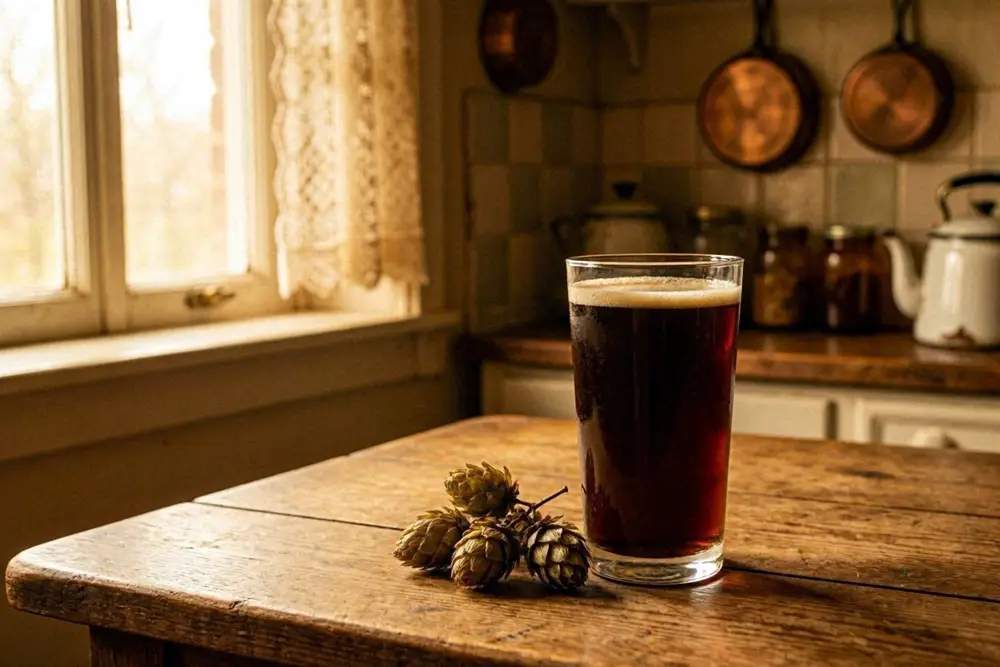
Black Beer
A traditional dark malt beverage from the early 20th century, brewed with roasted Kneipp barley, hops, and corn flour.