Mushrooms in Sour Cream
Pan-fried sliced mushrooms with onion in a rich sour cream and beef broth sauce – a simple, deeply savory Central European side dish.
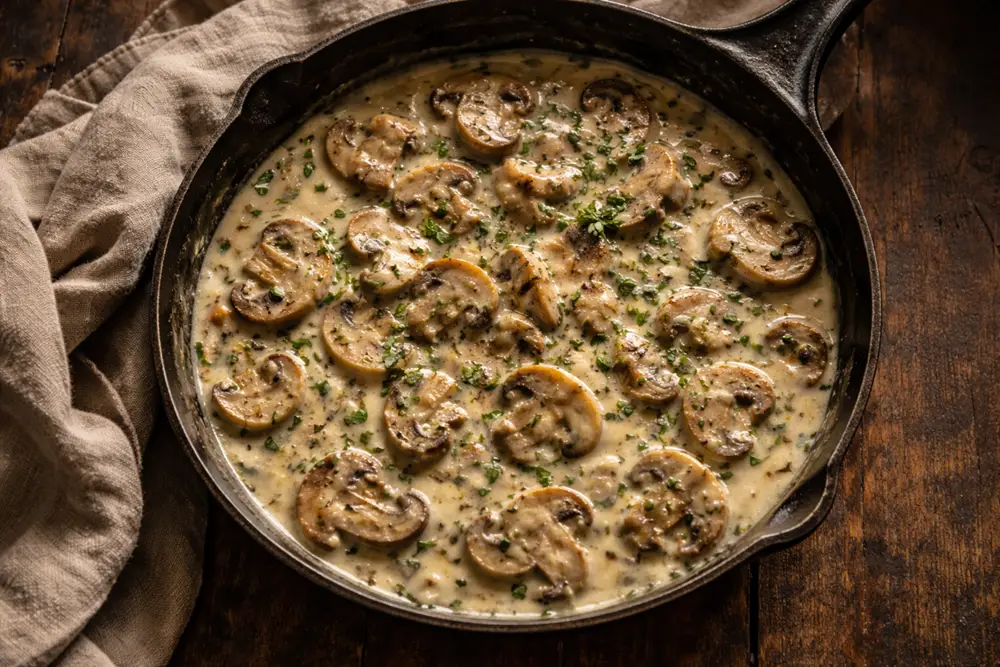
Historical recipe
Modernised adaptation of an early 20th‑century source. Not independently kitchen-tested by Attic Recipes. Quantities, temperatures, and food safety guidance have been updated for a contemporary kitchen — results may vary and errors may exist. Nutritional values, where provided, are estimates only and have not been laboratory tested. Always follow current food safety guidelines for your region. If you have a health condition, allergy, or dietary requirement, consult a qualified professional before preparing this recipe.
Use of this recipe is entirely at your own risk and subject to our Terms of Service and Privacy Policy. Attic Recipes accepts no liability for any adverse outcome.
- Dairy
- Gluten
Additional notes
-
Note
This dish has a high saturated fat content from butter and full-fat sour cream (approx. 11g per serving). Those managing cardiovascular health or cholesterol levels should be aware.
-
Caution
If using foraged wild mushrooms rather than cultivated varieties, ensure positive identification before use. Misidentified wild mushrooms can cause serious illness. When in doubt, use cultivated mushrooms only.
- 1
Wash the 750g mushrooms and slice them evenly, approximately 5mm thick. Place in a saucepan, cover with a lid, and set over medium heat. Allow the mushrooms to sweat in their own juices for 8–10 minutes until they release their liquid fully. Pour off and discard the liquid.
Tip Do not skip the sweating step — it removes excess water that would otherwise prevent browning in the next stage. The discarded liquid can be frozen and used as a flavor base for soups. - 2
In a wide frying pan, melt 2 tbsp butter over medium heat. Add the finely chopped onion and sauté, stirring occasionally, for 8–10 minutes until deeply golden and slightly reddened at the edges.
- 3
Add the drained mushrooms to the pan with the onion. Increase heat to medium-high and fry, stirring occasionally, for 6–8 minutes until the mushrooms are well browned and any remaining moisture has evaporated.
- 4
In a small bowl, mix 1 tbsp flour with 1 tbsp softened butter using a fork until a smooth paste forms (beurre manié). Add this paste to the pan and stir to coat the mushrooms and onion evenly. Cook for 1–2 minutes to lightly cook out the flour.
- 5
Add the 300g sour cream and 120ml beef broth to the pan. Stir to combine and bring to a boil, then immediately reduce to a gentle simmer. Cook for 3–5 minutes, stirring, until the sauce is smooth, glossy, and coats the back of a spoon. Season with 1 tsp salt and 0.5 tsp black pepper.
Tip If the sauce is too thick, add broth a tablespoon at a time. If too thin, simmer uncovered for a further 2–3 minutes. - 6
Transfer to a warm serving bowl. Scatter the 15g chopped parsley generously over the top. Serve immediately.
Nutrition Information per 1 serving (approx. 200g)
Nutritional values are approximate estimates and may vary based on specific ingredients used, preparation methods, and portion sizes.
Serving Suggestions
Serve alongside roasted or braised meat, or over buttered egg noodles or boiled potatoes for a more substantial plate. Good with dark rye bread to mop up the sauce. A classic accompaniment to game dishes. Serves 4 as a side; doubles as a main for 2 over pasta.
About This Recipe
This is the kind of dish that explains itself the moment it hits the table. Mushrooms sweated in their own liquid, drained, then fried hard in butter with onion until they brown properly — then pulled back with sour cream and a little broth into a sauce that is rich without being heavy. The two-stage technique is the whole recipe: everything else is just seasoning.
The original called for a quantity of mushrooms that reads as a transcription error — four kilograms is a catering batch, not a home recipe. Scaled to three-quarters of a kilogram, the proportions make sense: enough mushrooms to serve four as a generous side, with sour cream that coats rather than drowns.
What makes this worth writing about is the discard step. Mushrooms release a significant amount of liquid when heated under a lid, and that liquid, if left in the pan, prevents browning and dilutes the sauce into something thin and grey. Early home cooks discarded it as a matter of course. Modern recipes often skip this step or combine it with the frying stage, which is why so many mushroom dishes end up steamed rather than sautéed.
Why It Works
Mushrooms are roughly 90% water. When heated under a lid, they release most of that water within 8–10 minutes. Discarding it before frying means the mushrooms enter the butter dry — and dry mushrooms brown. Browning is where the flavor is: the Maillard reaction on the mushroom surface produces the deep, earthy complexity that makes this sauce taste like something, rather than just tasting of cream.
The thickener here is a beurre manié — equal parts flour and softened butter worked into a paste and stirred directly into the pan. It disperses into the sauce without lumps and cooks out quickly, producing a sauce that is glossy and lightly bound rather than starchy. The sour cream goes in last, off or at a low boil, which keeps it from splitting.
The parsley is not decoration. Added generously at the end, it cuts through the richness and brightens the whole dish. Do not skip it or reduce it.
Modern Kitchen Tips
- Mushroom choice: Cremini give the deepest flavor. Button mushrooms work well and are more neutral. Chanterelles or mixed wild mushrooms (cultivated) produce an exceptional result. Avoid pre-sliced packaged mushrooms — they are often too wet.
- Do not crowd the pan: After the sweating step, the mushrooms should go into a wide pan in as thin a layer as possible. Crowding causes steaming rather than browning. Work in two batches if needed.
- Sour cream temperature: Cold sour cream added to a very hot pan can split. Remove the pan from direct high heat before stirring it in, or allow the sour cream to come to room temperature first.
- The discarded liquid: Do not pour it down the drain. It is concentrated mushroom stock — freeze it in an ice cube tray and use it in soups, risotto, or gravy.
- Vegetarian version: Replace the beef broth with mushroom stock or vegetable broth. The dish loses some depth but remains very good.
A classic Central European mushroom side dish from the early 20th century home kitchen, preserved and adapted for the modern table.
The Story Behind This Recipe
Historical Context
Early 20th century recipes for mushrooms in sour cream consistently used the two-stage technique recorded here: sweating the mushrooms first under a lid to draw out their juice, discarding that liquid, then frying the dried mushrooms in butter with onion until well browned. Home cooks of the period understood intuitively that mushroom liquid prevents browning and dilutes the sauce — the discard step was standard, not optional. The thickener was a flour-and-butter paste stirred directly into the pan rather than a separately made roux, a faster method suited to home cooking. Sour cream in this quantity — generous relative to the mushroom weight — was characteristic of the period's approach to cream sauces, where richness was not restrained. Peeling the mushrooms was standard practice of the era for older or larger specimens.
Modern Kitchen Adaptation
The original recipe specified 4kg of mushrooms, which appears to be an OCR transcription error of ¾kg (750g); all quantities are based on 750g. The butter quantity for frying is not given in the original — 2 tbsp has been estimated and marked accordingly. The beef broth quantity was described as 'a small amount' — 120ml has been estimated for sauce consistency and marked accordingly. The parsley quantity was unspecified — 15g estimated proportionally and marked. Peeling the mushrooms, standard in the period for older specimens, is omitted here as unnecessary for fresh market mushrooms; the skins are thin and flavorless. Lard was the period-appropriate frying fat; unsalted butter is used for a cleaner, more accessible result.
This recipe is an independent modern adaptation developed from historical sources in the public domain. It is provided for informational and educational purposes only and does not constitute professional dietary, nutritional, or medical advice. Food preparation involves inherent risks. The reader assumes full responsibility for safe food handling, ingredient sourcing, and adherence to current local food safety guidelines. The site operator accepts no liability for outcomes resulting from the preparation or consumption of this recipe.
One recipe.
Every week.
You Might Also Like
More recipes from the same category
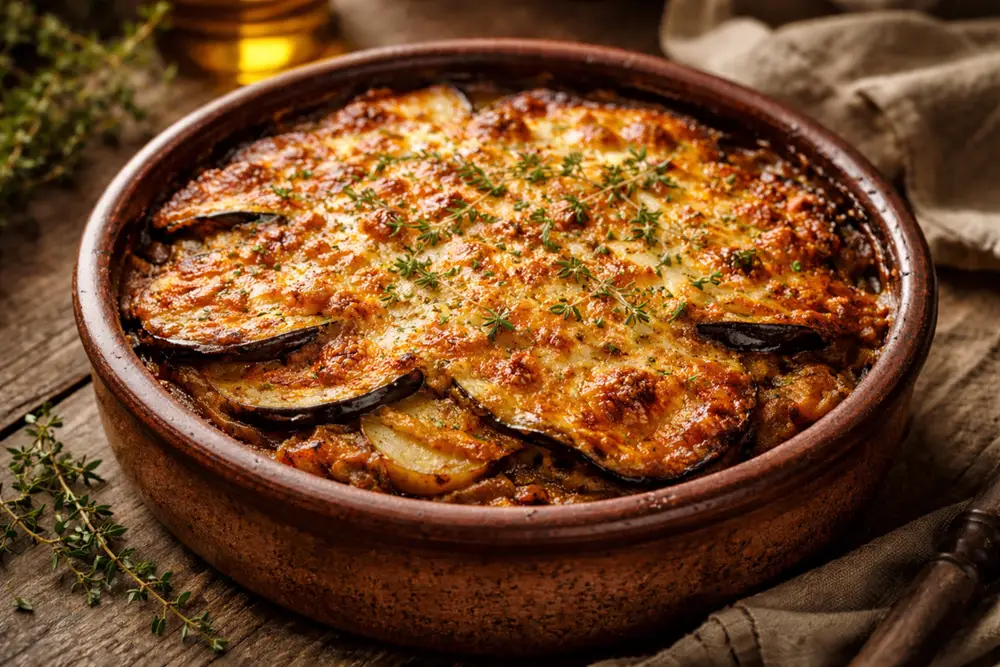
Baked Eggplant with Potatoes
A slow-baked layered casserole of eggplant, parboiled potatoes, golden fried onion, and melted cheese.
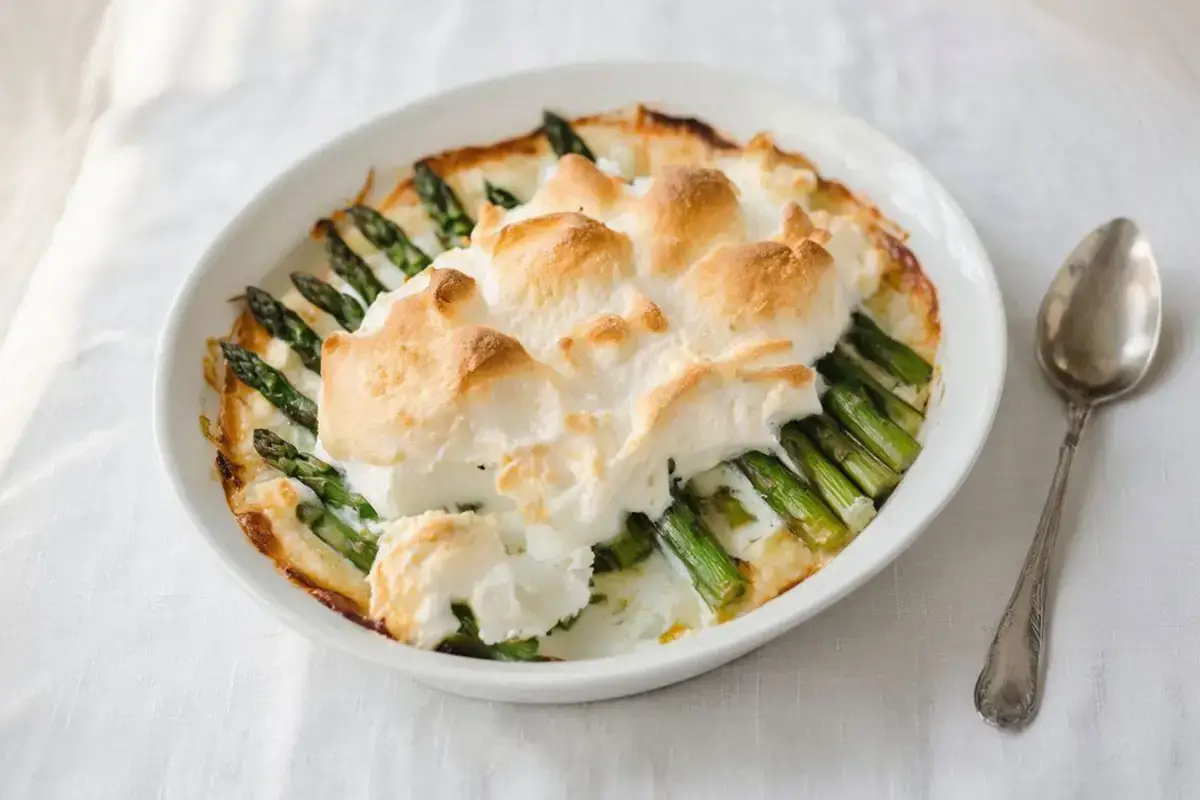
Asparagus Venetian Style
Fresh asparagus baked under a rich egg yolk cream sauce and a golden meringue-cheese topping. An elegant Central European appetizer.
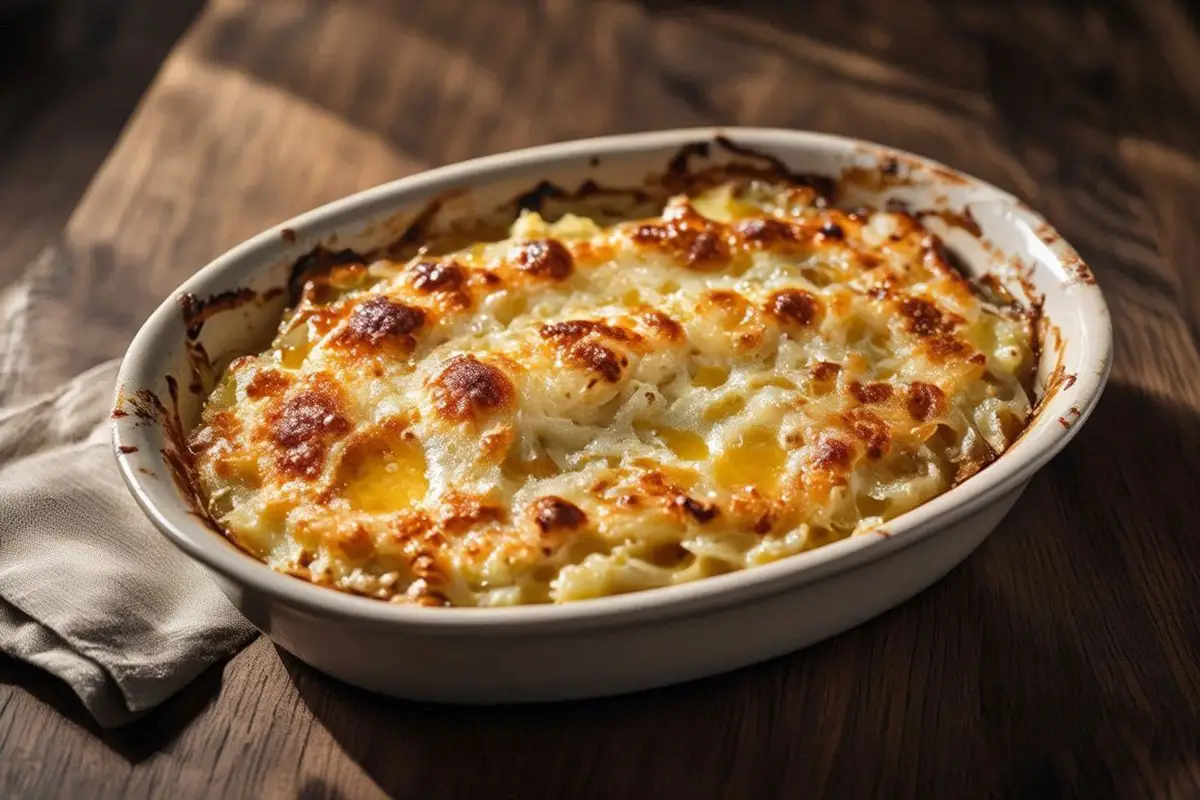
Baked Mashed Potatoes with Egg Yolks and Cheese
Silky mashed potatoes enriched with butter, egg yolks, sour cream and hard cheese, baked until golden.