Mixed Bone Broth Soup with Sour Cream and Fried Bread
A rich bone broth made from pork, veal, and beef bones, built on caramelized root vegetables and finished with a sour cream thickening and a splash of vinegar.
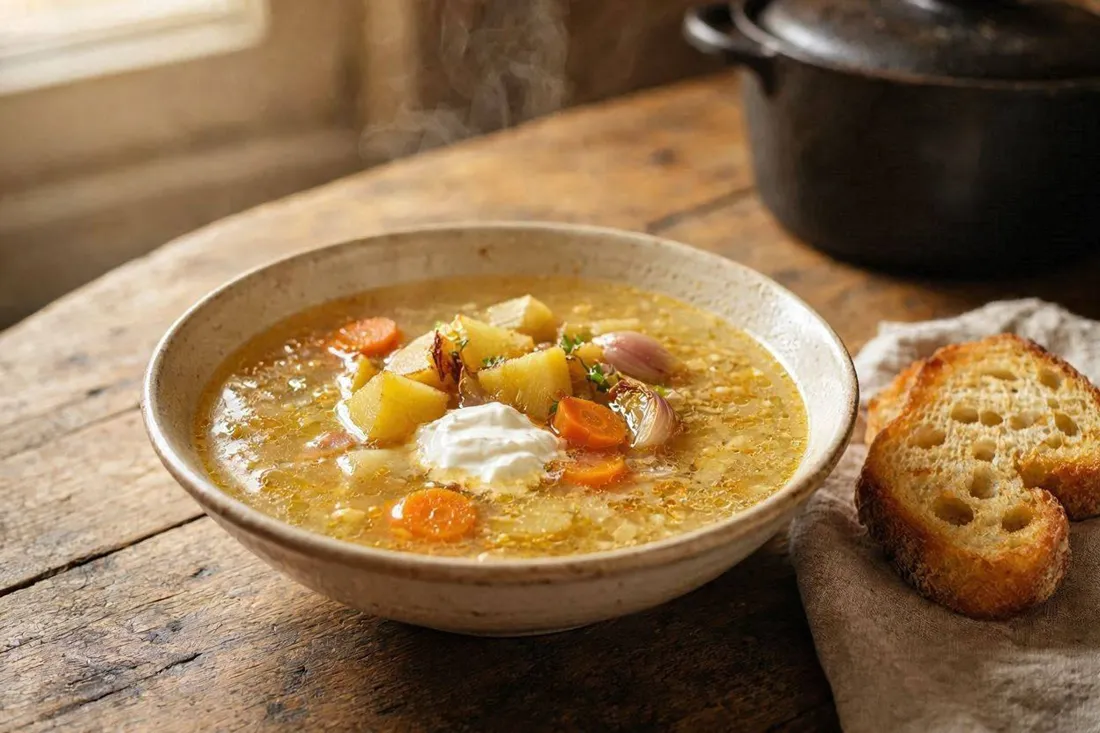
Quick Summary
A Central European bone broth made from pork, veal, and beef bones, built on caramelized sugar and root vegetables, finished with a sour cream and flour thickening and a splash of vinegar. Takes about 3 hours, mostly simmering. Served with fried bread on the side.
Historical recipe
Modernised adaptation of an early 20th‑century source. Not independently kitchen-tested by Attic Recipes. Quantities, temperatures, and food safety guidance have been updated for a contemporary kitchen — results may vary and errors may exist. Nutritional values, where provided, are estimates only and have not been laboratory tested. Always follow current food safety guidelines for your region. If you have a health condition, allergy, or dietary requirement, consult a qualified professional before preparing this recipe.
Use of this recipe is entirely at your own risk and subject to our Terms of Service and Privacy Policy. Attic Recipes accepts no liability for any adverse outcome.
- Dairy
- Gluten
- Celery
Additional notes
-
Warning
Caramelizing sugar in hot oil can cause burns from splatters or contact, even in small quantities. Keep children away from the stove during this step.
- 1
Heat the oil in a large pot. Add the sugar and cook until it turns golden, watching closely so it does not burn.
Tip This is the same caramelized base used across several soups and braises in this style of cooking — it adds depth the vegetables alone would not give. - 2
Add the chopped onion, carrot, parsley root, and celery root. Add the bay leaf and peppercorns. Fry the vegetables in the caramel, stirring, until they begin to soften and take on color.
- 3
Add the cut bones to the pot with the vegetables and cook, stirring occasionally, until the bones are lightly seared on the outside.
- 4
Pour in the hot water. Cover and simmer gently for about 2.5 hours.
Tip A slow, low simmer extracts more flavor and collagen from the bones than a hard boil, and keeps the broth clear rather than cloudy. - 5
Once the broth is ready, strain it through a fine sieve into a clean pot, discarding the bones. Push the softened vegetables through the sieve as well, so their puree returns to the strained broth.
- 6
In a small bowl, whisk the sour cream with the flour until smooth. Temper the mixture by stirring in a few spoonfuls of the hot broth, then stir the tempered mixture into the pot.
- 7
Simmer the soup for a few more minutes to cook out the raw flour taste, then stir in the vinegar to taste.
- 8
While the soup finishes, fry the bread slices in a little oil or butter until golden on both sides.
- 9
Serve the soup hot, with the fried bread alongside.
Nutrition Information per 1 portion (approx 550ml with bread)
Nutritional values are approximate estimates and may vary based on specific ingredients used, preparation methods, and portion sizes.
Serving Suggestions
Serve as a first course for a multi-course meal, or as a light main with extra bread. The soup keeps well refrigerated for up to 3 days; reheat gently and stir well, as the sour cream thickening can separate slightly on standing.
About This Recipe
This bone broth starts the same way several dishes of its era do: with sugar caramelized in fat before anything else goes into the pot. Root vegetables fried in that base, then a mix of pork, veal, and beef bones seared alongside them, build a broth with more depth than a plain simmer would give. Once strained, the softened vegetables aren’t discarded — they’re pushed back through the sieve into the broth, thickening it slightly before the sour cream and flour finish the job.
It’s a soup built in layers, each step adding something the last one couldn’t: sweetness from the caramel, body from the bones, and a light tang from the sour cream and vinegar at the end.
Why It Works
Searing the bones after the vegetables have already taken on color from the caramelized sugar means the fond built up in the pot carries both sweetness and roasted depth into the broth once the water goes in. Pushing the cooked vegetables through the sieve rather than discarding them adds body to the strained broth without needing extra flour. The sour cream and flour mixture is tempered with hot broth before going back into the pot — this prevents it from curdling or forming lumps, a step worth taking even though the temperature here is far lower than what raw egg yolks would require.
Modern Kitchen Tips
Ask a butcher to cut the bones into smaller pieces if a cleaver at home feels daunting — it makes a real difference in how much collagen renders into the broth. If the soup tastes flat after simmering, it usually needs the vinegar more than it needs salt; the acidity is what balances the caramelized sweetness from the first step. A store-bought bag of croutons is a perfectly reasonable substitute for the fried bread on a weeknight.
A classic of early 20th century home cooking, preserved and adapted for the modern kitchen.
The Story Behind This Recipe
Historical Context
Early 20th century recipes for bone broth soups typically began with root vegetables fried in fat with a small amount of caramelized sugar, the same technique used across several dishes of the period to deepen flavor before liquid is added. The traditional approach did not specify the weight of bones or the exact time needed to simmer them, nor how the finished broth was to be acidified — these were left to the cook's judgment.
Modern Kitchen Adaptation
Oil is used here in place of the traditional lard. The bone quantity, simmering time, sugar amount, and vinegar quantity are estimated, since the traditional method gave no specific figures. Ready-made croutons can be substituted for the fried bread if time is short — though part of the charm of these older recipes is that everything, down to the bread on the side, was made from scratch. That's a lot to ask of a modern kitchen, especially for anyone cooking on a weeknight after work, so treat the fried bread as the first thing to simplify if needed.
This recipe is an independent modern adaptation developed from historical sources in the public domain. It is provided for informational and educational purposes only and does not constitute professional dietary, nutritional, or medical advice. Food preparation involves inherent risks. The reader assumes full responsibility for safe food handling, ingredient sourcing, and adherence to current local food safety guidelines. The site operator accepts no liability for outcomes resulting from the preparation or consumption of this recipe.
One recipe.
Every week.
You Might Also Like
More recipes you'll enjoy
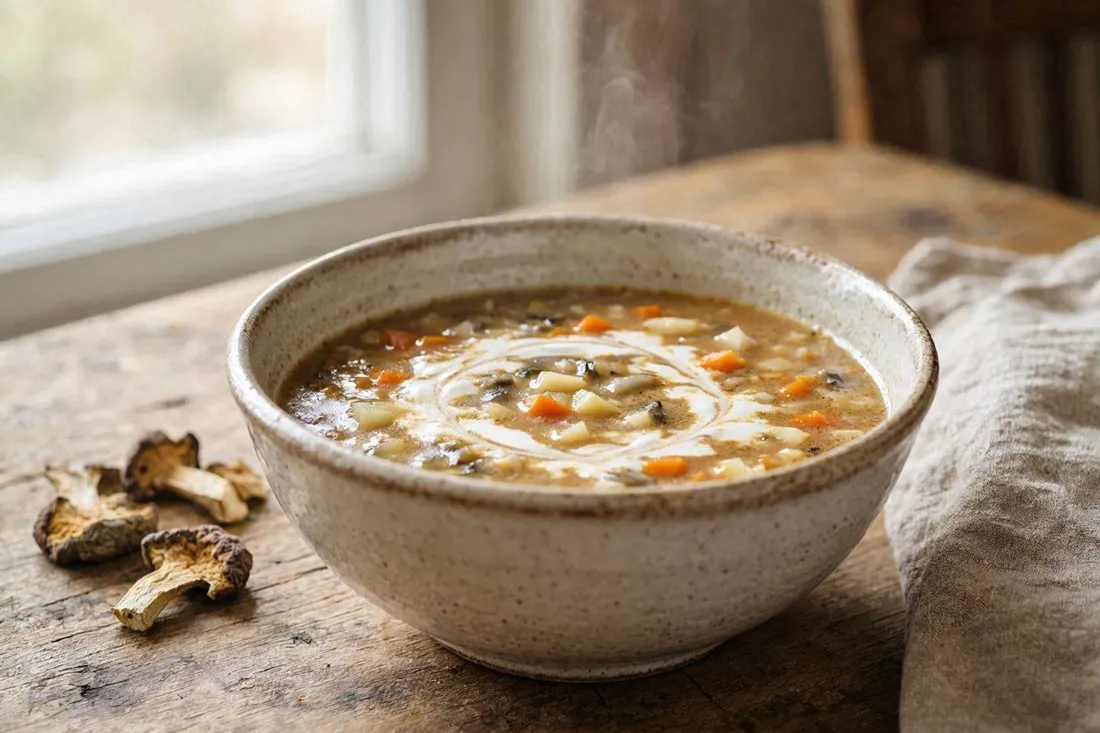
Mushroom Soup with Sour Cream
Dried mushrooms simmered with soup vegetables and finished with a sour cream and flour thickener — a simple, deeply flavored home-style soup.
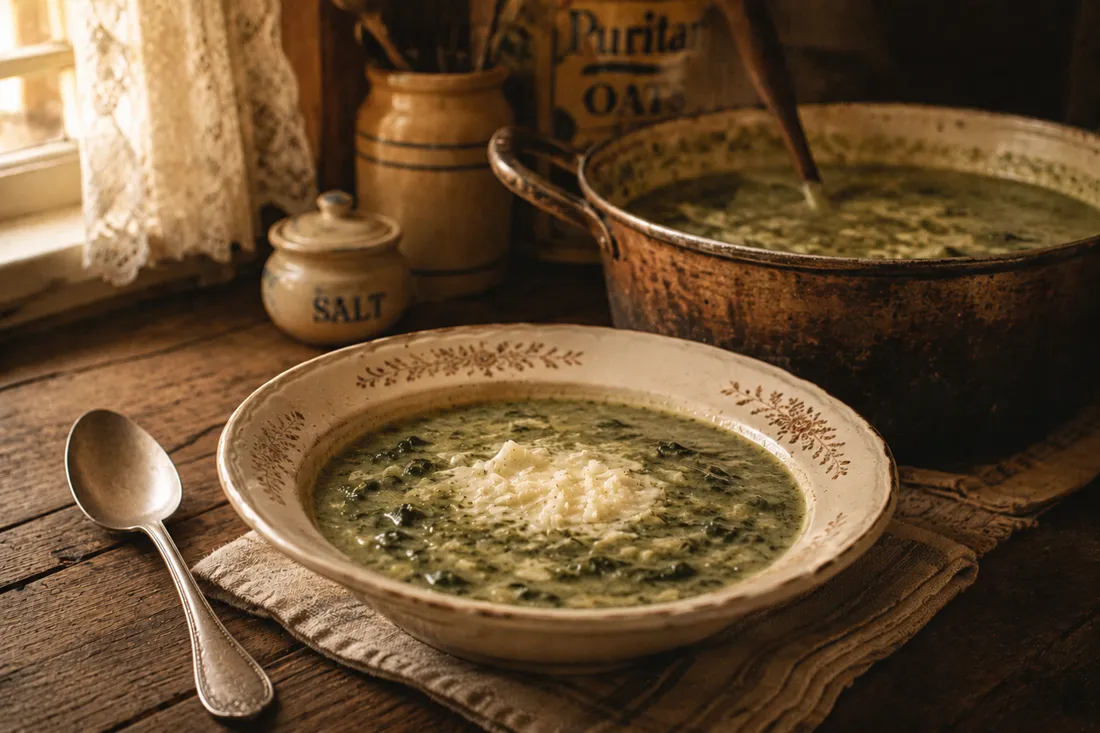
Cheese and Spinach Soup
A hearty soup of leek, spinach, and aged sheep's cheese, thickened with a paprika roux and finished with carefully tempered eggs.
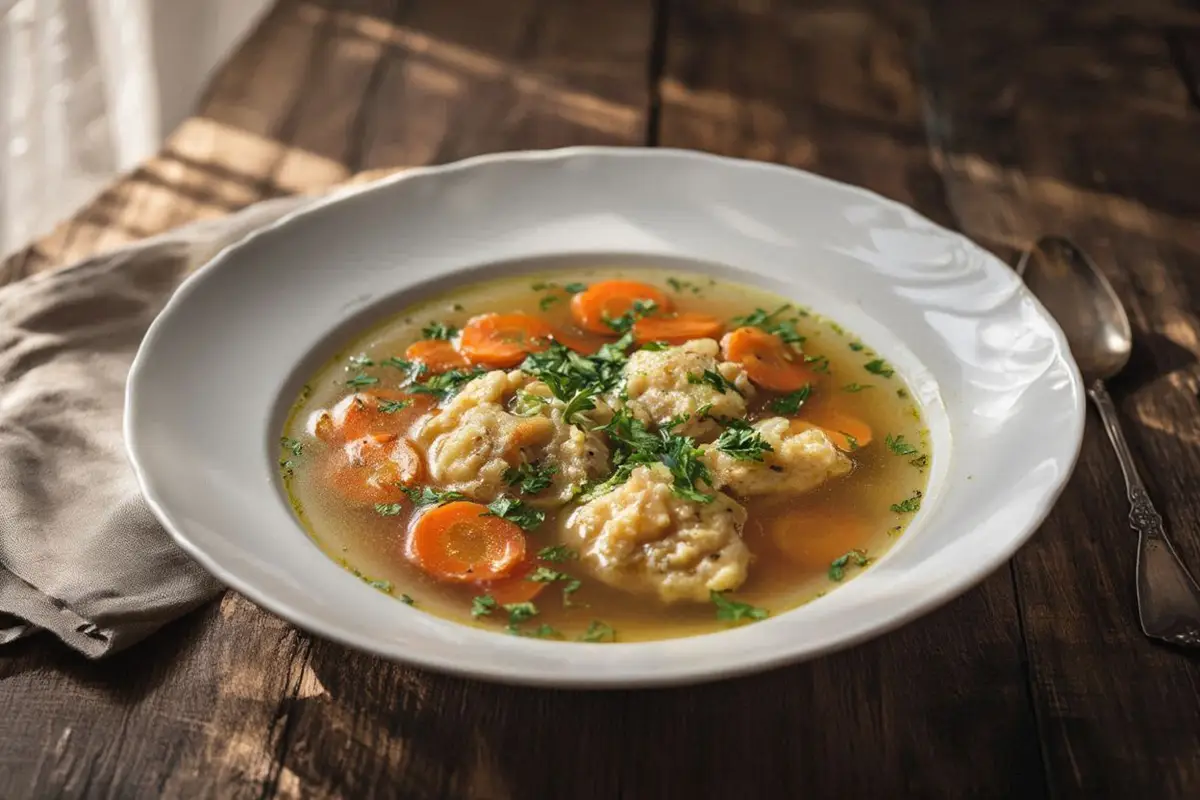
Beef Soup with Carrot-Colored Broth
A rich, golden Central European beef soup with carrot-colored broth, served with semolina or liver dumplings. Hearty, clear, and deeply flavorful.